What's the difference?
Eco-friendly vehicles are the leather pants of the new-car world; it takes a lot of money to make them look good (but people who own them think they look fantastic regardless). If you don't have a gazillion dollars to drop on a Tesla, then it's a one-way ticket to Prius town. And really, who wants that?
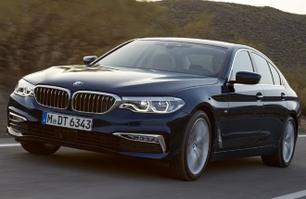
But what if it didn't have to be that way? Behold the BMW 530e iPerformance.
Seemingly tired of waiting for the Australian Government to introduce any sort of meaningful subsidy for green cars, BMW has made the choice simple: you can have a petrol-powered 530i for $108,900, or opt for the plug-in hybrid 530e for... $108,900. This is truly revelatory thinking.
There's no specification penalty, either, and the hybrid will power to 100km/h in an identical 6.2 seconds, so you're not even any slower. But you are sipping less fuel, emitting less C02 and basking in the general smugness, and sweet silence, that comes with feeling like you're saving the world.
So what's the catch?
Welcome to one of the world’s tiniest SUVs, as well as amongst Australia’s cheapest – Suzuki’s diminutive Ignis.
There’s an Aussie connection. Holden designer Peter Hughes styled the original YG Cruze based on the first (FH) Ignis of 2000, with both models sharing most components underneath; but the latter was not well received, prompting Suzuki to change tack for its reborn Swift replacement of 2004. Yet the name and concept were revived 11 years later (without GMH) for the retro-themed high-riding hatch/crossover you see here today.
The point? This quick history lesson serves to remind us how similar both Ignis generations are, as well as how devoted Suzuki is in its pursuit of owning the light SUV space.
In June 2020, a facelifted MF arrived, brandishing a revised grille, bumpers and trim to give it a chunkier appearance, along with minor spec changes.
Here we take a long look at the GLX auto.
Not all superheroes wear capes, and we're proud to report the 530e does its bit for green motoring without feeling the need to shout about it. And with no price or specification penalty, it's easier being green than ever before, and the pricing of this BMW really puts the cat amongst the canaries.
With statement styling, inherent agility, excellent efficiency, proven reliability, high equipment levels and low entry pricing, the 2021 Ignis GLX is in danger of becoming a mandatory short-list proposition for people seeking fun and affordable motoring.
But undermining all that is a distinct lack of driver-assist safety tech that can’t be – and shouldn’t be – ignored. At least give buyers the option of paying more for essentials like AEB.
If Suzuki can address this shortfall, the Ignis would join its excellent Swift supermini stablemate in being a very compelling and enjoyable compact urban runabout. We hope this happens sooner rather than later.
Crucially, there's nothing weird about the way the 530e looks. While some green cars look like they've been designed by one of the kids from 3rd Rock from the Sun, the 530e looks much the same as the rest of the range, save a few tiny but telltale giveaways - like the e-drive badging outside, and what looks like a bonus fuel flap tucked in behind a front wheel that houses the whole plug-in bit.
And we really, really like it. It's elegant and statesman-like from every angle, and looked especially important in the deep-blue colour of our test vehicle. It's not over-designed, with body creases used sparingly, and the occasional glint of polished silver that rings the windows and the grille adds a final sense of shininess to an understated design.
Inside, there's more going on than you might normally find in a BMW. The hugely complicated digital display screen now includes everything from battery charge, power usage to the usual assortment of speedometers and petrol readouts.
It doesn't feel overdone or crazily festooned, but there's more at play here than in your usual BMW.
The dash is busy, too, with a wide screen emerging from a centre stack that also houses a CD player and a digital aircon setup, which in turn sits above a complex centre console from which you can alter driving settings, control the multimedia or cycle through electric modes. It doesn't feel overdone or crazily festooned, but there's more at play here than in your usual BMW.
Elsewhere inside, the seats are beautifully designed, with a quilted leather highlight through the middle, while the gloss-black strip that lines the dash hides a dual strip of ambient interior lights that also runs across all four doors.
Sometimes facelifts do really improve the look of a vehicle, as is the case here with the MF Series II.
Maybe it’s the Suzuki Jimny 4x4-inspired quad-nostril grille or chunkier rear bumper inserts, but they somehow make the Japanese-built crossover seem less narrow and tippy-toed.
The styling – first seen in 2016 – actually references classic Suzukis of old like the late 1970s Cervo SC100 (as per the C-pillar slit inserts and angular silhouette) that were never offered in Australia anyway.
A good thing, then, that the Ignis’ handsome proportions, flared wheel arches, deep glass area, anthropomorphic grille and pushed-out wheelbase and tracks give it a purposeful look and stance that also stands as an attractive and individualistic 21st Century design in its own right.
Measuring in at 3700mm in length, 1660mm in width and 1595mm in height, the Ignis is substantially stubbier and narrower (though slightly taller) than the Hyundai Venue, whose corresponding numbers are 4040mm, 1770mm and 1592mm, respectively. The Suzuki’s 2435mm wheelbase is also 85mm shy of the Hyundai.
Still, the result doesn’t mean the Ignis’ cabin seems overly tight or cramped in any shape or form.
As the world's motoring tastes shrink faster than a lap-banded Clive Palmer, it's easy to forget the joys of the full-size sedan, but the space for passengers and luggage in the 5 Series will have you questioning your downsizing ways.
Upfront, there's plenty of room between front-seat riders, who will also share two smallish cup holders, along with room in each front door for bottles. There's also a dedicated wireless charge pad (which, because of its tight design, is crazy difficult to actually remove your phone from), but you'll also get two USB points and a power outlet that's hidden in the sizeable centre storage bin as standard fit.
Backseat riders get heaps of space, both in width and in leg room behind the front seats. And there's twin air-con temp controls and twin power outlets, too. But middle-seat passengers will be forced to sit with their legs on either side of the raised tunnel, which will definitely impact on comfort.
The boot's still sizeable, despite shrinking slightly to house the battery/fuel tank setup
Best to ditch the fifth passenger, then, and deploy the pull-down seat divider, which also houses two cup holders. Finally, there are three ISOFIX attachment points, one for each seat in the back.
The boot's still sizeable, despite shrinking slightly to house the battery/fuel tank setup (the tank has been moved further back to accomodate the batteries), and can be adjusted to be a flat load area if you'd like, offering up to 410 litres with the rear seats in place.
Thinking about it, the Ignis is uniquely suited to city life.
Forget its diminutive proportions for a moment, and consider instead that it has extraordinarily high seating positions and a tall turret. Perfect for stepping inside the car with some degree of dignity.
Once sat on the big, comfy and lofty front seats, you’re immediately struck by how confidence-building the commanding driving position, assisted by the excellent all-round vision afforded by the deep glass area and upright pillars and a pleasant leather-like steering wheel cover.
The front buckets themselves are comfy and enveloping, even though there is no lumbar adjustment support fitted; there is a height lever on the driver’s side, ample rearward travel for taller folk and side bolstering to help hug you through corners, while the soft cloth material feels good to the touch.
Suzuki’s thought about storage, as demonstrated by the big glovebox, bottle-holding door pockets up front, deep lower-console shelf and trio of cupholders, though there is no central armrest or bin, even in this up-spec grade.
Suzuki’s gone for a somewhat old-school off-roader theme inside, evidenced by the chunky heater/air-con controls, toggle switchgear and 4x4-look pared-back dash, while there’s plenty of hardy, hollow-sounding plastics to remind you that this is built down to a price. One lovely retro detail is the ‘60s pull-out bonnet release.
Operating the GLX’s climate control is child’s play, and the same applies to the ageing but still effective multimedia system, with its colourful display, easy connectivity and handy sat-nav. Note that the virtual volume slider on the screen is slow, fiddly and ultimately needlessly distracting. Give us a proper knob any day of the week. And what about a digital radio receiver, please, Suzuki?
We’re also less fond of the tilt-only non-telescopic steering column, as some drivers found it difficult to find the perfect position as a result, while the lack of digital speedo when there is room for it in the instrumentation’s LCD window smacks of penny pinching. Otherwise, the Ignis’ layout and design generally really hit the mark.
The rear doors open at nearly 90 degrees, aiding entry to and egress from the back seat. Although the front passenger seat lacks a height adjuster, it is still set up high, so big feet can tuck in underneath for taller occupants behind.
Being a GLX, the bench is split 50/50, is designed to only carry two people (so there’s no centre belt but ample width as a consequence) and the backrest reclines in 10 (narrow) positions for added comfort. Both also slide forward by a significant amount, boosting cargo space. Parents and guardians of smaller children might find this helpful as they can be positioned closer to the front seats for access that’s within arm’s reach.
The backrests themselves are… OK and clearly intended for smaller folk. Your 178cm tester found a distinct lack of under-thigh support due to the short squab and the backrest doesn’t reline far enough back for true comfort. And except for the aforementioned third cupholder nestled right at the rear of the front-seat lower-console area, door-pull recess that might hold an upright smartphone as well as a small bottle receptacle built into the door card, storage is non-existent back there. Yes, there is one map pocket, but that’s your lot. You’ll also search in vain for overhead grab handles (only the front passenger gets one), reading lights and rear-seat centre armrest – a wasted opportunity given this car’s four-seater status.
On the other hand, there’s space galore in every direction due to that very status, excellent vision and windows that wind (electrically of course) all the way down for a light and airy feel. Fido will be pleased. Just remember to bring your ear plugs if constant road noise bothers you.
Further back, you’ll marvel at the versatility of the cargo area, thanks to the sliding split bench that increases cargo capacity from 264 litres in normal four-seat mode to 515L with the backrests folded and 1104L in “maximum volume” mode. Note the five-seater GL’s ranges from 271L to 505L to 1101L respectively.
It’s properly long and deep in this setting. There’s a deep floor (with a space-saver spare underneath) and a light, but not much else. The fit and finish is fine but the floor seems flimsy and the parcel shelf lightweight. At least it isn’t mesh as per the Honda HR-V’s.
The 530e commands a 530i-equalling $108,900 price tag, which is genuinely impressive when you consider all the extra bits and pieces that go into make a plug-in hybrid. That money buys you a well-equipped car, and only those allergic to money need reach for the options list.
As standard, you'll find leather-wrapped - and heated in the front - sports seats, 19-inch alloy wheels and a 10.25-inch touchscreen that pairs with a really very good 16-speaker Haman Kardon stereo. Wireless Apple CarPlay is available, but it'll cost you an extra $500. To be honest, though, we didn't miss it.
You'll also find adaptive LED headlights, a huge head-up display (so big, in fact, that it impedes vision when climbing steep hills), dynamic dampers, an auto opening/closing boot and a self-parking system, along with BMW's suite of self-driving tech - but we'll come back to that under the Safety sub-heading.
The cheapest Ignis is the GL (what is this? 1982?) manual from $18,740 before on-road costs (ORC). Auto adds $1000 while the auto-only GLX starts from $21,740.
The series has endured two big price hikes since mid-last year, totalling a hefty $2750 in the latter grade. This places the light SUV hard up against the marginally-bigger base Hyundai Venue auto ($22,960 before ORC) and larger-still MG ZS Excite ($21,990 driveaway).
Let’s get to the bad news first.
Even as a flagship grade, the GLX lacks key driver-assist safety kit like automatic emergency braking (AEB) as found in most other competitors, along with lane keeping assistance, blind-spot monitoring and rear cross-traffic alert. Not even as an option. That’s a black mark. You will find six airbags (dual front, front side and curtain items), stability control, anti-lock brakes with electronic brake-force distribution and brake assist, and traction control.
Most punters will appreciate the GLX’s LED headlights with daytime running lights and auto on/off functionality, climate control air-conditioning, keyless entry and start, six (rather than four) speaker audio system, privacy glass and 16-inch alloy wheels (with a space-saver spare), replacing 15-inch steelies. They build on the GL’s cruise control, fog lights, 7.0-inch touchscreen, reverse camera, satellite navigation, Apple CarPlay/Android Auto connectivity, Bluetooth phone and audio streaming, leather-clad steering wheel and roof rails. Digital radio is not available on either grade.
Interestingly, the GLX swaps the GL’s fixed three-seater rear bench seat for a sliding (and reclining) 50/50 split-fold two-seater item, trading practicality for luggage-lugging versatility. More on that below.
Adding premium/metallic paint costs $595.
Drift around in pure EV mode and you'll be relying on the 530e's 83kW and 250Nm electric motor, which will provide what BMW refers to as "between 28 and 32 real-world kilometres".
Run out of range, or simply use too much throttle, and the 2.0-litre petrol engine comes into play, adding 135kW and 320Nm to the mix. All up, that's 185kW and 420Nm - respectable numbers by any measure, and enough to match the petrol-powered 530i's zero to 100km/h sprint of 6.2 seconds.
That power is fed through an eight-speed automatic transmission before being sent exclusively to the rear wheels, where it belongs.
Nearing 10 years in production, Suzuki’s K12C 1242cc 1.2-litre twin-cam 16-valve four-cylinder petrol engine is a tried and tested naturally-aspirated unit, revving strongly and effortlessly all the way to its red line. Peak power is 66kW at 6000rpm and the torque top is rated at 120Nm at 4400rpm.
With a kerb weight of just 865kg – a Suzuki specialty – the Ignis boasts a power-to-weight ratio of a healthy 76.3kW/per tonne.
It’s a shame the GLX isn’t available with the GL’s five-speed manual gearbox. Instead, your lot is an albeit-efficient automatic of the CVT (Continuously Variable Transmission) variety, driving just the front wheels for Aussie-bound Ignis models.
Overseas there are mild-hybrid and all-wheel drive alternatives too.
Like a Facebook relationship status, it's complicated. The 530e will sip a claimed combined 2.3 litres per hundred kilometres on the claimed/combined cycle, which is amazing for a car this size. Better still, it seems genuinely achievable - at the vehicle's launch, our own Richard Berry recorded a stunning 2.0 litres per hundred kilometres on a short test route.
But that's with a full load of battery charge on board. For our week with the 530e we were unable to actually plug it in (living in Sydney, I can't afford a garage), so once the initial battery charge had been used we were back to mostly petrol power. Unlike some other plug-in hybrids we've driven, we found it very difficult to recharge the battery to any meaningful level using regenerative braking, so once we were flat we stayed flat. If we had plugged it in, it would have been a two-hour recharge using a specialised wall unit, or about four hours using a normal plug.
As a result, though, our fuel use was closer to 7.0 litres per hundred kilometres after some considerable real-world testing.
Suzuki’s weight-loss obsession is great news for people wanting a high-economy urban crossover.
Tuned to run on 91 RON standard unleaded petrol, our Ignis GLX returned an efficient 6.2 litres per 100km at the pump. And while that is somewhat off the 4.9L/100km Suzuki claims, much of that was in heavy peak-hour traffic with the air-con on, or during performance testing out on the open road.
That 4.9L/100km published average figure translates to a carbon-dioxide emissions rating of just 114 grams per kilometre. Even with the Ignis’ tiny 32-litre tank, over 650km between refills is possible.
There's so much to like about the way the 530e sets about saving the world, and that's mostly because it doesn't shout about it, either to the driver or the outside world.
It's very much an underpants inside its pants superhero, which makes us like it even more. Set off in EV mode, and the 530e will drift silently away from the curb, burning battery power over fuel for as many as 30(ish) kilometres. But equally important, the shift from green to gas is largely imperceptible, with the petrol engine joining in willingly when you ask it to - usual via a prod of your right foot.
It is so effortlessly smooth that you need to really pay attention to notice the eight-speed 'box changing gears at city speeds, and it's commendably quiet, whichever drive mode you're in.
Downsides? Well, it doesn't feel quite as sharp as it's conventional-engined siblings. The batteries add around 230kg in weight, which never helps, and it all feels a little softer and a little less dynamic, even with Sport mode engaged. BMW assures us the adaptive suspension setup and tune is identical, but the 530e feels noticeably softer when you tackle a twisting back road. And that encourages you to use your right foot a little more, which in turn negates the whole electric thing in the first place.
One of the great joys of BMWs has always been their ability to transform from cosseting comfort to rear-drive rocket when you want them to, and you can't help but notice the 530e isn't quite up to that challenge. But if your intentions are mostly city- and freeway-based, then this plug-in BMW is almost indiscernible from its petrol-powered sibling.
Comparatively conventional in mechanical layout it may be, but the Ignis feels especially at home around town.
A strong and revvy 1.2-litre engine, coupled to a flexible CVT, provides eager off-the-line acceleration, though the accompanying loud exhaust drone may get tiresome for some. Aided by the Suzuki’s light mass, luckily there’s sufficient low-down response for most drivers to experience healthy performance without having to assault all occupants’ ear drums.
What this means is that the Ignis will accelerate quite vigorously once on the move, with plenty of oomph available as the revs rise towards the 6000rpm peak power point. Yes, the CVT will elicit an endless moan from the engine, but speed does build up quickly and before you know it.
We weren’t expecting to find a ‘Sport’ mode button located on the side of the auto’s shifter; locking out the highest ratios, it keeps the tacho needle within a pre-determined power band that’s useful if noticeably stronger throttle response is required. Otherwise, in Normal mode, the powertrain is tuned to upshift to top gear in the interest of efficiency. It’s good that the Suzuki at least gives the keener driver some choice in the matter.
This is also the best Ignis we’ve driven yet when it comes to steering. Around town, the turning circle is smaller than federal funding for the arts, environment and education portfolios come budget time, providing stupendously easy parking, effortless manoeuvrability and pin-point handling accuracy, especially when weaving in and out of traffic.
Yet the helm also works out on the highway as well, or through tight and twisty turns, with a blend of sporty precision and reassuring control. Keener drivers can scoot around corners at speed and – perhaps surprisingly – not experience excessive body lean, despite the Ignis’ height and narrow track. It instead just knuckles down and gets the job done, with confidence. The Ignis sticks to the road.
We expected scrappy handling but instead received no-drama agility. The chassis feels it can handle a whole lot more power than what the GLX offers. We were also pleased by how comfy the ride is on smooth roads.
However, though mid-corner bumps do not upset the Ignis’ composure, they certainly make themselves felt through inside the cabin. Indeed, around town, in the ‘burbs or out on the highway, the suspension’s inherent firmness that no doubt enhances the Suzuki’s dynamics means sharp, sudden jolts aren’t absorbed as well as we’d like, making for a hard ride at times. There’s less wheel travel from the MacPherson strut-style front and torsion beam rear end set-up than the 1.6-metre height and 180mm ground clearance suggest.
Reducing the amount of road and tyre noise piping through inside would substantially increase the Ignis’ overall appeal. That and level of driver-assist safety tech.
Two big jobs for its eventual successor, then.
You'll want for little here, with front, front-side and full curtain airbags joining parking sensors, a surround-view camera and a self-parking system.
You can also expect active cruise control, lane control assist with lane keep assist (so it will stay between the lane markings for you), AEB and cross-traffic warning. And all of that means that, technically, the 530e can drive for you. That is, of course, if you don't mind driving like a dick - in full-autonomous mode it will swerve from lane marking to lane marking like it's playing bumper bowling.
The Suzuki Ignis has never been tested by ANCAP.
However, a 2016 Series 1 model that aligns closely with the Australian one scored just three stars in the European NCAP ratings, against five stars for the equivalent with AEB. Now, as neither Ignis grades offer AEB, it should be concluded that only a three-star rating is achievable with our 2021 GLX auto.
Also missing are lane departure warning, lane keep assist, traffic sign recognition, blind-spot monitor and rear cross-traffic alert technologies, as well as auto high beam, front or rear parking sensors or adaptive cruise control.
Safety features that available are six airbags (dual front, side and curtain), stability control, anti-lock brakes with electronic brake-force distribution and brake assist, traction control, hill-hold control, a pedal breakaway system to reduce driver foot/leg injury in a severe impact and reverse camera.
Brakes are ventilated discs up front and drums out back.
Two rear-seat ISOFIX points as well as two top tethers for straps are included for younger passengers in the GLX, or three top tethers in the five-seat GL.
Like the rest of the 5 Series range, the 530e falls under BMW's three-year, unlimited-kilometre warranty. There are no set service intervals, either, with BMW using what it calls 'condition-based' servicing. In other words, the car will tell you when it requires a trip to the service centre.
The batteries are covered by a separate warranty covering six years or 100,000km.
Suzuki offers an industry-average five-year/unlimited kilometre warranty and roadside assistance.
Service intervals are every 12 months or 15,000km, while published basic capped-price servicing is available. Prices start at $239 (years one and five) and reach as high as $329 (year three). Total cost is $1465, averaging out to $293 annually over five years at the time of publishing.
Vehicles under five-years old but with higher mileages up to 90,000km can expect to be charged $499, according to Suzuki’s website.