What's the difference?
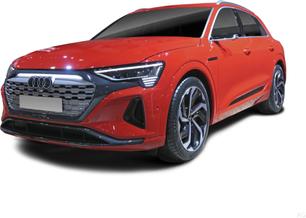
Late last year, Audi gave its large SUV range a freshen up by stocking its showrooms with the Q8 55 e-tron model; a rebadged, facelifted full-sized electric SUV designed to go head-to-head with things like the Mercedes-Benz EQE.
As it turned out, the Q8 55 was destined to become the mid-spec model and now Audi has book-ended the Q8 range with the entry-level Q8 e-tron 50 and the flagship SQ8 e-tron.
And while the previous 55 model was available in Sportback and SUV (station-wagon) forms, the latter has now been dropped.
That leaves the 50 model as an SUV only, while the headline act – and the vehicle we’re testing here – the SQ8 can be had in either body style.
The reason we’re concentrating on the biggest, baddest, most expensive variant, is that’s precisely what Audi is tipping the Australian market will gravitate towards.
In fact, as many as 70 per cent of Q8-platform sales could be the SQ8. That’s in line with the Australian market’s fondness for spending up big on the sportiest version of many makes and models, but it remains a bit of an anomaly in the rest of the car-buying world. Nevertheless, it remains the reason we’re focussing on that variant here.
Of course, electrification has never been more important for a carmaker operating here since the New Vehicle Efficiency Standard was announced recently, and even though the Q8 range will be a small percentage of Audi’s sales here, any EV represent progress towards meeting corporate targets.
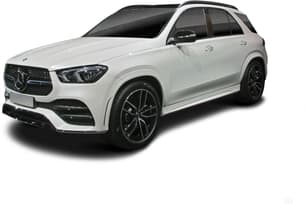
This is the first real Mercedes-Benz GLE. It's the second version of the SUV, but the last one was really just a big update of the old ML, and it never really soared to the heights it could have as a result of that.
But this new version - the 2020 GLE - is exactly that. It's new.
The exterior is new. The engines are new. The underpinnings are new. The interior - yep, you guessed it - new.
The big question is, though, is the GLE a competitor now? Can it stand up against the BMW X5, Maserati Levante, Porsche Cayenne, Range Rover Sport, Volvo XC90 and even the VW Touareg?
Let's find out.
There’s not doubt large, luxury SUVs like the SQ8 have a lot to gain from electrification in terms of refinement, performance and running costs. The flip-side is the extra mass of the batteries and other electrical gear but, in this case at least, there might be a silver lining there in the way the hulking SUV manages to force the air suspension into agreeable submission.
For our money, the station-wagon variant is the one to buy. It’s cheaper to begin with and with its greater luggage capacity, it simply makes more sense. Which is not to say the Sportback version is compromised in luxury, safety or performance terms, but if practicality doesn’t figure highly in any purchasing decision involving an SUV, then we sense a great disturbance in the force.
Regardless of what’s powering the SQ8, the driving experience is vintage Audi and that’s a good thing, and even that massive kerb mass can’t blunt the sort of chassis dynamics and feedback we’ve come to expect from the brand.
Some buyers will possibly baulk at the projected range and the Audi’s appetite for electrons, but when lined up side-by-side with its major competition, the SQ8 is every chance to emerge as the one to buy. We’ll need a proper comparison for that, of course, but the Audi should be on any short-list of big, deluxe, electric SUVs.
Note: CarsGuide attended this event as a guest of the manufacturer, with accommodation and meals provided.
All told, the Mercedes-Benz GLE 2020 model is an improvement in many ways over its predecessor. It's safer, more high-tech, considerably more luxurious and practical inside, and offers better value, too.
But, in 300d guise at least, it's let down by a slightly underdone engine, and suspension that just doesn't do a good enough job on rougher roads. It's close, but not close enough to be best in class.
Maybe that'll be a different case for the higher-grade versions with the most high-tech engines and the tricky optional suspension... we'll have to wait and see.