What's the difference?
Five-cylinder fury is still kicking!
Audi has just launched the mid-life updated version of its RS3 hatch and sedan in Australia.
With new looks inside and out, the German carmaker has also made a number of subtle tweaks under the skin via software updates. Thankfully, however, the five-cylinder beast lurking under the bonnet remains untouched.
As the viability of pure internal combustion engines in the hot hatch segment dwindles in the age of ever-tightening emissions regulations, will this be the last hurrah for the five-banger RS3?
Read along to see how this latest version stacks up.
You’re a city dweller on the hunt for a small hatch, but the usual suspects just don’t do it for you. Time for a trip down the urban road less travelled.
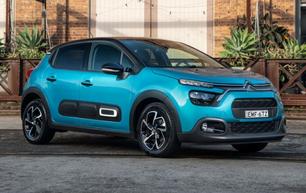
The Citroen C3 fits the bill in terms of scale, but brings something extra when it comes to personality. A fun-sized European with the ability to surprise and delight.
It comes at a price, though. So, is the promise of some extra excitement in your motoring life worth it? Read on to find out.
The Audi RS3 is a special hot hatch and sedan I’m so glad I experienced before its five-cylinder engine is inevitably retired due to emissions regulations. Full of character and charisma, this car is far from a rational purchase, pitched at boy racers who don’t want to grow up just yet.
From a value perspective, too, while the asking price has crossed the six-figure threshold and the option prices add thousands, it’s still much cheaper than the Mercedes-AMG A45 S. Make of that what you will.
Note: CarsGuide attended this event as a guest of the manufacturer, with meals provided.
The Citroen C3’s plus column contains some big ticket items like a solid standard equipment list, design flair, generous interior space, an eager engine, good safety and a comfy suspension. However, the minus side of the ledger isn’t exactly empty, with entries like steep price, marginal perceived quality, poor cabin storage, sub-par refinement, okay economy, and high ownership costs.
But there’s no doubt this car delivers a different, adventurous take on the city-sized hatch, and for you, that alone may count for more than any of those things.
Audi has made some subtle tweaks to the RS3 that has somehow made this snarling hot hatch look even angrier.
Up front there’s a new fascia featuring more open sections, which in turn improves air flow. A black styling package is now standard so it almost looks like the entire front is open and ready to eat you alive.
The matrix LED headlights now have a darkened finish which adds to the menacing look. There are new signatures, including a special chequered flag one for the RS3 which looks top notch.
Around the side it surprises me just how much wider the front is compared to the rear. Both have big, muscular haunches, but it shows this hot hatch is a bit of a bulldog. I’m a big fan.
These haunches stand out even more when you opt for the new Daytona Grey Matte exterior paint. While the extra $11,400 for the privilege makes me wince, it looks sexy on this car.
The standard 19-inch ‘Y-spoke’ alloy wheel design remains unchanged from the pre-update car, though there’s a new, optional ‘cross-spoke’ design that looks delicious (and tricky to clean).
At the back there’s still the classic RS dual exhaust tip motif which looks mean and it’s surrounded by a new black rear diffuser with a motorsport-inspired vertical red reflector in the centre.
The new LED tail-light signature with the vertical slats is so clean and neat. It looks particularly great in low-light situations or at night.
Inside, the biggest change is the new RS steering wheel with the flat top and bottom. As standard it’s wrapped in perforated leather, but with the optional RS Design package it’s wrapped in 'Dinamica' synthetic suede. I much prefer the standard leather-wrapped unit as the Dinamica likely won’t last in the long run, especially if you’ve got clammy hands.
Other changes include more interior ambient lighting on the door cards through small slits, as well as a new shift-by-wire gear selector. The digital instrument cluster and touchscreen multimedia system set-up remains unchanged which is no bad thing because they look fantastic.
It’s disappointing Audi has stuck with an extensive use of piano black on the centre console because this gets dusty and grimy very quickly, and then can get scratched easily when wiped clean. It now also features on the steering wheel buttons, which are frequent touchpoints.
If Citroen is known for anything it’s daring, innovative design. From the idiosyncratic 2CV, via the sleek DS, to the ultra-cool SM, and angular BX, Citroen boasts a 100-plus year back-catalogue of stunning automotive breakthroughs.
And true to form, the C3 sits left-of-centre with a determined, almost angry expression defined by chrome borders extending from its signature ‘double chevron’ logo above the grille.
A mix of carefully radiused curves, soft organic shapes and whimsical decoration define the rest of this SUV-ish hatch. Rounded rectangles and squares (squircles?) are a recurring theme, forming part of a dent-resistant panel along the car’s flanks and embossed into the door cards inside.
Our white test example sported a (no-cost) contrast red roof colour, the same shade picking out details like the front fog light surrounds, exterior mirror caps and side scuff panels.
The interior is less bold with a multi-tone grey colour palette broken up by light green contrast stitching on the seats, as well as piano black finish on the centre console and satin chrome highlights around the air vents, instrument panel and door handles.
Plus, the squircle still makes its presence felt in everything from the directional air vents to the speaker grilles and sections of the dash.
Functionality and ergonomics are good with sensible touches like a physical knob for audio volume control (big tick) as well as easy-to-navigate controls for audio, phone and more on the steering wheel.
An unexpected highlight, and regular talking point with people in the car during my week with it, is what Citroen calls ‘Luggage-inspired’ front interior door handles.
Check out the interior photos. The straps look amazing, are easy to use, and remind me of the handle on my mum’s circa-1965 Olympia portable typewriter.
The RS3’s standard sport front seats are deliciously comfortable and offer plenty of electric adjustment. This means people of any size and stature should be able to find their desired seating position.
Thanks to the electric lumbar there’s also a massage function for the front seats. This is pretty cool to flick on and relax into, but I wish the massage was a little stronger.
While the new steering wheel looks cool interacting with the buttons on it can be a bit of a hassle. They’re touch-sensitive but do have a satisfying click if pressed harder.
There were moments where I accidentally clicked on the buttons during intensive track driving as my hands were at the nine and three o’clock positions. Not the best thing when you’re meant to be focussing.
The digital instrument cluster offers so much configuration you won’t know what to do with yourself. There’s even a new rev counter design especially for the RS3 which looks very cool.
Moving across, the touchscreen multimedia system is classic Audi. It’s easy to navigate around and hard to get lost in the sub-menus. There’s also wireless Apple CarPlay and Android Auto connectivity which is virtually a given now.
While you need to use the touchscreen for a number of features, I appreciate how Audi has retained so much physical switchgear up front. It’s particularly handy to have physical toggle switches and a small digital display that’s separate from the touchscreen for the climate control.
Another piece of physical switchgear I like up front is the rotary dial for the media controls on centre console. It’s much like an iPod, allowing you to change the volume if you rotate your finger on it like a click-wheel. Major throwback vibes.
In terms of storage up front, it’s decent but not outstanding. There are two cupholders, a wireless phone charger, a centre console box as well as a lockable glove box.
Moving to the second row, it’s clear it’s more for the sake of it, rather than having a space you’d want to use all the time. At a leggy 182cm tall, I have minimal legroom behind my own driving position.
With headroom, it’s adequate in the hatchback and not great in the lower-slung sedan. I need to kink my neck in the latter to fit, which isn’t comfortable.
The second-row bench seat is comfortable, offering enough support for short-to-medium trips. I wouldn’t want to get stuck back there for too long, however.
In terms of amenities, there are air vents mounted on the back of the centre console with a dedicated third zone of climate control, two USB-C ports, nets on the seat backs as well as a fold-down centre armrest with cupholders.
At the back there’s a power tailgate for the hatchback, however the sedan only has a power-opening boot lid. This means you need to manually shut it, which isn’t uncommon for sedans.
Boot space in the RS3 is a weak spot due to all the componentry for the all-wheel drive system and the tricky rear clutch set-up. There’s only 282L for the hatch and 321L for the sedan, which isn’t much.
In reality, however, the boot space is still usable. It’s fairly square and there’s barely any boot lip, meaning you can slide things in and out with ease.
Boot-related amenities include a netting system to keep things from sliding around, a light, some hooks and a 12V socket. There’s also a parcel cover for the hatchback.
Unfortunately there’s no spare wheel of any kind under the boot floor in the RS3 as this is where the 12V battery lives. Instead there’s a tyre repair kit. This isn’t uncommon in performance cars, though it’s disappointing if you frequently travel in the country, away from tyre repair shops.
At a fraction under 4.0m long, just over 1.8m wide, and close to 1.5m tall, the C3 is a small hatch that, in terms of practicality, does well in some areas and could do better in others.
On the plus side, there’s plenty of space for the driver and front seat passenger, and rear room is surprisingly generous. Sitting behind the driver’s seat, set for my 183cm position, I had more than adequate head, leg and knee room.
Three full-size adults across the rear is a short-journey proposition only, but a trio of up to mid-teenage kids will be fine.
The space-efficiency carries over to the boot, with 300 litres of volume available (below the parcel shelf) with the 60/40 split-folding rear seat upright. But beyond that number, the space has been carefully sculpted to maximise usability.
We managed to fit our three-piece (36L, 95L, 124L) luggage set in there, with a small cheat of removing the divider, and could swap them out for the bulky CarsGuide pram, with room to spare. Fold the rear backrest down and available space increases to an impressive 922 litres.
The downside is storage and concessions to comfort elsewhere in the car. As in, a lack of them.
For a start, the dual cupholders in the front centre console confirm the French’s affection for Espresso. You’ll struggle to locate an average size take-away coffee cup in one of those dainty receptacles.
The front door bins are long but relatively narrow, and lack a designated spot to hold bottles upright, so I found myself laying drink bottles horizontally along them, which is awkward.
Plus, there’s no lidded storage box between the front seats, so no centre armrest, either. Rather an open tray behind the handbrake lever.
The glove box is modest, there’s a small open cubby below the central multimedia screen that isn’t big enough to hold a phone, there’s just one USB-A port for connectivity/power and a single 12V outlet.
No fold-down centre armrest in the rear, either. There are map pockets on the front seat backs, a single (again, small) cupholder at the end of the front centre console for back-seaters to share, and while rear door pockets are welcome, they’re petite.
Yes, the boot is commodious, but it lacks tie-down anchors to secure loose loads, and the flimsy carpet in there is prone to moving around.
On a more positive note, the spare is a 15-inch space-saver, which is streets ahead of the all-too common inflator/repair kit.
This facelift for the Audi RS3 has seen the price tag rise beyond six figures for the first time.
It’s now priced from $104,800, before on-road costs for the hatchback or $107,800, before on-road costs for the sedan. This is between $9000 and $9500 more expensive than the pre-update version, depending on body style.
While this may seem like a considerable amount of money for a hot hatch it’s worth noting the Mercedes-AMG A45 S is well over $120,000, before on-roads.
As standard there are 19-inch alloy wheels, darkened matrix LED headlights, a black exterior styling package, 12.3-inch digital instrument cluster, 10.1-inch touchscreen multimedia system with wireless Apple CarPlay and Android Auto, 15-speaker Sonos audio and RS sport seats with Nappa leather upholstery.
There’s a new RS steering wheel with a flat top and bottom, as well as touch-sensitive and shortcut buttons for the 'RS Performance' drive modes. There’s also more interior ambient lighting and a panoramic glass sunroof as standard.
Optional extras include a 'Carbon Package' ($7400 hatch, $6300 sedan), 'RS Design Package Plus' ($2150) in either red or green, ceramic front brakes ($10,800) and a new 'Daytona Grey Matte' exterior paint colour ($11,400). The latter is the first time matt paint has been offered on an RS3 locally.
While there’s a considerable amount of standard kit in the RS3, it’s easy to add tens of thousands to the asking price with the options list, but as a result you can personalise the car exactly how you’d like.
The Citroen C3 is offered in a single Shine grade, and lines up against a slew of similarly city-sized hatches from China, Europe, Japan and South Korea. Think Kia Rio, Mazda2, MG3, Suzuki Swift, Toyota Yaris, and VW Polo.
But when it comes to its price - $32,267, before on-road costs - you’re looking at primo competitors only, like the Suzuki Swift Sport Turbo ($30,990), Toyota Yaris ZR Hybrid ($32,200), and VW Polo Style ($31,250).
And to tempt you away from those more mainstream options, Citroen loads up the C3 with a solid list of standard equipment.
Aside from the safety tech covered later in the review, this small hatch features keyless entry and start, cruise control, a 10-inch colour multimedia touchscreen (with voice recognition across multiple functions), climate control air, a leather-trimmed steering wheel, six-speaker audio (with digital radio as well as Bluetooth, Apple CarPlay and Android Auto connectivity), built-in sat nav, LED headlights and daytime running lights, rain-sensing wipers, and 16-inch alloy wheels.
Not too shabby, but bear in mind, as is often the case in this class, the trim is cloth, the front seats adjust manually and the instruments are conventional analogue.
At this point, it’s important to mention ‘perceived quality’, a term used in various industries to describe the look, touch and feel of a product. And it’s here that the C3 suffers.
Open the tailgate, look to the pillar on the right-hand side of the rear windscreen (from the inside) and you’re confronted with more than half a dozen spot weld craters that have creased the sheet metal to varying degrees. Not to mention a crude fold of the outside panel onto this interior piece. Perfectly functional, but not a good look.
The elastic cords suspending the cargo divider at the top of the boot space feel as insubstantial as the thin metal hooks they’re attached to, and the finisher matt sitting on top of the engine looks like it won’t stand the test of time.
There are other examples, but suffice it to say, the overall feel is not in the same league as this car’s main competitors.
The Audi RS3 is still powered by a 2.5-litre turbocharged five-cylinder petrol engine which produces an unchanged 294kW of power and 500Nm of torque.
This is mated to a seven-speed dual-clutch automatic transmission with drive sent through an all-wheel drive system.
Audi claims both versions of the RS3 can do the 0-100km/h sprint in just 3.8 seconds, which is technically 0.1 seconds faster than a Mercedes-AMG A45 S. Top speed is electronically limited to 250km/h.
The Citroen C3 is powered by a small-capacity (1.2-litre), turbo-petrol, three-cylinder engine, driving the front wheels through a six-speed automatic transmission.
This little unit punches well above its weight thanks to tech like direct injection, and dual variable valve timing to enhance pulling power. The lightweight (all-alloy) unit produces 81kW of power at 5500rpm and a substantial 205Nm of torque at just 1500rpm.
The Audi RS3 sedan is claimed to consume 8.2L/100km, whereas the RS3 hatch is claimed to consume 8.3L/100km, both on the combined (urban/extra-urban) cycle (ADR 81/02).
Both body types come with a 55L fuel tank and require a minimum of 98 RON premium unleaded petrol.
During my testing I saw an average of 9.6L/100km according to the trip computer. We did around 200km of higher speed driving heading east out of Melbourne, including some spirited sections.
Our on-test figure translates to a range of 570km on a full tank of petrol.
Citroen’s official fuel economy number for the combined (ADR 81/02 - urban, extra-urban) cycle is 5.2L/100km, the 1.2-litre three-cylinder emitting a modest 118g/km of CO2 in the process.
Our time with the car included mainly city and suburban trips, with some freeway running thrown in, and the result was a (dash-indicated) average of 8.0L/100km. Not exactly miserly, and points to the turbo triple having to work pretty hard to keep up around town.
Minimum fuel recommendation is the relatively pricey 95 RON premium unleaded, but you’ll need just 45 litres of it to fill the tank. Using the official consumption figure, that translates to a range of 865km, dropping to around 560km using our real-world number.
Spoiler alert, it’s a cracker.
Starting up the RS3, you’re instantly aware you’re behind the wheel of something special. Audi has made the start-up more “emotional” with this update and also “optimised” the exhaust flap control for more five-cylinder growl across a wider rev range.
When you’re on the boil, this five-cylinder sounds so fantastic. It’s the clear centrepiece of this car and I’m so happy Audi has continued to offer it.
However, thanks to the addition of a petrol particulate filter (PPF) with this latest-generation model it sounds a little muted in everyday driving. Call me a boy racer, but I want more noise.
Staying on the engine, it’s full of character and gets this small hatch and sedan moving along with ease. Even though the outputs are unchanged with this update, it’s still more than enough; 0-100km/h in 3.8 seconds shows it's more than enough.
The seven-speed dual-clutch automatic transmission in this car keeps the acceleration feeling relentless with snappy gear changes at a moment’s notice. It’s particularly fun taking control of moving between the ratios with the paddle shifters.
In slow-moving traffic, however, the dual-clutch can get a little lost and stuttery, which is a classic characteristic of this kind of transmission.
As standard the all-wheel drive system remains neutral, keeping the front and rear balanced and in check. However, if you flick to the ‘Dynamic’ drive mode you get more rear-biased action which is fun when you exit a corner with some extra heat.
There’s also still a ‘RS torque rear’ drive mode which is essentially a drift mode. Unfortunately we didn’t get to sample this during the launch program.
Additionally, there’s an ‘Individual’ mode that allows you to choose your own destiny. You could spend hours here fine-tuning your desired drive mode which is both great to see but complete nerd-core.
Like the pre-update car, there’s an electronically controlled multi-disc clutch on the rear axle which actively splits the torque between the rear wheels. However, it’s been "optimised" to allow for quicker cornering.
While this is hard to gauge without testing the pre-update and current car back-to-back, the RS3 is so dynamic it feels like you only scratch the surface on public roads. Thankfully we got to see how far we could push it on Haunted Hills, which is a fantastically complicated hill climb circuit in eastern Victoria.
In terms of the steering, there’s a progressive rack as standard which ramps up the steering intensity the more you turn the wheel. In practice, this means the lock-to-lock ratio is very short, making it easy to link up tight corners.
It also makes it easy to navigate tighter driving scenarios, like parking, though it disguises how wide the turning circle is. Expect to do three-point turns fairly often.
For the suspension, the RS3 has adaptive dampers set-up that generally errs on the sportier and firm side. There is a ‘Comfort’ mode which irons out some bumps, but larger road imperfections still transmit harshly into the cabin.
It’s also worth noting at higher speeds there’s a considerable amount of road and tyre noise that comes into the cabin. Thankfully the Sonos sound system does a great job at drowning this out.
Lastly, the safety systems in this car are generally user-friendly, though the lane-keep assist can be a little too hands-on, especially on narrow roads with poor lane markings. Thankfully you can switch this off by pressing and holding a button on the end of the indicator stalk.
The C3’s compact footprint and relatively light weight (1090kg) make it an urban-friendly option and outputs from the 1.2-litre turbo-petrol engine are exceptional.
Maximum torque of 205 Nm is plenty of pulling power from such a tiny unit, and with that number arriving at just 1500rpm it should be ideally suited to stop-start traffic.
And yes, with enthusiast use of the right pedal the C3 gets up and goes pretty well, but refinement isn’t its strongest suit.
The throttle can be jumpy unless you’re super smooth with it, the three-cylinder engine’s typically coarse note makes its presence felt under load, and the brakes need to be dealt with gently to avoid an overly aggressive stop.
Sure, familiarity and practice will help you get in tune with the car but it’s not a smooth ‘plug-and-play’ drive like the majority of its competitors.
That said, in true Citroen fashion, steering feel is good, the front seats are as comfortable as they are supportive, while the suspension manages to blend plush compliance with excellent dynamic response. Another Citroen hallmark.
The six-speed auto shifts smoothly, with a press of the Sport button encouraging it to shift up later and down earlier for a more urgent response. But the zig-zag (my term, not Citroen’s) shift pattern makes for an awkward shuffle between D, N and R when parking. No doubt you’d get used to it, but I’m not a fan.
Speaking of parking, the C3's diminutive size makes it easy to slot into even tight spots, the standard front and rear proximity sensors, as well as a decent resolution reversing camera helping out, too.
The regular Audi A3 received a maximum five-star ANCAP safety rating back in 2020, though this only covers front-wheel drive versions and doesn’t extend to the high-performance RS3.
Standard safety equipment includes seven airbags, autonomous emergency braking (AEB), blind-spot monitoring with exit warning, rear cross-traffic alert, adaptive cruise control, lane-keep assist, driver attention monitor, front and rear parking sensors, a surround-view camera as well as a semi-autonomous parking assistant.
AEB is active from 5.0km/h and lane-keep assist activates from 60km/h.
There’s also Audi’s 'Pre-Safe' system as standard which automatically closes the windows and sunroof, as well as pre-tensions the seatbelts if the car senses it’s going to be involved in a crash.
Additionally, all owners get three years of complimentary access to 'Audi Connected Services', including online roadside assistance and remote functions through a smartphone app. There’s also 10 years' emergency SOS call support and automatic service reminders.
The Citroen C3 scores four out of five ANCAP stars courtesy of testing dating back to 2017.
The sticking point was a sub-par result in Pedestrian Protection, one of the independent safety body’s four main assessment areas (beside Adult Occupant Protection, Child Occupant Protection, and Safety Assist).
Specifically, potential pedestrian head injuries resulting from contact with the base of the windscreen and “stiff” windscreen pillars.
But Citroen hasn’t left the C3 standing still with active (crash-avoidance) tech fitted to the current model including the usual suspects like stability and traction controls as well as more sophisticated systems like ‘Autonomous Emergency Braking’ (AEB), forward collision warning, blind-spot monitoring, lane departure warning, ‘Driver Attention Alert’, a reversing camera (with zoom function), and tyre pressure monitoring.
That said, although there are parking sensors front and rear, there’s no cross-traffic alert (front or rear), no adaptive functionality on the cruise control, and no lane change assist. Arguably unrealistic to suggest all of these should be included at this price point but it’s worth noting not all boxes are ticked.
If a crash is unavoidable there are six airbags on-board (driver and front passenger front and side, plus full-length side curtain). The hazard lights automatically activate when emergency braking force is applied, but multi-collision brake, which reduces the chances of further impacts after an initial crash, is missing-in-action.
There are three top tethers for child seats or baby capsules across the back seat, with ISOFIX anchor points in the two outer rear positions.
Like all Audis, the RS3 is covered by a five-year, unlimited-kilometre warranty. There’s also five years of roadside assistance.
Logbook servicing is required every 12 months or 15,000km, whichever comes first.
You’re able to purchase a five-year pre-paid service package for $4010. That averages out to $802 per service, which seems like a lot until you see how much Mercedes-AMG charges to service an A45 S.
RS3 owners can also purchase two-year packages to extend the warranty, roadside assistance and servicing coverage. This allows new RS3 owners to have warranty coverage for up to nine years and it’s transferable to future owners.
Citroen covers the C3 with a five year/unlimited km warranty, which is cost-of-entry now in the mainstream market, and roadside assistance is included for the duration.
Service is scheduled for 12 month/15,000km intervals, with costs capped for the first five workshop visits. The average annual figure over that period is $505, which is way more than double the $205 you’ll pay annually for servicing a Toyota Yaris ZR Hybrid. Sacre bleu!