What's the difference?
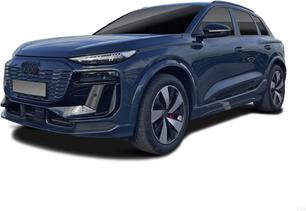
From a few paces back, the Q6 e-tron is easy to mistake for just another Audi.
After all, Audi, perhaps above all its contemporaries, has established such a consistent look and feel for its entire range.
But this is no regular Audi. The brand tells us the Q6 e-tron is the most significant new vehicle it has launched in a decade.
Underneath its familiar visage, Audi is so excited about the Q6 e-tron because it brings with it a ground-up new-vehicle platform, which brings with it some forward leaps when it comes to technology.
But does being new actually make the Q6 e-tron a good car? We went to its Australian media launch to find out.
As far as vehicle niches go, this is pretty niche. The Mercedes-Benz EQV is Australia’s first premium electric seven-seat commercial vehicle-based people mover.
The EQV falls under Benz’s electric ‘EQ’ banner and is based on the Vito van platform, but adapted to house an all-electric powertrain.
However, unlike the popular EQA small SUV or recently launched EQB, don’t expect to see too many EQVs on the roads.
It is likely to appeal to airport transfer operators, hotels and other corporate customers that need to ferry multiple people around in comfort.
But given the kilometres those airport limo drivers can clock up in a day, is an EV capable of doing the job? And will these buyers be happy to fork out more than $150,000 for the privilege?
The Q6 e-tron knocks the luxury SUV formula out of the park, regardless of the fact it’s an electric vehicle. It has a slick, sporty feel, a high level of standard equipment for a premium car and at least on paper it’s a solid EV with plenty of driving range.
But here’s the thing: To me, the Q6 e-tron feels exactly how you would expect it to. It’s the same Audi formula, just upgraded for the electric age and in an era where rivals both old and new are using this once-in-a generation opportunity to truly innovate, there’s something a little disappointing about that.
The EQV is indeed a curious offering. The driving range is decent, but not outstanding, and depending on what you’re using it for, it could be a savvy investment. Especially if you charge using solar power. You’ll also save on servicing costs. But if you’re a limo operator, it really will depend how many kilometres you’re going to do each day. A V-Class might suffice.
Either way it’s great that Benz is giving buyers electric options in a variety of body styles and segments - an SUV simply won’t suit everyone.
If you can live with that ride quality and have the deep pockets for an EQV, there’s more than enough to like. But I suspect there won’t be many of you.
At a distance, the Q6 sticks to the same Audi formula. An inoffensive overall shape with the same core design cues as something like a Q5 are all part of the plan according to the brand, as it attempts to make the idea of switching to electric as easy as possible for its loyal buyers.
Things like the inverted grille (where there’s body colour where black would normally be) framed by a sporty black insert in the shape of Audi's usual combustion grille feels more tactfully executed than Mercedes’ attempt to bring an electrified touch to its EQ range.
Up close though, I must admit this car looks a bit meaner than your average Q-series SUV. The way the wheels sit wide and bold, accentuated by the inflated wheel arches (or blisters as Audi calls them) give the Q6 a tough feel, sitting boldly on its haunches.
Audi fans will love the exterior design, and it may convert some to electric car buyers, but it’s hard to see this car bringing new buyers into the fold, especially with more radical designs out there to catch the eyeballs of aspirational EV buyers.
Inside, Audi has traded away the somewhat ageing feeling of the outgoing Q5 for something much more tech-y in the Q6. The dash is dominated by the three large screens, which are also sharp, fast and responsive, with improved software this time around.
It is a lot though. While the exterior design plays it safe and the interior avoids the kind of obnoxiousness of an overbearing portrait-oriented screen, it feels almost unnecessary for every grade to get the three-screen layout.
Elsewhere the textures and patterns feel the part, and there’s no shortage of attention to detail when it comes to soft trims down the centre console, or clever new air vent fittings, for example.
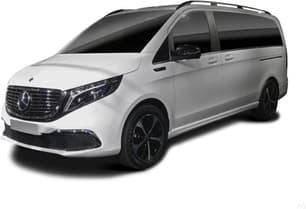
If you’ve seen a Mercedes van or people mover, you’ll have an idea of the EQV.
The difference between it and its V-Class twin is the ‘EQ’ touches, including the front end that has a definite connection to other EQ models like the EQA.
The chrome-rimmed grille is blacked out and has fins, and that’s the key difference between the two MPVs. Otherwise it’s a very large white box on wheels. Nicely designed 18-inch five-spoke alloy wheels, at that.
Inside, the EQV is showing the age of this vehicle's shared underpinnings. Next year will mark 10 years since the current Vito went on sale in Europe, and while it and its derivatives are still somewhat handsome, the interior is getting on.
It’s hard to fault the materials used inside, and elements like the perforated leather steering wheel, and dash stitching are welcome, but it could feel even more premium. It’s no more high-end than a Kia Carnival Platinum that is more than half the price of the EQV.
But the look of the dash is very reminiscent of Benz models from a few years back - certainly nothing like the twin-screen set-up of the current crop. And given the size of the cabin, the 10.25-inch central screen looks small in this vehicle.
This brings us nicely across to practicality, because along with the enormous set of screens, the Q6 brings with it a significant reduction in the amount of switchgear available. The centre console still features a physical volume dial, and there are a handful of shortcut buttons, but the climate functions are exclusively controlled via touchscreen menus.
Additionally, the Q6 features an array of haptic buttons on the steering wheel (which some will remember, were much maligned on Volkswagen products) alongside a huge haptic panel on the driver's side door controlling everything from the headlights to the windows and mirrors.
It feels as though Audi has dressed the cabin up with new stuff rather than cost-cutting, which is often the case with its rivals. To Audi's credit, these functions are well enough laid out they didn’t bring much frustration on our test drive. Mercifully the screens are fast so adjusting functions is instantaneous, but these features are never as easy to use as physical buttons when you’re trying to concentrate on the road.
No matter how well they work, not everyone will love them (especially rusted-on Audi buyers who will be used to a decent array of physical switches).
There’s plenty of storage in the cabin. The doors feature a big pocket and bottle holder, with a further two bottle holders in the centre with adjustable ridges and a gloss roller cover to keep things tidy when you’re not using them.
Up front there’s a large storage bay with the phone charger mounted vertically on its side to minimise the amount of space it uses. The centre console box is shallow but extends quite far under the console owing to the car’s electric platform, and the array of charging ports are easy enough to reach.
As usual with Audis, the front seats are bolstered nicely and there’s no shortage of adjustment on offer to find a comfortable seating position.
The back seat is spacious enough, although I was expecting more for a car on a new EV platform designed to be larger than the already-spacious Q5. At 182cm tall I have decent, but not a massive amount of room behind my own driving position, with airspace for both my knees and my head. As a saving grace here, the floor is more or less flat and the car is quite wide so the centre position will still be useful for a full-sized adult.
Storage comes via bottle holders and pockets in each door and nettings (which I don’t love as they tend to age poorly) on the backs of the front seats. Unlike the Q5 the rear row is fixed instead of on rails, but it does feature individually folding seat backs, which means you can drop the centre position to put long objects in the cabin and still have two rear passengers (kind of like a ski port, but better).
The boot measures 526 litres (or 1529L with the rear seats down) which seems about right, although we didn’t have a chance to test it with our usual luggage set. It has some space under the floor for the storage of cables, although like many EVs it doesn’t have a spare wheel, only an inflator kit. It also has a frunk, which measures 64 litres. These spaces might seem like a bit of a gimmick but the Q6 comes with a clever little fitted duffle bag which slots perfectly into the void where you can keep both your wall socket and Type 2 to Type 2 charging gear.
If space is what you want, space is what you’ll find in the EQV. People movers like the Kia Carnival are incredibly spacious, but they can’t compete with something that’s spawned from a commercial vehicle platform, like this Benz.
Thanks to the flat floor and 2+2+3 three-row seating layout, you can literally stand up (depending on your height) and walk from the driver’s seat to the third row.
Back up front, the old underpinnings mean no fully digital instrument cluster here, just analogue dials, which is not a bad thing.
That also means the air con controls are separate from the central screen and therefore easy to use.
The MBUX system isn’t as advanced as the version fitted to the latest Benz models, and as a result there are fewer functions and it’s less complicated to use. There’s a touchpad as well as the touchscreen but I only ever used the screen.
Another slightly old school element to the EQV is the fact that it requires a key to start. Which is unusual for an EV. Also, the ignition is on the left side of the steering wheel which is great news for left-handed people but it’s somewhat annoying if you’re right-handed.
Storage wise up front, there is a decent space with a cover under the centre stack, housing cupholders, two USB-C ports and a 12-volt charger, but no wireless charger. There’s ample space for very large bottles in the front doors and it has a medium-sized glove box.
The front leather seats with fold-down armrests on each side are well bolstered and are very comfortable, too. No complaints there.
Given this car is designed to ferry people around, you’d hope for a functional rear cabin and on that Benz has delivered - for the most part.
Unsurprisingly given the EQV’s massive dimensions, there is a huge amount of headroom, legroom, and hip and shoulder room in all rows.
Both sliding side doors are power operated and one (the passenger side) can be opened via the key fob. The very large tailgate is also power operated.
Those two second-row captains chairs are comfy and supportive. There are map pockets on the rear of the front and second-row seats. There are floor and roof-mounted air vents, but just roof vents in the third row.
There’s not a whole lot of storage options in the second row, while the third row has stand-up phone holders, but that’s about it. No USB ports back there.
If you’re folding the second row seats, they’re quite heavy and cumbersome. But tumbling them forward via the lever is much easier. That ensures ample space to get into the third row.
The third row can be folded flat as well but you have to remove the very large and heavy parcel shelf from the cargo area. Like the seats the shelf structure is also on rails and it lifts out if required. That third row can also slide but not as far as the second row.
The shelf can double as a stand-up desk for a computer in the rear if required. It’s actually quite handy.
And it helps hide items in the boot. It comes with plastic folding shopping crates.
Benz says the boot can swallow 1030 litres with all seats in place, but minus the parcel shelf. It also has a 17-inch spare steel wheel under the rear of the vehicle.
Before we dig into the literal nuts and bolts of the Q6 e-tron, let’s first take a look at its price-tag and where it sits in Australia’s premium car landscape.
The range consists of three variants, which start with the base Performance grade from $115,500 (all prices before on-road costs) and remains rear-wheel drive for range and efficiency.
Next is the mid-spec Quattro, at $122,500. As the name implies, this version brings with it all-wheel drive via a second motor on the front axle. Finally, the top-spec SQ6 at $151,400 scores a significant bump to power outputs and adds some more sport-oriented equipment to the range.
All three grades come with the same massive 94.9kWh (usable) battery pack with correspondingly healthy driving range. The range is also loaded with standard equipment, leaving each grade differentiated primarily by increases in performance.
The base car comes with 19-inch alloy wheels, Matrix LED headlights, and the full suite of screens and software, consisting of a 14.5-inch OLED multimedia touchscreen in the centre, an 11.9-inch digital instrument cluster, and a 10.9-inch passenger multimedia display. It also scores wireless Apple CarPlay and Android Auto connectivity, with a wireless charger up front. The base speakers are a 10-speaker 180-watt sound setup.
Leather seats are standard across the range as are heated front and rear seats with tri-zone climate control, a power tailgate, and white interior ambient lighting.
Stepping up to the Quattro adds a full suite of S-Line bodywork with black interior headlining as well as 20-inch Audi Sport alloys, sport leather seats with the S logo, a three-spoke steering wheel and sports pedals.
Finally, the top-spec SQ6 adds 21-inch two-tone alloys, red brake callipers, adaptive air suspension, aluminium-look mirror covers and roof rails, acoustic glazing for the front windows, a panoramic sunroof, rear privacy glass, colour ambient interior lighting, and an electrically adjustable steering column.
If you like the idea of some of those additional features further up the range, but would prefer a lower grade, Audi has you covered, with the ‘Tech Pro’ package adding the transformative air suspension, as well as OLED tail-lights and electric steering column ($4900).
Meanwhile the ‘Style Package’ adds the S-Line exterior features, black highlights, and privacy glass to the base car with 20-inch alloys for $5500, or black highlights, privacy glass and 21-inch wheels to the Quattro for $3600.
Finally, the Premium package adds a panoramic glass roof, the AR head-up display, Bang and Olufsen audio system, colour ambient lighting, acoustic glass and high-output USBs otherwise only available on the SQ6 for $8900 on the Performance or Quattro grades.
The level of customisation via packages is a nice touch, although the jumps between grades aren’t huge (in the context of a $100k+ car) to begin with, so I’d caution keen shoppers to keep an eye on the final price. For example, if you add the Tech Pro, Style Package and Premium Package to the Quattro, you end up at $139,900. At this price it’s not much of a stretch to get the additional power of the SQ6, no?
How does the range compare to its rivals? Well Audi promised it wouldn’t partake in the constant price adjusting some of its rivals have engaged in to try to maintain an edge. As a result, the Q6 range kicks off lower than equivalent versions of the BMW iX and Mercedes-Benz EQE SUV, while being neck-and-neck with the Polestar 3.
This segment’s biggest challenge will be ahead of it though with the introduction of alternative and often more ambitious offerings from Chinese automakers. Will the likes of the Zeekr 7X and BYD’s incoming Denza brand, both of which will undoubtedly be more affordable, make a mark on Audi’s customer base? Time will tell.
It’s fair to say the EQV isn’t cheap. At $155,338 before on-road costs, it’s now the priciest people mover money can buy in Australia.
But, it’s not without expensive electric competitors. Chinese commercial vehicle specialist, LDV, has just launched a new MPV dubbed the Mifa 9, another people-moving EV. The price for that model ranges from $106,000 to $131,000, before on-road costs.
Soon enough Volkswagen will have its funky ID. Buzz people hauler here as well, while Ford’s Transit Custom-based Tourneo MPV now has an electric version in Europe.
Point is, Benz and LDV aren’t going to be on their own for long.
The EQV sits alongside the mechanically related internal combustion V-Class in its line-up and that model ranges from $91,668 and $106,344. So it's quite a leap to electric from there.
The EQV is offered in one grade in Australia and Mercedes has ensured it has a decent amount of standard gear. The EQV comes with a 10.25-inch central screen housing the 'MBUX' multimedia system and operated via touchscreen or touchpad, digital radio, Apple CarPlay and Android Auto, sat-nav, and USB-C ports.
It also gets power side doors, leather trim, a Burmester surround sound system, multifunction leather steering wheel, heated power adjustable front seats, ambient lighting, automatic dual-zone climate control with pre-entry climate, a seat rail system and rear removable parcel shelf.
Lining the specs up next to the LDV reveals that the Mifa 9 Luxe has more gear. It’s not super surprising given that model is very new and LDV has a strong value proposition. Also the underpinnings of the EQV are older.
But at more than $150K and a Benz badge, you think there would be a few more goodies, like heated rear seats or a massage function. Some extra luxuries would be nice, but it’s certainly not without the good stuff.
A lot of the bigger innovations for the Q6 e-tron can’t be as easily seen because they’re primarily a result of its new platform. This Premium Platform Electric (PPE) architecture is new to Volkswagen Group and is designed specifically by and for Audi and Porsche rather than the MEB platform which underpins both the Q4 e-tron from Audi and ID.4 from Volkswagen.
Benefits include a primarily rear-drive orientation, the ability to accommodate more sophisticated suspension layouts, software capable of reaching deeper into the car (when it comes to updates), and of course a new electrical architecture with the capability to support 800-volt systems.
Power is impressive across the range. The base Performance puts out 225kW/485Nm from its rear motor, and can sprint from 0-100km/h in 6.6 seconds. The Quattro adds a second motor on the front axle, which combines with the rear motor for totals of 285kW/580Nm. It can sprint from 0-100km/h in 5.9 seconds.
The range-topping SQ6 ups power significantly to 360kW/580Nm from its dual motors, lowering the 0-100km/h sprint time to just 4.3 seconds using launch control.
The EQV is a battery electric vehicle that uses a single motor that sends up to 150kW of power and 365Nm of torque to the front wheels. It is paired with a 90kWh lithium-ion battery pack housed beneath the floor. The kerb weight is a hefty 2846kg.
With a DC charging capacity of up to 110kW, topping the battery up from 10 to 80 per cent can be done using a rapid charging station in about 45 minutes.
If you use an 11kW AC charger, like a Mercedes-Benz Wallbox, it will take approximately 10 hours to recharge from empty to 100 per cent.
Driving range is excellent no matter which variant you pick. You’d hope so given the size of this car’s nickel-manganese cobalt battery pack. The usable 94.9kWh capacity grants the Performance 558km of range, the Quattro 542km of range, and the SQ6 568km of range, all measured to the WLTP standard.
The 800-volt architecture which forms part of the new PPE platform unlocks ultra-fast DC charging times, which are impressive given the size of the Q6 e-tron’s battery pack.
A claimed peak charging speed of 270kW will take the battery from 10 to 80 per cent in just 21 minutes if you can find a fast enough charger. Audi says the charging system is optimised to maintain its peak charging for as long as possible (something we’ll have the opportunity to test at a later date, although we’ve found these claims to ring reasonably true for the e-tron GT on the older J1 platform).
On a slower AC charger (the kind you might find at the local shops), the maximum charging speed is an acceptable 11kW, although the max rate of 22kW would be nice to see. At 11kW to charge from 10 to 100 per cent will take around eight hours. In an unusual touch, the Q6 gets a second AC charging port on the driver’s side to go with the AC/DC combo port on the passenger side.
Sadly, there’s no vehicle-to-load or vehicle-to-grid features for the Q6 e-tron range, particularly given the size of its battery pack. While you might not use these features initially, it would be good to have them long-term as more use-cases become apparent.
When it comes to energy efficiency the Q6 e-tron’s official numbers are 19kWh/100km for the Performance, 19.5kWh/100km for the Quattro, or 18.4kWh/100km for the SQ6. Interestingly, the SQ6 has the most impressive efficiency rating, which, according to Audi is due to the lower ride height and better aerodynamic performance afforded by the air suspension.
The consumption numbers are about on-par for a vehicle this size, but are far from impressive numbers I’ve seen in the real world on similarly sized rivals like the Ford Mustang Mach-E for example. As we were jumping in and out of vehicles on this launch, expect a more thorough real-world efficiency evaluation at a later date.
According to Mercedes-Benz, the EQV has a driving range of 418km on the NEDC cycle, which is about 355km on the WLTP cycle, which is seen as more real world.
I covered 233km in the EQV and by the end of the week the vehicle’s trip computer was sayong I had used 239km of range, which is pretty close.
As an example of how this vehicle would be used, let’s say an airport transfer driver did six trips to and from the Melbourne CBD to the airport in a day (about 46km), that’s about 276km - which is well within the EQV’s range.
However, when you consider the diesel V-CLass has a range of more than 900km, you can see why some buyers might not want to take the risk.
It consumes 26.3kWh of energy, which was the same figure I achieved.
The EQV has a CCS charging port.
Here’s the thing, Audi has talked a big game about this new PPE platform, but from behind the wheel the Q6 e-tron doesn’t offer the kind of massive step change I was expecting. In fact, just one look at the car and I felt like I knew how it would drive, and it didn’t stray from this expectation.
The Q6 e-tron is defined by its balanced weight distribution, its sharp steering and the powerful follow-through its electric motor provides. It defies its weight in the corners, but at the same time its SUV body struggles to shake the sheer mass which remains present under the floor.
As a result, it doesn’t have the reactive athleticism of its combustion counterparts, instead offering a more sturdy feel of the road, bolstered by thick tyres. Still, no matter which variant you pick, you’re getting more power delivered more quickly than entry-level engines in the Q5 range, for example.
There’s something to be said for how exhilarating these can be. These new motors also don’t have the same disappointing hollowed-out acceleration feeling lesser MEB-based cars can have when it comes to overtaking manoeuvres.
And yet, there’s something disappointing about how the Q6 feels to drive. It’s exactly what you’d expect from a powerful Audi EV and nothing more, where some rivals, and even Audi’s own e-tron GT feel more like an absolute generational leap.
There’s more, too. Versions that don’t feature the acoustic glass had a surprising amount of road noise on coarse chip surfaces. I’d expect better for a premium car on a new platform, and the standard suspension had the odd jilted moment as it wrangled with the sheer weight of the Q6.
The air suspension package was a massive improvement on this, damping both noise levels and the undulations and imperfections the road can throw at you. It stood out to me as a very worthwhile option to have, even on base cars if you’re chasing the best handling and ride this platform has to offer.
The SQ6, featuring the lot, is of course an absolute monster of a car, with even more powerful acceleration, and the air suspension as standard, although on the road at least the additional power over the Quattro was hard to quantify.
We didn’t have the chance to sample the base Performance at the launch. The rear-drive dynamics and lesser weight over the front axle as well as smaller wheel will make for a different feel compared to the Quattro and SQ6 we did drive, so we’re hoping we can bring you a review of this car at a later date.
Driving the EQV feels a bit like driving a bus. That’s because you’re essentially driving a bus.
There’s no getting around the EQV’s size and heft, especially in an urban driving setting. It’s massive and challenging to park, especially in inner city areas with small spaces. It also has a pretty sizable 12.9-metre turning circle.
It does also have excellent visibility thanks to a significant amount of glass around you.
After so many years of complaining about Mercedes’ steering wheel-mounted gear shifter, I think I have finally come around to it. Would I prefer it in the centre console? Yes, but I now think the stalk is actually a logical place for it.
A stalk is a less logical place to house cruise control buttons. They are much better on the steering wheel than a stalk hidden behind the wheel.
From take-off, the EQV doesn’t quite flaw you with its acceleration like some EVs can. It’s more leisurely, but far from slow.
The 0-100km/h dash is done in approximately 12 seconds but around town it is responsive enough. In fact, on a particularly hectic day rushing to and from appointments all over town, I was surprised how lively the EQV felt, despite feeling heavy on the road.
As expected, it’s quiet on the road, for the most part - a nice change from diesel engines found in its siblings. But I did notice some creaking noises when driving on less than perfect tarmac.
The steering is weighted on the heavier side and slow to respond but that’s fine for a vehicle like this. You don’t need point and shoot steering for a 3.0-tonne bus. The brakes are not super responsive and require a bit of weight in the foot.
The biggest issue is with the EQV’s ride. The firmly sprung suspension combined with the vehicle’s mass means that you feel, and hear, every single bump.
I understand it is a commercial vehicle platform but given its positioning, Benz could have done more to soften the ride and make it less crashy, especially over speed bumps, potholes and sections of roadwork.
The EQV bumps along the road after you’ve gone over a speed bump and takes a while to balance itself out. It’s this floaty, bouncy ride characteristic that makes all but the smoothest roads a bit of a chore.
The entire list of modern active safety gear is standard on the Q6 e-tron range including such highlights as autobahn-speed auto emergency braking which has been upgraded to include intersection assist, as well as turn assist font and rear (which alerts you if you’re about to turn and a motorcycle or cyclist is about to potentially undercut you on the inside.
There’s also lane keep assist (but lane centring was left off Australian specified vehicles due to ‘calibration concerns’) blind spot monitoring with rear cross-traffic alert, exit warning, speed sign recognition, and driver fatigue alert. The Q6 also scores adaptive cruise with stop and go functions, as well as 360-degree parking cameras with kerb view functions.
The Q6 e-tron is yet to be rated by ANCAP, but it also scores a comprehensive array of nine airbags (dual front, quad side, dual curtain and a front centre airbag) which looks promising for this mid-sizer’s chances.
A big positive from a driver’s perspective is how well these systems work away in the background rather than interfere. The serial offenders, lane keep (or lane centering assist) and driver attention alert are both toned down, keeping them from interrupting an otherwise smooth drive.
At this point, ANCAP has not rated the EQV.
Benz has fitted the EQV with standard safety gear including A-to-D-pillar window airbags, auto emergency braking, driver and front passenger airbags (front, thorax and window), hill-start assist, lane keep assist, blind spot monitor, crosswind assist, reversing camera and sensors, driver attention warning, and a tyre pressure monitor.
It also has Benz’s ‘Active Distance Assist DISTRONIC’ which uses the adaptive cruise control to reduce and increase speed according to the movement of the vehicle it is following.
The Benz’s lane keeping aid is not intrusive. Rather than steering you back into the lane it has a haptic steering wheel vibration and audible alert. The adaptive cruise control is responsive, too.
The usual five-year and unlimited-kilometre warranty applies to the Q6 e-tron, alongside six years of roadside assistance and an industry-standard eight-year or 160,000km battery warranty.
Additionally, Audi throws in one year of a Chargefox subscription, theoretically making your first 12 months of fast DC charging free (provided Chargefox administers your local charging infrastructure).
At the time of writing, Audi was yet to provide service pricing, but the interval is nice and long, at 24 months or 30,000km. A pre-paid service package covering six years and 90,000km comes in at just $2080 which is super affordable for a car from a traditional luxury brand, even if it only covers the first three workshop visits.
The EQV is covered by a five-year, unlimited-kilometre warranty for private buyers (that drops to five years/250,000km for commercial buyers), and an eight-year or 160,000km battery warranty.
The servicing schedule is once a year or every 40,000km.
Benz offers the EQV with a choice of three servicing plans, covering three services ($1252), four ($1959), or five services ($2149).
It also comes with a one-year complimentary Chargefox subscription.
The warranty terms are a little better than the LDV Mifa 9 (five years/160,000km), but you get more kilometres (200,000km) for the battery warranty on the LDV.