What's the difference?
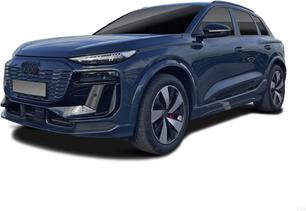
From a few paces back, the Q6 e-tron is easy to mistake for just another Audi.
After all, Audi, perhaps above all its contemporaries, has established such a consistent look and feel for its entire range.
But this is no regular Audi. The brand tells us the Q6 e-tron is the most significant new vehicle it has launched in a decade.
Underneath its familiar visage, Audi is so excited about the Q6 e-tron because it brings with it a ground-up new-vehicle platform, which brings with it some forward leaps when it comes to technology.
But does being new actually make the Q6 e-tron a good car? We went to its Australian media launch to find out.
Anybody who doubts that Hyundai is gunning for the number one in the world has rocks in their head. Big heavy ones. Korean companies do not settle for anything less than number one. The second-generation Genesis (our first taste here in the Antipodes as the gen-one had its steering wheel on the wrong side) is proof.
What's different about Hyundai's unstoppable rise is the way they're going about it. They've always done their own thing in Korea, reinventing themselves time and again when they strayed off the beaten path.
The Genesis is a gamble for a Korean company in foreign markets whose default setting for luxury is marked, Britain or Germany. If Hyundai gets the Genesis wrong there will be howls of derision, or at best patronising pats on the back - "Nice try, you'll get there one day". But if they get it right...
The Q6 e-tron knocks the luxury SUV formula out of the park, regardless of the fact it’s an electric vehicle. It has a slick, sporty feel, a high level of standard equipment for a premium car and at least on paper it’s a solid EV with plenty of driving range.
But here’s the thing: To me, the Q6 e-tron feels exactly how you would expect it to. It’s the same Audi formula, just upgraded for the electric age and in an era where rivals both old and new are using this once-in-a generation opportunity to truly innovate, there’s something a little disappointing about that.
The Genesis is not quite a match for cars twice its price but it makes you think what's possible. It doesn't have the dynamic brilliance of a BMW or the self-assured faultless execution of a Mercedes. Lexus ought to be worried, though - why would you have an LS when you could have this? The only answer is 'badge'.
The Genesis is an epoch-making car for the Korean manufacturer. As the company has got better, there are fewer excuses for overlooking it. While the Genesis is pitched into a shrinking market, it's not really meant for the average i30 buyer to buy, but to see.
It's bristling with tech and is not only a halo car but a shot across the bows of both Lexus and the Germans. Attached to that shot is a note: "We're coming for you." In other words, Hyundai got it right.
At a distance, the Q6 sticks to the same Audi formula. An inoffensive overall shape with the same core design cues as something like a Q5 are all part of the plan according to the brand, as it attempts to make the idea of switching to electric as easy as possible for its loyal buyers.
Things like the inverted grille (where there’s body colour where black would normally be) framed by a sporty black insert in the shape of Audi's usual combustion grille feels more tactfully executed than Mercedes’ attempt to bring an electrified touch to its EQ range.
Up close though, I must admit this car looks a bit meaner than your average Q-series SUV. The way the wheels sit wide and bold, accentuated by the inflated wheel arches (or blisters as Audi calls them) give the Q6 a tough feel, sitting boldly on its haunches.
Audi fans will love the exterior design, and it may convert some to electric car buyers, but it’s hard to see this car bringing new buyers into the fold, especially with more radical designs out there to catch the eyeballs of aspirational EV buyers.
Inside, Audi has traded away the somewhat ageing feeling of the outgoing Q5 for something much more tech-y in the Q6. The dash is dominated by the three large screens, which are also sharp, fast and responsive, with improved software this time around.
It is a lot though. While the exterior design plays it safe and the interior avoids the kind of obnoxiousness of an overbearing portrait-oriented screen, it feels almost unnecessary for every grade to get the three-screen layout.
Elsewhere the textures and patterns feel the part, and there’s no shortage of attention to detail when it comes to soft trims down the centre console, or clever new air vent fittings, for example.
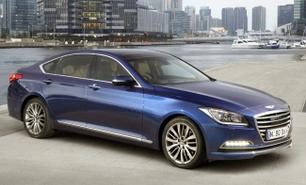
The Genesis is like no other Hyundai. For a start, it's gigantic - it looks easily as big as a BMW 7 Series (it isn't) with the road presence to match. There's a lot of BMW from most directions, but with a sharper approach to the creasing and character of the sheet metal.
Towards the rear it's more BMW 6 Series Gran Coupe and is all the better for it. The style is understated and technocratic.
Inside is also very Germanic, but with a bit more of a Lexus feel
The big wheels from the Ultimate pack help make it look lower and sleeker, too.
Inside is also very Germanic, but with a bit more of a Lexus feel. Our car had the lighter leather which meant that the wood and the metal materials didn't necessarily work well together.
The interior is expertly put together and feels like it will last forever.
The only jarring moment is the gear selector is shared with our long-term Hyundai i30 - it looked a bit cheap in what is otherwise a beautifully executed cabin - it needs more heft.
On Australian-delivered cars there is just one Hyundai badge, sitting proudly on the boot - you get the feeling this was debated long and hard and when the decision was made to go for it, a big one was chosen.
However, the winged Genesis branding takes pride of place everywhere else. When you approach the car at night and the puddle lamps come on, the Genesis logo is projected on to the ground, crisp and clear.
Before we dig into the literal nuts and bolts of the Q6 e-tron, let’s first take a look at its price-tag and where it sits in Australia’s premium car landscape.
The range consists of three variants, which start with the base Performance grade from $115,500 (all prices before on-road costs) and remains rear-wheel drive for range and efficiency.
Next is the mid-spec Quattro, at $122,500. As the name implies, this version brings with it all-wheel drive via a second motor on the front axle. Finally, the top-spec SQ6 at $151,400 scores a significant bump to power outputs and adds some more sport-oriented equipment to the range.
All three grades come with the same massive 94.9kWh (usable) battery pack with correspondingly healthy driving range. The range is also loaded with standard equipment, leaving each grade differentiated primarily by increases in performance.
The base car comes with 19-inch alloy wheels, Matrix LED headlights, and the full suite of screens and software, consisting of a 14.5-inch OLED multimedia touchscreen in the centre, an 11.9-inch digital instrument cluster, and a 10.9-inch passenger multimedia display. It also scores wireless Apple CarPlay and Android Auto connectivity, with a wireless charger up front. The base speakers are a 10-speaker 180-watt sound setup.
Leather seats are standard across the range as are heated front and rear seats with tri-zone climate control, a power tailgate, and white interior ambient lighting.
Stepping up to the Quattro adds a full suite of S-Line bodywork with black interior headlining as well as 20-inch Audi Sport alloys, sport leather seats with the S logo, a three-spoke steering wheel and sports pedals.
Finally, the top-spec SQ6 adds 21-inch two-tone alloys, red brake callipers, adaptive air suspension, aluminium-look mirror covers and roof rails, acoustic glazing for the front windows, a panoramic sunroof, rear privacy glass, colour ambient interior lighting, and an electrically adjustable steering column.
If you like the idea of some of those additional features further up the range, but would prefer a lower grade, Audi has you covered, with the ‘Tech Pro’ package adding the transformative air suspension, as well as OLED tail-lights and electric steering column ($4900).
Meanwhile the ‘Style Package’ adds the S-Line exterior features, black highlights, and privacy glass to the base car with 20-inch alloys for $5500, or black highlights, privacy glass and 21-inch wheels to the Quattro for $3600.
Finally, the Premium package adds a panoramic glass roof, the AR head-up display, Bang and Olufsen audio system, colour ambient lighting, acoustic glass and high-output USBs otherwise only available on the SQ6 for $8900 on the Performance or Quattro grades.
The level of customisation via packages is a nice touch, although the jumps between grades aren’t huge (in the context of a $100k+ car) to begin with, so I’d caution keen shoppers to keep an eye on the final price. For example, if you add the Tech Pro, Style Package and Premium Package to the Quattro, you end up at $139,900. At this price it’s not much of a stretch to get the additional power of the SQ6, no?
How does the range compare to its rivals? Well Audi promised it wouldn’t partake in the constant price adjusting some of its rivals have engaged in to try to maintain an edge. As a result, the Q6 range kicks off lower than equivalent versions of the BMW iX and Mercedes-Benz EQE SUV, while being neck-and-neck with the Polestar 3.
This segment’s biggest challenge will be ahead of it though with the introduction of alternative and often more ambitious offerings from Chinese automakers. Will the likes of the Zeekr 7X and BYD’s incoming Denza brand, both of which will undoubtedly be more affordable, make a mark on Audi’s customer base? Time will tell.
The only way to describe the Genesis' pricing is aggressive - kicking off at $60,000, it's the most expensive Hyundai money can buy, but with a spec list like this, you won't feel at all short-changed.
Your sixty large buys you a huge cabin with a seventeen speaker stereo, auto headlights and wipers, LED ambient lighting inside and out, dual-zone climate control, keyless entry and start, powered front seats which are heated and cooled, satnav, front and rear parking sensors, and plenty of other bits and pieces.
Our car had the $22,000 Ultimate package, adding 19-inch alloys, blind spot sensor, front and side cameras, around-view display, real leather, more adjustments for the driver's seat, ventilated seats in the front, heated rear seats, panoramic glass sunroof, acoustic glass, heads-up display, powered bootlid and LED foglamps.
The Genesis is like no other Hyundai
You can have a lot of the more useful features in the $11,000 Sensory Pack. It's a good middle ground that, for example, features the excellent heads-up display.
The 9.2-inch screen splits the asymmetric air-conditioning vents. The software is unique to the Genesis and a huge leap forward over the rest of the Hyundai range - classy, smooth graphics, a good responsive screen.
You control the seventeen speaker stereo from here, which kicks out a rich sound and an impressive Bluetooth performance - rear seat passengers can also run the stereo from their armrest. The satnav is detailed and chatty, while the excellent heads-up display shows a configurable information set in strong, clear graphics.
A lot of the bigger innovations for the Q6 e-tron can’t be as easily seen because they’re primarily a result of its new platform. This Premium Platform Electric (PPE) architecture is new to Volkswagen Group and is designed specifically by and for Audi and Porsche rather than the MEB platform which underpins both the Q4 e-tron from Audi and ID.4 from Volkswagen.
Benefits include a primarily rear-drive orientation, the ability to accommodate more sophisticated suspension layouts, software capable of reaching deeper into the car (when it comes to updates), and of course a new electrical architecture with the capability to support 800-volt systems.
Power is impressive across the range. The base Performance puts out 225kW/485Nm from its rear motor, and can sprint from 0-100km/h in 6.6 seconds. The Quattro adds a second motor on the front axle, which combines with the rear motor for totals of 285kW/580Nm. It can sprint from 0-100km/h in 5.9 seconds.
The range-topping SQ6 ups power significantly to 360kW/580Nm from its dual motors, lowering the 0-100km/h sprint time to just 4.3 seconds using launch control.
The Genesis is powered by Hyundai's own 3.8-litre V6 developing 232kW and 397Nm, mated to Hyundai's eight-speed automatic transmission.
Despite weighing just under two tonnes, the Genesis completes the dash to 100km/h in 6.5 seconds.
It has a claimed 11.2L/100km on the combined cycle. In what must be a first, we got below that, averaging 10.8L/100km over two weeks. And that's without stop-start fuel-saving to blunt the effect of lot of city driving.
The Genesis is not going to tempt you into a track day, even with rear wheel drive
We'd still like to try the V8 - only available in left-hand drive markets - though.
Here’s the thing, Audi has talked a big game about this new PPE platform, but from behind the wheel the Q6 e-tron doesn’t offer the kind of massive step change I was expecting. In fact, just one look at the car and I felt like I knew how it would drive, and it didn’t stray from this expectation.
The Q6 e-tron is defined by its balanced weight distribution, its sharp steering and the powerful follow-through its electric motor provides. It defies its weight in the corners, but at the same time its SUV body struggles to shake the sheer mass which remains present under the floor.
As a result, it doesn’t have the reactive athleticism of its combustion counterparts, instead offering a more sturdy feel of the road, bolstered by thick tyres. Still, no matter which variant you pick, you’re getting more power delivered more quickly than entry-level engines in the Q5 range, for example.
There’s something to be said for how exhilarating these can be. These new motors also don’t have the same disappointing hollowed-out acceleration feeling lesser MEB-based cars can have when it comes to overtaking manoeuvres.
And yet, there’s something disappointing about how the Q6 feels to drive. It’s exactly what you’d expect from a powerful Audi EV and nothing more, where some rivals, and even Audi’s own e-tron GT feel more like an absolute generational leap.
There’s more, too. Versions that don’t feature the acoustic glass had a surprising amount of road noise on coarse chip surfaces. I’d expect better for a premium car on a new platform, and the standard suspension had the odd jilted moment as it wrangled with the sheer weight of the Q6.
The air suspension package was a massive improvement on this, damping both noise levels and the undulations and imperfections the road can throw at you. It stood out to me as a very worthwhile option to have, even on base cars if you’re chasing the best handling and ride this platform has to offer.
The SQ6, featuring the lot, is of course an absolute monster of a car, with even more powerful acceleration, and the air suspension as standard, although on the road at least the additional power over the Quattro was hard to quantify.
We didn’t have the chance to sample the base Performance at the launch. The rear-drive dynamics and lesser weight over the front axle as well as smaller wheel will make for a different feel compared to the Quattro and SQ6 we did drive, so we’re hoping we can bring you a review of this car at a later date.
At five metres long, with a ride firmly pitched in the luxury camp, the Genesis is not going to tempt you into a track day, even with rear wheel drive.
Blindfold your passengers and swap them between a Lexus, a BMW and a Genesis and the overwhelming impression they'll get is one of incredible smoothness.
If you're wanting sudden movements, this isn't the car for you
Sitting in the back of the Genesis, it's easily as good as the German and luxury Japanese competition. The seats are hugely comfortable, there's ample head, leg and shoulder room and it feels lot nicer than anything within a bull's roar of its price.
No matter where you sit, it's an incredibly quiet car. The engine is a distant whoosh, the tyre noise muted and there's almost no wind or ambient noise. It's supremely comfortable and the excellent stereo will wash away what little noise does invade.
It certainly feels its weight from the driver's seat, with a competent, soft turn-in, but if you're wanting sudden movements, this isn't the car for you.
The Genesis is an epoch-making car for the Korean manufacturer
On fast flowing roads you can have some fun, but things will get floaty and that will quickly kill that fun. The ride and isolation from the rest of the world is completely worth it.
The entire list of modern active safety gear is standard on the Q6 e-tron range including such highlights as autobahn-speed auto emergency braking which has been upgraded to include intersection assist, as well as turn assist font and rear (which alerts you if you’re about to turn and a motorcycle or cyclist is about to potentially undercut you on the inside.
There’s also lane keep assist (but lane centring was left off Australian specified vehicles due to ‘calibration concerns’) blind spot monitoring with rear cross-traffic alert, exit warning, speed sign recognition, and driver fatigue alert. The Q6 also scores adaptive cruise with stop and go functions, as well as 360-degree parking cameras with kerb view functions.
The Q6 e-tron is yet to be rated by ANCAP, but it also scores a comprehensive array of nine airbags (dual front, quad side, dual curtain and a front centre airbag) which looks promising for this mid-sizer’s chances.
A big positive from a driver’s perspective is how well these systems work away in the background rather than interfere. The serial offenders, lane keep (or lane centering assist) and driver attention alert are both toned down, keeping them from interrupting an otherwise smooth drive.
Nine airbags, traction and stability control, lane departure warning, forward collision control, ABS, brake force assist and distribution and traction and stability control bring the ANCAP count to five stars.
The Sensory and Ultimate packs add blind spot sensors and around view cameras.