What's the difference?
Audi is known as a design-led brand, and arguably no model in the line-up embodies that ethos more than the Audi A7 Sportback.
This all-new version of Audi's largest swoopy five-door hatchback takes the concept of the original first-generation version and, rather than reinventing the idea, reimagines it with a more modern and even more style-focused look, inside and out.
And it's a very convincing execution, indeed.
Australia is experiencing a mass extinction event.
Like the dinosaurs before them, and hopefully not the bees in the near future, the sub-$20,000 car is nearing the bitter end.
An evolutionary dead-end, as higher emissions and safety regulations relegate older models (read Mitsubishi Mirage) to the great scrap-heap in the sky and prevent newer ones (read Honda Jazz) from leaving their local markets.
For you, this means there are quite literally a handful of brand-new vehicles left in Australia which wear before-on-road price-tags under the magic $20,000 number.
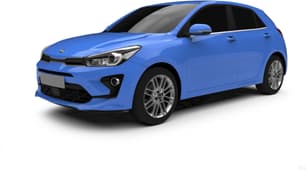
One of them is the car we’re looking at for this review: The Kia Rio S, with the catch being you’ll have to be happy changing gears yourself.
So, is this most basic Rio worth your while, or is it best left as a puzzling fossil for future generations to study? Let’s have a look.
The Audi A7 is a really likeable car, one that is heavily focused on style but also emanates substance. The 55 TFSI model will appeal to many, but my initial impression is that the best buy in the range could well be the entry-level 45 TFSI. I can't wait to sample it sometime in 2019.
The Rio S Manual is a fun-to-drive little car with a big practicality and multimedia offering in a segment rapidly heading towards extinction.
While some elements of the drive experience are reminiscent of budget cars from 10-20 years ago, Kia makes up for it by wrapping the Rio in a contemporary looking and feeling package, ready for the buyer who needs no frills and demands no nonsense. Until the manual transmission goes the way of the dodo, there is almost no better option.
If you can't find something interesting about the design of the Audi A7, there's a good chance you're visually impaired.
The original A7 Sportback was perhaps ahead of its time in the way it blended the lines of a coupe with the practicality of a big sedan, and the new second-generation version pushes the envelope even further into the future. The vision, according to chief designer Andreas Koglin, was "a clear form with sharp lines and tight shapes", including the distinguishable 'boat tail' at the rear.
This is a technologically advanced looking car - big, long, sleek and stylish. From the LED headlights (or matrix LED and laser lights - yes, frikkin' lasers that have the same 5500 Kelvin as the sun, according to Audi) and daytime running lights, to the long, lean LED tail-light assembly, there's an illuminated, enlightened air to the A7.
Plus, with the matrix lights, both ends of the car do a sort of disco sequence as part of the start up and shut down procedure for the car.
There are a few carefully balanced lines across the body of the A7 that help catch the light, which is something you can't really say about its closest direct rival, the Mercedes-Benz CLS. It still retains the 'big-metal-small-glasshouse' look of the existing model, but there are definitely more angles and interesting elements to this new-generation car.
There are two exterior types offered for Australia - the S line that you see here is the version that'll be fitted to the two higher grade models, while the entry-grade model gets a less aggressive look to its front and rear bumpers. To my eyes, the base car actually looks more luxurious, where the S line models - when not fitted with the optional black exterior styling pack that deletes the chrome trims outside - have a slightly uneasy look in the grille area. With a black edge to the single frame grille, it looks a touch more convincing.
The A7 is still large, at 4969mm long (-5mm) and riding on a longer 2926mm wheelbase (+12mm), spans 1908mm wide (2118mm including mirrors), but it's also a little bit taller, at 1422mm (+2mm). According to Audi, the interior space has been increased by 21mm in this generation, making for a more luxurious cabin than before.
Things are a little edgier in terms of design in the cockpit, too. Gone is the appealing wraparound dashboard design, with a more driver-focused treatment evident. It looks sharper, more shapely, and has improvements to the usability inside, too.
While notable equipment is missing, the Rio reclaims lost ground with the way it looks, and to a degree, the way it feels.
Ever since this new generation hatch launched, I’ve thought it brings a slick modern design to the city-car space, and even in its most rudimentary form as-tested (our car even came in the most basic ‘Clear White’ paint) it’s a great looking little hatch.
Sure, it doesn’t have the romance factor of the Fiat 500, nor the more delicate curvature of the much more expensive new-generation Toyota Yaris, but it certainly has a more refined visage than, say, the MG3 whilst feeling a bit more grown-up than the Suzuki Swift.
Solid, squared-off lines give this car a sporty pose, and its frowny-face and blocky rear round out a stout city-car persona, and I especially like the way even this most basic trim is adorned with contrast pieces, a spoiler above the boot lid, and body-coloured door handles and mirrors.
Sure, the 15-inch steelies dress it down a bit, but on the Rio these leave the impression of financial prudence rather than cost-cutting.
Inside is basic but tidy. The overall look maintains a hint of sportiness, with an appealing symmetrical finish to the dash.
There’s no question the Rio is a budget model when it comes to the touch though, with everything either a soft polyurethane or a nasty hard plastic, so while it all might look neat it’s far from the most comfortable place to be for long periods of time.
The basic dot-matrix multifunction display, chunky plastic air-conditioning controls, and polyurethane items from the wheel to the handbrake and shifter are reminders of a bygone era, but the overall aesthetic of the driver’s space is pleasing.
According to Audi, the A7's interior is said to offer a "futuristic lounge type ambience". And if your vision of a lounge in the future includes beautiful textile finishes, quality trims, and your choice of three crisp screens to look at and interact with, it certainly lives up to that.
Unlike the existing model, which seemed to draw a bit more inspiration from the world of watercraft, the new model isn't as luxe looking, with a more tech-focused approach inside. The wraparound finish on the dash is gone, and everything is more driver-centric in its orientation - the screens are tilted just enough towards the pilot and the design of the dashboard helps anchor the person in the driver's seat as the most important in the car.
As a driver, I still struggle to come to terms with climate controls that require you to use a screen, and I think it's distracting, too. At least with the Audi screen there's the possibility to slide up or down on the temperature display to make quick changes, rather than having to tap the screen repeatedly.
The haptic feedback on the screens is something that does take a bit of getting used to, because the response time isn't as instant as some regular touchscreen systems, but the menus are all pretty logically laid out.
And of course, all the storage considerations are dealt with, including good cupholders between the seats, decent door pockets, some loose item caddies and so on. In the back there's a flip-down armrest with cupholders, bottle holders in the doors and map pockets on the seat backs. One really neat addition is illuminated seat belt buckles - clever!
Space back there is mostly good, but it's better if you're short. There's enough legroom and shoulder-room for three adults, but anyone taller than me (I'm 182cm) will likely lack some headroom due to the curvaceous roofline.
The boot is good at 535 litres - enough to deal with two golf bags, the brand claims. The shape of the boot means tall items mightn't fit, but the length and width is good, and you get tie-downs with a mesh net to keep things in order. And there's a space-saver spare wheel under the boot floor.
I'd argue the key reason to buy the Rio at this end of the market is that it has the most space and largest cabin relative to its rivals, bar maybe the Suzuki Baleno.
All-round practicality is great, with front passengers scoring a low, sporty seating position with a high roof, and so much width in the cabin it almost feels like the Rio belongs in the next segment up.
Storage options up front include a large bottle holder and bin in each of the doors, dual cupholders next to the handbrake up front, and a large storage tray underneath the climate unit. Unlike the Yaris or Mazda2, the Rio features a small armrest console box, which gives a small lift to the ambiance of the cabin.
Back seat passengers are treated to great space for this segment, which feels nice and open courtesy of the large rear windows. At 182cm tall, I have airspace for my knees behind my own driving position, as well as relatively healthy headroom and ample width, which is again more like a car in the next segment up.
Rear passengers don’t get adjustable air vents, but there is a single USB port, a single pocket on the back of the passenger seat, and small bottle holders in each of the doors.
Perhaps the Rio’s biggest drawcard is its boot capacity, which at 325 litres is one of the largest in the city car class. Unlike the Yaris, Mazda2, or Suzuki Swift, the Rio will actually accept the CarsGuide three-piece luggage set with the rear seats up, although the rear view was obscured by the medium case.
Thanks to the boxy roofline, the Rio offers a cavernous 980L with the rear seats folded down, and despite its abundance of room, maintains a space saver spare wheel under the floor.
There are three models in the range, and considering the most natural competitors to the Audi A7 - the Mercedes-Benz CLS (from $136,900) and the BMW 6 series GT (from $123,500) - there's an argument that this car is something of a bargain. Ahem. 'Bargain' is relative, clearly.
The entry-level model is the 45 TFSI, which lists at $113,900 plus on-road costs. That's pretty close to the existing starting point for the A7, but now there's a bit more gear included as standard. It doesn't arrive until around the middle of 2019, though.
This model is comprehensively kitted out, with standard inclusions consisting of 20-inch alloy wheels, adaptive suspension, Audi's 'progressive steering' system, LED headlights with high-beam assist, an electronic tailgate with smart opening, keyless entry and push-button start, 'Valcona' leather trim and sports front seats, electric front seat adjustment and front seat heating and three-zone climate control air conditioning.
Other goodies include an LED interior ambient lighting package, head-up display, Audi's 12.3-inch 'Virtual Cockpit' digital driver information display, a 10.1-inch media screen and 8.6-inch control touchscreen, Bluetooth phone and audio streaming, USB connectivity, Apple CarPlay and Android Auto phone mirroring, and wireless smartphone charging.
Next up the model range is the 55 TFSI, which has a list price of $131,900 before on-road costs - which is the exact same price, and carries the exact same level of standard specification, as the diesel-powered 50 TDI model (also due mid-2019). This splits the difference between the existing models, but still undercuts the rivals by a good margin.
Over the entry-grade model, the 50 TDI and 55 TFSI models bring matrix LED headlights (with light animation), a different 20-inch wheel design, the S line exterior styling pack - essentially a body kit with new front and rear bumpers incorporating mesh-look diffusers and new side sills, plus S line badging.
These two models also get different interior styling, too, with S line embossed leather seats, illuminated door sill trims, a flat-bottom leather wheel with paddle shifters, dark brushed aluminium inlays, stainless steel faced pedals, black headlining, piped floor mats, electric steering column adjustment and a Bang & Olufsen 3D 705-watt sound system with 16 speakers and subwoofer.
There's a lot of safety kit included at each price point, too - see the section below for a breakdown.
Audi has tried to simplify things in terms of optional gear - apparently its customers said there was too much complexity when it came to electing bits and bobs, so the company's local arm has just one optional package... and a few other items it says are very much "buyer specific".
The 'Premium Plus' package costs $6500 for the 45 TFSI and $8000 for the other two models (and you get air suspension included in those grades). Across all grades the pack adds 21-inch alloy wheels, tinted rear glass, a panoramic glass roof, an extended upholstery package, four-zone climate control with rear touch control panel, plus a colour interior lighting package with up to 30 colours.
Other options include metallic paint (up to $2200), a four-wheel steering system ($4200) and laser headlights ($2500).
Value seems less important here when you’re contending with a limited list of potential options at this end of the market.
The Rio S manual currently wears an MSRP of $19,690, and if you’re able to shuffle cogs yourself, it counts its rivals as the Suzuki Baleno GL ($18,490), Suzuki Ignis GL ($19,490), or Fiat 500 Lounge ($19,550).
There’s also the option of the MG3 (from $18,990) or Kia’s own much smaller Picanto (from $15,990).
I’m pleased to report the Rio S is one of the best among these options, though. Not only is this car much more modern in terms of its platform and design than pretty much anything on that list, it packs great standard equipment, too.
The major wow-factor item is the Rio’s best-in-class multimedia system, consisting of an 8.0-inch touchscreen with wireless Apple CarPlay and Android Auto connectivity, just one of the areas where this car will grab eyes over rivals.
Elsewhere is a predictably honest list of standard equipment, including basic halogen headlights, 15-inch steel wheels, manual air conditioning, cloth seat trim with a polyurethane steering wheel, a small multifunction display in the dash, two USB ports, a six-speaker audio system, and surprisingly, steering-wheel mounted controls.
There’s no keyless entry or push-start ignition, and this level of equipment makes you feel lucky to have automatic headlights. Sadly, the S manual also misses out on the basic luxury of cruise control.
It’s cheap, missing a lot of gear, and feels it with an abundance of plastic trims, but somehow this car gets by with almost everything you really, truly need. Sure, it’s a bit of a hark back to the equipment lists of the early 2000s, but if you’re just looking for a basic car to get the job done, you could do far worse than this Kia with its impressive multimedia offering.
All three drivetrains offered in the A7 have some form of mild hybridisation. The entry-level 45 TFSI engine is a 2.0-litre four-cylinder turbo producing 180kW of power (at 5000-6000rpm) and 370Nm of torque (1600-4500rpm). It has a 0-100km/h claim of 6.8 seconds, and employs a seven-speed dual-clutch auto with quattro all-wheel drive. It employs a 12-volt mild-hybrid system to assist with stop-start traffic and uses brake regeneration, too.
The high-spec petrol is the 55 TFSI, a 3.0-litre V6 producing 250kW (at 5000-6400rpm) and 500Nm (1370-4500rpm). The 0-100 claim is 5.3sec, and it also uses a seven-speed dual-clutch auto. It has a 48-volt mild-hybrid system that uses a larger capacity battery and a belt-driven starter generator that recuperates energy in stop start traffic and, according to Audi, can also allow the car to coast for up to 40 seconds at speeds of 55-160km/h.
The same 48-volt tech is used for the only diesel model in the range, the 50 TDI. This powertrain uses a 3.0-litre turbo-diesel engine producing 210kW (3500-4000rpm) and 620Nm (2250-3000rpm), and unlike the petrols, it has an eight-speed automatic (not a dual-clutch). The claim for acceleration is 5.7sec from 0-100km/h.
The Rio is beginning to fall behind here with an antiquated 1.4-litre four-cylinder non-turbo petrol engine. Peak outputs aren’t far off where they should be for this segment, with 74kW of power and 133Nm of torque, although they arrive at the most distant end of the rpm range (6000rpm and 4000rpm respectively) so you need to rev it.
It can be clumsy to extract this power, too, with the engine paired in this circumstance to a six-speed manual which leaves a lot to be desired in terms of action and clutch feel.
While the abundance of ratios can be beneficial for fuel consumption, it’s clear this car was designed to be paired with the more modern three-cylinder turbocharged engine only available on the top GT-Line trim.
The mild hybrid tech in each of the A7 models help it offer miserly fuel consumption.
The 45 TFSI model claims 7.1 litres per 100 kilometres; the 55 TFSI model just a touch more, at 7.3L/100km. And as you might expect, the 50 TDI diesel model is the most efficient, using a claimed 6.0L/100km.
We only drove the 55 TFSI on test, and the dashboard indicated display of 9.1L/100km seemed pretty respectable.
The Rio S manual has an official combined cycle fuel consumption rating of 5.6L/100km, which is about right for a light car with a small engine.
On test, covering largely urban kilometres, I saw a higher but not unreasonable 7.4L/100km. Still, this number isn’t too far off what some larger cars with 2.0-litre engines are capable of.
Rios with this engine accept entry-level 91RON unleaded fuel, and have 45-litre fuel tanks. They are only compliant with Euro 5 emissions regulations.
A lot of the time when we go on new car launches the test drive route is planned to highlight handling dynamism, with less focus on the day-to-day drudgery most of us will actually encounter.
The launch of the Audi A7 was primarily of that design, too, but (thankfully?) there was some disgusting traffic to deal with on our in and out of Brisbane, where it was clear the A7 is superbly comfortable.
Well, that is, if you get the air suspension system. The ride was impressively cushioned, untroubled by sharp edges and road joins, and the suspension eliminated pothole effects, too. All the cars I drove on the launch were the 55 TFSI model, and all had the air suspension - the cynic in me thinks there's probably a reason for that, and I'd love to sample one without it.
This stint of stop-start driving saw the engine cut out at speeds up to 22km/h when you're decelerating, allowing us to coast to a stop without the engine burning fuel.
Once we exited the city limits and found ourselves on the roads of Mt Nebo and Mt Glorious, the chance presented itself to push the A7 in some bendy bits. With the dynamic drive mode selected, the transmission in sport mode, and about a hundred corners to contend with, the big German luxury hatch showed its skills.
The air suspension kept the circa-1815kg model relatively flat in the bends, but the front seats lacked adequate side bolster support despite being called 'sports' seats. Obviously physics were at play here.
The steering was more eager in the four-wheel steer version we sampled, and that's definitely an option for the enthusiastic owner to consider. Otherwise, the steering was accurate, if devoid of meaningful feel.
And while the engine was strong in its response and the transmission clever in its shift speed and intelligence, it became clear that this was a car that seemed more adept at open road cruising than bruising a series of hairpins. It didn't disappoint in terms of dynamics - it just felt its size.
Eventually when we reached an open road, the effortlessness of the A7 came to the fore. Comfort mode engaged, it paced along beautifully, the adaptive cruise taking its surroundings in nicely. There is a touch of wind noise and the suspension can be loud when you encounter pockmarked sections, but it doesn't feel flustered at speed.
One of the nice elements of the A7's smarts is that it will pulse the accelerator pedal to warn you that you could be saving fuel - say you're approaching an 80km/h zone, and you're driving at 100km/h, the throttle will throb to let you know you could ease off. Neat.
At the end of our day of driving, I was left with the impression that the Audi A7 is more than capable as a luxury saloon, one that was relaxing to drive - even when we encountered a five km traffic jam on the way back into Brisbane. It feels well engineered, without excessive gimmickry and with enough genuine quality to leave you feeling pampered.
A six-speed manual with a tiny non-turbo engine is an absolute oddity in today’s new car market, but as a result of its rudimentary approach, there’s something refreshingly honest about the Rio S.
The engine requires a wringing to extract the desired result, and a lot of action on the gears, as six speeds proves to be quite a few to work your way through before you achieve cruising speed.
As so much interaction is required with the transmission, I wish it was tighter when it comes to the clutch which feels a bit doughy at the best of times.
The Rio is very organic, though, with next to no electrical assistance for any of its interaction points offering the driver a high level of control.
The steering is direct, but as a result of a cheaper rack (with less teeth compared to this car’s Stonic relation), it feels simple and brittle when it comes to feedback.
The same criticism can be levelled at the suspension, which errs on the side of firm. This attribute combines with the low seating position to make even this most basic Rio an absolute hoot in the corners.
But it can be a little crashy over every-day potholes and corrugations, despite the abundant amount of rubber cladding the 15-inch steel wheels.
Visibility is superb out of this little car’s big windows, making you feel in control of your surroundings (necessary in the multi-lane confines and tight parking conditions of a city), and ergonomics in the cabin are absolutely on-point with the large touchscreen elements easy to reach and the instruments taking a basic no-nonsense form.
While noise levels are okay at urban speeds, they pick up above 80km/h, making the Rio more unpleasant to drive over long distances than, say, the more upmarket-feeling Yaris.
The Rio does find its place in this price bracket as a fun-to-drive, but predictably rudimentary experience, for the niche audience of drivers seeking an entry-level car who are still able to shift gears themselves.
The Audi A7 doesn't have a five-star safety rating from either ANCAP or Euro NCAP. It's hard to see it not getting that rating, if it were to be tested, because every trim grade has an array of high-tech safety equipment.
The A7 is fitted with a surround-view camera system (360 degree camera) and there are front, side and rear parking sensors, as well as Audi's version of auto emergency braking (AEB) which it calls 'pre sense' - and it operates up to 250km/h.
There's also a reverse AEB system, lane keeping assistance, blind spot monitoring, cross traffic alert (front and rear), and there's adaptive cruise control with traffic jam assist (allowing semi-autonomous driving up to 60km/h), a system that'll stop the car if it doesn't think you can make a gap in the traffic (Intersection Assist) and a system that prevents you from opening your door into the path of cyclists, pedestrians or oncoming traffic.
There are dual ISOFIX child seat restraints in the back, as well as three top-tether attachments. The A7 has dual front airbags, side airbags front and rear, and curtain airbags (Audi claims a total of 10, but by most other makers' counts, that'd be eight).
Sadly, the Rio S misses out on any advanced active safety items. This is one area where city-sized cars are struggling to keep up, as expensive active safety systems tend to push them well into the mid-$20,000 region.
Unlike the mid-range Rio Sport, the S has no auto emergency braking, lane keep assist, or driver attention alert.
It makes do with the more basic array of brake, stability and traction controls, with the addition of a great reversing camera, three top-tether and two ISOFIX child seat mounting points, and six airbags.
The Rio carries a valid five-star ANCAP safety rating, to an earlier 2017 standard before its missing modern active safety items were mandated.
As with all Audi models, there's a three-year/unlimited kilometre warranty offered. Mainstream brands seem to be pushing to five years' warranty, while the premium makers lag behind.
The company also offers a three-year pre-purchase capped price service plan called the 'Audi Genuine Care Service Plan', which you can bundle into your finance package. Exact pricing isn't known yet, but you can expect it to average out at about $650 for every 12 month/15,000km service (based on the previous generation model).
The Rio again gets the edge on its budget competition with a lengthy seven-year, unlimited kilometre warranty. In this space it only butts heads with the MG3, which offers a matching promise.
Roadside assist is included for up to eight years if you continue to service with Kia, and there's also a capped price service program for the duration of the warranty, covering up to 105,000km.
The Rio needs to be serviced once every 12 months or 15,000km, and prices range from $269 and $608 per visit, for an annual average of $409.40.
Not the cheapest servicing schedule we’ve seen, particularly when compared with the likes of Toyota.