What's the difference?
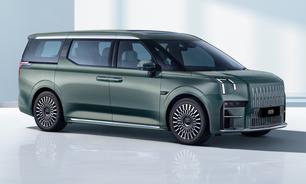
If Rolls-Royce was to make a Kia Carnival then the Zeekr 009 would probably be it, but without the stratospheric price tag.
Zeekr is Volvo’s sister from China under its massive Geely parent company and the 009 is a fully electric, luxury people mover that arrived in Australia to join the small X hatch and the forthcoming 7X mid-sized electric SUV.
The Zeekr 009 we tested is the seven-seater version and with a price of $135,900, before on-road costs, it's double the price of the fanciest Kia Carnival. Then again, the 009 is about $85,000 cheaper than the Lexus LM500h hybrid people mover.
If you are a family with more than two or three children, or a chauffeur service operator, then the 009 could be a much more practical and luxurious alternative to a high-end SUV. And, as I'll show you, even at this price it's a bargain.
Before the 1980s, when air travel was expensive, the humble Australian family car had to be able to tow a big boat or caravan in order to take the brood on holidays across our vast, sunburnt land.
Many turned to oversized American barges, like the Dodge Phoenix and the Pontiac Parisienne. People loved their massive dimensions, huge interiors, endless torque and look-at-me status.
And guess what? They still do. And even the same carmakers remain today, thanks to Chrysler’s Ram 2500/3500 Heavy Duty (HD) – which grew out of Dodge – and General Motors’ Chevrolet Silverado 2500 HD.
Now, the Ram HDs, which were also the first of the modern American remanufactured trucks in Australia back in 2015, have come in for an overhaul.
How do the latest 2500/3500 stack up? Keep reading.
The Zeekr 009 is difficult to fault. It's a luxurious, practical vehicle that's easy and enjoyable to drive. There's no SUV on the planet that can compete with its practicality, whether it's room for people and their cargo, or just getting in and out of the vehicle. The only thing I would change about the 009 in terms of family use are the captain's chairs in the second row; a bench seat here for three people would be more practical for a family. If, however, you are using the 009 as a chauffeur car then the captain's chairs would provide the comfort and luxury jet-setting executives would welcome.
If you're a grey nomad with a massive caravan searching for something to do the big lap in, or a big boater seeking an effortless weekend getaway machine, then this sort of ute makes sense. The HD series shows just how much more muscle is available, for those who genuinely need it.
But if towing or hauling to the max isn’t your priority, then the far-more dynamic – and class-leading – Ram 1500 series does everything else with much-greater aplomb.
Note: CarsGuide attended this event as a guest of the manufacturer, with accommodation and meals provided.
You might think that there's only so much you can do to make a people mover good looking but Zeekr’s futuristic and alien-like take is inspired.
I love to sheer bluntness of the face. I love the chiseled looking bonnet, the LED running lights and the little show they put on every time you walk to or from the car. Even the side profile of the car sitting low and planted on its air suspension looks sleek and stylish. And I love the roulette-wheel-style alloys wheels.
I was impressed by the interior of the Lexus LM500h but the interior of the 009 exceeds even that with modern and youthful styling wrapped in beautiful soft leather upholstery. The second-row seats are just absolutely sumptuous and every single touch point throughout the cabin feels luxurious.
The 009 doesn't match the size of the gigantic entertainment screen in the second row of the LM500h but I found the drop down 17-inch 3K entertainment to have an even more modern look and feel.
You can spot the HD facelift by the bi-LED headlights and bulgier bonnet, while chrome’s been replaced by black trim inside and out, including in the restyled grille, alloy wheels and side steps, for a more-modern appearance.
Both models are identical bar the badging. However, while they share a tri-link solid front axle system, the 2500 HD features coil-spring rear suspension, while the super heavy-duty 3500 HD relies on leaf springs. That’s for it to achieve maximum pulling and hauling capability.
Inside, the already-contemporary dashboard, with its 12-inch Tesla-esque portrait touchscreen, remains much the same as before, except for a few detail updates to accommodate the big new centre console, twin wireless charger housings, extra USB ports and restyled electronic instrument cluster.
Otherwise, it’s as vast as ever.
When it comes to practicality, no SUV on the planet can beat a people mover for space, storage and utility. The Zeekr 009 is beautifully luxurious with outstanding practicality.
Air suspension can lower the vehicle to an entry height that is just a small step into a cabin through the power sliding doors and while space in the second row is outstanding, entry to the third row is easy with the second-row seats folding forward at the touch of the button.
This third row by the way is the most spacious I have encountered with excellent leg and headroom.
Gigantic door pockets, a folding table between second-row seats, great storage under the floating centre console and in the centre console bin, cupholders in all three rows along with wireless charging pads and USB ports everywhere make this a practical and versatile cabin for families or executives.
Boot capacity with all seven seats in place is 574 litres and with the third row folded flat there's 2979 litres of volume.
A front boot can be found under the bonnet but will probably just fit the charging cable.
As with all Walkinshaw Automotive Group utes (that includes the Silverado), the Ram HD’s fit and finish seem exemplary, with an insider suggesting the quality may exceed the North American factory original.
This is no small feat. Ateco Automotive, the instigator and original importer of over 35,000 (and counting) remanufactured left-hand to right-hand-drive DS, DT and DJ full-sized utes in Australia since the first 2500 HD rolled off the Melbourne production line in 2015, says “between 400 and 500” unique engineering pieces are necessary.
Compared to the pre-facelift versions, the DJ Series II sees a switching out of the old front bench seat, which meant the earlier versions were six seaters, to shapelier individual items. Apparently, comfort and convenience are what buyers prefer, since a large centre console with armrest is now included. It’s certainly seems plush and luxurious inside.
Along with greater storage, the Ram’s electronic instrumentation is new and the multimedia system has been updated, with extra USB ports as well as twin phone chargers.
The driving position might be compromised for some by a lack of reach adjustability for the steering column (unlike in the DT 1500), and the foot-operated park brake seems like an anachronistic nowadays, but otherwise everything is easy to reach and operate – despite being scattered all about – after you’ve learned what all the buttons and switches do.
Meanwhile, the now-fixed seats can accommodate a trio of burly occupants no problems due to the sheer width of the cabin.
Included are air vents, extra USB ports, a sliding back window and storage underneath the seat cushions and within a special floor compartment.
Owners can also create a raised floor section, by tilting both cushions up and folding down two corresponding bases for a flat and even load area, with additional hidden storage within the now-covered footwells.
Overall, the Ram’s cabin balances convenience and utility quite well.
Further back, the tub length is 1938mm, width is 1687mm and 1295mm between the wheel arches and height is 511mm. This compares to the Silverado 2500’s superior corresponding figures of 2089mm/1814mm/1317mm/533mm, respectively.
A swing-away step is provided to help tub access, as well as a spray-in bedliner, strut-assisted tailgate-close and 12-pin towbar fitted as standard.
Maximum towing capacities vary from 3.5 tonnes to an unmatched eight tonnes with the correct accessories. The 2500’s payload is 785kg while the 3500 more than doubles that. And standard exhaust brakes help with braking on long descents when fully laden.
Which brings us to the heart of the matter. Muscle.
The list price of the Zeekr 009 seven-seater is $135,900 before on-roads. There is also a six-seat version for $139,900 which swaps out the third-row bench seating for two separate, more luxurious seats.
We’ve tested the seven-seater version here but the standard features on both are almost identical.
Coming standard on the seven-seat 009 are LED headlights and LED tail-lights, power sliding side doors, a power tailgate and 20-inch alloy wheels clad in Michelin Pilots for EV tyres.
Inside, seven seats come standard with two captain’s chairs in the second row with heating, ventilation and massaging functions, and of course these are also fully power adjustable.
Standard, too, is a 30-speaker 3000W Yamaha sound system with speakers in the head rests. While I’m no audiophile, I have experienced the best sound systems offered by carmakers and this is up there with the most exceptional - Mark Levinsons included.
Folding out of the ceiling is a 17-inch 3K OLED screen for second and third-row passenger entertainment.
There’s four-zone climate control, sun shades for all side windows, a glass roof, and an 8.6-litre fridge large enough for six cans of drink.
Up front the seats are power adjustable, heated and ventilated too, there’s a 15.05-inch media screen, a 10.25-inch instrument cluster, a 35.95-inch augmented reality head-up display, sat nav, Apple CarPlay and Android Auto.
If you're wondering how all this adds up to $136,000 you can't forget that the Zeekr 009 has one of the largest batteries available in a production car. The 116kWh battery is only matched by Mercedes-Benz's EQS and BMW's i7 and these cars cost hundreds of thousands of dollars.
Batteries account for a large portion of the cost of an electric car and so at under $140K, and with all of the features it has as well, the Zeekr 009 is a relative bargain.
Coded as the DJ, the 2500 and even heavier-duty 3500 differ significantly compared to the DT-series 1500, and use many of the body, chassis and mechanical components from the previous-gen DS-series 2500/3500 HD. Hence the unique model code.
Only launched in North America earlier this year, the DJ Series II kicks off from $172,950 (all prices are before on-road costs) for the 2500 HD. That’s the same old retail figure as before, despite the newcomer ushering in a minor facelift, major muscle boost and more kit, although the Silverado 2500 HD is still cheaper, at about $5K less, while the old runout versions now start from under $170K driveaway.
It’s also worth keeping in mind that the Ram 3500 HD has no direct rival in Australia.
As you’d expect, many luxury features are standard, such as heated and vented front seats with driver’s side memory, leather upholstery, retractable exterior mirrors, a surround-view monitor and adaptive cruise control. Upgraded driver-assist safety systems have also been added. More on those later on.
The newly-added items include a sunroof, centre console bisecting the front seats, a 12.3-inch instrument display, wireless Apple CarPlay/Android Auto, dual smartphone chargers, eight USB ports and traffic sign recognition.
So, no more three-person front bench. And it seems the reclining rear seat has been binned for a fixed-position item.
The Zeekr 009 has two electric motors - one at the front and one at the rear - with a combined output of 450kW and 693Nm. That's Lamborghini Huracan stuff! Almost identical power, but this has more torque.
Not only does this provide all-wheel drive and fantastically controlled traction, but the way the power and torque is delivered is simply superb. This is a seven-seater rocket that will never leave the ground - hopefully.
The nature of electric motors - especially these ones - are the perfect fit for this vehicle, providing a serenely quiet, luxurious and effortlessly powerful experience.
Under the now-bulgier bonnet may be the torquiest engine money can buy, at least in something that does not require a special driving license. Or pilot's licence.
Completely overhauled with a redesigned engine head, larger intake and exhaust valves, a new turbo, heavier-duty pistons, a higher-pressure fuel system and upgraded intake manifold amongst other changes, the Cummins-sourced 6.7-litre in-line six-cylinder turbo-diesel unit now delivers 313kW of power at 2800rpm and 1458Nm at 1800rpm.
Formerly making 276kW and 1152Nm, the new figures are 13 per cent and 26 per cent better than before (respectively), reducing the power gap with the Silverado’s 350kW/1322Nm 6.6L V8 turbo-diesel, while easily leap-frogging it for torque.
At 3710kg (kerb), the HD’s power-to-weight ratio improves significantly despite putting on about 100kg, from 76.5 kW/tonne to 84.4kW/tonne.
Meanwhile, a ZF-supplied eight-speed auto replaces the old six-speed unit. It’s now a second faster to 100 at under 7.3 seconds and the spread of extra gears should improve highway fuel consumption, albeit slightly.
Drive is sent to the rear wheels in two-wheel drive (2WD) mode in most cases. However, 4WD High (4H) is also available via a part-time dual-range transfer case and is selectable on-the-fly, though it is not recommended for operation above 80km/h, while 4WD Low (4L) is for rougher terrain at very low speeds.
The Zeekr 009 has a 116kWh battery which is enormous - almost the biggest you can get in Australia currently. This lithium-ion battery has a range of 582km (WLTP). There are petrol cars that can’t go that far on a tank.
The battery has an AC charging capacity of 11kW and DC charging capacity of 205kW, allowing you to charge from 10-80 per cent in 39 minutes.
Energy consumption is officially 19.5kWh/100km and we’ve been getting an average of 23.5kWh/100km.
That’s because this thing is so heavy at 2.9 tonnes.
Ram says the Australian Government doesn't mandate an official combined fuel consumption figure for full-sized utes like these, so there is no average economy number for us to share.
But the trip meter in two of our test vehicles said it consumed between 15 litres per 100km and 15.6L/100km of diesel fuel, and both had not been towing a trailer or load since being reset.
Despite the new ZF eight-speed auto’s revised final drive ratio (now 3.42:1 instead of 3.73:1) to help improve efficiency, clearly this is no Toyota Prius.
Based on those trip computer numbers, expect the 117-litre fuel tank to provide about 760km between refills. Handily, the 28.4L AdBlue reservoir comes with its own tank display on the dash.
The Zeekr 009 is one of the largest vehicles on the Australian market at almost three tonnes and 5.2 meters long but it's also one of the most comfortable, and one of the easiest and most enjoyable cars I've driven.
This is for three main reasons. The first is the air suspension which provides a beautifully comfortable and composed ride.
The next is those electric motors which provide so much grunt but in a very predictable way that's smooth, silent and instant, allowing you to move through traffic or drive confidently on a motorway.
Finally the visibility, steering and pedal feel all combined to provide an effortless piloting experience through narrow laneways, carparks or while parking.
Adding to the enjoyment of driving this people mover is a comfortable, plush interior that's so well insulated that you'll coast serenely through traffic.
As for handling, I have also driven the 009 on a race track at Sydney Motorsport Park. I pushed it through a couple of corners where even some sports have cars struggled to maintain their composure and this massive people move performed surprisingly well, staying planted through the corners.
I've also taken the 009 onto a skid pan and intentionally tried to slide the vehicle and even under these controlled conditions it showed no sign of roll or loss of control.
Having taken the 009 through probably the widest range of testing I've ever put a car through I'd say that it feels safe and secure in pretty much any real-world condition you will experience.
The Ram HD’s column shifter and foot-operated park brake say it all. This is a big, floaty and, at times, old-fashioned American truck, and that is certainly how it feels from behind the wheel.
2500 HD first.
From the initial burble of the forced-induction in-line six diesel, you can feel the torque simmering restlessly within. Slot the awkward selector into Drive, and – depending on how much heft you’re hauling – the Ram will lurch off the line like a startled bull, and before you know it, you’re bounding along.
If lightly laden, you’ll even momentarily spin the rear wheels in the lower ratios – second (the start-off gear; first’s for lugging only), third and maybe even fourth if the surface is slippery enough, though the traction controls will quell anything more than a bit of a bum wiggle.
From there on in, on a straight piece of highway anyway, the 3.7-tonne ute just strides along effortlessly, picking up the pace with ridiculous ease as required. You’re soon aware that the cruise control is vital if you’re going to keep your licence.
If you’re wondering how different the HD feels compared to the related regular Ram 1500, the first corner will serve up some answers soon enough.
The steering is light and reassuringly measured in response, but also numb and less precise than expected, if not quite vague, meaning you need to feed in inputs carefully. Especially at speed. Rushing it in, or blundering through a tighter turn carelessly, will have the laws of physics reminding you of this truck’s length and girth, and not to mention maybe the long arm of the law on your tail as well before long. Anyway, other road users will soon let you know as well. Take it easy.
Over the varied and at-times tight rural roads of Victoria’s Gippsland region, the endless pitter-patter of the unladen suspension, combined with the constant pitching from the body and trigger-happy brakes, resulted in motion queasiness, if not sickness. We’ve been assured that with a load as intended, everything including our internal sense of balance should settle down. Which makes sense. A boat or caravan out back should provide the anchoring effect required.
Back on straighter and smoother ground, where the 2500 smothers and smooshes most things before it, you’ll be glad for the commanding vision aided by the massive mirrors and surround-view cameras, helping to boost driver confidence, particularly when weaving through traffic or in parking scenarios.
But the compromises demanded for the ability to haul up to eight tonnes means this is a very niche proposition.
Which is why Ram insisted on us testing the sole 3500 HD with a 3.5-tonne caravan hitched out back, on the ex-Holden speed loop at Lang Lang.
This was a test of acceleration and control, and – again – we managed to spin the rear wheels in the lower gears.
Likewise, all that torque was delivered without struggle or strain, and almost immediately the 3500 was sitting steadily at 110km/h. The planted chassis and various electronics seamlessly kept everything in line.
But the track surface was too calm to assess the ride comfort from the leaf-sprung suspension, and we weren’t allowed to venture on to public roads.
Returning back to base, we even forgot all about the caravan quietly shadowing our every move out back, which is a sign of the 3500’s towering towing confidence.
Which is exactly what it says on the tin.
The Zeekr 009 hasn’t been tested by ANCAP yet, but it comes with auto emergency braking (AEB), front and rear cross-traffic alert, lane keeping assistance, auto parking, and blind spot warning. You’ve got airbags covering all three rows and a centre airbag up front.
For child seats there are four ISOFIX points in the second and third rows and four top tether points.
Neither ANCAP nor Euro NCAP have tested any full-sized American utes at this stage.
However, the 2500 HD is alone in its class in having a National Highway Traffic Safety Administration rating for 2025, scoring four out of five stars.
For the Series II upgrade, the autonomous emergency braking system now includes cyclist and pedestrian detection and braking, the traffic-sign recognition tech is new, whilst rear-cross-traffic alert, blind-spot monitoring, a 360-degree view camera and tyre-pressure monitors continue. No operation parameter data for the AEB is provided.
Plus, dual front, front side and curtain airbags are fitted, along with three child-seat restraining top-tether points and a pair of ISOFIX latches in the rear outboard seats.
The 009 is covered by Zeekr’s five-year/unlimited kilometre warranty. The battery is covered by an eight-year/160,000km warranty.
Servicing is recommended every 40,000km or every two years, whichever comes first. There’s also five years/unlimited kilometres of roadside assistance and five years of connected services as standard.
So, here's where the news may not be so good for potential HD buyers, because the Ram’s warranty is well below its main competitor.
Now it is the sole US full-sized ute with a three-year, 100,000km warranty, instead of the five-year/unlimited-kilometre coverage offered by the others.
And don’t forget, this is the era where (albeit smaller) utes from Kia have seven years while Mitsubishi, Nissan and MG are up to 10 years (conditionally).
Service intervals are at just six months or 12,000km and there are no capped-price servicing options either.
As a result of trailing the competition so badly in these key areas, the Ram HD’s overall rating has been dragged down significantly.
Along with the 75 Ram dealers throughout every state and territory in Australia, there are an additional three garages that will service the vehicles.