What's the difference?
The first-generation Volvo XC90 remained on sale for 12 years in Australia before being replaced by the handsome second-gen version that recently clocked up a decade of sales.
There’s a reason for the longevity. People love the Volvo XC90. It is a reliable seven-seat family-friendly SUV with a premium bent. You’ll spot loads of these at fancy private school drop off.
Volvo has extended the life of the second-gen XC90 with a significant late-life update. It adopts some features from its stablemate, the similarly sized and positioned EX90 electric SUV.
It doesn’t get a fully-electric powertrain but you have the choice of a mild-hybrid grade that acts as the range opener and the well-equipped T8 Plug-In Hybrid I’m testing.
Interestingly, a number of this car’s rivals have had their lives extended, too. As many carmakers pour billions into EVs, they’ve taken to delivering major updates to older internal combustion platforms rather than developing all-new underpinnings. The Audi Q7 and BMW X5 are other examples of this.
For the update, Volvo has ushered in a front-end design refresh, a fresh take on the interior, new multimedia and safety tech, a light tweak to suspension and new colours and wheels.
But is this enough to keep premium SUV buyers interested? Let’s find out…
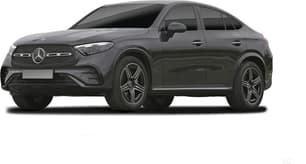
Just seeing a coupe SUV in the traffic makes some people very cranky, but others love the sight of them and it’s these fans that Mercedes-Benz is hoping to woo with its new GLC300 Coupe.
This new-generation GLC Coupe arrives six months after the regular SUV version of the GLC landed in Australia and goes head-to-head with the BMW X4 and Audi’s Q5 Sportback.
The coupe style with the ‘cut-down’ roofline which slopes towards a low tailgate means practicality is compromised and if you’re thinking of putting one in your family’s driveway then it might be an idea to read how this writer’s family coped with the GLC300 Coupe for a few days.
It’s a credit to Volvo that the XC90 feels like a new car, even with its older underpinnings. This latest update has successfully addressed areas that needed the most attention, namely the multimedia system, interior and exterior design. The electric driving range now feels somewhat old school compared to the numbers some manufacturers can achieve these days. A lot of PHEVs now exceed 100km EV range and buyers are starting to expect that. And setting up the third row takes way too much effort to want to do it regularly. The new Volvo XC90 is a comfortable, engaging and properly premium family SUV and the updates have only improved what was already a solid offering.
The GLC300 Coupe isn't quite as great when it comes to being a family car as the regular SUV version of the GLC, and that's purely down to the sloping roofline which not only makes access more difficult to the second row but reduces boot capacity.
That said, the GLC300 Coupe makes a much better family car than a Mercedes-Benz C-Class sedan, or any sedan.
Easy and enjoyable to drive, packed with great features and still practical, the GLC300 Coupe would still cut it as a good family car.
Back in early 2015, I attended the international launch of the second-generation Volvo XC90. At the time I thought it was a handsome SUV, with Volvo successfully interpreting what is essentially a big people-hauling box on wheels with typical Scandinavian flair.
There’s been a facelift since then, but this latest refresh brings the XC90 bang up to date.
New elements include a modern take on the 'Thor's Hammer' LED headlights, and a new bonnet and grille with an updated diagonal logo spread across the car's face. At the rear the only change is slightly darker tail-lights.
The new grille in particular looks great, and with all of the blacked-out elements of the T8 - grille, lower air intakes, parts of the apron, mirror caps, roof rails and window surrounds - it looks quite cool, especially contrasted with the test car's 'Crystal White' paint. It has elevated the overall look.
Inside, Volvo has made big changes, mostly with the dash and console. It retains the familiarity of other Volvos, but is much more in keeping with its new all-electric EX90 sibling.
It still has a horizontal theme, but with cool new vertical air vents. The new multimedia screen fits well into the dash layout, and isn’t over sized. It’s the ideal size at 11.2 inches. There are a few buttons underneath but not many.
The mix of materials used at the front of the cabin includes ‘Grey Ash’ wood, piano black, chrome, metal-look speakers, grey fabric and soft touch as well as hard plastics. It sounds like it would be too much but it works well.
Volvo has always been a leader when it comes to car seats and the new XC90 is no exception. The beautifully designed ventilated charcoal Nappa leather seats look and feel stunning. The tiny Swedish flag is a nice touch, too.
The engine start/stop button and the crystal selector add a touch of glamour to the cabin. Overall, the XC90 feels properly premium inside, still with a Scandinavian bent. Just lovely.
Coupe SUVs aren’t for everybody… they’re not even for lots of people. But the design of an SUV with its roof cut down so that it meets the tailgate at an almost sportscar-like angle appeals to more than a few fans. The thing is they don’t just like the look, they love it, and they also probably enjoy how much the styling makes other people cranky.
To my eyes the GLC300 Coupe is the best execution of the bodystyle compared to those of BMW and Audi. There’s an elegance to the GLC300 Coupe and the AMG-line adds a tough look that only enhances the solid, powerful but pretty look.
The GLC Coupe is a mid-sized SUV and this new generation model is a bit bigger the previous one and now measures 31mm longer at 4763mm end to end, it’s 1890mm wide, 1605mm tall and has a wheelbase of 2888mm.
It’s also more aerodynamic than ever. No seriously, it’s drag coefficient is now 0.27 and it looks like a bar of soap - and it's about as slippery as one, too.
More curved surfaces await inside with a dashboard that pours down into the large centre console and it's adorned with a sloping and large portrait-style media screen.
At night or in tunnels the ambient lighting glows through the air vents and skirts the edges of the door trims, console and dashboard.
It’s a minimalist and high-tech cockpit with modern sports seats up front and a Nappa leather wrapped steering wheel with its twin blade design.
So, how does the coupe design work for family practicality? Let’s take a look.
Any dedicated seven-seat family SUV needs to nail practicality and when it comes to the Volvo XC90, there are clear pros and some surprising cons.
One of the many pros is the seats. As mentioned, they look schmick, but are also supremely comfortable and offer the perfect level of bolstering and support. The T8 has a seat adjustment memory function that can be programmed into the driver profiles that also tailors other functions to suit different drivers.
The quality of the materials and build quality of the cabin is largely impressive. Even the damping of the indicator stalk has a feeling of high-end quality.
Volvo’s digital instrument cluster is clear and easy to navigate, once you work out what the buttons on the steering wheel do. They don’t have words on them so it takes a while. The driver’s manual comes in handy for this.
The big story in the cabin is the new 11.2-inch multimedia display. Volvo uses a Google platform and the car comes with Google Services which includes Google Assistant voice control, Maps and Play.
I’m a fan of Apple CarPlay and once I have assessed a car’s in-house multimedia system I often defer to CarPlay. It’s simple and familiar. But aside from using CarPlay to connect once, I used Volvo’s system for the vast majority of my time with this car.
Logging into your Google account means your favourites come up on the map and there is no downside to functionality. If I had the car for longer I would've added Spotify to the system and logged into that, too, but I was happy listening to digital radio on the phenomenal 19-speaker Bowers & Wilkins sound system.
The screen takes some familiarisation, but once you understand the home keys and how to switch between apps, it’s a pleasure to use. It has a clear layout, nice graphics and is responsive. Yes, the air con controls are mostly housed in the screen, but if you tap the lower part of the screen the entire climate menu appears. It is light years ahead of Volvo’s previous screen set-up.
Most functions are housed in the screen, although there are buttons just under the screen for volume and audio on/off, front and rear demisters, hazard lights and a button to open the glove box.
Storage up front is just okay. The console houses shallow cupholders and a handy upright phone holder, as well as the device charging pad. It’s a shame there’s no under console storage, but the transmission tunnel might be too chunky for that.
The shallow central bin houses two USB-C ports and a 12-volt outlet. Bottle storage is decent in the front door cards.
The panoramic sunroof only has a sheer blind (it’s powered) which is less than ideal in a country like Australia. It’s been fine in winter but I’m curious to know what it’s like in the height of summer.
The second row features manual window blinds to keep your little ones cool.
There’s some back support for the second-row seats but the base is flat. Some of the seat fabric in that row looks like it doesn’t quite fit, but I think that’s the nature of the leather with the intricate designs.
In terms of space, there’s ample leg, toe and headroom, and the rear backrests recline for extra comfort on long trips. The bases roll forward and back and the seats are split 40/20/40.
Kids will likely fight over who has to sit in the middle seat because the combination of an intrusive transmission tunnel and the rear of the front centre console protruding into the space means it is not a great seat.
Occupants have access to chest and knee-level air vents, heated seat and digital climate controls, map pockets, two USB-C ports and a central fold-down armrest with a fiddly cupholder mechanism. The rear doors will only house small, narrow bottles.
Accessing the third row of the Volvo is challenging. For starters, to move the second row seats forward you need to use the lever at the top of the seat and the roller under the base to move them. And they are heavy seats. That leaves just enough of an aperture to get into the third row.
But first you have to raise the third row. Sadly there’s no lever in the boot area to quickly raise or lower the third-row seats. You have to either climb into the boot and reach for the lever at the top of the seats, or reach through the back door and try and raise them that way. And again, they are heavy.
It is a deeply unintuitive system and leaves you exhausted and frustrated. Especially when you consider other seven seaters have a much more functional and lightweight third-row arrangement.
Once in the third row, it’s clear it is for humans with tiny legs only. It is not a space appropriate for six-foot tall men like me, even for short distances. You do get ample headroom, air vents, cupholders and storage boxes on either side that open up to show a kid-friendly spider web design with a friendly looking spider. Cute!
The seats fold flat into the boot floor and the loading lip is level with the floor so loading heavy or long items should be a breeze. You can adjust the air suspension from the boot to lower the height further which is always a handy feature.
It comes with a solid cargo blind but you need to remove it if you want to raise the third row. When putting it back in, it catches on the third-row seat belts, so it’s not the best design.
In terms of boot features, the Volvo comes with a household charging cable that is housed neatly under the boot floor in a stylish bag. Many PHEVs and EVs still don’t have a dedicated spot to house a cable so you have to take up boot space with a chunky cable bag. Good job, Volvo.
It has a powered tailgate, a few nooks and a pair of 5.0kg hooks. However, it doesn’t have a spare wheel of any description. Just a tyre repair kit. This is due to packaging restrictions, but it’s never an ideal solution.
In terms of space, the Volvo can swallow 640 litres of cargo with the second row up and 301L with all three rows in place. That latter figure isn’t bad compared to some seven-seaters.
SUVs are the most practical cars for families because of the better access to the cabin thanks to their large doors and slightly elevated ride height, their big boots with wide and tall hatch openings and their high flat rooflines. They’re essentially raised station wagons.
A coupe-style SUV still has four doors but they are less boxy due to the sloping roofline which falls away quickly to meet the tailgate at a lower point. The effect is a sporty-looking shape but practicality is lost in this exercise of form over function.
The second row doorways aren’t as large as those on the regular SUV. I did a side-by-side test and felt like I had to duck under the sloping roof when getting out of the back seat.
The smaller opening also made it trickier to lift my toddler daughter into her baby seat.
The sidesteps are also surprisingly handy for bigger kids and my eight-year-old used them every time when climbing into the car.
Cabin storage is outstanding with huge door pockets and cupholders in both rows, and while the 545-litre boot in the GLC300 Coupe is 80 litres smaller than the cargo capacity of the regular GLC SUV, it's bigger than the previous version of the Coupe.
As for people space, there’s enough headroom for me at 189cm tall in the back seat and heaps of legroom, even behind my driving position.
I’ve mentioned the lack of climate control in the second row, but also should point out that there are no USB ports back there either.
There are USB ports in the big centre console box upfront and a long cord should be able to make it to the second row.
There’s a wireless phone charger but it's housed in the bowels of the centre console too, and you’ll need to weave your hand while clasping the phone under the shiny black trapdoor, past the cupholders possibly with drinks in them and almost under the dashboard.
The pre-update XC90 soldiered on for 10 years and Volvo has, at various points, offered multiple powertrains, including a diesel. Not anymore.
Volvo now offers just two distinct powertrain grades for the XC90, the B5 Bright mild-hybrid from $104,990, before on-road costs, while the T8 plug-in hybrid I am testing tops the range at $130,990.
There’s an increase in cost over the pre-update versions of about $5000 for the B5 Bright and $2600 for the T8 PHEV, but the XC90 remains more affordable than rivals like the Audi Q7, BMW X5 and Mercedes-Benz GLE for equivalent grades.
On top of that, the Volvo is the only dedicated seven-seat premium plug-in hybrid SUV on the market.
The B5 Bright comes standard with a decent amount of gear including Google Services, keyless entry, a power tailgate, 12.0-inch digital driver’s display, wireless charging, powered front seats with heating, cooling and memory functions, wired Apple CarPlay and a new 11.2-inch digital touchscreen with over-the-air updates.
It also gets four-zone climate control, heated rear seats, a 360-degree camera and a crystal gear shifter by Orrefors.
Step up to the T8 PHEV and you gain a 19-speaker Bowers and Wilkins audio system, a panoramic sunroof, heated steering wheel and more.
There is a lot of standard gear packed into both XC90 grades. It can’t match the value of rivals like the Lexus RX and Genesis GV80 but it offers better value than some of those European rivals.
Mercedes-Benz is offering Australia just the GLC300 grade in both the SUV and Coupe body styles.
High-performance AMG variants are out overseas now and will arrive in Australia soon, too.
You can expect to pay more for these AMG beasts - a lot more than the $113,900 list price of the GLC300 Coupe.
Still the GLC300 Coupe does come standard with an AMG Line body kit and 20-inch AMG alloy wheels. LED headlights are also standard, so is the panoramic glass roof, tinted rear glass, proximity unlocking and a power tailgate.
Inside there’s synthetic leather Artico upholstery, sports heated front seats, Nappa leather steering wheel, an 11.9-inch media display with Apple CarPlay and Android Auto, a 12.3-inch digital instrument cluster and a head-up display. There’s also dual-zone climate control and wireless phone charging.
The value is good in terms of features, although the price is slightly higher compared to the rivals such as the BMW X4 xDrive30i ($106,400) and Audi Q5 Sportback 55TFSI ($110,200).
It’s worth pointing out, too, that the GLC300 Coupe is about $10K more than the GLC300 SUV version. Why? The coupe versions of prestige SUVs always tend to be pricier than their regular more boxy SUV siblings. Somebody in marketing will be able to explain why.
Having lived with the GLC300 Coupe with my family over the past few days I can say the proximity unlocking which works by touching even the back door handles is excellent, the tinted windows are dark and cut out much of the sun's glare, but there’s no climate control in the second row. There are air vents back there, which is good.
I found that on hot days the semi-transparent shade on the glass roof couldn’t stop the cabin from heating up quickly.
Two powertrains are available in the new XC90, both with all-wheel drive.
The B5 Bright comes with a 2.0-litre four-cylinder turbo-petrol engine with 48-volt mild hybrid assistance offering 183kW of power and 350Nm of torque. It can dash from zero to 100km/h in 7.7 seconds.
The version I’m testing has a 233kW, 2.0-litre four-cylinder turbo-petrol engine with a plug-in hybrid system that uses a 107kW electric motor and an 18.8kWh, 400-volt battery.
The total system output for the T8 PHEV is 340kW and a meaty 709Nm. It uses an eight-speed automatic transmission. It can complete the 0-100km/h sprint in a brisk 5.3 seconds.
The GLC300 Coupe has a 2.0-litre four-cylinder turbo-petrol engine making 190kW of power and 400Nm of torque.
There’s also an overboost function which allows the engine to make an extra 17kW and 200Nm just for a brief moment, but that extra dollop of grunt combined with the regular output provides impressive acceleration (0-100km/h in about 6.3 seconds) for overtaking or moving quickly when you need to.
A smooth nine-speed automatic transmission sends the drive to all-four wheels.
The GLC300 Coupe is all-wheel drive and while there’s a setting for rougher terrain, along with one for comfort, eco and sport, but I’d make sure that it doesn’t get any more adventurous than tame gravel and dirt roads.
Mercedes-Benz refers to the GLC300 Coupe as a mild hybrid and this is because it has a 48-volt system and an integrated starter-generator.
This type of hybrid doesn’t use electric motors, doesn’t drive the wheels and won’t save much fuel, but it will provide efficiencies by supporting the engine and when coasting, plus will reduce petrol consumption to a small degree.
The mild-hybrid XC90 B5 Bright has an official fuel use figure of 8.1 litres per 100 kilometres, which is on the thirsty side, although it is a 2.5-tonne SUV.
Officially, the XC90 T8 Plug In Hybrid sips just 1.8L/100km on the combined (urban/extra-urban) cycle, but as with any PHEVs, unless you charge your car religiously and never drive far enough to deplete the battery, that figure is extremely hard to achieve.
I charged the car regularly using my home wall charger (two to three hours for a full charge) and the fuel gauge barely moved.
After a week of mixed driving my final fuel economy figure was 3.4 litres per 100km, which isn’t too bad.
The XC90 T8 has a 3.6kW onboard charger and a Type 2 plug so it’s only capable of AC charging. It is not compatible with a DC source so no fast charging on the go.
The official electric driving range according to Volvo is 77km, which feels a little old school compared to the many PHEVs landing on the market now that have an EV driving range in excess of 100km.
The offical figure also seems somewhat optimistic because the most I got on a full charge was 60km. Anecdotally, I have heard it can get up to 70km after a charge, it just didn't get there in my time with the XC90.
As we mentioned above the GLC300 Coupe's 48-volt mild hybrid system is not the kind of hybrid that will allow you to drive miles on electric power, nor will it dramatically reduce fuel consumption in the way a parallel, series or plug-in hybrid will. But every bit of efficiency helps.
Mercedes-Benz says the GLC300 Coupe will use 7.7L/100km after a combination of open and urban roads.
We had the GLC300 Coupe for just two days, but in that time my family covered 176km of regular daily usage which took in motorways but mainly suburban duties such as the school run, supermarket dashes, that sort of thing.
In our fuel test we measured 14.48 litres at the fuel pump which works out to be an on-test fuel use figure of 8.2L/100km and not far off the manufacturer’s claim.
While this fuel consumption isn’t overly high, a plug-in hybrid or even a parallel or series hybrid could return about 5.0L/100km or less.
Mercedes-Benz has dropped plug-in hybrids from its Australian range which is a shame because it would be good to see more efficient options in the GLC range. Of course if you want more efficiency from a Benz of the same size, there is always the fully electric EQB or EQC.
For a tall, large and heavy SUV, the XC90 has an excellent driving position. You feel hunkered down in the driver’s seat; it’s almost sporty!
Those healthy power and torque figures translate well on the road. It is properly quick off the mark and picks up pace rapidly when already at speed. You do need to work out the trigger point for the accelerator because if you give it too much it feels a little like a slingshot.
The transition between the electric motor and the petrol engine is noticeable, but it’s still smooth. It’s not harsh or clunky like some hybrids and PHEVs. Similarly, the eight-speed transmission is so smooth it rarely makes its presence felt. It's a lovely match for this powertrain.
On that, the cabin is incredibly well insulated. It’s a hushed ride at any speed. Again, you’ll hear the engine kick in but it has a nice note so that noise is welcome.
The powertrain has several driving modes including 'Pure' (EV only), 'Power' (for added performance) and 'Hybrid'. Hybrid is the go-to and 'Auto' allows the system to determine when the petrol engine kicks in. This is the best everyday mode.
Volvo understands the XC90 is more than just family transport and has engineered it in such a way that it offers a surprising level of dynamism.
It’s flatter in corners and bends than you expect of a car of this size and weight. It has a balanced chassis, likely helped by the air suspension, with minimal body roll and little lateral movement inside. Impressive.
It has enough grip on looser surfaces, aided by the all-wheel drive set-up.
The ride quality is more composed and refined at higher speeds, regardless of the road conditions, managing potholes and the like quite well. Volvo has tweaked the suspension tune as part of the update for this very reason.
At lower urban speeds, it’s not quite as calm. You’ll feel speed bumps and potholes and it's a little jiggly on rough surfaces. The low profile (275/35 R22) tyres are partly to blame here.
With that said, it’s not enough to dampen the overall XC90 drive experience. It is a lovely car to drive, whether cruising on freeways, country road blasts or city commuting.
Its underpinnings might be 10 years old, but the XC90 feels as fresh to drive as many of its rivals.
There’s a lot to like here but the short version is the GLC300 Coupe has a comfortable ride, but good handling, with a responsive engine, although rear visibility through the small back window is poor.
If we drill down a bit further I can tell you that excellent cameras around the car will help you check to make sure kids aren’t running around behind you and that forward and side visibility through the window is good.
An important takeaway is that the GLC300 Coupe is easy to drive with light steering and an engine that’s mild and controlled in its power delivery.
The gear shifter is mounted on the steering column, in the same way an indicator lever is. So putting the car into Drive, Reverse and Park is so easy and means you don’t have to take your hands off the steering wheel.
As a family car I liked the good body control and composed ride. We have a small toddler that we can sometimes only get to sleep by taking her for a drive and we found that she could nod off and not be woken by potholes and speed bumps or too much leaning in the corners.
Volvo’s reputation for safety is hard to beat, so as expected the XC90 comes with a solid list of standard safety gear.
The safety tech includes auto emergency braking (AEB) with pedestrian, vehicle and cyclist detection, low-speed rear AEB, blind-spot monitoring with a cross-traffic alert and a ‘Run-off road Mitigation system’ that uses steering and braking to edge you back into the lane.
It also gets a front and rear collision warning, traffic jam assist, adaptive cruise control, lane keeping aid, tyre pressure monitoring, post-impact braking, an adjustable speed limiter and more.
One thing it doesn’t have is an ANCAP crash safety rating. It was awarded a maximum five stars back in 2015 but that rating has expired and Volvo says there are no plans for the car to be re-tested.
The GLC was given the maximum five star ANCAP rating in 2022. There’s AEB, active lane keeping assistance and active blind spot warning and nine airbags including a centre airbag.
As mentioned above I especially liked the surround-view camera systems - which let you look right around the car - good for driveway safety and kids.
For child seats you’ll find two ISOFIX mounts and three top tether anchor points in the second row.
I was also impressed to see a space-saver spare wheel under the boot floor and not just a puncture repair kit.
The XC90 is covered by Volvo’s five-year, unlimited kilometre warranty, and the servicing schedule is every 12 months or 15,000km, whichever comes first. These are similar terms to other premium brands in Australia.
Buyers can opt for one of two capped-price servicing packs, costing $2380 for three years and $3870 for five years.
This pricing is a little more than the BMW X5 but quite a bit more affordable than the Mercedes-Benz GLE.
The Swedish brand used to have a reputation for over-priced servicing but it’s sharpened up its offer considerably in recent years.
Volvo has around 40 dealerships located across Australia and conducts its servicing in-house at the dealer.
The GLC300 is covered by Mercedes-Benz's five-year, unlimited-kilometre warranty.
Services are annually or every 25,000km. And you can buy a three-year service plan for about $3000.