What's the difference?
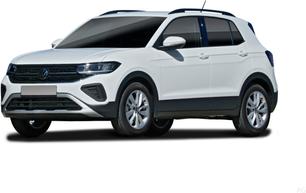
The Volkswagen T-Cross is the smallest SUV in the brand’s entire range, but it’s incredibly practical, great to drive and has an excellent level of safety.
It’s just been updated with some new features and it’s probably more affordable than you think.
So if you are thinking of a Mazda CX-3 or a Toyota Yaris Cross, then put the T-Cross on your list to check out, too.
If you’re in the market for a seven-seat SUV these days, you really are spoiled for choice.
Of course, you always have your obvious options like the Nissan X-Trail, Mitsubishi Outlander, and Honda CR-V, but what if you’re a big family on a relatively small budget.
Well, Chinese player Chery has just introduced its Tiggo 8 Pro Max into the seven-seat mid-size SUV space. I’m guessing the name means if you’re a professional, maximum-sized family, then it’s designed to be the best option for you.
But does it have what it takes to challenge such established seven-seat rivals? We tested one at its Australian launch to find out.
There are so many new little SUVs out there and it might be easy to think they’re all the same - a tiny cheap SUV is just a tiny cheap SUV. But I’m convinced the Volkswagen T-Cross isn’t like the others.
Yes, it’s tiny and relatively cheap, but it can do more than most of the others from the storage and space it offers to the value-for-money and its level of refinement. Then there’s the way it drives - which can’t in my books be matched by any of its rivals.
The sweet spot in the range is the entry grade Life. At $35K drive-away the value is best and with no difference in engines between the grades there are no huge reasons to step up higher in the range unless you have the money.
Note: CarsGuide attended this event as a guest of the manufacturer, with travel, accommodation and meals provided.
This mid-sized seven-seat SUV segment is dominated by just a handful of nameplates, and it’s easy to see how some of them might be under threat by something like the Chery Tiggo 8 Pro Max.
There are a few areas where it could use some fine-tuning, but these are mainly restricted to being pedantic about the drive experience. There are no dealbreakers here as there often can be for low-cost alternatives, and so long as you’re primarily putting kids in the back seats, this Tiggo is well equipped, comfortable, plush, and surprisingly refined.
With a robust ownership proposition as well, it’s hard to see why you wouldn’t consider one of these if you’re shopping in the seven-seat SUV space - and that's why this could be Chery's shot at the big leagues.
The T-Cross is Volkswagen’s smallest SUV at 4.1m long and even though it’s closely related to the little Polo hatchback it looks more like a mini version of the Tiguan.
It might be tiny and relatively affordable but it has Volkswagen’s premium looks and sharp styling, with creases in the panels so crisp it looks like somebody just ironed it.
This update has brought new front and rear bumper designs, and new styling to the LED running lights and tail-lights. That’s typically how car companies do exterior design updates, inside the styling changes are pretty minimal, too.
There’s new dashboard design and new media screen, but again the design and quality feels refined and high quality, which I can't say goes for a lot of this car's rivals.
The entry-grade Life misses out on the cross design tail-lights of the Style and R-Line, and gets hubcaps rather than alloy wheels like the other two grades.
The Tiggo 8 Pro Max just looks like a mid-size SUV. Perhaps if you calculated the average design cues of every mid-size SUV on the market, this would be what you end up with.
Of all the Chinese automakers currently in the market though, the Tiggo range of SUVs are the least controversial. There’s no weird theme to the design, there’s no bizarre light fittings or controversial angles. You could stick a badge on this car from any Korean or Japanese brand and you wouldn’t think twice about it.
It doesn’t say much for innovation, but I think it will very much work in this car's favour. It provides a much more globally appealing look when compared to the controversial design of BYD products, the crazy grilles and badging on GWM products, or the derivative style of the MG range.
For this reason it won’t turn heads at the school drop-off, but that’s perfect for families who want to run incognito and would normally buy a conservative mainstream SUV from Toyota or Mitsubishi.
Inside things get a bit more interesting. The Tiggo 8 has a contemporary design, complete with a high-riding bridge-style console, and the dual-screens are encased in a single housing that spans half the length of the dash.
It’s ambitious too, with generous amounts of soft-touch surfaces and synthetic leather finishes. Clearly, it’s inspired by others in the industry. The dual-screen layout is very Hyundai or Kia via Mercedes, while the Benz influence extends to the wood grain-look plastic inserts and even the little silver finishes covering the speakers up. Rather than a naff knock-off though, the Chery interior genuinely feels its own space.
The only areas that you can see through the facade to a car built-to-a price is in a handful of places. The steering wheel buttons, for instance, feel a bit cheap, and when it comes to those big screens, the resolution isn’t as high as you might expect, and the processing isn’t as fast as it could be, leading to a slightly laggy experience.
Still, the same can be said for many mainstream manufacturers, and at least Chery’s native software has been localised and is easy to navigate. Also, none of this stops the Chery from feeling properly plush on the inside. It was also seemingly pretty well put together, free of rattles, switchgear with too much play, or nasty hollow plastics.
First impressions are good.
You really should take a look at my video to get an idea of how good space and storage is in the T-Cross. I’m tall at 189cm but I can drive with plenty of elbow room and legroom. The front seats also have really long bases which offer great under-thigh support, too.
Legroom in the back is great for the class and I can sit behind my driving position without my knees touching the seatback, while headroom is excellent, too. The second row also slides on rails to increase the boot side which is enormous for the class at 455L.
The second row doors also have large apertures making entry and exit easier.
Cabin storage is great with giant door pockets in the front and back, a wireless phone charger with four USB-C ports (two in the front and two in the second row).
The interior is also thoughtfully designed, but it needs to compete with user-friendly cars like the Honda CR-V and Nissan X-Trail in this segment.
The front occupants are treated to a reasonably spacious cabin, which for the driver is quite adjustable, although the design of the dash means it sticks out into the front passenger’s knee area. Head and shoulder space is impressive, and everywhere you put your arms or knees there’s a soft-clad finish rather than hard plastic to greet you.
As already mentioned, the software isn’t half bad when it comes to ease-of-use, however the lack of tactile toggles or dials for the climate unit is a bit of a miss. It has its own dedicated set of touch controls below the screen itself, but they provide no tactile feedback, so are a little hard to use while on the move.
Storage is great, with large pockets and bottle-holders in the doors, a further two bottle holders in the centre console, a wireless phone charger, and a neat little set of drive mode buttons and a digital shift lever within easy reach.
The bridge-style console also offers a large pass-through area underneath for the storage of larger items, and there’s a deep centre armrest console box, too.
The second row is quite versatile, offering rail adjustment for the base, so you can maximise the room available to the third row if need be.
Second-row occupants (with the seats set to a decent position for myself at 182cm tall) have plenty of knee room and plenty of headroom, and the doors open nice and wide for the loading of objects or people.
Storage includes large pockets on the backs of the front seats, a bottle holder in each door, and a further two in the drop-down armrest. There is a set of adjustable air vents on the back of the centre console, with both a USB-A and USB-C port for power delivery.
The third row is a bit more challenging. I had to contort myself to get in with the second row seat either slid forward or folded flat. Once I was in there, I was surprised to find I fit, but only just.
My knees were hard up against the seat in front, while my head was touching the roof. Mercifully, I had enough room to slide my feet under the seat in front, otherwise it would’ve been too tight. It’s passable for adults then, but only in a pinch, and you wouldn’t want to be back there for long. No problem if you’re just putting kids back there though.
The third row gets air vents on either side with an independent fan speed controller on the mid-grade Elite and top-spec Ultimate, and there’s a useful storage tray, and small bottle holder on each side. You don’t get USB ports, but there’s a 12 volt outlet available just behind the rear seats in the boot.
On the topic of the boot, it is not as large as I was hoping, but then neither is the car itself.
The boot measures 479 litres with the second-row up, or just 117-litres with all seven seats deployed. It’s smaller than some mid-size rivals, but not enough for it to be a dealbreaker. We’ll get it back for a longer test to see what does and does not fit.
The floor is quite high to facilitate those fold-flat rear seats, and there’s a small under-floor storage tray where you can hide the retractable luggage cover on the Urban and Elite variants. Unfortunately the Ultimate gets a subwoofer here.
All variants get a space-saver spare wheel mounted outside underneath the car, so at least you don’t need to deal with a tyre repair kit.
There are three grades in the T-Cross line up, the entry level Life which lists for $33,990, the Style for $37,490 and at the top of the range is the R-Line for $40,990.
At the time of the launch of this updated T-Cross, Volkswagen was doing drive-away pricing of $34,990 for the Life, $39,990 for the Style and $43,990 for the R-Line.
Compared to rivals like the Mazda CX-3 and Toyota Yaris Cross, a drive-away price of $35K for the Life is excellent and $40K for the Style is also a good deal, especially when you look at the healthy standard features list.
Coming standard on the Life are LED headlights, black roof rails and power folding mirrors, there’s a leather steering wheel, a digital driver display (which is new, too), there’s an 8.0-inch media screen, wireless phone charging, air con, digital radio, Apple CarPlay and Android Auto.
Stepping up into the Style grade adds 17-inch alloys wheels, matrix LED headlights - those are new - chrome-look roof rails, an LED grille strip, proximity unlocking, dual-zone climate control, sat nav, and a new, larger digital driver display. The Style also gets the fancy 'cross' LED tail-lights like the R-Line grade above it.
The R-line is a new model sitting at the top of the line-up and it comes with sporty R-Line exterior styling plus 18-inch alloy wheels and dark tinted rear windows. Inside there’s R-line interior styling, 'Drive Modes' and a Beats sound system.
The Tiggo 8 Pro Max needs to be keenly priced to compete, but you might be surprised to find it’s not the most affordable option in this category. For slightly less money than the Tiggo 8 Pro Max, you can get into the Mahindra XUV700 or the LDV D90, but Chery says it is aiming to provide a little more than just a low price-tag.
Still, thanks to its keen national drive-away prices, the Tiggo 8 does manage to undercut its prominent Japanese competition. The price starts from $41,990 for the base Urban, moves to $43,990 for the mid-grade Elite, and tops out at $47,990 for the all-wheel drive Ultimate.
If you’ve been shopping around this space, you’ll note these prices, once you get the car on the road, will manage to undercut the likes of the Nissan X-Trail (from $40,290), Mitsubishi Outlander (from $39,540) and the Honda CR-V (from $46,800).
Keep in mind that this is very much a mid-size SUV offering too. At 4720mm long, 1860mm wide, and 1705mm tall, the Tiggo 8 Pro Max isn’t competing with the Hyundai Santa Fe, Toyota Kluger, or Kia Sorento, which are seven-seaters in the medium-to-large segment a full category up.
Like other Chinese challenger brands, Chery aims to dazzle on the specification front. Even the base Urban scores a comprehensive list of standard inclusions like 18-inch alloy wheels, LED headlights, synthetic leather interior trim, dual 12.3-inch screens in the cabin, as well as relative luxuries usually unheard of in base cars like heated and ventilated front seats with power adjust, a 360-degree parking camera, and wireless phone chargers.
You also score an eight-speaker audio system, an air purification system, dual-zone climate, keyless entry with push-start ignition, built-in navigation, a voice command system, power folding exterior mirrors, and ambient LED multi-colour interior lighting.
It’s a lot of stuff for a base car, and yet the Elite manages to add a power tailgate, heated exterior mirrors, a built-in dash-cam (nice touch), third-row air vents with independent fan speed control, illuminated door sills and a retractable cargo blind.
Finally, the top-spec Ultimate scores all-wheel drive with additional drive modes, 19-inch alloy wheels, a panoramic sunroof, a 10-speaker Sony-branded audio system, tinted rear windows, puddle lamps, and the option to choose an alternate brown theme for the synthetic leather interior trim.
All variants get all the active safety equipment - check out the full list in the safety section of this review.
The T-Cross has a 1.0-litre three-cylinder engine which sounds tiny and it is, but it's turbo-charged and the 85kW/200Nm it produces is plenty of grunt to move this little SUV which at just under 1.3 tonnes is relatively light.
All grades in the T-Cross line-up have this same engine and there’s no high-performance variant, although the R-Line has selectable drive modes. Every T-Cross is front-wheel drive with a seven-speed dual-clutch auto transmission.
This three-cylinder is a mighty little beastie with a growly tone to it. There is some turbo lag during stop-start city driving, but it’s so eager to play that if it was a dog it’d be a Jack Russell with every intention to chase anything it sees but no idea how small it is.
There is only one engine option in the Tiggo 8 Pro Max range, a 2.0-litre turbocharged four-cylinder petrol unit that produces 180kW/375Nm.
No matter which variant you choose, it’s also mated to a seven-speed dual-clutch automatic transmission. The Urban and Elite variants are front-wheel drive, while the Ultimate scores a Borg-Warner-sourced all-wheel-drive system with additional off-road drive modes.
The outputs are more than competitive with a lot of rivals, but there’s no fuel-saving hybrid option in the line-up just yet. It’s something Chery wants to add in the future.
Especially for Australia, the folks at Chery also made sure to get the Tiggo 8 Pro Max certified to tow. It can do that at up to 1300kg braked, or 750kg unbraked.
Smaller engines use less fuel than larger ones and the 1.0-litre three-cylinder in the T-Cross is little and Volkswagen says over a combination of open and urban roads it uses 5.6L/100km.
That’s fuel efficient but these days larger SUVs with hybrid systems are achieving the same low consumption. Toyota’s Yaris Cross is available with a hybrid system and will use about 3.8L/100km.
Volkswagen doesn’t have a hybrid version of the T-Cross, but it should, especially given these little cars will spend more time in urban environments where fuel consumption will generally be higher.
That said, most tiny SUVs don’t have hybrid systems so that makes the Yaris Cross exceptional while the T-Cross is about average.
The 2.0-litre turbo engine has an official/combined consumption rating of 8.1L/100km for the front-wheel drive variants, or 8.7L/100km for the all-wheel drive Ultimate.
On our drive route for the day which took place on curvy country roads and expressways, my Ultimate all-wheel-drive test example produced a figure of 9.5L/100km which seems reasonable.
Unfortunately the engine also requires mid-shelf 95RON unleaded fuel, so this will push your running costs up slightly.
The Tiggo 8 Pro Max has a 57-litre fuel tank, indicating an estimated maximum cruising range of 703km for FWD variants.
Quite possibly the best little SUV to drive for this price and size, the only drawback is that there’s a touch of lag in the time it takes the power to arrive at low speeds in stop-start traffic, but that can be remedied by putting the transmission in 'Sport' mode.
The steering is light and accurate, the visibility is excellent thanks to the big windows and raised ride height, the pedal feel under your feet is great and the brakes are responsive.
The car feels stable, planted and secure whether it's on a motorway, or a winding country road, while the little 1.0-litre engine is a champion that keeps punching with a throaty growl that matches its enthusiasm.
The seven-speed transmission is superb and changes gears fast, while the paddle shifter lets you take control to keep the revs high.
These little SUVs aren't sports cars but some are so underwhelming to drive it feels like performance was never thought about while developing the vehicle.
But the T-Cross made me grin until my face hurt on the steep winding hairpin filled roads we tested it on at its launch.
Cars from Chinese brands often fall short of expectations when it comes to the drive experience, but the Tiggo 8 Pro Max moves everything in the right direction, and importantly it doesn’t add any deal-breaking characteristics along the way.
Visibility is great out of the cabin, with large windows all-round. The wing mirrors are great, but the centre rear-vision mirror is a quirky piece with a wide viewing angle. In a way this is great for parents, because with one glance you can see both out the rear of the vehicle and the rear seats to keep an eye on kids, but it does mess with your depth perception a bit.
On multiple occasions I felt like the car behind was tailgating, only to peer in the side mirrors to find that it was actually quite far back. Odd!
The steering is very light, and a bit disconnected as a result. While this sounds like a negative, I actually think suburban buyers who often negotiate with shopping centre parking lots, apartment towers, and school drop-offs will love it. It makes a big SUV feel really easy to steer and position.
Sure, it feels a bit doughy out on the open road, meaning it's hardly a confident corner-carver, but that’s not really the point of this car.
The engine on the other hand has loads of poke. Power of 180kW sounds like a lot because it is (once upon a time not so long ago this was well into V6 territory) and actually for the front-wheel-drive versions it might be a little bit too much power. It will readily spin the front wheels with slightly too much throttle input, which brings us nicely to the dual-clutch automatic which is responsible for communicating that power to the ground.
Dual clutches rightly raise a bit of a red flag for some because they can be particularly jerky from a standstill and have some pretty questionable gear shifts once you’re rolling. For the most part though, the Tiggo 8’s dual-clutch unit is pretty good. The brand stressed that it had done significant software tuning to this transmission to try to iron out nasty characteristics, and while it's still occasionally caught off-guard, I’ve certainly driven worse. It will occasionally produce a bucking feeling rather than a full second of lag like some rivals, but its enthusiasm to deliver power to the ground quickly gives the front-drive versions that slightly skittish feel.
It is one of those rare occasions when it’s worth splashing for the all-wheel drive. I found the Ultimate to be much more sure-footed and confident on the road, able to handle the engine’s relatively mountainous torque with ease.
On the open road I was impressed by the Tiggo 8’s level of refinement. The amount of sound entering the cabin in both variants was low, with minimal tyre roar or wind noise. Thuds from the suspension and roar from the engine under load were also pleasingly distant, even at freeway speeds.
When it comes to the ride it’s built to a certain cadence. It’s soft and comfortable, matching the semi-luxurious cabin feel nicely, but it can be a bit springy and lose a bit of body control over undulations and corrugations. Again, it’s not exactly an athlete, but then for most people, it won’t have to be.
Importantly, it filters out sharper bumps like potholes, road imperfections, and speed bumps with relative ease. It’s even better in the 2WD versions thanks to larger tyres and smaller alloy wheels.
Mercifully, the active safety systems don’t intrude on the driving experience either. Chery has apparently learned some hard lessons after the feedback it received on the overbearing lane assist equipment on the smaller Omoda 5, and applied those learnings here in the Tiggo 8.
The lane systems are still there, but they only intervene when they really have to, while warning chimes from things like the traffic sign recognition, blind spot monitoring, and driver attention alert are, at worst, background. It’s a good thing too because of all the systems, the driver attention alert is the one that triggers most often as you look away from the road to adjust the touch-based climate systems.
Where does that leave us? Actually pretty impressed. The Tiggo 8 Pro Max might not have the balancing act between ride quality and performance quite as well tuned as some of its Japanese and Korean rivals, but this is a comfortable, quiet, and refined SUV that, importantly, feels very normal. There’s no deal-breaking safety bugs, or a terrible transmission or frustrating software that takes away from the experience. Chery is learning, and it’s learning fast.
The T-Cross was given the maximum five-star ANCAP rating in 2019. What is truly great is that on every grade you’ve got AEB, adaptive cruise control, lane keeping assistance, rear cross-traffic alert, manoeuvre braking, plus front and rear and parking sensors.
For child seats there are three top tether anchor points and two ISOFIX points in the second row.
A space saver spare wheel can be found under the boot floor.
Every Tiggo 8 Pro Max gets the full array of active safety gear, including auto emergency braking, lane keep assist with lane departure warning, blind spot monitoring with rear cross-traffic alert and rear auto braking, traffic sign recognition, driver attention alert, and adaptive cruise control with traffic jam assist.
It also scores the expected array of traction and brake controls, as well as a 360-degree parking camera, and dual ISOFIX positions on the outboard rear seats.
The airbag total seems to come to 10 with dual front, dual curtain, quad side, a front centre airbag, and a knee airbag, although from what we can tell the curtain and side airbag coverage unfortunately still doesn’t manage to extend the full length of the third row. Worth keeping in mind if you plan on regularly putting people back there.
At the time of writing the Tiggo 8 Pro Max was yet to get an ANCAP safety rating.
The T-Cross is covered by Volkswagen’s five-year unlimited kilometre warranty.
Servicing is recommended every 15,000km or yearly and while there’s no capped price servicing you can buy a five-year plan for $2800, which equates to $560 per workshop visit.
Chery offers its line-up with seven years and unlimited kilometres of warranty, seven-years of capped-price servicing, and seven years of roadside assist.
The roadside assist is topped up on a 12 monthly basis so long as you service with Chery. At the time of writing, Chery was yet to provide costings for its capped-price servicing program, but if it follows the same scheme as the Omoda 5 and Tiggo 7, it will be competitive.