What's the difference?
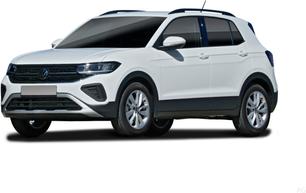
The Volkswagen T-Cross is the smallest SUV in the brand’s entire range, but it’s incredibly practical, great to drive and has an excellent level of safety.
It’s just been updated with some new features and it’s probably more affordable than you think.
So if you are thinking of a Mazda CX-3 or a Toyota Yaris Cross, then put the T-Cross on your list to check out, too.
Renault’s Arkana coupe-style compact SUV has been hit with its first makeover, which ushers in a range of styling changes, increased equipment and new model grade names.
There are few cars like it in the compact SUV segment, where vehicles usually favour the boxier, traditional SUV wagon shape over the stylish but often internal space compromised coupe SUVs.
Renault Australia is only expecting about one per cent share of the segment or around 1500 sales a year.
But if you want to stand out from the crowd of Mazda CX-30, Mitsubishi ASX and Toyota Corolla Cross small SUVs then the Arkana might be for you.
There are so many new little SUVs out there and it might be easy to think they’re all the same - a tiny cheap SUV is just a tiny cheap SUV. But I’m convinced the Volkswagen T-Cross isn’t like the others.
Yes, it’s tiny and relatively cheap, but it can do more than most of the others from the storage and space it offers to the value-for-money and its level of refinement. Then there’s the way it drives - which can’t in my books be matched by any of its rivals.
The sweet spot in the range is the entry grade Life. At $35K drive-away the value is best and with no difference in engines between the grades there are no huge reasons to step up higher in the range unless you have the money.
Note: CarsGuide attended this event as a guest of the manufacturer, with travel, accommodation and meals provided.
The Arkana is a stylish alternative in a sea of same-same compact SUVs. It's relatively well equipped and has some hidden gems in its ownership and running costs that elevate it above some of the competition.
It’s not a bad thing to steer, either, but the lurchy dual-clutch could be a deal breaker for some.
The sweet spot is the Techno, which misses out on the Esprit Alpine’s special touches but represents the most bang for your buck.
Note: CarsGuide attended this event as a guest of the manufacturer, with meals provided.
The T-Cross is Volkswagen’s smallest SUV at 4.1m long and even though it’s closely related to the little Polo hatchback it looks more like a mini version of the Tiguan.
It might be tiny and relatively affordable but it has Volkswagen’s premium looks and sharp styling, with creases in the panels so crisp it looks like somebody just ironed it.
This update has brought new front and rear bumper designs, and new styling to the LED running lights and tail-lights. That’s typically how car companies do exterior design updates, inside the styling changes are pretty minimal, too.
There’s new dashboard design and new media screen, but again the design and quality feels refined and high quality, which I can't say goes for a lot of this car's rivals.
The entry-grade Life misses out on the cross design tail-lights of the Style and R-Line, and gets hubcaps rather than alloy wheels like the other two grades.
This update isn’t a massive overhaul of the Arkana, rather its “refreshing and enhancing” what was already there according to Renault Australia.
And this remains true with the car’s styling. Not much has changed on the outside except for a few minor garnishes and flourishes, especially on the Esprit Alpine variant.
The coupe styling isn’t for everyone. It’s more popular in Europe than Australia but if you want to stand out from the crowd it’s a good place to start.
The Arkana has curves in all the right places and its little grille made up of little Renault badge diamonds is a welcome addition in a world of wide mouth front ends. The C-shaped LED headlights and a large Renault badge add a bit of pop to its look.
The pinched rear end has LED lighting that runs from the tail-lights to the centre badge and Arkana is spelled out in big, bold letters.
The Esprit Alpine stands out with gunmetal highlights on the front bumper and the front and rear skid plates in the same colour. It also adds a Esprit Alpine badge below the side mirror and front door sill plates.
The Esprit Alpine has 'Tricolour' stitching in red, white and blue on the door trim and steering wheel, which is complemented by blue contrast stitching on the gear shifter, seats and centre console.
Cabin quality is variable. There are some nice feeling materials used on the dash and on the door trims but below eye level there are lots of hard wearing plastics. A big slab of faux wood running along the dashboard doesn’t feel as high-quality as you would like. The quality drops a bit in the back row, which is where carmakers often try to cut costs.
Solid white is the only no cost paint colour, but it is not available on the Esprit Alpine. Metallic white, blue, black, grey and red cost $750.
Buyers can also option a black roof for a two-tone look for $600.
You really should take a look at my video to get an idea of how good space and storage is in the T-Cross. I’m tall at 189cm but I can drive with plenty of elbow room and legroom. The front seats also have really long bases which offer great under-thigh support, too.
Legroom in the back is great for the class and I can sit behind my driving position without my knees touching the seatback, while headroom is excellent, too. The second row also slides on rails to increase the boot side which is enormous for the class at 455L.
The second row doors also have large apertures making entry and exit easier.
Cabin storage is great with giant door pockets in the front and back, a wireless phone charger with four USB-C ports (two in the front and two in the second row).
The Arkana isn’t a family SUV, but rather is pitched at younger couples and empty nesters.
Up front there is great forward vision with a higher seating position than hatchbacks and sedans. Electronically adjustable seats and a manually moveable steering wheel means there’s a good seating position for pretty much everyone.
The seats are comfy and the multimedia screen and climate controls are easy to reach. The centre console has a wireless device charger, two USB-A charging ports and a 12-volt socket to keep various devices juiced up.
Two cupholders take up most of the space with minimal storage space leftover. There are decent sized storage bins in the doors and a little net in the passenger seats footwell to stop small items rolling around.
Back seat passengers have their own air con vents and USB charging ports, which is a welcome addition.
In the rear pew is where the Arkana’s stylish coupe-like design dents its practicality. The sloping roof shrinks the windows and reduces headroom, which makes it feel a bit gloomy compared to more boxy-shaped SUVs that makes it no-no for smaller kids.
The boot is a decent size, but it’s longer and lower than other SUVs, which is the price you pay for looking good.
There are three grades in the T-Cross line up, the entry level Life which lists for $33,990, the Style for $37,490 and at the top of the range is the R-Line for $40,990.
At the time of the launch of this updated T-Cross, Volkswagen was doing drive-away pricing of $34,990 for the Life, $39,990 for the Style and $43,990 for the R-Line.
Compared to rivals like the Mazda CX-3 and Toyota Yaris Cross, a drive-away price of $35K for the Life is excellent and $40K for the Style is also a good deal, especially when you look at the healthy standard features list.
Coming standard on the Life are LED headlights, black roof rails and power folding mirrors, there’s a leather steering wheel, a digital driver display (which is new, too), there’s an 8.0-inch media screen, wireless phone charging, air con, digital radio, Apple CarPlay and Android Auto.
Stepping up into the Style grade adds 17-inch alloys wheels, matrix LED headlights - those are new - chrome-look roof rails, an LED grille strip, proximity unlocking, dual-zone climate control, sat nav, and a new, larger digital driver display. The Style also gets the fancy 'cross' LED tail-lights like the R-Line grade above it.
The R-line is a new model sitting at the top of the line-up and it comes with sporty R-Line exterior styling plus 18-inch alloy wheels and dark tinted rear windows. Inside there’s R-line interior styling, 'Drive Modes' and a Beats sound system.
Initially Renault is launching with just two variants, the mid-tier Techno and top-spec Esprit Alpine, which replace the formerly named Intens and R.S. Line variants.
Despite the update, prices remain the same with the Techno starting at $41,000, before on-road costs, and the Esprit Alpine from $45,000.
An entry-level Evolution grade will arrive later to take the place of the old Zen variant. Expect it to be priced from $37,500.
The Arkana isn’t the cheapest compact SUV on sale with lower starting points for the Hyundai Kona, Kia Seltos and Mazda CX-30 ranges. It is cheaper than the hybrid-only Toyota C-HR and its French rival, the Peugeot 2008.
The two model grades are fairly well stacked with gear to justify the price, though.
Techno shoppers can expect 18-inch alloy wheels, which swell to 19-inche on the Esprit Alpine and all variants have LED head and tail-lights.
Step inside and the Techno grade has black leather and synthetic suede accented seats, which upgrade to more premium synthetic leather and suede upholstery with contrast blue stitching and Alpine badging in the top-spec grade.
The front seats are heated in both grades and the Esprit Alpine has a heated steering wheel, too.
On the tech front both variants have a 9.3-inch portrait-shaped multimedia display paired with a 10.25-inch digital driver display.
Apple CarPlay and Android Auto wireless smartphone mirroring is standard.
The Esprit Alpine version ditches the six-speaker stereo in the Techno for a booming eight-speaker Bose system and it adds a sunroof.
The T-Cross has a 1.0-litre three-cylinder engine which sounds tiny and it is, but it's turbo-charged and the 85kW/200Nm it produces is plenty of grunt to move this little SUV which at just under 1.3 tonnes is relatively light.
All grades in the T-Cross line-up have this same engine and there’s no high-performance variant, although the R-Line has selectable drive modes. Every T-Cross is front-wheel drive with a seven-speed dual-clutch auto transmission.
This three-cylinder is a mighty little beastie with a growly tone to it. There is some turbo lag during stop-start city driving, but it’s so eager to play that if it was a dog it’d be a Jack Russell with every intention to chase anything it sees but no idea how small it is.
The Arkana keeps the 1.3-litre four-cylinder turbocharged petrol engine from before. It makes 115kW and 262Nm and is paired with a seven-speed dual-clutch auto that drives the front wheels.
That’s plenty of grunt for a car this size, but it’s let down by a glitchy transmission that hesitates a lot at lower speeds and doesn’t do its best work when asked to hustle, either.
Smaller engines use less fuel than larger ones and the 1.0-litre three-cylinder in the T-Cross is little and Volkswagen says over a combination of open and urban roads it uses 5.6L/100km.
That’s fuel efficient but these days larger SUVs with hybrid systems are achieving the same low consumption. Toyota’s Yaris Cross is available with a hybrid system and will use about 3.8L/100km.
Volkswagen doesn’t have a hybrid version of the T-Cross, but it should, especially given these little cars will spend more time in urban environments where fuel consumption will generally be higher.
That said, most tiny SUVs don’t have hybrid systems so that makes the Yaris Cross exceptional while the T-Cross is about average.
Efficiency is the name of the game with the Arkana’s little turbo engine. The French brand claims it drinks 5.9L/100km on the combined (urban/extra-urban) cycle but we averaged 7.5L/100km on our circa two-hour country road drive according to the trip computer.
The higher speed twisting and turning country roads we drove on aren’t conducive to low fuel use, though.
It has a 50-litre fuel tank and only requires cheaper 91 RON petrol, which is rare for little turbo engines that usually have premium tastes.
Quite possibly the best little SUV to drive for this price and size, the only drawback is that there’s a touch of lag in the time it takes the power to arrive at low speeds in stop-start traffic, but that can be remedied by putting the transmission in 'Sport' mode.
The steering is light and accurate, the visibility is excellent thanks to the big windows and raised ride height, the pedal feel under your feet is great and the brakes are responsive.
The car feels stable, planted and secure whether it's on a motorway, or a winding country road, while the little 1.0-litre engine is a champion that keeps punching with a throaty growl that matches its enthusiasm.
The seven-speed transmission is superb and changes gears fast, while the paddle shifter lets you take control to keep the revs high.
These little SUVs aren't sports cars but some are so underwhelming to drive it feels like performance was never thought about while developing the vehicle.
But the T-Cross made me grin until my face hurt on the steep winding hairpin filled roads we tested it on at its launch.
The Arkana is a bit of a mixed bag on the road. Its engine is a nice little unit but the dual-clutch auto deflates the drive experience.
At lower speeds it hesitates and then gives too much oomph all at once, which can result in some wheel spin. It means you need to be mindful at T-intersections and when turning across traffic and feather the pedals.
This is a symptom of most dual-clutch autos but the Arkana’s is less sophisticated than say ones fitted to Volkswagens, and the Arkana doesn’t have the meaty power and torque bands of performance cars. A conventional torque converter auto would suit it better.
The Arkana does some of its best work at higher speeds, where the dual-clutch is more decisive and it's an admirable highway cruiser.
It isn’t a bad operator through the bends where it exerts excellent body control to minimise rolling. This is complemented by nice steering that is well weighted and accurate. Pedal feel is excellent with no woody or doughy feel to them.
The suspension is on the firmer side and you’ll feel some harsh bumps, especially over consistent smaller ones that it will crash over.
Its rear torsion beam suspension set-up is less sophisticated than the multilink arrangements found in an increasing number of competitors in the segment.
Road noise is noticeable at higher speeds. There's a fair bit of wind noise, too, but it was an especially windy day on our test drive.
The Arkana isn’t a sports car but is a stylish SUV for punting around town and facilitating weekend getaways, but there are other compact players that answer this brief better.
The T-Cross was given the maximum five-star ANCAP rating in 2019. What is truly great is that on every grade you’ve got AEB, adaptive cruise control, lane keeping assistance, rear cross-traffic alert, manoeuvre braking, plus front and rear and parking sensors.
For child seats there are three top tether anchor points and two ISOFIX points in the second row.
A space saver spare wheel can be found under the boot floor.
The Arkana holds a maximum five-star ANCAP rating, but it is based on the 2019 crash test of the Renault Captur, with which it shares much of its underpinnings. This rating is due to expire in late 2025.
There are six airbags and a range of active driver aids included as standard and the update adds a 360-degree camera view to all grades.
This joins auto emergency braking with pedestrian and cyclist detection, lane keep assist, blind-spot monitoring, rear cross-traffic alert, radar cruise control and speed sign recognition.
A lot of carmakers just tick the box for active driver aids but don’t think of the calibration. Not Renault. The driver aids barely interjected during the launch drive and only chirped up when needed, which is a welcome reprieve from the overly touchy and nannying sensors found in other cars.
The T-Cross is covered by Volkswagen’s five-year unlimited kilometre warranty.
Servicing is recommended every 15,000km or yearly and while there’s no capped price servicing you can buy a five-year plan for $2800, which equates to $560 per workshop visit.
There is one part of Renault’s ownership credentials that others can’t match.
Its service intervals are every 12 months and a whopping 30,000km, which is double the industry norm of 15,000km.
If you need to do big kays such as a sales rep or rideshare driver might this will be extremely important.
Five years or 150,000km of capped price servicing visits costs $2385, which is one the expensive side compared to Honda, Hyundai and Toyota but is in the ballpark of similar-sized Kias and Volkswagens.
Renault covers the Arkana with a five year/unlimited km warranty - par for the course in the mainstream market - and five years of roadside assistance.