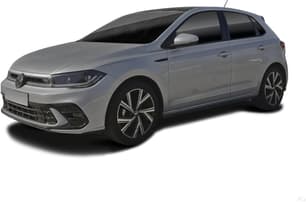
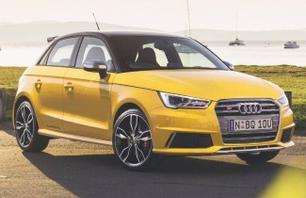
What's the difference?
The Volkswagen Polo is about to turn 30 in Australia but, by 1996, it was already 21-years and three generations old in Europe.
As the least-expensive jumping-on point for the brand here today (RIP VW Up!), the Polo has deftly juggled affordability with the premium pricing that its German engineering demands.
But, at nine-years old, and in an era of newer, hybrid and electric vehicle (EV) and often cheaper alternatives from China and elsewhere, is the ageing Polo as convincing?
We test the mid-spec CityLife to find out.
Spoilt. That's what we are. If you're in the market for a hot hatch, you can have your pick of German-built and French ones from as little as $27,000. There isn't a dud among them now that the VW Polo GTI has had a bit of an update and you can pick and choose your style. Audi's S1 is aiming to be king of the kids with its stiffly-priced S1.
Set the finances aside and consider for a moment what's on offer. As it turns out, a lot.
The VW Polo may be getting old, but it still shines on a number of fronts, including design, interior packaging and presentation, driving sophistication, efficiency and quality.
But, the ride can be too firm and the turbo/DCT lag frustrating, it is also expensive and not fully equipped enough in CityLife grade as tested, undermining the German’s value-for-money equation somewhat.
Haggle hard, though, and you’ll end up with a fine and mature urban hatch.
Cars this small shouldn't be this fast and useable at the same time, but the Audi S1 is. It isn't without its problems - the ride is harder even than the Fiesta ST which might weary some prospective buyers.
It's also a bit difficult to justify the price - in its basic form it's missing a few creature comforts that you'd expect in a $50,000 car - reversing camera, high-res screen, that sort of thing.
However, in the hot hatch world, those things don't matter. It has the bragging rights, the tech and the outright blinding speed to take on the bonkers Focus ST and equally zany Megane RS. And even the Audi S3.
Still looking good after nearly a decade, the 2026 Polo’s styling was overseen by the same person who created the landmark Mk4 Golf’s interior, and helped shape every existing ID. electric vehicle (EV) in VW’s arsenal, though now he’s with Changan of China.
Anyway, Polo 6’s dimensions were substantially larger than its pert predecessor’s, riding on a shortened Mk7 Golf platform (dubbed MQB A0) that has since also underpinned the very closely related Audi A1 (the circle of life!) and Fabia, as well as Skoda’s Kamiq light SUV and its VW T-Cross cousin.
The obvious upshot of all this growth is generous cabin space (being roomier than the first four Golfs), as well as a very Golf-esque/ID. EV-style dash layout that's inline with the brand’s existing design themes. It pays to be first with the new stuff. Even though some of that tech, like the touchscreen slide controllers and other buttonless nonsense developments, have taken the shine off VW since.
And it would be remiss of us not to mention that there is no sign of the current Polo being retired anytime soon despite its advancing years, with VW suggesting the newly unveiled ID. Polo EV – essentially series number seven – will run alongside with identical dimensions but far greater interior space, to help keep the company cost-competitive in the light-car class.
At this stage we don't know if Australia will even receive the new electric Polo, so the status quo here remains.
The A1 is so small it starts to strain Audi's design language. When you cram on the S-style bumpers and raccoon-eyed trim on the hatchback, it's starts to look a bit busy.
It isn't quite a shrink-wrapped A3 - Ingolstadt's designers know better than that - but it's full of Audi design cues, such as the strong, light-catching character lines, distinctive LED daytime running lights and fondness for big wheels.
Inside is along the themes of the A3, with what are becoming Audi's trademark; round eyeball air-con vents, the manual fold-down screen familiar to Q3 owners (but smaller) and a good clear dash. The handbrake jars slightly as it feels cheap to hold and wobbles a bit.
The S Sport seats are big and comfortable, and the top half of the backs are capped in plastic, which was colour-coded on our car. The rear passengers will certainly get an eyeful of whatever terrifying hue you've chosen, so choose wisely.
Despite the five doors, the back seats are occasionals, like the Mini the A1 is gunning for, and the boot is very small, but okay for shopping for couples or singles.
Four Polos are available in 2026. The Life starts from $30,990 (all prices are before on-road costs unless otherwise stated), CityLife from $32,790, Style from $34,990 and GTI from $41,990.
All, bar the range topper, use a 1.0-litre three-cylinder turbo-petrol engine dubbed 85TSI, leaving the 2.0-litre four-pot turbo solely for the hot-hatch flagship. An automatic transmission is standard across all models, with no manual availability, unfortunately.
Every Polo comes with LED headlights, adaptive cruise control, an 8.0-inch touchscreen with reverse camera, wireless Apple CarPlay/Android Auto, DAB+ digital radio, electronic instrumentation, smartphone charging, four USB-C ports, parking sensors and alloy wheels (with a spare wheel, thankfully).
Now, the CityLife is essentially the quite plain-Jane Life, but with welcome extra gear you’d expect at the Polo’s lofty base price, including keyless entry/start, climate control air-con, automatic parking assistance, tinted side windows and 16-inch alloy wheels.
The rear cross-traffic alert, blind-spot monitor and matrix LED adaptive headlights safety tech are alone worth the $2200 jump to the Style (again, they ought to be included at this level), which also adds more glamourous instrumentation, glossier trim, sat-nav, multimedia gesture control and fancier wheels that at least inject a bit of upmarket flair.
Never the cheapest in its class, the Polo has long had to rely on notions of next-level quality, engineering prowess and brand cache to make its value-for-money arguments in Australia stick.
Which in some ways is easier today than a decade ago, since so many light hatch rivals from back then have disappeared from the scene – including the Ford Fiesta, Holden Barina, Honda Jazz, Kia Rio, Nissan Micra, Peugeot 208 and Renault Clio. Seriously, we miss them.
Fewer traditional competitors then, yet every remaining direct rival in near-equivalent CityLife specification costs less, some significantly so.
They include the MG3 Essence from just $24,990 drive-away (and even the Hybrid+ undercuts the VW from $30,990 drive-away), Mazda2 GT from $28,490, Suzuki Swift (mild) Hybrid GLX from $31,490 drive-away, the closely related Skoda Fabia Select from $32,390 and Toyota Yaris SX Hybrid from $32,390.
Chinese EVs at or under the same price as the VW include the BYD Atto 1 in longer-range Premium guise from $27,990, the next-size-up BYD Dolphin Essential from $29,990 and GAC Aion UT Premium from $31,990.
Finally, while scores of small SUV alternatives exist, most of the cheapies from China are simply not good enough, except for the (albeit still patchy) BYD Atto 2 EV from $31,990.
On the other hand, worthwhile options from elsewhere include India’s Mahindra XUV3XO in higher-spec AX7L from $26,990 drive-away (bargain!), Romania’s Renault Duster Evolution from $31,990, South Korea’s Kia Stonic Sport from $32,290 and Japan’s Toyota Yaris Cross GX Hybrid and Mazda CX-3 Evolve, from $31,790 and $32,400 respectively.
With opponents like these, it’s little wonder that VW only sold 934 Polos last year against 15,429 CX-3s.
Value just isn’t the CityLife’s strong suit.
Starting at $49,900, Audi S1 is by far the priciest of the small-hatch based hotties, at least until Mini's madcap JCW arrives. This price is just almost double that of VW stablemate's forthcoming 2015 Polo GTI.
Standard on the manual-and-five-door-only S1 is a ten speaker stereo, climate control, ambient lighting, remote central locking, cruise control, satnav, headlight washers, auto headlights with xenon low beams, partial leather seats, leather-bound steering wheel, auto wipers and rear parking sensors.
Our Misano Red ($990 option) came with two extra packs. The Quattro Exterior Package ($3990) adds bi-xenon headlights with red trim, red brake calipers, spoiler, quattro logos on rear doors (ahem!) and five-spoke 18-inch alloys that are part matt black, part polished.
The Quattro Interior Package ($2490) adds S Sport front seats with Nappa leather and red backrest capping with quattro logo (ugh), more nappa around the cabin with contrast stitching, flat bottom steering wheel and red rings on the air vents.
There's an S Performance Package that brings the best of these two packs together for $4990, saving about $1500 and the embarrassment of the quattro logos.
Our test car also had aluminium air vents ($220), black contrasting boot lid ($300) and black roof ($720).
The A1 is so small it starts to strain Audi's design language
The grand total is a sobering $58,610. There's a couple more options that'll easily pop you over $60,000.
Audi's MMI is dash-mounted in the A1 as there's no room on the narrow centre console. As ever, it works well and doesn't take much getting used to. The satnav is a bit grainy on the smaller screen but is otherwise a competent unit.
Sound is from a ten-speaker stereo and you can stream across Bluetooth or plug in a memory card. The sound was good but the system did take a while to find the phone whenever we came back to the car.
The 85TSI is a 1.0-litre three-cylinder turbo-petrol engine, with direct injection and a start/stop system designed to save fuel.
That said, this EU6 emissions-rated unit provides a healthy 85kW of power between 5000-5500rpm, as well as 200Nm of torque from 2000-3500rpm.
It drives the front wheels via a seven-speed dual-clutch transmission (DCT) VW brands DSG, while other markets enjoy the option of a six-speed manual.
The official 0-100km/h acceleration time is 10.4 seconds, on the way to a top speed of 200km/h.
This is where the action is. The S1's tiny body packs a 2.0-litre turbocharged four-cylinder producing 170kW and 370Nm of torque. The S1 will streak to 100km/h in 5.9 seconds thank to the traction aid of quattro all-wheel drive.
All Audi S1s come with a six-speed manual
Despite a pretty solid hammering during its week with us, including more time than we'd have liked in Sydney traffic, the stop-start function helped deliver a pretty reasonable 10.2L/100km, however that's a long way over claimed 7.1L/100km.
All Audi S1s come with a six-speed manual, so dual-clutch haters can save the whining. The only downside from not having a self-shifter is the ECU can't deliver the boy racer farts, parps and crackles of the other S cars.
It is quite astounding how VW manages to maintain a consistency throughout its model range, from Polo to Touareg, and the CityLife’s 85TSI DSG is no exception.
Press the starter button and you’ll barely discern the engine as a three cylinder, so effective is the sound deadening. Slot the satisfyingly normal gear lever into ‘D’ and, depending on your expectations, what comes next seems either a tad frustrating or impressively lively.
Let’s explain this more.
As with almost all turbo/DCT applications, there is a moment’s hesitation due to the turbo spooling and gears meshing up. If you’re rushing to merge with fast motorway traffic or turning at an intersection, the acceleration can feel like it needs forever before the car lurches into action and you’re on your way. Every single time.
Yet, in every other circumstance, the 85TSI is a lusty and lively machine, stepping away eagerly and smoothly under moderate throttle input, with the speed then instantly piling on as the engine’s revs reach towards the 5000rpm sweet spot, accompanied by a throaty exhaust note.
Combined with the ultra-fast ratio changes that the DCT is famous for, this is when you’d call the Polo enjoyably rapid, offering instant response for quick and easy overtaking. And all the while, the powertrain feels and sounds silky-smooth.
We noted that the adaptive cruise control betrays the VW’s age, since it can maintain varying speed with traffic flow, but once fully stopped, it requires the driver to keep a foot on the brake pedal to keep it from releasing and creeping forward (or backward on a hill). Nowadays, most newer systems stay stopped until traffic moves on again. It’s a surprise that the company did not update this with the Polo’s 2022 facelift.
The steering, though, feels state-of-the-art. A real treat, it is precisely weighted and beautifully tactile, for immersive, controlled cornering agility and feel over an impressively broad range of speeds and environments.
On smooth roads the 85TSI’s dynamic fluency is lovely, with the front end working with the keen driver while also providing reassuring grip and control. Yet it’s also light and easy enough to fit in tight spots, or zig-zag through traffic, making it an ideal urban runabout.
After a seemingly endless run of (especially Chinese) EVs and hybrids serving up dull and detached steering, the Polo’s nuance and finesse is a total breath of fresh air. VW, please don’t lose this ability.
The same also applies to the advanced driver-assist systems (ADAS) tune, which works quietly yet effectively in the background without jarring interference. The Polo feels light years ahead here as well.
But a bit more suspension comfort is required when the roads get rough.
Isolating and cushy on the smooth stuff to the point it feels like a luxury car, the suspension starts transmitting bumps and lumps when the bitumen turns bad, breaking the seamless flow of an otherwise accomplished chassis tune. It can also become a bit vocal over coarse bitumen, due to road and tyre noise intrusion.
Otherwise, the 85TSI is a slick and accomplished drive, with a quiet ride and long legs for easy, long-distance cruising.
Just like every other new VW.
If you're buying the S1 as a comfortable urban runabout with a cool badge, you're half right. While the seating for front passengers is certainly supportive, the hard suspension tune will ensure you're well aware of road surface imperfections.
The S1 is a rocket
Thankfully, what it missed out on in the ride department it makes up for in every other way - the S1 is a rocket. The 2.0-litre turbo jammed under the bonnet has almost no lag and is paired with a slick six-speed manual that is terrific fun to manhandle through the gears.
The way the S1 picks up speed when it's on boost is addictive and licence-endangering. A flattened accelerator in second or third will obliterate just about anything this side of $100,000 and you'll be having more fun in this than big brother S3 because the chassis is more adjustable and there's a bit more life.
You can hear the turbo sing to accompany the bassy exhaust growl. Hit the massive brakes hard and the car remains stable even over rutted roads. Turning the wheel brings almost-instant turn-in, mashing the throttle again a fun little wriggle. It's superb.
It's tremendous fun point-to-point on a twisty road
You'll have to be a bit patient with the throttle to get the wriggle, though - give it too much too early and it will want to push wide, the quattro system shuffling power around to try and quell understeer while the electronic diff fiddles with the braking system to do the same thing. It gets there in the end, but you're better off meting out the power with your right foot for maximum rewards.
It's tremendous fun point-to-point on a twisty road - despite being a bit heavy for its size (1415kg), it's as chuckable as the next best thing, the Fiesta ST.
Tested in 2022 after the Polo’s mid-life refresh, it achieved a five-star crash-test safety rating.
Standard safety features include autonomous emergency braking (AEB, operational from 4km/h to 85km/h and with cyclist and night-time operation), low-speed manoeuvre braking (up to 10km/h), lane support systems (between 60km/h and 240km/h), lane departure warning with steering assist, driver fatigue monitor, parking sensors and full-airbag coverage.
However, for rear cross-traffic alert and blind-spot monitor, you’ll need to pay more for the Style (or GTI), when more modern alternatives offer these inclusive at the CityLife’s price point.
A pair of ISOFIX points as well and a trio of top tethers for securing child seats are fitted to the back seats.
Six airbags, stability and traction control, ABS, brake assist and distribution all add up to a five star ANCAP rating.