What's the difference?
Long before a hash-tag was anything more than a confusing symbol on a typewriter, vanlife was already a thing.
And you can largely thank Volkswagen for that because its Kombi models from the 1950s, '60s and '70s help cement the idea of roaming around the planet in a self-contained car-cum-house as a counter-culture favourite. More than that, the affordable, rugged Kombi made it actually possible.
Back then, there were a couple of paths to tread. You could take a second-hand butcher’s or florist’s Kombi van (windows optional) and trick it out with a bed, a table and whatever gear you needed to survive on the road.
Or, if the cash was around in sufficient quantities, you could buy a Kombi brand-new and have it converted to camper spec. And of all those brand-new conversion options, Volkswagen’s own, in-house conversion supplier, Westfalia was (and is) regarded as the pick of the crop.
So, when VW announces a 21st Century take on the concept of a factory campervan, those who like the idea of a lap of Australia but don’t like caravans or towing, are suddenly all ears.
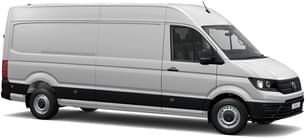
Like most things, the latter-day VW camper has grown a size or two over the last six or seven decades. Which is why the factory Kampervan TD1410 4 Motion (to give it its full name) is based on the long-wheelbase, high-roof version of the Crafter van rather than the original Transporter layout. (There’s still the VW Multivan-based California if the Kampervan is too big.)
But just as commercial vehicles have become bigger and more sophisticated, and glamping has grown out of actual camping, does the modern take on a hippy legend make the grade in 2024? And does the Volkswagen offering retain any of the charm of the original campervan?
Oh, and forget about Westfalia. This conversion is the work of none other than Aussie caravan specialist Jayco.
The deal between Jayco and VW locally, means this variant of the Crafter Kampervan is an Australia-only deal.
If you’ve clicked on this thinking, “What’s a Farizon?” you're probably not alone.
Farizon is yet another sub-brand of Chinese giant Geely which owns brands like Volvo, Polestar, Lotus, Smart and Zeekr, among others.
This new brand is an electric commercial vehicle specialist that arrived in Australia earlier this year thanks to Saudi Arabia-based distributor, Jameel Motors. Sales are currently only offered in Queensland through Farizon’s website, though a dealer network is being developed with a priority of the eastern seaboard.
The Farizon SuperVan is the company’s first offering in Australia, alongside an electric light truck called the H9E. This electric mid-size van is a rival to the likes of the LDV eDeliver 7, Peugeot E-Expert and Volkswagen ID. Buzz, as well as the forthcoming Ford E-Transit Custom.
How does it stack up? Read along to find out.
This is not the vehicle for somebody looking for the odd weekend away. That’s mainly because it will take up a lot of real estate when you’re not using it (it may not even fit in a lot of car-ports or garages) and it’s far from a daily driver for the school run or shopping trips.
If you’re looking for a getaway machine that will also work at home for the other 48 weeks of the year, a conventional caravan and four-wheel-drive is likely to be a better bet, purely because the tow-vehicle can be your day-to-day transport
But if your plans include longer getaways and you have the storage space to keep the Kampervan stashed away safely, it starts to emerge as a functional alternative.
Talk to long-term travellers, and even the best camper trailer needs to be set up each night and folded away next morning, and as for tents, don’t even start us…
But like a full-sized caravan, the VW simply pulls up to where ever it is you want to stay for the night and is ready to feed, entertain and rest its occupants within seconds of stopping.
But unlike a big, heavy caravan, the Volkswagen imposes far fewer driving caveats (including fuel consumption) and is a vastly more enjoyable and simple thing to drive in pretty much any circumstance.
It's not for everybody, but for those whose lifestyle it matches, the VW Kampervan is an alternative to a caravan that deserves short-listing. Let’s face it, 50 million hippies can’t be wrong.
Note: CarsGuide attended this event as a guest of the manufacturer, with accommodation and meals provided.
You’d think Farizon would be onto a winner given it has created a van with cool looks and the packaging benefits that come with a dedicated EV architecture. However, the SuperVan left a sour taste in my mouth.
There are good bones here, but Farizon has a long way to go with fixing the electric motor whine and safety systems.
It’s great the company is aware of the SuperVan’s shortcomings and is currently working on software updates, but it begs the question, why wasn’t it good in the first place?