What's the difference?
The venerable VW Caddy was launched in 1979 and after five generations and more than four decades of service, it remains one of the world’s most popular range of small vans.
In Australia’s light-commercial vehicle market, the Caddy’s work-focused Cargo model competes in the small van (under 2.5-tonne GVM) segment against the Renault Kangoo and Peugeot Partner.
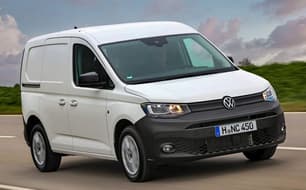
The VW range offers Cargo (SWB), Cargo Maxi (LWB) and Crewvan (LWB) models with a unique choice of petrol/diesel engines and manual/auto transmissions.
We recently revisited this German workhorse to find out why it remains such a strong seller in Australia from a business perspective.
That the 2020 Mini Clubman John Cooper Works is the most powerful Mini to have landed in Australia isn’t all that surprising. After all, parent company BMW has squeezed the thumping four-cylinder engine from the M135i under its bonnet, and that thing creates a snarling beast of any vehicle it finds a home in.
What is a surprise, though, is that having now driven this angry, crackling, snarling hot hatch, what with its burbling exhaust and properly rapid acceleration, is that it took Mini this long to get around to doing it.
So does the engine upgrade now put the Clubman JCW on the same pedestal as the best European hot hatches? There's only one way to find out.
It’s not hard to see why the Caddy Cargo maintains its enduring favouritism in the small van class. It has outstanding workhorse capabilities, unmatched five-star safety and drivetrain choice, combined with a spirited car-like driving experience, be it unladen or with a heavy payload. It’s not perfect, but it's also hard to fault in a workhorse role.
The Mini Clubman JCW is quirky in a lot of the right ways, and now has a hard-charging engine to up the adrenalin factor. If you were already sold on the idea of joining the Clubman club, this one will steal your heart more than any other.
Our test vehicle rides on a 2755mm wheelbase with 4500mm overall length, yet its 11.4-metre turning circle is slightly larger than a Toyota HiAce mid-sized van, which highlights the restrictions in steering lock shared by front-wheel-drive vehicles like the Caddy and its French rivals.
Underneath you’ll find robust MacPherson strut front suspension, a coil-spring beam rear axle with Panhard rod, four-wheel disc brakes and electric power-assisted steering.
It comes well armoured for work duties with unpainted dark grey plastic used in areas where bumps, scrapes and wear usually occur like the front/rear bumpers (including the rear pillars from top to bottom), door-handles and door mirror-shells. The bright silver alloy-look plastic wheel-covers can also be easily replaced if damaged by kerbs to keep this van looking sharp on the job.
Its purposeful external appearance is matched by a neat and practical cabin design with wipe-clean rubber flooring and fabric-trimmed bucket seats for driver and passenger. Hard surfaces abound in contrasting shades of grey with splashes of satin chrome.
The minimalist dash design is achieved by corralling most functions into the comparatively small (by today's standards) central touchscreen including often-used climate control, engine auto start-stop etc., which can be fiddly and distracting when driving. Thankfully, at least physical dials for audio volume and tuning remain.
It's no real secret that earlier iterations of the Clubman were, well, a little challenging on the eye (Mini itself says “It was cool - if you were built that way…").
But this face-lifted version is much easier on the eye, if not as a cute a package as the three-door hatch variants. It's dimensions - long, smooth sides, a squared-off rump and bulging grille - somehow work as one to create car that is undoubtedly unique, but also rather fetching.
Inside, it’s all pretty familiar Mini, what with the circle screens and jet-style switches. And it is a stylish space in the cabin, with a good material mix and the addition of wireless Apple CarPlay and Android Auto making the centre screen far more functional.
The only downside is that, for mine, it favours that style over substance. It’s not the most user-friendly space I’ve ever sat in, though I imagine you’d get a little more used to it the more time you spent in there.
The Caddy’s 1508kg tare weight and 2250kg GVM results in a 742kg payload rating, of which up to 100kg can be legally carried on the roof where external anchorage points are provided for roof racks or rails.
It’s also rated to tow up to 1500kg of braked trailer, although its relatively low 75kg tow-ball download (TBD) limit could present a challenge, given that TBD is typically about 10 per cent of trailer weight. So, a 150kg TBD rating would be better.
Volkswagen also does not publish a GCM (Gross Combination Mass) rating, so we don’t know how much it can legally carry and tow at the same time.
The cargo bay, which offers up to 3.1 cubic metres of load volume, is accessed through a kerbside sliding door or asymmetric rear barn-doors.
Its 1797mm length and 1614mm width with 1230mm between the rear wheel-housings provides good versatility, given it can carry an 1165mm-square Aussie pallet or 1000 x 1200mm Euro 3 pallet, two 800mm x 1200mm Euro pallets, or two 720 x 830mm bread-roll containers.
However, with the sliding side-door’s 695mm opening, all of these would need to be loaded through the rear barn-doors which offer 180-degree opening for easy forklift or loading dock access. The load floor is protected by a thick moulded-rubber liner and there are six load-anchorage points.
The cargo bay walls and doors are lined to mid-height and there are two bright LED roof lights and a handy 12-volt socket.
Driver and passenger have ample cabin storage with large-bottle holders and bins in each front door, a handy pull-out compartment to the right of the steering column, numerous bins embedded in the dash-pad, full-width overhead shelf, a large glovebox and a centre console with dual small-bottle/cup holders and numerous storage nooks.
The Clubman is super practical - for a Mini... This is not a Bunnings bandit, and nor will you be piling endless Ikea flatpacks into the boot.
It measures just over 4.2m in the length, 1.4m in height and 1.8m in width, and while they're not massive numbers, you might find yourself surprised by the room in the backset.
I'm around 175cm, and I could sit behind my own driving position with ease - thanks in no small part to the clever scalloped seas that give you extra leg room - and the headroom isn't half bad, either.
Yep, you can definitely fit two adults in the backseat (but never three), and those travelling back there will find air vents to help keep the temp down, as well as USB points and a pair of child seat anchors.
Up front, the cabin somehow manages to feel more cramped, with the steering wheel, centre console and controls on the driver's door all feeling like they're encroaching on your personal space a bit, but it's a comfortable place to sit all the same.
Step around to the barn-door style boot and you'll find what looks a little bit like a station wagon, only without all the space. Yes, it looks like a positive load-lugger next to the three-door hatch, but you still don't get that much space for luggage, with the official number at 360 - 1250 litres.
Our test vehicle in standard Candy White is the Cargo SWB, which at entry-level is available with a 1.5-litre turbo petrol engine with six-speed manual or seven-speed auto. Or you can step-up to a 2.0-litre turbo-diesel with either a six-speed manual or (like our example) a seven-speed auto for a price of $45,990 plus on-road costs.
That’s higher than its two small van competitors, given the Renault Kangoo SWB petrol auto lists at $42,990 and Peugeot’s Partner Pro Short petrol auto is $39,990, but the Cargo is unique in offering five-star safety and its drivetrain choices.
The work-focused standard equipment list includes 16-inch steel wheels with plastic covers, 205/60R16 tyres and a full-size spare. There’s also an electronic handbrake, separate cargo bay locking system, a reversing camera, rear parking sensors, heated door mirrors, daytime running lights, two USB-C ports and two 12-volt sockets.
A moulded composite bulkhead with window separates the cabin from the cargo bay. The driver also gets a leather-trimmed flat-bottom steering wheel with multi-function controls, plus adjustable lumbar support for both driver and passenger seats.
The four-speaker multimedia system is controlled by an 8.25-inch colour touchscreen with Apple CarPlay, Android Auto and MirrorLink connectivity and FM radio, but no DAB or (sorry, talkback fans) AM band.
Volkswagen also offers numerous paint colour options and four option packs, plus there’s a genuine accessories range containing useful workhorse items like all-weather floor mats, roof racks, cargo barriers, dashcams and more.
Mini is rolling the dice on a new specification strategy designed to take the endless questions and options out of buying a new car.
And so the Clubman JCW is the first Mini to be offered in the Pure trim ($57,900), which seriously limits the personalisation options to get you out of the dealership and behind the wheel as quickly as possible. You can choose from two wheel choices, four exterior paint choices, a back roof or a sunroof, and, well, that's about it.
Outside, your money buys you 18-inch alloys wrapped in Michelin rubber, adaptive suspension, roof rails and LED head and taillights. Inside, expect cloth sports seats, an 8.8-inch screen that's both (wireless) Apple CarPlay and Android Auto equipped, standard navigation, climate control with rear vents and push-button start.
If the Pure doesn't give you enough options, then the regular Clubman JCW ($62,900) will add 19-inch alloys, leather seats, a 12-speaker Harman Kardon stereo, a head-up display and heated front seats. Oh, and all the personalisation options you shake your credit card at.
Our test vehicle’s premium 2.0-litre four-cylinder turbo-diesel engine, dubbed TDI320, meets Euro6 emission standards using AdBlue, and produces 90kW at 4250rpm and 320Nm between 1500-2500rpm.
The seven-speed dual-clutch automatic offers three drive modes comprising (default) Drive, Sport or sequential manual-shifting using steering wheel-mounted paddles. There’s also an electronically-controlled automatic locking diff.
This is a cracking engine; a twin-charge, 2.0-litre, four-cylinder weapon that sends 225kW and 450Nm thundering to all four tyres.
That power is funnelled through an eight-speed automatic transmission, and will see the Clubman JCW clip 100km/h in 4.9 seconds before pushing on to a 250km/h.
The official combined average fuel consumption is a hybrid-like 4.9L/100km and the dash display was showing 5.6L after our 355km test, of which about one third of that distance was hauling a near-maximum payload.
That wasn’t far south of our own fuel-sipping figure of 6.5L/100km, based on actual tripmeter and fuel bowser readings. Therefore, you could expect an excellent real-world driving range of up to 770km from its 50-litre tank.
Mini says its Clubman JCW will sip 7.7L/100km on the combined cycle, and emit some 175g/km of C02.
Its compact external dimensions are deceptive, as the cabin has ample headroom and it’s not hard for even tallish drivers (I’m 186cm) to find a comfortable position, even though the close-fitting bulkhead restricts backrest recline adjustment and the base cushion rake is fixed.
Small vans are the closest you’ll get to a car-like driving experience in light commercials and, given the Cargo’s unique turbo-diesel powertrain, it has unmatched torque output that provides energetic performance.
The shift calibrations of its seven-speed dual-clutch automatic ensure vigorous response in city and suburban driving, given that for most of the time they keep the engine operating between 1500-2500rpm, where its 320Nm of torque is served at full strength.
Combined with nicely weighted steering and four-coil suspension that provides an ideal balance of responsive handling and supple bump absorption, it’s an enjoyable and engaging vehicle to drive. The Sport drive mode and sequential manual-shifting options raise the fun level.
The gearing also ensures low-stressed highway driving with only 1600rpm required to maintain 110km/h, at which speeds the solid bulkhead minimises cargo bay noise that mostly emanates from the rear tyres. However, tyre noise can still be intrusive on certain grades of coarse bitumen.
To test its payload rating, we forklifted 650kg into the cargo bay through the rear barn-doors, which with driver equalled a total payload just shy of its 742kg payload limit. The rear suspension compressed almost 60mm under this weight, with long jounce rubbers positioned inside the rear coil springs providing additional load support and, in effect, a second stage of springing.
The Caddy took this heavy load haul in its stride on city and suburban roads, gliding over bumps without a hint of bottoming-out. The payload’s effect on engine, steering and braking performance was minimal and its handling composure was maintained regardless of speed or road conditions.
It also made light work of our 13 per cent gradient, 2.0km-long set climb at 60km/h, and although engine braking on the way down required some assistance from the quartet of disc brakes to keep speeds in check, they handled this task with ease.
Our only criticism of the driving experience is that, given the substantial blind-spot over the driver’s left shoulder caused by the cargo bay’s solid walls, a Cargo buyer must pay extra to get blind-spot monitoring and rear cross-traffic alert as part of an options pack. We reckon these active features are crucial to safe van operation (any solid-walled van that is) and should be standard.
Yes, this is the most powerful Mini to have landed in Australia. And even better, it’ll remain so, or at least equal first, when the Mini GP arrives next year. That car gets this same thumping engine, and the outputs are the same, though the smaller, lighter hatch will no doubt be faster.
It means Clubman JCW shoppers aren't about to lose their street credit, with this engine likely to remain the king of the castle for some time yet.
The Clubman It might tip the scales at 1550kg, but the kilos don’t hurt its straight line speed much. Whack it in sport mode, which also adds this deep bass to the exhaust, plant your right foot and the Clubman positively pounces forward.
Better still, it feels - and sounds - quick, too, There’s this angry snap and crackle on the overrun, and the exhaust genuinely booms in the cabin when you really bury your foot.
You’ve heard the cliches before, of course, about Minis feeling like they’re on rails, and we won’t waste your time with those here. Suffice to say we have pushed Clubman around some pretty tight corners at some pretty decent speeds, and while it doesn’t feel like a featherweight, it also picks and sticks to a line with absolutely no nonsense from the tyres and very little in the way of body roll.
That’s the good, now the not so good. The impressive handling feels like it’s been achieved by hardening up the suspension as much as possible, and the downside of that is that it can feel plenty sharp and bouncy over big bumps. On the right road, it kind of adds to the experience, but I'd imagine the daily commute would start to fray your patience fairly quickly.
There’s also a kind of skittishness to the way it drives fast too, which I actually don’t mind, but others might say isn’t as natural and flowing as others in the segment.
But this is the hardest, fastest clubman you can buy, and so you’re going into it knowing there’s going to be some comfort compromises. And if you’re looking a loud and rorty hot-hatch experience, this thing delivers in spades.
And on the right stretch of road, it’s an absolute hoot.
Unmatched by its small van rivals is a five-star ANCAP rating (tested 2021, expires 2027) which applies to all Cargo variants built from July 2022.
It’s equipped with seven airbags, AEB with pedestrian and cyclist monitoring, a reversing camera, rear parking sensors, daytime running lights, non-adaptive cruise control, driver fatigue alert system and more, but you must pay extra for extra safety.
The Clubman JCW arrives with six airbags, a reversing camera, AEB, active cruise, forward collision warning and front and rear parking sensors and what Mini calls Performance Control, which it promises will reduce understeer and increase traction in corners.
The Mini Clubman was awarded the full five-star ANCAP safety rating when tested in 2017.
The Caddy comes with a five-year/unlimited-kilometre warranty and 12 months roadside assist.
Scheduled servicing is every 15,000km or 12 months, whichever occurs first.
An optional five-year pre-paid service package is available for the price of a three-year package ($2000), so that’s two free services and savings of up to $1439 compared to pay-as-you-go capped-price servicing. In other words, an average annual servicing cost of $400.
The Mini Clubman JCW is covered by a three-year warranty, and falls under the BMW group's condition-based servicing program, in that it will tell you when it's time for a service.