What's the difference?
This is a very important ute if you’re Volkswagen Australia.
A lot of time and money has gone into making sure this, the 2026 VW Amarok W600 as engineered by Walkinshaw, is the ultimate driver’s ute. Not the best 4X4, but the best ute on the road. Sounds like an odd task, right?
It might be, but a couple of thousand people bought the last version of this ute, so why not try to make it better?
Over a long development period and a steady build-up, including previews at the former Holden proving ground at Lang Lang, Volkswagen has teased its ‘ultimate driver’s ute’.
Now, we get to put the production version to the test on the very roads that helped shape it during its development in Tasmania.
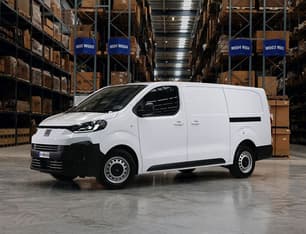
About a decade has passed since the Fiat Scudo mid-size (2.5-3.5 tonne GVM) van was last sold in Australia, when it shared its underpinnings with the Peugeot Expert before Fiat-Chrysler and PSA (Peugeot-Citroën) merged to become the giant Stellantis group in 2021.
In 2026 the Scudo (which means ‘shield’ in Italian) has returned under the Fiat Professional Australia banner as the Series 3 or third-generation, again sharing its underpinnings and core styling with the Peugeot Expert but now based on the latest Stellantis 'EMP2' platform.
We recently spent a working week aboard Fiat’s new commercial offering to see how it measures up from a tradie’s perspective in this popular van segment.
The Amarok W600 is impressive when you get it onto a twisty road, and my hat goes off to Walkinshaw for turning a dual-cab into something that is genuinely fun to drive on twisty roads. I’m not kidding, the W600 is proper fun.
But it’s expensive, and despite the tough looks and on-road ability, it doesn’t have any more on-paper performance than its standard siblings. That and its ride is compromised by its new abilities.
Those who spend the cash on a W600 probably won’t be disappointed if they can handle a slightly stiff ride, but it’s possible VW is expecting people will be more into the idea of a corner-carving dual-cab than is the reality.
Note: CarsGuide attended this event as a guest of the manufacturer, with travel, accommodation and meals provided.
The Fiat Scudo LWB Primo offers a large payload rating, excellent fuel economy, peppy performance and practical features like its load-through flap. However, it also has shortcomings like a tiny tow rating and no sequential manual-shifting. So, only a potential buyer can determine if the positives outweigh the negatives when deciding if this largely badge-engineered European van is the right fit for their business.
The Amarok W600 looks tough. In fact, it might even look a little too tough given the engine under its bonnet is unchanged from the regular V6 Amarok.
Walkinshaw has done an excellent job making the Amarok look like a properly fierce on-road performer, from the bespoke front bumper and new ‘W’ motif in the grille, to the lightbar across the front of the fascia connecting the lights and the aforementioned 20-inch Walkinshaw wheels.
The side-exit twin exhaust up the back of the ute looks excellent, and the fact that the sidesteps retract to tuck in below the doors gives the ute a sleeker vibe.
It’s a bit underwhelming in the cabin by comparison, with the Walkinshaw stitching in the headrests and the stainless steel pedals the biggest additions to the (admittedly already plush) Amarok interior.
It’s just a little more than a jazzed-up Ranger interior, but not by much.
Like its platform-sharing Peugeot Expert associate (which differs only in cosmetic changes) and other continental rivals like the Ford Transit Custom and Renault Trafic, the Scudo has a distinctive ‘Euro’ look which combines boldly sculptured bodywork with work-focused practicality.
It also employs unpainted dark grey plastic in areas most vulnerable to bumps and scrapes including the bumpers, door mirror shells, side protection strips, sliding door tracks and hubcaps.
The cabin is spacious, comfortable and visually appealing but like the exterior is designed with work in mind given its wipe-clean vinyl floor and fabric-trimmed seating for up to three crew members, comprising a driver’s bucket seat and two-passenger bench seat.
Confusingly, the SWB and LWB share the same 3275mm wheelbase. The difference between them is purely in body length, with the LWB being 330mm longer due to its extended rear overhang.
The Amarok starts from a solid base in terms of practicality, so the W600 inherits pretty much all of it, including a couple of its downsides.
The positives to start, the W600 uses the same handy multimedia system on a nice, clear vertical touchscreen with always-on climate controls and a few buttons for key shortcuts.
As much as a bespoke steering wheel would feel more special, the standard one from the Amarok has convenient buttons and is nice to hold.
The seats in the W600 are comfortable, and finding a naturally ergonomic position is easy with the 10-way electric adjustment, but as much as everything falls nicely to hand the cupholders are in an awkward position and there’s not a lot of easy storage space.
A little cubby above the glovebox and a small centre storage bin are a little hard to reach or access while driving, and the phone charger isn’t the best place to store items.
There’s decent space in the back, with doorcard bottle storage (as up front) and a centre armrest with cupholders.
Impressively, the Amarok W600 still has a 3500kg braked towing capacity, a 954kg payload, and no intrusion on the 1544mm long and 1224mm wide tray. There’s an optional roller cover for that, too.
Our test vehicle’s 1796kg kerb weight is relatively light, which when deducted from its 3100kg GVM leaves a substantial 1304kg payload rating of which up to 170kg can be carried on the roof.
However, in stark contrast the Scudo is only rated to tow up to 600kg, which is below the 750kg threshold for mandatory trailer brakes. And Fiat does not publish a GCM rating (how much it can legally carry and tow at the same time) so we don’t know if the Scudo can carry its maximum payload while towing its maximum trailer weight.
In practical terms this tow rating would restrict users to the smallest and lightest box trailers to leave enough capacity for a decent load, which could be a deal breaker for those who need to tow heavier weights.
The cargo bay, which in LWB form provides a competitive 6.1 cubic metres of load volume, can be increased to 6.6 cubic metres by opening the large load-through flap at the lower left of the cabin bulkhead and raising the outer passenger seat’s base cushion into its vertical position.
This extends the load floor to an expansive 4024mm which allows extra-long items like timber, electrical conduit, copper/PVC pipe, carpet roles etc to slide through to the passenger footwell, which greatly increases practicality.
For example, we used this handy feature to transport several 3.6-metre wooden posts from a hardware store (see images) which would have been too long for the standard floor, so it was a convenient solution.
Our only criticism of this feature is that the flap is hinged at its base which means when opened it lies flat on the floor, which makes it more vulnerable to load damage than a top-hinged flap (like the Renault Trafic) which opens upwards and therefore out of harm’s way.
The LWB cargo bay’s load floor is 2862mm long (without using the bulkhead flap) and 1628mm wide with 1397mm from floor to roof. There’s also 1258mm between the rear wheel housings, which means it can carry up to two standard Aussie pallets or up to three Euro pallets, secured by a choice of eight load anchorage points.
The cargo bay is accessed through solid sliding doors on each side and glazed twin barn-doors at the rear (a glazed rear liftgate is available as a $700 option). The barn-doors can swing open to 270 degrees to optimise forklift and loading dock access but there are no detents in the hinges or other stays to hold them open, so they can easily swing shut in a light breeze or if parked on an incline.
There’s no standard floor protection which makes it prone to load damage but the cargo bay walls are neatly lined to mid-height plus there’s ample lighting and a handy 12V socket.
Although it can seat up to three occupants, centre seat comfort is compromised by the large dash protrusion housing the gear selector. This forces the central passenger to sit with knees skewed to the left, which also encroaches on the outer passenger’s legroom. So, a crew of three is okay for short trips but ideally should be capped at two for longer journeys.
Cabin storage includes bins in the base of each door which are big enough to carry large bottles. The dash provides cupholders on each side and a clamshell-lidded compartment in the centre plus a glove box and adjoining open storage compartment.
The Primo’s centre console has wireless phone charging in addition to the standard 12V socket and pair of USB-C ports. The centre seat backrest also folds forward to reveal a handy work desk and under its base cushion is an insulated compartment lined in polystyrene foam to help keep food and drinks hot or cold.
Given the W600 is positioned at the pointy end of the Amarok range it should be no surprise that the dual-cab ute is pricey.
But the W600 starts from $91,990 before on-roads, which is $1300 more than the Ford Ranger Raptor. And the Raptor could be considered a bigger step up in performance when compared with its Blue Oval Brethren than the W600 is to its family.
Noting, of course, that the Amarok borrows much of the Ranger’s construction from chassis to driveline to interior elements, the W600 is like the much more refined European cousin to the redneck Raptor.
For what you pay, the W600 does have a healthy level of features included, but it does feel like a lot of that cost is paying for the engineering that comes with it.
Regular stuff like a big 12.0-inch multimedia touchscreen, wide 12.3-inch driver display, eight-speaker sound system, electric leather seats and wireless phone charger should be expected anyway, but specific to the W600 is a set of 20-inch Walkinshaw wheels custom-fit to the W600, a dual-exit exhaust which of course exits to the side, and retractable sidesteps.
That, and the engineering underneath which includes a bespoke set of Koni dampers, the addition of a rear anti-roll bar, and a set of Michelin Pilot Sport 4 SUV tyres to go with the new lightweight wheels.
The Scudo is available in a choice of short wheelbase (SWB) or long wheelbase (LWB) and two trim levels across four models, comprising the entry-level Scudo SWB ($48,490, plus on-road costs) and better equipped Primo SWB ($50,990), plus the Scudo LWB ($50,490) and Primo LWB ($52,990).
Our test vehicle is the top-shelf Primo LWB with its sub-$53K list pricing in the same ballpark as the major players in this league including the Ford Transit Custom Trend LWB Auto ($57,890), Hyundai Staria Load Premium Auto ($52,740) and Toyota HiAce LWB Auto ($53,880).
Like all models in the Scudo range, it shares the same 2.0-litre four-cylinder diesel engine and eight-speed automatic transmission plus other standard features including 16-inch steel wheels with 215/75 R16C tyres and a full-size spare, front/rear parking sensors including side-of-vehicle coverage, reversing camera, front fog lamps and heated door mirrors to name a few.
Inside there’s a metal bulkhead to separate the cabin from the cargo bay plus a heated driver’s seat, steering wheel audio controls, 12V socket and two USB-C ports, a 10-inch digital instrument cluster, 10-inch multimedia touchscreen including wireless Apple/Android connectivity and more.
The Primo, which costs $2500 more than the base model, adds body coloured exterior door handles, automatic LED headlights, keyless entry/start, a leather wrapped and heated steering wheel, unique interior door trim highlights, wireless phone charging, dual-zone climate control, LED cargo bay lighting, a fold-down work desk and a load-through flap in the bulkhead (see Practicality).
The Scudo is powered by a 2.0-litre four-cylinder turbo-diesel engine which produces 110kW at 4000rpm and 370Nm of torque at 2000rpm.
It drives the front wheels through an eight-speed torque converter auto transmission which in Australian delivered specification does not include the choice of sequential manual shifting.
Our test vehicle rides on a quartet of coil springs courtesy of MacPherson strut-style front and oblique wishbone rear suspension. Steering is via electric power-assisted rack and pinion and stopping is courtesy of four-wheel disc brakes.
The Amarok’s diesel V6 engine remains unchanged so the 8.4L/100km fuel consumption rate stands, but if you’re driving the W600 as intended, you’ll see that figure climb.
It’s fitted with an 80-litre fuel tank so theoretically a 950km trip would be possible in WLTP test conditions.
Fiat claims an official average combined (urban/extra-urban) cycle consumption of just 6.3L/100km and the dash display was claiming a slightly higher 7.3 figure when we stopped to refuel at the completion of our test, which covered 334km and included our usual mix of suburban, city and highway driving of which about one third was hauling more than one tonne of payload.
Our own figure, calculated from fuel bowser and tripmeter readings, was only slightly higher at 7.8L/100km which is outstanding economy for a mid-size commercial van in real-world driving conditions. So, based on our test consumption, you could expect a lengthy driving range nudging 900km from its 69-litre diesel tank.
The first and most impressive thing to mention once you’re on the move in the Amarok W600 is that, once you sling the 2.4-tonne dual cab into a corner, you can tell there’s been some rigorous engineering work undertaken here.
The cornering and handling ability of the W600 belies its dual-cab nature to some extent, as it holds relatively flat and is far more confidence inspiring even on soaked roads than any ladder-frame ute I can recall.
Of course, the tyres help on the cornering front too, with the PS4 SUV rubber being a fairly big trade-off in terms of sacrificing off-road ruggedness for asphalt grip.
Even the exhaust is a subtle reminder that you’re in something that’s had the once-over (or several times over) from a crew of engineers who know what they’re doing.
Sure, it’s not the same burble that used to roll out of the Walkinshaw sheds back in the Holden days, but it growls gently at certain revs or under the right load.
But the ride is firm, and it’s surprising the roads in the south and east of Tassie showed that given they were the test roads used to turn the W600 into the ‘ultimate driver’s ute’.
It’s noticeable enough that you’d probably get a bit tired of it on a long trip, which is a shame as that’s something VW is pretty sure its W600 customers are looking to use it for. That’s why it can still tow 3500kg and has that near-1000kg payload.
I should note that utes with some weight in the tray often feel a little more settled at the leaf-sprung rear, but we didn't test the W600 with any load onboard.
Its big wheels and low-profile rubber probably don’t help the 2.4-tonne ute on the comfort front, but hey, they look good.
The other main issue is it doesn’t feel as ‘special’ as it could in the power and performance department.
The engine is great for a dual-cab, plenty torquey and doesn’t feel like it needs to work hard day-to-day, but something with a bit of mongrel about it would have been better.
VW not wanting Walkinshaw to detract from its towing and payload ability might have hindered this a little, but I can’t help but wonder if the Amarok W600 could have been more lively with the four-cylinder petrol engine than the diesel V6.
In the Amarok TSI452 variants, it feels peppy enough to be interesting, and there’s probably more scope for chassis balance than the twin-turbo diesel allows.
It’s also the engine used in Ford’s Mustang EcoBoost and the wicked Focus RS of a few years ago, so not bad pedigree.
It’s easy to step aboard and the car-like driving position is spacious and comfortable given I’m 186cm and have ample head and legroom with good eyelines to all mirrors. In that context, the centre seat headrest can be easily removed and stored when not required to improve the central mirror’s view through the bulkhead window.
The flat-bottom steering wheel leaves plenty of torso clearance for easy entry and exit plus there’s plenty of adjustment in the driver’s seat with its manually altered lumbar support and fold-down inboard armrest. A wide left footrest provides additional comfort and support.
Unladen ride quality is excellent given the suppleness of its four-coil suspension, enhanced by load-adaptive dampers which allow a softer ride when unladen but automatically increase damping resistance under heavy loads.
The eight-speed auto offers crisp and smooth shifting, which combined with close to 400Nm of torque and a relatively light kerb weight ensures energetic performance. Although torque peaks at 2000rpm the engine displays ample flexibility either side of that figure, which ensures good throttle response in the mostly metro driving we encountered.
The engine is relatively quiet during highway travel with most noise coming from the tyres, which can become intrusive at these speeds particularly on coarse bitumen surfaces.
To test its GVM rating we forklifted 975kg into the cargo bay which combined with driver equalled a total payload of 1075kg that was about 200kg less than its legal limit. The rear suspension only compressed about 40mm under this weight which ensured plenty of travel remained and it hauled this sizeable payload with ease.
Two criticisms, the first being the absence of sequential manual shifting offered in other markets, which is desirable when hauling heavy loads in hilly terrain and optimising engine braking on steep descents.
We also noticed the traffic sign recognition (TSR) function worked fine with traditional metal signage but became glitchy when interpreting the brightly illuminated speed signs displayed on overhead motorway gantries.
The Amarok boasts a five-star ANCAP rating and a strong list of safety features as standard, including a very impressive count of nine airbags.
A driver assistance suite includes lane-assist, pedestrian and cyclist monitoring, a surround-view parking camera, trailer and hitching assist with sway control, plus front and rear cameras with cross-traffic alert.
It’s certainly at the more impressive end of the dual-cab market considering the age of the Amarok as a whole.
Even better, the driver assist systems are unobtrusive, leaving you to enjoy the impressive on-road performance of the W600 without interruption from dings, chimes or warnings.
The MY26 Fiat Scudo scored a Gold grading in ANCAP’s Commercial Van Safety Comparison, which is one grade lower than the premium Platinum achieved by several rivals including the Ford Transit Custom and Toyota HiAce. Active safety includes Autonomous Emergency Braking (AEB) with pedestrian and cyclist detection, lane keeping assist, blind-spot monitoring, intelligent speed assist, traffic sign recognition, driver attention assist, front and rear parking sensors including side-of-vehicle coverage, tyre pressure monitoring and more, but no adaptive cruise control like Ford's Transit Custom.
The W600 is backed by VW’s standard five-year, unlimited kilometre warranty.
Given most popular utes are covered by the same, that’s pretty standard, but longer warranties are creeping in.
Volkswagen says a five-year servicing plan covers the Amarok for just $3200, which averages to $640 a year. Service schedule is every 12 months or 15,000km.
The Fiat Scudo comes standard with a five-year/200,000km warranty and five years' roadside assist which is competitive with the major players.
Scheduled servicing is every 12 months/20,000km whichever occurs first, which is also up there with rivals and twice as good as the Toyota HiAce’s six months/10,000km requirement.
However, local servicing costs for the Scudo are yet to confirmed, which hampers cross-shopping for potential buyers.
Fiat Professional has a relatively small national network of around 10-15 dealers.