What's the difference?
They call it the Toyota LandCruiser (two words) but to Australian eyes it looks like what we affectionately call a Prado. But it’s what’s underneath the surface, beyond the name, that makes this car so interesting.
We recently had the opportunity to drive the Toyota LandCruiser in the US, where the engine isn’t the usual turbo diesel found in the Prado, but rather a petrol-electric hybrid that Australian buyers are denied.
So we wanted to know if we were missing out on something special or if Toyota Australia made the right call to stick with a diesel-only option. Aside from the engine the LandCruiser is very similar to the Prado, so we’ll focus on the key difference rather than detailing the minor changes across the pair.
We spent time behind the wheel of the US LandCruiser to find out, spending a few days driving it around Los Angeles to get a feel for it.
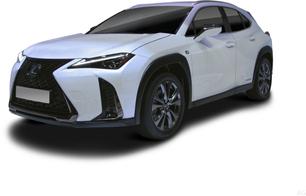
Lexus has released a revamped version of its smallest electric SUV, the UX300e and I’ve been driving the Sports Luxury grade this week with my little family of three.
This model sees a few key upgrades to its battery performance, driving range and technology.
These improvements should see it continue to be a solid competitor for its rivals, the BMW iX1 XDrive 30 M Sport, Mercedes-Benz EQA 250 and Volvo XC40 Recharge Pure Electric.
While no doubt the hybrid would appeal to some buyers, given the limits in towing capacity and higher fuel consumption, the extra performance doesn’t really make the i-Force Max a compelling proposition for the LandCruiser/Prado. Australian buyers have made it abundantly clear they’re happy with the Prado already on sale, so it’s hard to see the hybrid having too much success here alongside the diesel engine.
The Lexus UX300e Sports Luxury nails the luxury and standard features list! It certainly feels like a premium SUV inside and the updated technology and driving range were sorely needed to keep this competitive, but once you start looking at its rivals, which all offer similar specs and better driving ranges, the price point starts to feel a smidge high. However, the ongoing costs and the complimentary bonuses that Lexus throws in, are great.
The Prado and LandCruiser largely look the same, but the 1958 we drove did have a few standout elements from a design perspective.
The most obvious are the retro round headlights of the 1958, which are meant to hark back to the original FJ Cruiser. The retro theme is helped by the round light framing the large rectangular mesh grille with ‘TOYOTA’ in big, bold letters.
Personally, I really like the round lights and think it’s a shame the Australian-bound Prado misses out, purely for the aesthetics.
Inside the cabin also feels like a throwback in time, but not to the 1950s, rather the late ‘80s and early ‘90s with the grey cloth trim. It’s a brave decision from Toyota to ditch a more modern look and feel, but, again, I really like it. It feels hard-wearing and suits the nature of the Land Cruiser in the US market, where it has to woo buyers away from Bronco and Wrangler.
One design choice of note is the US-spec version has ‘LandCruiser’ embossed on the dashboard ahead of the passenger, something else we miss out on here with our Prado.
The design hasn’t seen much change and Lexus seems to be encouraging an understated EV design as it looks just like its fuel-based siblings.
I don’t mind that it’s not as futuristic as some of its competitors and that, at first glance, there isn’t anything to set it apart.
The front sports a classic Lexus 'spindle' grille and the external lights are large but the rear side lights jut out rather severely, reminding me too much of its Toyota counterparts.
The rear features a cool LED strip light for the brakes, which elevates its night-time presence.
The sporty-looking 18-inch alloy wheels are a nice touch but the plastic mouldings around the base of the car detract from the premium-level this model sits in. It’s not as slick-looking as it could be.
Having said that, the interior earns back points courtesy of its premium feel with leather-accented trims and Japanese Washi paper influenced accent panels. But there is a lot happening with the dashboard.
It’s a little overwhelming at first because it protrudes well into the cabin and features multiple cutaways, but you get used to it after a while.
There are also little knobs on either side of the instrument panel that look out of place to me and resemble horns.
As the entry-grade variant in the US range, the LandCruiser 1958 is more utilitarian than pampering. That translates to a cabin that has plenty of usability, just like the Australian-delivered LandCruiser Prados we’re used to.
There’s nothing overtly different about the US-spec model, with good space and small item storage in the front and decent room in the second row.
The multimedia system is the same as the one used here too, which speaks to Toyota’s strength for consistency of product around the world. It means anyone driving a Toyota - whether it’s in Australia, the US or elsewhere - has a sense of familiarity immediately.
It also helps that Toyota has stuck with a large amount of physical buttons and switchgear (I counted nearly 50) in addition to the touchscreen. While other brands look to cut controls to save money at the expense of usability, Toyota is sticking with what people know and enjoy.
However, the US version of the Prado has the same riser box inside the boot, which limits its cargo capacity in the same way as it has done here. It's still a reasonable size, but the riser does eat into space and compromises practicality.
As soon as you slide in, you’re reminded that the UX is a small SUV. Even with the driver's seat at its lowest position I still knock my knees on the steering wheel when getting in and out of the car.
The higher door sills also accentuate the penned in feeling despite there being plenty of head- and legroom in the front row!
Then comes the back seat, which is super tight on space. I’m 168cm (5'6") and my headroom is fine but the legroom sucks. My knees press into the back of the driver’s seat (set for my driving position).
There’s also not a lot of space underneath the seat for toes, so I wouldn’t recommend the UX to anyone who regularly transports tall passengers.
Having said that the seats in both rows are very comfortable and the leather trims feel lovely to touch. Both front seats are electric with heat and ventilation functions but only the driver’s side enjoys adjustable lumbar support.
Storage is good throughout the car, which is not usually the case for the small SUV class. Up front you get a glove box, two cupholders, two drink bottle holders and a middle console that opens from both sides, which is handy and cool.
In the rear you get two cupholders in a fold-down armrest and map pockets but no storage bins in either door unfortunately.
Other amenities in the back are very good for this class with the heated outboard seats, directional air vents, reading lights and two USB-C ports.
On that note, the upgraded multimedia system is now easier to use while on the go, is responsive to touch and looks great.
Some of the information on the system can be annoying to find but the customisations available on the 7.0-inch digital instrument panel more than make up for it.
There is a coloured head-up display, wireless Apple CarPlay, wired Android Auto and satellite navigation.
All are easy to use and won’t confuse you too much!
The charging options are great with each row getting two USB-C ports but the front also gets a USB-A port, 12-volt socket and a wireless charging pad. You’re seriously spoilt for choice.
The boot space sits at a small 314L, which is 100L less than the previous model but that’s because Lexus has made a little storage nook underneath the floor for the tyre repair kit and cable pouches.
It's a great boot because it sits high and is easy to access, and I have plenty of room for all of the gear needed for a week’s errands. The hands-free powered tailgate is great, too.
For a bit of context to why the Prado is known as the LandCruiser in the States, Toyota USA skips the Fortuner for the 4Runner and ignores the LandCruiser 300 Series in favour of the Tundra-twinned Sequoia. That leaves the iconic LandCruiser nameplate unused, so it does make sense to ditch the ‘Prado’ name.
In the US it is positioned as a rival to the likes of the Ford Bronco and Jeep Wrangler, aimed at off-road adventure types, rather than the family market.
We drove the LandCruiser 1958, an entry-grade specification that has a ‘retro’ look and feel and features some unique design elements. It’s priced from US$56,700 (approx. $86,300), which is significantly more than the $72,500 Prado GX that starts our local range.
Despite the retro elements the 1958 variant gets a reasonable level of standard equipment, including keyless entry and ignition, heated fabric seats, climate control, a 7.0-inch digital instrument display panel, an 8.0-inch multimedia touchscreen, six-speaker sound system and wireless Apple CarPlay and Android auto.
There are only two variants for the electric UX and our test model is the top-spec Sports Luxury but the gear isn’t the only thing that’s been upgraded. The before on-road costs price for this model has jumped by almost $7K to a hefty $87,665!
In comparison, the BMW is the nearest rival at $84,900 (MSRP) and the Mercedes-Benz is a bit more affordable again at $82,300 (MSRP) while the Volvo sits pretty at $76,990 (MSRP).
The UX300e is the most expensive but is well-specified by anyone’s standards.
The Sports Luxury grade maintains its premium features, like the sunroof, heated front and rear outboard seats, ventilated front seats, and a heated steering wheel.
But the technology has been retooled and a new 12.3-inch touchscreen multimedia system replaces the previous model's 10.3-inch touchpad arrangement. It’s a welcome addition as it’s much easier to use.
New features, like wireless Apple CarPlay, acoustic front glass and insulation around the bonnet and wheel wells provide additional on-road comfort and practicality.
Lexus also throws in an AC Type 2 charging cable, as well as a GPO (General Power Outlet) cable. The technology is robust but I’ll go into more detail in the Practicality section.
Other standard features are solid with 18-inch alloy wheels, a tyre repair kit, handsfree powered tailgate, full suite of LED exterior lights, 10-way electric driver’s seat and an eight-way electric front passenger seat (but only the driver enjoys adjustable lumbar support).
The leather-accented trims feel luxy and the steering wheel has mounted controls and paddles to customise the regenerative braking while on the go.
This is the heart of our review, the unavailable hybrid engine, the so-called 'i-Force Max' hybrid powertrain. This is because the US market has never embraced diesel engines, which are so beloved by Prado owners in Australia, so in the search for greater efficiency, Toyota USA is leaning on hybrid technology.
The set-up in the LandCruiser combines a 2.4-litre four-cylinder turbocharged petrol engine with an electric motor in the bell housing between the engine and eight-speed automatic transmission. The combined output of this petrol-electric hybrid is 243kW of power and 630Nm of torque, which is significantly more than the 150kW/500Nm offered by the 2.8-litre turbo diesel offered in Australia.
The catch is, despite the additional power and torque, the LandCruiser is only rated to tow slightly more than 2700kg compared to the 3500kg towing capacity offered by our diesel Prado.
The UX300e has a fully electric powertrain with a 72.8kWh lithium-ion battery that’s located on the front axle.
The power and torque remain unchanged at 150kW and 300Nm but that’s enough to produce a 0-100km/h sprint time of 7.5-seconds. Plenty of oomph for city-slickers and open-roaders to boot.
The update sees the battery increase in capacity by 34 per cent which means the driving range has jumped from 305km to 440km.
That's still a bit lower than some of the UX's competitors but it certainly helps ease range anxiety! And unlike some of its rivals, the UX300e only sports a front-wheel drive drivetrain.
Obviously one of the biggest reasons for offering/choosing a hybrid engine is fuel efficiency and on that front the LandCruiser runs into the classic problem of big car, small engine. The official combined urban/highway fuel economy figure for the hybrid is 10.2L/100km, which is well behind the official claim for the diesel-powered Prado of just 7.6L/100km.
Drilling in deeper, the LandCruiser hybrid can drop as low as 9.4L/100km on the highway but rises to 10.6L/100km in a purely urban environment, which is typically the opposite to how hybrids excel.
The other major difference between the LandCruiser and our Prado is the size of the fuel tank. The US model only gets a 67-litre tank compared to the 110L offered in Australian models. That, naturally, has a major impact on range, with the LandCruiser hybrid only able to go a theoretical 656km on a single tank, compared to nearly 1300km for the Prado diesel.
My energy consumption sat at an average of 19.5kWh, which is decent considering all of the open-road driving I did.
There are four levels of regenerative braking to help conserve battery percentage but even on the firmest setting, it’s not super noticeable.
When you’re at full charge, multiple notifications and sound alerts pop up on the instrument panel stating ‘Regenerative Braking Limited Press Brake to Decelerate’. It’s quite an intrusive feature but disappears after 20 to 30km.
Despite the bigger battery size, the UX300e can only accept up to 6.6kW on AC charging, whereas, all of its rivals can accept 11kW. On a 240-volt AC charger, expect to see a charge time of nine and a half hours to get to 80 per cent.
Curiously, the UX features two charging ports, on the right-hand-side, there is a Type 2 port and, on the left, a CHAdeMo port, which allows for faster charging.
You'd think it would be easier to simply add the CCS enhancement on the Type 2 port but still, expect to get from 10-80 per cent in 80-minutes on a 50kW fast charger.
While it may be a hybrid, the LandCruiser is no urban ‘show pony’ and Toyota USA is adamant that it is tough enough to live up to the reputation of its famous nameplate. It’s built on the same TNGA-F platform as our Prado - as well as the Tundra pick-up and others - so it has the foundations for rugged adventure.
It comes standard with locking centre and rear differentials, rear coil springs, full-time four-wheel drive, a two-speed transfer case, ‘CRAWL Control’, a 2400W AC inverter and standard trailer brake controller, which are all must-haves for anyone planning a serious off-road trip.
While we have little reason to doubt the off-road ability of the LandCruiser, our test drive was limited to the urban jungle of Los Angeles, which allowed us to really focus on the powertrain.
Not surprisingly, given its similarities with other Toyota hybrid set-ups, it felt very familiar, albeit in a very different vehicle than the RAV4 and Camry we’ve driven previously. Despite its big on-paper numbers, there was some noticeable lag on initial acceleration and the engine sounds like a modern four-cylinder - a bit gruff when revved hard.
It certainly has enough performance to pull the LandCruiser along, but it isn’t over-endowed with power and torque. At least not in the way its stats suggest.
For the most part, around town, it did a good job of quietly motivating the big SUV around with a minimum of fuss.
The UX300e comes into its own when you’re zipping around tight city streets. The power is responsive and the steering crisp with excellent cornering capabilities.
It feels well-placed on the road most of the time but can move around when it gets hit by high winds.
While the power is steady, the tyres can lose a little traction if you’re too quick to accelerate from a full stop.
The ride comfort is also very good with the new acoustic glass and extra insulation around the bonnet and wheel wells providing a whisper quiet cabin space.
The suspension is well-cushioned but not floaty and you won’t wince when you hit a bump, but occasionally you get a thump-thump shudder through the frame on certain rough road surfaces.
It’s not a massive size and you’ll be thankful for that when it comes time to park because it is seriously easy to slide into a spot!
The 360-degree view camera system is top-notch providing clear graphics and a cool feature where the car becomes invisible in the video feed, which makes it even easier to see all around you. Coupled with the front and rear parking sensors, you’re set.
Being a US-specific model there is no ANCAP or Euro NCAP crash testing data, but given the diesel model scored a five-star rating there’s little evidence to suggest it would be any less safe.
All US LandCruiser models come standard with the Toyota Safety Sense 3.0 suite of active safety features. This includes pre-collision warning, lane departure warning with steering assist, lane tracing assist, road sign assist and full-speed adaptive cruise control.
The UX300e has a bunch of great safety features that come as standard and I like the proximity alert that pops up a camera feed of your surroundings when you’re in stop/start traffic. It’s a practical feature to help identify pedestrians or cyclists in your blind spots.
Other standard safety equipment includes forward collision warning, blind-spot monitoring, daytime running lights, rear cross-traffic alert, lane keeping aids, lane departure warning, adaptive cruise control, intelligent seat belt reminders, traffic sign recognition, an SOS call button, and that awesome 360-degree view camera system.
Family-friendly features include two ISOFIX child seat mounts on the rear outboard seats plus three top-tethers but two seats will fit best.
The UX also has a rear occupant alert if it detects weight or seat belts in use in the back seat, which is always a great feature.
The UX has a maximum five-star ANCAP safety rating from testing done in 2019. It also has eight airbags, which includes knee airbags for both front occupants.
One big plus for the LandCruiser over the Prado is Toyota USA offers two years of free servicing - a nice bonus.
It does have different warranty coverage for different components though, the overall vehicle warranty covers the first three years, the powertrain is covered for five years but the hybrid components are warranted for 10 years.
The UX comes with a five-year/unlimited km warranty but the battery is covered by a 10-year or up to 160,000km warranty, which is better than most in this class.
This also comes with a five-year capped-priced servicing plan where services cost a flat $295, which is good but the servicing intervals are more in line with a fuel-based car at every 12-months or 15,000km, whichever occurs first. It’s typical to see intervals stretched out at every two years for an EV.
Lexus also throws in a few sweeteners for owners with three-year complimentary subscriptions to both ChargeFox and Lexus Connected Services, as well as, installation of an at-home wall charger. It’s not often you see the word ‘complimentary’ coupled with a luxury brand, so that’s a nice touch.