What's the difference?
The ninth-generation Toyota HiLux is not really a new HiLux in the true sense of the word, but there’s enough going on with it to have generated plenty of excitement in the ute-loving public.
This ‘new’ HiLux, in essence, is an update but it’s an update with substance: the HiLux now sports a new retro design, new interior layout, new suspension tune (softer rated springs and dampers for improved on-road comfort) – and it even has an electric park brake now.
So, with no major mechanical upgrades, is this HiLux enough of an improvement over past iterations to warrant your attention?
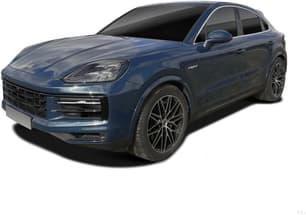
The Porsche Cayenne Turbo GT needs a better name. This is the king of Cayennes and quite possibly the ruler of all super SUVs.
Well, the Cayenne Turbo GT is the fastest SUV around the Nurburgring Nordschleife. Not just that, it has such colossal power and torque it'll be side-by-side with a Porsche 911 GT3 RS in a sprint from 0-100km/h. No, a better name for this SUV would be the Cayenne GT3.
Which is perfect for me because I'm at the point in my life where although I love full-on and noisy cars I also have a full-on and noisy family.
We lived with the Cayenne Turbo GT for a week to find out if this super SUV was also a super family car - from practicality to safety.
We're also a family with ridiculously high expectations of luxury SUVs having lived with and tested each of the Cayenne Turbo GT's rivals - from the Lamborghini Urus and Bentley Bentayga to the Aston Martin DBX and Alfa Romeo Stelvio Quadrifoglio.
The Toyota HiLux SR5 now feels nicer and more modern inside and out and it no longer lags behind some other utes – even some of the cheaper ones – in terms of comfort, refinement and all-round driveability.
Toyota has in the past been guilty of sometimes doing the bare minimum when it comes to producing a ‘new’ vehicle – especially LandCruisers or HiLuxes – but this time even though this HiLux is definitely not a new model, the exterior revamp and interior refresh have added more than enough to the HiLux package to keep fans and new buyers happy.
This is the best HiLux so far.
Of all the super SUVs I've piloted, the Porsche Cayenne Turbo GT is the best all-rounder in terms of performance, comfort, cabin technology and style.
As a family car it's roomy, practical and easy to use and drive daily.
As a performance car the Turbo GT is stupidly quick, with the agility of a sports car. Sure, a 911 would leave it behind on a twisty race track, but this SUV is close to having that sportscar experience and keeping your family, as well.
This HiLux is 5320mm long (with a 3085mm wheelbase), 1885mm wide and 1865mm high. No change there.
It does, however, have a new distinctive front end incorporating a revised design, which includes LED headlights, retro-style ‘Toyota’ brand across the front, and honeycomb-style mesh grille.
Initially I wasn’t keen on the HiLux’s revised front end, but it looks a lot better in the metal than it does in photos and it has grown on me.
This ute’s profile remains the same as before, but the rear end has also been given a sly slap and tickle, giving it a squared-off look.
The interior has also undergone a glow-up – there’s a real 250 Series LandCruiser look and feel to this cabin – and it now has a 12.3-inch touchscreen multimedia system rather than the old 8.0-inch unit.
It still has plenty of hard plastic surfaces but, overall, the HiLux interior doesn’t look or feel anywhere near as old as it used to.
While it remains definitely a HiLux, the new look brings this Toyota ute closer to its rivals, such as the Ford Ranger, in terms of contemporary styling.
This might be a personal thing but to me nearly all Porsches look better from the back than the front.
It's the wide stance and powerful haunches, the hunkered down suction-capped-to-the-road look that does it for me and the Cayenne Turbo GT, despite being an SUV, passes this important Porsche checklist item.
The GT aero kit only serves to make this SUV look more of a beast, and the gold-bronze looking satin Neodyne wheels are a Porsche theme that I've not always been a fan of, but I get the historic connection.
If only the Turbo GT could look a little less like other Cayennes from the front. This is the king of the SUV range and despite the apron and bumper already being exclusive to this model, there should be more.
Vents in the wheel arches, carbon bonnet with nostrils GT3-style perhaps? Or is that going too far? If you do want something more lairy then there's always the Urus.
The Cayenne Turbo GT's cabin is stunning in its plushness and modern surprises such as the passenger display, the hoodless instrument digital cluster, the lashings of Race-Tex upholstery everywhere. It's perfectly Porsche. High-performance meets high-end.
It's also highly practical. Let's talk about that.
The HiLux cabin is very familiar – you know where everything is and how to use it and that’s reassuring – but besides some minor changes and the introduction of an electric park brake the most noticeable change is that aforementioned new 12.3-inch unit.
Apple CarPlay is easy to get working via the multimedia system, and the screen is now big enough and clear enough to operate with ease.
Beyond that, there are plenty of durable hard plastic surfaces, numerous storage spaces, a reasonable number of charging points up front – two USB ports as well as a wireless charging pad and two 12V sockets and a 240V socket inside the centre console.
The driver’s seat is power-adjustable and comfortable without ever being at risk of being described as “plush”.
The rear seat is on the wrong side of squeezy across the shoulders and is best suited to accommodating three children, three jockeys or two adults.
People seated back there have access to two USB-C ports, bottle holders in each door and a dual cupholder in the fold-down centre armrest.
In terms of packability for touring, the SR5’s tub is 1550mm long (1100mm between the wheel arches), 1520mm wide and the load space itself is 490mm deep. Load height is 830mm.
There is nothing extra-special going on in the SR5’s tub – no marine-grade carpet, LED strip lighting, or hidden storage compartments – but it does have four tie-down points.
In terms of practicality, the HiLux, while it does have a barebones approach, still holds its own against the likes of the Ford Ranger.
The Porsche Cayenne Turbo GT only makes one compromise on practicality and that's the removal of the middle seat in the back, which, with just two kids isn't used all the time but on average we might need it once a week for school mates and cousins.
Instead of a middle seat there is a shallow tray, which will fit a phone or in our case leaves and rocks found at the park.
So, yes, the Turbo GT is a four-seater only, but this is a spacious, large SUV with good head and legroom, wide-opening doors for easy entry and exit, and air suspension which can raise and lower the height for easy access.
Storage is excellent with enormous door pockets in the front and back and there are four cupholders.
There's a wireless phone charger in the front and two USB-C ports as well, plus two USB-C sockets in the back.
Four-zone climate control means the kids in the back can set their own temperatures. They also have heated seats.
I was disappointed to see there aren't sunshades for the rear windows - pretty vital in Australia where it feels like we're only about 50 metres away from the sun.
The Turbo GT's 576-litre boot just managed to fit our pram and a week's shopping, which is our minimum standard for living. Any more space is a bonus.
The SR5 sits in the middle of the HiLux line-up. This version – with a six-speed manual gearbox – has pricing starting at $63,990 before on-road costs. Our test vehicle has Toyota’s premium interior pack ($2500) and premium paint ($675).
Standard features include a 12.3-inch touchscreen multimedia system (with wireless Apple CarPlay and Android Auto plus wireless charging), eight-speaker stereo, dual-zone climate control, and 18-inch alloy wheels.
Other features include high-grade LED headlights, a “comfort-oriented” leaf-spring rear suspension tune, larger front brake discs, power-folding, heated exterior mirrors, an integrated tow-bar, as well as LED tail-lights and LED rear fog lights.
Exterior paint choices include 'Glacier White', 'Frosted White', 'Ash Slate', 'Eclipse Black', Feverish Red' and 'Sunglow'. Some – like 'Stunning Silver' on our test vehicle – cost $675.
The HiLux offers reasonable value for money when cross-shopped against the likes of Ford Ranger, especially the XLT (approx. $64,000) or Sport (approx. $72,000) variants.
The Turbo GT is the king of Cayennes, so it shouldn't surprise anybody that it's also the most expensive with its list price of $364,700.
Lamborghini's Urus lists for $409,744 and is the Cayenne Turbo GT's not-so-subtle Italian cousin, sharing the same platform and engine.
Both are in my mind the best performance SUVs on the planet. It just depends how conspicuous you want to be.
Then there's Bentley's V8 Bentayga which isn't blessed with the Porsche's good looks but would still be all over the Cayenne if the two happened to meet at a race track.
So, why is the GT Turbo the king of the Cayennes? What makes it better? For all the reasons you'd think - it's the fastest, most powerful, most luxurious and most equipped Cayenne in the range.
We'll get into mind-bending engine and performance specs soon, but first let me take you through the standard features on a car that's anything but standard.
Coming standard and exclusively to the Turbo GT are 22-inch 'GT Design' wheels in satin 'Neodyne' with full-colour Porsche centre caps, an active rear spoiler, Turbo GT front apron, dual titanium exhaust, rear apron with diffuser, 'SportDesign' side skirts, wheel arch extensions, a lightweight carbon roof and tinted LED HD-matrix headlights.
Inside, and also exclusive to this grade, is the 'GT Interior Package' with 'Race-Tex' upholstery throughout with 'Deep Sea Blue' stitching on the front seats and centre console and the armrests and dashboard.
There's also the 'Carbon Interior Package' which includes dashboard and door trim elements.
Race-Tex trim is applied to the 'GT Sports' steering wheel, roof lining and gearshift, too.
The adaptive active air suspension, which can lower the car by 15mm, is standard and only available on the Turbo GT, too.
The soft-close doors are standard (a cost option on lower grades), as are the stainless steel pedal covers.
The rest of the features are also found on lower grades and include the 12.65-inch digital instrument cluster, head-up display, proximity unlocking, 12.3-inch multimedia touchscreen with sat nav, wireless Apple CarPlay and Android Auto, digital radio, a 10-speaker Bose sound system, heated front seats, rear privacy glass and an auto tailgate.
Four-zone climate control is standard on the GT Turbo, too, and so are heated rear seats.
Our car had several options fitted such as the front passenger display ($2860) and the Deep Sea Blue Accent Package.
The passenger display is a crowd pleaser, but as a family car my kids felt like they were missing screens in the back seats, too. Well, in my day...
This SR5 has a 2.8-litre four-cylinder turbo-diesel engine, producing 150kW at 3400rpm and 420Nm at 1400-3400rpm and a six-speed manual gearbox; the six-speed auto SR5 gets 500Nm at 1600-2800rpm and auto HiLuxes also have the 48-volt mild-hybrid technology onboard.
This is a proven engine-and-gearbox combination, with plenty of lowdown torque, and it’s more than a match for the likes of Ranger and D-Max/BT-50 in terms of overall performance.
This SR5 has part-time four-wheel drive and a rear diff-lock.
As a middle-aged parent with two children, a Porsche that I don't have to crawl into and out of like a cubby house is a great thing.
What's even better is that this ‘easy access' Porsche is every bit as brutally powerful and fast as the quintessentially ‘pure' Porsche, the 911. Actually, it's more powerful and faster.
The Turbo GT's twin-turbo 4.0-litre V8 petrol engine makes 485kW and 850Nm with drive going through an eight-speed transmission to all four wheels.
In comparison, a Porsche 911 GT3 RS, arguably the most brutal and anti-social 911, has 386kW/485Nm.
I haven't made a mistake. Those are the real numbers. And it's only when you step on the accelerator in the Cayenne Turbo GT, and it feels like somebody's sat down on your chest, that you realise what a big deal this is.
That is such a colossal amount of oomph that this 2.2-tonne family SUV can accelerate from 0-100km/h in 3.3 seconds.
The 911 GT3 RS can do it in 3.2 and it has a roll cage and a fixed rear wing the size of a bedroom door.
And yes, we're now coming into a digital age where Teslas and other electric SUVs are quick, too, but can they go around corners like a Porsche Cayenne Turbo GT?
Do they have the same rumble and roar as a twin-turbo V8 that's terrifying and enticing at the same time.
The correct answer is, absolutely not.
Official fuel consumption for the manual is listed as 7.1L/100km on a combined cycle. The auto is 7.4L/100km.
Fuel consumption on this test was 9.1L/100km, which is pretty good because I have done a lot of low-range 4WDing.
The SR5 has a 80-litre fuel tank so, going by that fuel figure, you could reasonably expect a driving range of about 879km out of a full tank
Seriously? This is a 2.0-tonne twin-turbo petrol V8 with a 90-litre fuel tank. Even the Porsche specs sheet doesn't understand the question because in the column for fuel efficiency there are three letters - tbc.
My own testing saw me record 22.5 L/100km at the fuel pump, which means I enjoyed driving the car very much.
A little digging around reveals Porsche globally claims the Turbo GT will use 12.6L/100km, over a combination of open and urban roads.
You might not have as much fun as I did but easing back a little might get you closer to the 700km of range this more frugal consumption figure appears to offer.
While efficient it isn't, I'm not going to mark the Turbo GT too much here because compared to its petrol rivals the fuel consumption is what I'd expect from such a high-output heavy SUV.
As mentioned, there have been no major mechanical upgrades to the HiLux, but it does now have electric power steering (rather than the hydraulic assistance it’s had in the past). Result? There’s a smoother, more precise feeling to the steering, with a nice weight and balance to it, on sealed and unsealed surfaces.
The HiLux, with a listed kerb weight of 2215kg and a turning circle of 12.6m, is not an insubstantial vehicle but, at the same time, it’s not unwieldy either and manages to feel quite nimble on and off the road.
On sealed surfaces it yields a surprisingly high level of ride and comfort. It’s actually quite compliant, controlled and somewhat refined. That’s largely because this SR5 has multi-purpose suspension on board rather than the heavy-duty suspension, which is on lower-spec, work-focussed HiLux variants for load-carrying duties.
This set-up is intended to offer a softer ride on road – and it does – but off-road it's a different story. Even on minor imperfections (small potholes, minor corrugations and the like) on dirt tracks it tends to thump and bump in and out and it doesn't offer such a comfortable all-round ride as you might be hoping.
I didn’t have much weight onboard – vehicle-recovery gear, a first-aid kit, four Maxtrax and an air compressor – and it will, of course, settle down with more of a load but I was expecting the multi-purpose suspension to be better than it was at soaking up a track’s lumps and bumps – it’s not terrible, but it is noticeable.
However, in terms of pure off-road effectiveness, the HiLux is impressive.
It's never been an underperforming 4WD, it’s simply never been as refined or as comfortably capable as others, such as the Ranger, but it is much more comfortably capable now than it used to be.
There is plenty of power and torque in this HiLux and while this six-speed manual version has 80Nm less than the auto version, it uses what it has really well. The 2.8-litre is a tractable engine and works well as part of an effective powertrain that is well suited to low-range 4WDing. There is a heap of torque at low revs, which is great for low-speed, technical off-roading.
Low-speed throttle response is also impressive, offering nice control when you need it.
I have driven auto HiLuxes in the past and the auto is very clever and it may be your better bet, but I like the manual.
Ground clearance is listed as 224mm and while the HiLux doesn’t have any trouble clearing most jagged rock steps or tree roots you’ll likely encounter on a weekend trip, I didn’t have the opportunity to seriously scrutinise the 700mm wading depth because our testing area was pretty dry. Next time.
Off-road angles – 29-degree approach and 26-degree departure (no rampover is listed) – all check out, even though they are a little shallower than the Rugged or the Rogue variants, they are fine for light-to-moderate 4WDing.
The off-road traction control system in this HiLux is well calibrated and if you do need more dirt-grabbing ability, then this ute does have a rear diff lock.
The only real off-roading weaknesses in the HiLux package are the tyres (Dunlop Grandtrek A/T 31, 265/60R18 110H). They’re not well suited for anything more than light to moderate 4WDing. If you’re planning anything rougher than a well-maintained dirt road in dry weather then consider replacing the showroom tyres with a set of decent all-terrain tires, light-truck construction preferably and away you go.
In terms of towing capacity the SR5 is rated to tow 750kg unbraked, and 3500kg braked.
Payload is a listed 900kg, Gross Vehicle Mass is 3090kg and Gross Combined Mass is 6300kg (a 450kg increase).
While nothing mechanical has changed onboard this vehicle, the combination of 4WD set-up, driver-assist tech, rear diff lock, as well as structural modifications (such as thicker steel in the ladder-frame chassis, a stiffer roll-bar, and reinforced side rails) and suspension tweaks (including retuned dampers and re-rated coil springs at the front, and new dampers and softer spring rates on the live-axle rear) all works well together in this current HiLux package.
The HiLux has now drawn closer to the Ranger in terms of comfortable capability, if not matched it.
Never have I met a car this powerful and superbly athletic that is as pleasurable to drive alone on great, fast roads as it is to pilot at 50km/h in the suburbs with a family on board.
It exceeds my understanding of engineering that something this large can move so quickly. That in an instant can turn and tip into a corner with such precision and effortlessness.
Yet it can switch seamlessly and happily to coping with speed bumps and potholes, delivering a ride so comfortable it'll send babies off to sleep. And it did.
The only issue, and this is such a tiny thing, is the dash-mounted gearshift, which means having to reach up and select Drive or Reverse or Park, which, when executing a three-point turn, is necessarily frustrating.
Still, I'm giving the Turbo GT a 10 out of 10 for driving under all conditions, and we didn't even go off-road, which of course you can do, as long as it's not too wild.
The Toyota HiLux SR5 has the maximum five-star ANCAP safety rating, as a result of testing in 2025.
As standard, it has eight airbags (now with a front-centre airbag) and an upgraded suite of driver-assist tech including improved auto emergency braking (AEB), lane-keep assist, adaptive cruise control, and blind-spot monitoring.
The Porsche Cayenne Turbo GT hasn't been locally crash tested and so doesn't have an ANCAP rating.
That's quite normal for super high-end cars. But, when this third-generation model first arrived in 2017 it was tested by ANCAP's European equivalent, Euro NCAP, and was awarded the maximum five stars.
There's AEB which operates at city, urban and highway speeds, and lane keeping assistance, and lane change assistance which is a form of blind-spot warning, and adaptive cruise control. You can option rear cross-traffic alert, as well.
A space saver spare wheel is under the boot floor.
The HiLux has a five-year/unlimited kilometre warranty.
Service intervals are scheduled for every six months or 10,000km and cost $395 per service.
Toyota Australia has about 300 dealerships across the country.
This type of warranty is pretty standard among the HiLux's rivals so the Toyota ute does remain competitive, in terms of these ownership costs.
The Cayenne Turbo GT is covered by Porsche's three-year, unlimited kilometre warranty, which is lagging behind in terms of duration even compared to other luxury brands such as Mercedes-Benz, which offers five years.
Servicing is recommended annually or every 15,000km, although there isn't a capped price maintenance plan with final costs determined at the dealer level (in line with variable labour rates by state or territory).