What's the difference?
The bZ4X was the first of a new era for Toyota.
The Japanese carmaker has had a lot of success with its hybrid technology which it pioneered back in the late 1990s. However, it took all the way until 2024 for its first fully electric car, the bZ4X, to launch in Australia (following a number of delays).
By this point Toyota was already late to the game, plus competition in the EV segment has been getting stiffer and stiffer.
It’s now mid-life facelift time and Toyota has thrown everything at the bZ4X. Read on to find out whether or not this has improved the formula.
The small van segment (Under 2.5-tonne GVM) is one of the smallest in Australia’s light commercial vehicle market, as it currently caters for only three contenders, the Volkswagen Caddy Cargo, Peugeot Partner and Renault Kangoo.
Although total sales in this category are a fraction of those achieved in the mid-size (2.5-3.5-tonne GVM) van division, these compact commercials are ideal for buyers not requiring the big one-tonne payload ratings and cavernous load volumes of their larger siblings.
Petrol and diesel-powered models are typically equipped with small displacement engines offering excellent fuel efficiency, combined with cabin ergonomics and driving dynamics which are the most car-like of any LCV offering.
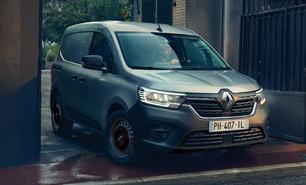
French manufacturer Renault released its third generation Kangoo range in Australia in 2024, comprising a mix of petrol and full-electric variants. We were recently handed the keys to one of the petrol models to see if it has what it takes to win costumers in this three-way fight.
When the bZ4X first launched it was already late to the game and blended into the background too much. However, this update has dramatically improved its appeal.
Despite this, the electric mid-size SUV segment is incredibly fierce and it’s hard to not get caught up in glitzier rivals like the BYD Sealion 7, Tesla Model Y and Zeekr 7X.
It’ll be interesting to see whether the Australian public reacts to this update and if it draws in more punters.
The latest petrol-powered Kangoo has the pricing, practicality and performance to win friends in Australia’s small commercial van class. If you can afford an option pack or two, like those fitted to our test vehicle, it's even better.
The exterior design of the bZ4X never really blew me away. It’s just sensible and not too out there. In saying that though, being sensible is no bad thing and can be seen as a positive for some buyers.
This facelift has brought Toyota’s new corporate look, including the hammerhead shark-like LED lighting signature. It already features on models like the C-HR, Camry and RAV4. In fact this update has made the bZ4X look more like an electric RAV4 than ever before.
I like the C-shaped daytime running lights but I’m not a fan of how the main headlight section is now separate. I prefer how they looked before.
The black wheel arch cladding is now also glossy and not matte. Sure, this looks great right now, but it likely won’t be long until it unfortunately gets scratched.
Inside, if you covered up the Toyota badge you could likely fool me into thinking this is a Lexus. The new 14.0-inch touchscreen is virtually identical to the one in models like the Lexus NX, RX and GX.
There are also plenty of premium-feeling soft-touch materials around the cabin. I’m not a huge fan of the grey and white two-tone interior, at least from a family-friendly standpoint, but thankfully you can get an all-black interior instead.
Another major design change with the interior is the new centre console. It now features two wireless chargers and a revised button layout. I particularly like it because it’s no longer covered in glossy piano black.
Our test vehicle is less than 4.5 metres long (4488mm) and well under 2.0 metres in width (1859mm) and height (1830mm), making it ideal for those with either limited parking space and/or needing to access space-restricted areas in their working roles.
Its compact 2716 wheelbase results in an 11.3-metre turning circle. This is larger than you might expect, given it’s no tighter than Toyota’s shortest HiAce mid-sized van.
However, it’s also line-ball with its small van rivals, which highlights the restrictions in steering lock shared by front-wheel drive vehicles compared to rear-wheel drivers like the HiAce.
The Kangoo features MacPherson strut front suspension and its rear suspension uses torsion bar primary springing supplemented by a pair of secondary coil springs for carrying heavy loads. There’s also rack and pinion steering and a quartet of disc brakes.
Bodywork and wheels confirm its no-frills work focus, with unpainted dark grey plastic prominent on the hubcaps, front/rear bumpers and along the sides where bumps and scrapes usually occur.
It has tidy styling for a commercial van, including the sharp cabin design that combines a tasteful blend of grey and satin chrome hard surfaces with the practicality of wipe-clean fabric upholstery and vinyl floors.
The front seats in the bZ4X are deliciously comfortable and supportive. They make long trips a breeze, plus the ventilation that’s standard on the AWD trim works well in the heat.
Despite this, I’m still not a huge fan of the driving position. You need to look over the steering wheel in order to view the almost windscreen-mounted digital instrument cluster. It’s a similar set-up to what Peugeot employs and is intended to reduce the amount you need to stray your eyes from the road.
I appreciate this but it just doesn’t work for everyone. Personally I need to jack the seat up more than I’d like in order to see the screen fully. When I do this my knees get in the way of the steering wheel no matter how I position it, which isn’t ideal.
The set-up in the related Solterra is a little better as it has a squared-off steering wheel instead of a traditional round steering wheel.
Going back to the digital instrument cluster, the content display on this is still rather limited. Thankfully, critical information like your current speed is displayed clearly, but having added customisation through more informative displays to toggle through or more themes would be a nice extra touch.
Moving across the larger touchscreen multimedia system is a welcome addition, but I didn’t think there was anything wrong with the old one. The user interface is still basic in a good way, meaning it’s hard to get lost.
A difference is the climate control features are now fully integrated into the touchscreen, save two physical dials that change the dual-zone climate control temperature.
While this means you need to press on the touchscreen to change certain climate control-related features now, a lot of these in the pre-update were touch-sensitive buttons on a panel under the touchscreen. Really, it makes no difference.
Wireless Apple CarPlay and Android Auto are still standard and work flawlessly with my iPhone 15 Pro Max. There are now also two wireless chargers, which is great if you want to charge your phone and your passenger’s phone.
However, they don’t work properly as they don’t offer any ventilation. They regularly make my phone overheat and stop charging, even on shorter trips. If you want to reliably top your phone’s battery up, it’s best to just plug into a USB port with a cable.
Looking elsewhere around the cabin, there is an adequate amount of storage, though some more would be nice. There are two decently sized cupholders, a small shelf under the centre console and a side-hinging centre console box. Like the pre-update version, there is still no proper glove box.
In the second row there’s plenty of legroom available for adults behind adults, though due to the placement of the high-voltage battery this leaves you with a knees-up feeling. This is common in a number of EVs, even some that are based on dedicated electric architectures, like the bZ4X.
Headroom also isn’t fantastic as the roof starts to taper back where your head is located. You wouldn’t want to be much taller than 180-odd centimetres back there. It’s also made worse when you recline the seat backrest.
Second-row amenities include air vents, heated outboard rear seats, USB-C ports, seatback map pockets, as well as a fold-down armrest with some cupholders and a tablet holder.
At the back there is a hands-free power tailgate which is rather slow to open and close and makes plenty of beeping while doing so. It's a classic Toyota on this front.
The bZ4X AWD offers 410L of boot space with the rear seats upright which is slightly less than the 2WD due to the added rear electric motor.
It’s a decent space but doesn’t stand out from the crowd. There’s some extra underfloor storage which is large enough to fit some cables and that’s about it. Unfortunately there’s no front boot.
Boot-related amenities include a cargo blind, a variety of hooks, as well as vehicle-to-load (V2L) capability using 220V/1500W AC inverter and a single household power socket. The latter allows you to power household appliances using the vehicle’s high-voltage battery.
Disappointingly there is no spare wheel, but this isn’t uncommon for EVs. You have to make do with a tyre repair kit, which is fine if you have a small air leak but pointless if you have a proper puncture.
Our test vehicle’s 1447kg kerb weight and 2010kg GVM results in a useful 563kg payload rating.
It’s also rated to tow up to 1500kg of braked trailer and with its 3510kg GCM (or how much it can legally carry and tow at the same time) it can carry its maximum payload while towing its maximum trailer weight for optimum versatility.
Cargo bay access is through asymmetric rear barn-doors which can be opened to 180 degrees for forklift and loading dock access, or sliding doors on each side with (according to our tape measure) 625mm openings. The walls and doors are lined to mid-height and there’s internal lighting.
The cargo bay’s load volume is a competitive 3.3 cubic metres and with more than 1.8 metres in length, almost 1.6 metres in width and more than 1.2 metres between the rear-wheel housings, it can easily swallow one standard Aussie pallet or two Euro pallets.
The load floor, which does not include a protective liner as standard equipment, offers a choice of six load-anchorage points.
The solid bulkhead doubles as a sturdy cargo barrier and insulates the cabin from cargo bay noise, most of which comes from the tyres emanating through the rear-wheel housings.
Given its compact dimensions, the cabin is surprisingly spacious and accommodating even for someone my height (186cm), thanks to front doors that open to a full 90 degrees, generous leg and elbow room plus a high roof relative to the seating position that adds to the airy feel.
Storage includes a large-bottle holder and bin in the base of each door, single glove box, full-width overhead shelf, large open tray in the centre of the dash-pad and (in standard form at least) a centre console with two cupholders and trays for small items.
However, given our test vehicle is equipped with the optional Business Pack, the standard console is replaced with a more elaborate version, which in addition to a pair of cupholders has a wireless phone-charging dock up front and a box with hinged lid at the back.
There’s also a sizeable clamshell-lid compartment set into the dash-pad ahead of the driver, which includes a smartphone holder on a stalk that can be easily moved to either side of the compartment depending on driver preference.
Our only criticism is the lid on the optional console box. Although it’s been thoughtfully angled downwards at the front to provide the driver with comfortable elbow support, there’s no mechanism on the hinge to hold it in the open position.
This makes it awkward to access the box, as the angled lid naturally wants to keep closing on your hand, so a detent in the hinge would be useful.
And, in a similar context, we’d also like to see hinge detents (or struts) to firmly hold the rear barn-doors open in their 180-degree positions, given their propensity to slam shut if hit by wind gusts during loading/unloading.
This can potentially injure the operator, so these devices should be standard issue, not only for Kangoos but all barn-door vans.
There are still only two trim levels in the bZ4X line-up – 2WD and AWD, the latter on test here.
Compared to the pre-update version, pricing has been slashed by up to $10,000, depending on the variant.
The line-up now starts at $55,990, before on-road costs, for the 2WD and extends to $67,990, before on-road costs, for the AWD.
This top-spec bZ4X AWD now undercuts the corresponding Subaru Solterra AWD Touring by $2000. These two cars are twins under the skin and are built in the same Japanese facility.
It also undercuts the top-selling Tesla Model Y Long Range AWD by $1000, which is a major feat. However, certain rivals like the BYD Sealion 7 Performance and Zeekr 7X Long Range are still cheaper but not all of them offer all-wheel drive.
With this update there’s now a larger 14.0-inch multimedia touchscreen, two wireless phone chargers, vehicle-to-load (V2L) capability, plus a hands-free power tailgate and heated steering wheel standard across the line-up.
This is above and beyond the standard LED headlights, roof rails, dual-zone climate control and heated front seats with electric adjustment in the 2WD.
The AWD brings larger 20-inch alloy wheels, a panoramic glass sunroof, a nine-speaker JBL sound system, digital rear-view mirror and ventilated front seats.
This is a lot of standard equipment and you can’t really complain because you’re getting all of this for less than before.
The Kangoo petrol range is available in SWB (short wheelbase) with a choice of six-speed manual or seven-speed dual-clutch automatic, plus a LWB (long wheelbase) model available only with the auto.
Our test vehicle is the SWB auto, powered by the same 1.3-litre four-cylinder turbocharged engine shared by all petrol models, for a list price of $41,990.
That figure sits comfortably between petrol rivals in the small van class, including the Peugeot Partner Pro Short ($39,990) and Volkswagen Caddy Cargo TSI220 ($43,990).
Our example has been enhanced with genuine accessory carpet mats ($167) plus some desirable options including 'Highland Grey' metallic paint ($800) and the ‘Peace of Mind Pack’ ($1500) comprising blind-spot monitoring, front/rear/side parking sensors, driver attention alert, high-beam assist, navigation, overspeed prevention and traffic sign recognition.
It’s also equipped with the ‘Business Pack’ ($3000) which adds tyre pressure monitoring, hands-free key card, body-coloured external door handles, climate control, adaptive cruise control, centre console with armrest and storage, wireless smartphone charger, extra tinted rear barn-door glass, front fog lights, LED headlights and a leather-wrapped steering wheel.
This is in addition to its work-focused standard equipment list which includes 16-inch steel wheels and 205/65 R16 tyres with a full-size spare, plus auto-door lock when driving, rain-sensing wipers, a reversing camera and more.
The two-seater cabin, which is separated from the cargo bay by a solid bulkhead, is equipped with an electronic parking brake, two USB ports, two 12-volt sockets, a colour 4.2-inch driver’s info display and a multimedia system controlled by an 8.0-inch central touchscreen with wireless Apple CarPlay/Android Auto connectivity and smartphone dock.
In addition to its option packs, Renault also offers numerous single options including a 200kg GCM upgrade, different cargo bay sliding-door configurations, a smart digital rear view mirror and more.
While there have been a number of spec changes or additions with this update, even more tweaks have happened under the skin.
All versions of the bZ4X now make more power and torque. The AWD’s dual electric motor set-up now has a total system output of 252kW (+92kW) and 438Nm (+101Nm).
Like the pre-update version, the bZ4X AWD offers 'X-Mode' off-road drive modes, crawl control, as well as downhill assist control. However with 20-inch alloy wheels as standard, I doubt these will be taken off the beaten track very often, if at all.
The Euro 6 emissions-compliant 1.3-litre turbocharged four-cylinder engine produces 96kW at 5000rpm and 240Nm at 1600rpm.
Its seven-speed dual-clutch automatic provides the option of sequential manual-shifting plus three drive modes comprising 'Normal', 'Eco' and 'Performance', which alter the shift calibrations to optimise engine efficiency in each setting. They are selected using a button on the dash.
Another big under-the-skin change with this update is Toyota has fitted the bZ4X line-up with a larger 74.7kWh lithium-ion battery pack.
As a result this EV has more range. The AWD now offers up to 517km of WLTP claimed range (up from 411km) with an official energy consumption figure of 16.0kWh/100km.
During my largely urban testing over the Christmas break I saw an average energy consumption of 14.4kWh/100km. In fact, on one particular trip into the city with minimal traffic I saw an average energy consumption of 10.5kWh/100km. This is incredibly low for an all-wheel drive EV and almost Tesla-like.
Using my as-tested energy consumption figure, the bZ4X AWD has a theoretical total range of 518km.
The Type 2/CCS combination charge port remains on the left-hand front wheel arch which is fine because it’s kerbside, but at some public charging stations it can be hard to connect the cable without having it run up against the front bumper.
Speaking of charging, the maximum AC charging rate has now been upped all the way from 11kW to 22kW, which is a fantastic update. This now allows for a 10 to 100 per cent charge in 3.5 hours.
While peak DC fast-charging unfortunately is still capped at 150kW, Toyota claims it can remain at a higher charge rate for longer now thanks to reworked battery thermal technology.
A fast charge from 10 to 80 per cent is now meant to take 45 minutes. It would be good to see quicker charging because many of this car’s rivals are faster and this can make a world of a difference during long road trips.
Renault claims average combined consumption of 6.4L/100km and the dash display was showing 7.8 when we stopped to refuel at the completion of our 254km test, of which about one third of that distance was hauling more than half a tonne of payload. We also had the annoying engine auto stop/start function switched off for the duration.
Our own figure, calculated from fuel bowser and tripmeter readings, was higher again at 8.6 which was still within the usual 2.0-3.0L/100km discrepancy between official and ‘real world’ figures.
So, based on our consumption number, you could expect a ‘real world’ driving range of around 630km from its 54-litre tank which should only be filled with premium petrol (min 95 RON).
The bZ4X AWD was never a slow car to begin with but the added oomph is welcome.
While it's not overtly noticeable in everyday driving, when you mash the throttle at the lights you're pinned back in the seat a lot more than before.
Despite this, it still doesn’t feel like this car wants to be driven quickly. If you drive with a docile right foot, the bZ4X is a supremely comfortable vehicle that’s relaxing and easy to drive.
There are a number of regenerative braking modes to select from by using the steering wheel-mounted paddle shifters, but none of them offer a one-pedal driving mode. This means you need to use the brake pedal to come to a complete stop.
As a result, this car’s driving experience is more like a combustion or hybrid vehicle, like the RAV4. This can make the transition to an EV easier if you’ve never driven one before.
The steering feel in the bZ4X has a noticeable weight and heft to it which feels nice when you’re zipping around on urban streets. It also feels like the steering wheel is actually connected to the wheels rather than the overly assisted and light steering systems in some of its rivals.
Where the added steering heft can feel a touch annoying is when you’re doing a tight parking manoeuvre. This car is longer than you think, meaning you may need to do three-point turns more often.
Speaking of parking, the bZ4X’s surround-view camera system is detailed and high-resolution, which is a great peace of mind. The semi-autonomous park assist is also fantastic as it can detect and park the vehicle within painted lines, rather than just slot it between two parked vehicles.
Adding to the comfort factor is this car’s ride, which is a major highlight. Despite the large 20-inch alloy wheels, the suspension does a great job at softening bigger bumps and small road imperfections.
There is little that upsets the interior ambience in this car, making it a serene place to be regardless of where you’re travelling. For an EV you’d expect more tyre and wind noise given there’s no engine to drown the noise out, but Toyota has seemingly done a great job of insulating the cabin and choosing suitable tyres.
Apart from the huge and unavoidable solid-walled blind-spot over the driver’s left shoulder, the Kangoo feels more like a nippy small car than a commercial van.
The driver’s seat has no adjustments for lumbar support or base-cushion rake and the backrest angle is restricted by the bulkhead close behind it, but there’s still enough room even for tall people to find a comfortable driving position.
Its leather-rimmed wheel feels nice in your hands and the unladen ride quality is excellent, with nicely weighted and responsive steering feel, reassuringly strong braking and suspension settings that combine good handling response with supple bump absorption.
The turbocharged 1.3-litre four is a refined and willing performer, albeit with softer response below its peak torque band which is tapped at 1600rpm.
From there it happily spins its way to maximum power at 5000rpm, with the dual-clutch auto getting the best out of this engine in all drive modes, when either unladen or hauling a heavy load.
Its diminutive size and agility are well suited to zipping through heavy city traffic, squeezing into tight loading zones or negotiating narrow and crowded city lanes for delivery work.
Manual sequential-shifting allows more direct control if preferred when hauling heavy loads, or for those simply wanting a more engaging drive experience (particularly in Performance mode).
It's impressively quiet up to 80km/h in city and suburban use, but at highway speeds tyre noise becomes more intrusive (particularly on coarse bitumen surfaces) and some wind noise is evident.
The engine requires only 2000rpm to maintain 110km/h cruising speeds and the (optional) adaptive cruise control is resolute in maintaining its speed settings, even on long and steep descents.
To test its GVM rating, we forklifted 415kg into the cargo bay which with driver equalled a payload of just over half a tonne, or about 50kg under its legal limit.
The rear suspension compressed 55mm, which engaged the long cone-shaped jounce rubbers positioned inside the rear coil springs to provide a second stage of load support.
The Kangoo coped commendably with this payload, floating smoothly over bumps and with minimal effect on handling, braking and engine performance.
It also made light work of our 13 per cent gradient, 2.0km-long set climb at 60km/h, quickly self-shifting down to fourth gear to easily reach the summit.
Engine-braking on the way down was not as robust, as you’d expect from such a small engine with more than half a tonne on its back, but still within expectations for small vans.
Our only gripes are the absence of a full-width driver’s left footrest and that the thick panel separating the bulkhead windows almost completely blocks the central mirror’s view through the LHS barn-door. You can option a smart digital mirror with rear-facing camera to resolve this issue, but that’s another $800.
As standard there is a five-year, unlimited-kilometre warranty which is fine but does not stand out for the segment anymore.
However, if you service at one of Toyota’s 260+ dealers around Australia when required, warranty coverage for the high-voltage battery can be extended all the way out to 10 years.
Logbook servicing is required every 12 months or 15,000km, whichever comes first, and the first five services are capped at $180 each. While the pricing in classic Toyota fashion is competitive, the 12 month intervals aren’t (in the EV space). The standard is now closer to 24 months.
As part of the ownership package owners get Mode 2 and Mode 3 charging cables. The 'Toyota Go' loyalty programs also allows for the choice of a complimentary 7.0kW home charger or 12-month Chargefox subscription.
The Kangoo petrol is backed by a five year/200,000km warranty, whichever occurs first. There's also complimentary roadside assist for up to four years/120,000km, with annual renewals available after that.
Scheduled servicing is every 12 months/30,000km with capped-pricing for the first five scheduled services totalling $2385, or an average of $477 per year.