What's the difference?
Suzuki really needs you to buy this car.
Not only are cut-price Chinese rivals dicing up the entry-level part of the market where this Japanese brand used to thrive, but Suzuki is also facing pressure to adapt to Australia’s tough new emissions laws.
That’s where this e Vitara comes in.
Built in India on a new platform shared with Toyota, the e Vitara is unlike any Suzuki that's come before it in Australia. Does it have what it takes to crack the super competitive end of the new-car market?
Read on to find out.
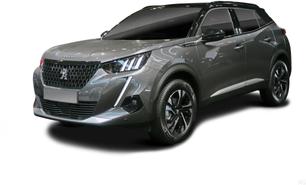
Looks are subjective but Peugeot’s updated 2008 small SUV is good looking from every angle.
The update brings a raft of design tweaks and some tech upgrades, but mechanically there isn’t anything new.
It’s not a cheap car and its diminutive size might scare off some buyers who can cross-shop cheaper and more value focused alternatives from mainstream Japanese and Korean brands.
We are driving the range-topping 2008 GT variant to find out if it’s more than just a pretty face.
The Suzuki e Vitara is a fun, if unusual little electric car, but it does come at a price premium over many of its rivals, which includes the likes of the Kia EV3 and Hyundai Kona.
It’s great to drive, has a versatile cabin, and has a familiar feel for anyone new to electric cars. However, with low driving range, slow charging, no vehicle-to-load or single-pedal driving and comparatively high service costs, it may be a tall order.
Some will prefer that it wears a Japanese badge on its nose compared to budget alternatives, but I’m not sure Suzuki will be selling these in the kinds of volumes it needs to at this price.
The Peugeot 2008 is a handsome and accomplished little SUV that’s fun to drive and has a cabin that feels a little bit special.
In reality the 2008 is too expensive and isn’t as practical as most of the mainstream compact SUVs.
This is the car you buy with your heart, not with your head.
The e Vitara is an odd looking car, with a super upright front and rear combining with sharp motifs across its blocky body.
It’s a departure from anything Suzuki has done before, with only echoes of the current Vitara combustion SUV at the front.
It moves Suzuki into new styling territory with the contemporary angular design feeling more similar to the Kia EV3 rather than the more curvy, contemporary designs seen on some of its more affordable Chinese competition.
The interior updates bring Suzuki into the current decade, with more screens, better software, and a more swish design compared to the increasingly dated interiors of its combustion models.
It has a more conservative approach than some newer names to the Australian market, with comparatively tame screens, the existence of actual buttons for some climate functions, and familiar switchgear, like traditional indicator stalks and a rotary-style shifter.
In fact, the shifter and some of the other buttons seem to be shared components with Toyota, because they are the same as what you might find in the bZ4X, for better or worse.
The software is basic. It features a handful of screens with little depth to the info on offer. However, it is quick to respond, and the dashboard offers a degree of customisation in its layouts.
Even if it’s not quite the stellar software offering that you might see in a Tesla, it’s the best software Suzuki has offered and it seems to just work without being distracting, so that’s something at least.
The Peugeot 2008 is a smooth operator with head-turning French flair, but the devil is in the detail.
It’s not just the 2008’s well proportioned dimensions or the healthy dollop of exterior black highlights that catch your eye, but Peugeot has added a range of design cues to symbolise the Lion on its badge.
The tail-lights have a 3D effect that make them look like cat’s claws and the daytime running lights on the front resemble a scratch mark. These pair perfectly with the lion head crest on the grille.
Look deeper and you notice the attention to detail.
The 2008's redesigned front grille's slates are colour matched to the car's body colour.
Dual exhaust pipes are finished in chrome, giving the impression of performance even if the car doesn’t deliver on it.
The GT variant gets a two-tone paint job with a black roof contrasting with the body's colour.
Inside there are plenty of high quality finishes. The centre console is festooned in gloss black and there is a lovely carbon-effect textured insert on the dash and doors.
Some hard plastics below eye-level and on touch points such as where your knee might rub are less impressive. The rear seat loses some of the lustre of the front pew with tough plastics covering the back of the front seats and most of the doors.
There’s major pros and cons for the e Vitara on the practicality front. In some ways it’s a smart and pragmatic cabin, in other ways it leaves a lot to be desired.
Up front the seats are an easy win. Nicely bolstered with good padding, they’re surprisingly comfortable on a long drive despite a high seat base and interesting material choices.
Ergonomically, I felt as though the seating position was a bit high. It feels like an ‘early’ EV in that sense, with the batteries clearly taking up floor space. For shorter people, this will be a good thing, with the car offering a commanding view of the road, but it doesn't feel quite right for me.
The cabin offers ease of access to all the key controls, with physical toggles for the climate unit and a dial for volume. There are some buttons on the steering wheel for adjusting the digital instruments and key cruise functions, but no paddle shifters for controlling regenerative braking.
The centre console is the biggest design blunder. The raised bridge piece is almost entirely gloss plastic, which is impossible to keep clean and will scratch over time. The controls are also chunky, taking up a lot of real estate in this essential location. They could easily have been compressed down to a smaller area with more storage on offer instead.
The padded armrest is too low and too far back. It could have had adjustable height and reach where it sits, and could have offered more storage underneath as well.
To the e Vitara’s credit, there’s a set of two very nice cupholders up front, but using them with a bottle will block access to the physical climate controls and limit access to the wireless charger.
There’s also a tray beneath that houses the 12v, USB-A and USB-C ports, but it’s a bit too height-limited for larger items like handbags. It's finished in a scratchy plastic so loose objects slide around. There are large bottle holders with dividers in each of the front doors.
The rear seat continues with the nice seat trim and offers quite an impressive amount of legroom in its default position. The floor is flat, too, so the centre position is useful enough in terms of space to put your feet. Each door has a bottle holder and there’s a pocket on the back of the passenger seat. The centre seat folds down to make for a padded armrest with two cupholders.
However, there are no power outlets for rear passengers, nor are there adjustable air vents. The headliner and window tint back there is also dark, making the space feel claustrophobic, and the high seat bases combine with a tight roofline (blame the sunroof) to make for a space I only just fit into, despite ample leg room.
The boot also feels small, but the e Vitara has a trick up its sleeve. With just 238 litres in its default configuration, it’s a small but oblong cargo area, but it swallowed our small and large CarsGuide travel cases. The second seating row is on rails and can move forward to nearly double the available volume. In this position, which would only leave enough space for small children or pets, the boot can absorb the whole three-piece luggage set with space to spare.
There’s a small amount of additional storage under the floor, good for charging cables, although there’s no spare wheel, only a tyre repair kit.
A lack of full-size power outlet or vehicle-to-load discharge system is a notable omission for an electric vehicle in 2026. There’s also no frunk, with the entire under-bonnet area taken up by high-voltage and battery cooling gear.
Step inside and there is no hiding the 2008’s diminutive proportions.
It’s 4300mm long, 1815mm wide and 1550mm high, which puts it closer in size to the mini Mazda CX-3 than the larger CX-30 it is more aligned with price-wise.
This all adds up to a snug fit in whichever row you sit.
There are a couple of cupholders in the centre console - a smaller one for a standard takeaway coffee and a larger one for drink bottles.
Slight storage bins in the door can hold a regular drink bottle but there isn’t much room for much else.
The wireless device charger is hidden away behind a compartment below the central screen that opens with a push and there are two USB-C ports up front and the rear seats score a USB-C and A connection.
Rear seat passengers do without a dedicated aircon vent, unfortunately.
There is an issue with Peugeot’s i-Cockpit steering wheel and digital driver display, too.
If you like to sit low the chances are the steering wheel will cut off your view of the bottom part of the display. If you prefer to have the seat jacked up, you’ll have better vision of the readouts.
There are piano key-like physical controls for simple climate functions such as the de-mister and auto climate settings. More complex functions are done via the 10-inch central multimedia screen.
The boot is a decent size at 434L and can easily handle a weekly grocery shop or a few overnight bags.
There is only a space saver spare wheel, but this car is aimed at city driving where it is easier to source a replacement tyre.
The e Vitara isn’t off to a good start on the pricing front. This small electric SUV starts from $49,000, which is a drive-away price at the time of writing. This already strikes it out of the value leagues, nowhere close to the sub-$40,000 starting price of China-sourced alternatives like the Leapmotor B10, Jaecoo J5 or BYD Atto 2.
Instead, the e Vitara plays in the big mainstream price leagues with the Kia EV3, Hyundai Kona Electric or even the MG S5, and even then the Ultra all-wheel drive we sampled for this review has an eye-watering $9000 price jump over the base Motion 2WD variant.
This pitches it against the most expensive versions of the EV3 and Kona, and in the same pricing league as the Volvo EX30, all three of which offer a significantly higher electric driving range.
We’ll get more into that later, but the spec sheet for the e Vitara at this price reads more like that of a combustion car, rather than a new-age EV.
Highlights include the futuristic 18-inch alloy wheels, auto high beam LED headlights, multi-tone sports seats with electric adjust for the driver, heated front seats, a premium sound system and an opening sunroof.
It also scores a 10.1-inch multimedia touchscreen with wireless Apple CarPlay and Android Auto, a 10.25-inch digital instrument cluster, and ambient lighting which makes it feel a bit more swish at night.
It’s good stuff typical of a mainstream brand, but at significantly less money, rivals from China are offering larger screens and more features.
Plus, while you’re getting a Japanese brand badge, the e Vitara is actually built in India alongside its Toyota relation, the Urban Cruiser, which we’re unlikely to see in Australia.
The 2008 range kicks off at $39,990, before on-road costs, for the base Allure grade and rises to $44,490 for the fully loaded GT variant.
That’s a lot of money for a small SUV, especially considering the Skoda Kamiq range starts at $32,990, you can get Nissan’s Qashqai from $33,890 and a Mazda CX-30 for $33,140.
There is a lot to like about the 2008’s standard equipment list, though.
Flash looking 17-inch alloy wheels are complemented by adaptive LED headlights that control individual LEDs to brighten the road without dazzling oncoming vehicles. The headlights will automatically switch on in low light situations and stay on for a short period of time after you exit the vehicle to make it easier to find your way to the door at night.
A 10-inch multimedia screen is compatible with wireless Apple CarPlay and Android Auto, and a wireless device charger completes the cord-free ecosystem.
Peugeot’s 'i-Cockpit' brings a 10-inch driver display with 3D readouts paired with a small steering wheel.
GT buyers can expect eight colour ambient lighting, a six-speaker stereo, four USB charging ports, in-built sat nav and brushed aluminium foot pedals.
Well bolstered seats are heated up front and wrapped in synthetic suede and leather upholstery with contrast green stitching. The driver’s seat is power adjustable and has a massage function but the front seat passenger will need to move the seat themselves.
There are rain-sensing wipers, roof rails, power folding and heated side mirrors and a space saver spare wheel.
It’s a solid list of equipment but is missing some features you’ll find on similarly priced rivals such as a head-up display.
The e Vitara Ultra impresses when it comes to its drive hardware. With 135kW/307Nm it’s punchy for a small SUV, with the 0-100km/h sprint time officially measured at 7.4 seconds.
It feels faster to get to 60 though, with a big surge of torque instantly available. This Ultra grade features a dual-motor all-wheel-drive set-up, and even has specific traction settings for off-road scenarios, making it theoretically more capable than some of its rivals.
Lurking beneath the bonnet is a little three-cylinder 1.2-litre turbo-petrol engine that makes 96kW and 230Nm. That’s a decent amount of grunt from the little unit, but again you can get more oomph for less from mainstream rivals.
It is paired to an eight-speed automatic transmission that drives the front wheels.
There is no hybrid help, either.
This all-wheel-drive set-up comes at a significant cost. The e Vitara Ultra has a WLTP driving range of 395km and an official energy consumption of 16.5kWh/100km. Far from the 500km-plus range of some of its rivals.
But the story gets worse. While I tend to pull close to if not occasionally more than the official driving range from Hyundai and Kia models, the e Vitara fell well short of its quoted range in my testing.
While not a scientific test by any means, I drove it in regular city driving conditions with some freeway jaunts. The projected range my car was indicating on the dash was just 295km.
While the Toyota bZ4X is fairly notorious for keeping a huge emergency range reserve which impacts its overall driving range, 100km less than the claim is simply not acceptable.
It also overshot its energy consumption significantly, with the car indicating 17.9kWh/100km, which I would expect from an EV a full size bracket above this.
Compounding these issues is the sub-par charging speed. 70kW was once okay for a 61kWh battery, but is now behind the pace, with most rivals quoting 100kW of peak DC charging speed or significantly more.
As such it takes about 45 minutes to charge the e Vitara Ultra from 10-80 per cent, which is well behind the 20-30 minutes of many of its rivals. At least the AC charging speed is an acceptable 11kW.
Stiff emissions regulations in Europe mean these little turbocharged petrol engines have a fair bit of self control on the drink.
Peugeot claims the 2008 uses 5.4L/100km on the combined cycle. We used slightly more than this but spent most of the time in the cut and thrust of city traffic where cars use more fuel.
You’ll need to budget for pricier premium unleaded petrol, too.
For all its flaws, the e Vitara is a nice car to drive. Unlike many of its rivals, the driving ergonomics and switchgear feel instantly familiar in this small SUV. You’re not met with an array of weird touch-based systems, strangely placed screens, or even annoying indicator stalks as you are in so many of this car’s rivals from newer brands.
It’s refreshingly straightforward when you hit the road, with more traditional assisted steering, standard pedal feel and nicely blended or near-single-pedal regenerative braking, depending on how you set it.
The e Vitara in Ultra trim with its dual-motor system is also alarmingly rapid, at least to the 60km/h mark, with its raised body lurching forward with some urgency when you stomp on the accelerator.
It’s not like any Suzuki you’ve driven before, that’s for sure.
Despite this impressive sprint ability, things are kept under control with smart traction software and halfway decent tyres keeping things civilised. There’s no violent torque-steer trying to rip the steering wheel out of your hands, or pure tyre torture you get from some EVs in this class.
The ride is comfortable, too. It's not as harsh as the likes of the Tesla Model Y, for example, but it’s also not too spongy like many China-sourced rivals.
Day-to-day it absorbs harsher road imperfections in its stride, and handles cornering with surprising grace, despite what feels like a tall ride height. Its biggest ride flaw is long undulations in the road, which give the car an unsettling floating feeling at certain cadences, as the weight of the battery starts to pendulum.
For the most part though, the e Vitara is refreshingly straightforward and feels familiar to drive, which should keep fans of the brand and those looking for a more traditional Japanese car drive experience pleased.
On the road the 2008 is a bit temperamental.
Most European cars are fitted with stiffer suspension than the cosseting springs found in Japanese machines.
This means you’ll feel bumps and road imperfections through your seat more than other SUVs. It has particular problems ironing out consistent smaller bumps, which can unsettle it and lead the 2008 to skip across them.
The counterbalance to that is a more dynamic drive experience, with the 2008 exerting excellent body control through the bends as it is held in line by the stiffer set-up.
Pair this with sharp, direct and well-weighted steering and it's a fun little SUV to take on a twisting country back road.
Three cylinders might not sound like a lot, but in the real world this is all the 2008 needs.
Its 96kW and 230Nm won’t set the world on fire but the torque is accessed from just 1750rpm, which endows the 2008 with some punch off the mark and it feels zippy when navigating the daily commute.
Don’t confuse that for outright speed, though, the 2008 completes the benchmark 0-100km/h dash in 9.3 seconds.
The transmission is fine when you are accelerating or cruising at motorway speeds, where it uses its many ratios to keep the engine humming along in its sweet spot. There are paddle shifters if you want more control.
In stop-start traffic it isn’t as an accomplished performer. It can struggle to find the right ratio and this leads to a jerky movement reminiscent of dual-clutch autos.
The cabin is well insulated with the outside world kept mostly at bay, but you’ll hear the three cylinder’s charming little rumble when you put your foot down.
Parking is a cinch thanks to its petite proportions and the 2008 has no issues navigating tight city streets or underground car parks.
The array of active safety kit present on the e Vitara is also nicely tuned, with key systems like auto emergency braking (AEB), lane-keep assist, and blind-spot monitoring all well-calibrated and not needing to be turned off like a lot of this car’s more affordable rivals.
The adaptive cruise control proved to be compliant in my time with the car.
The Suzuki has seven airbags and a four-star ANCAP safety rating, which should still make it a very safe car. It's also, somehow, the highest-scoring current Suzuki model.
The 2008 has a maximum five-star ANCAP safety rating, but that mark was given in 2020 and it might not get the same score if it was retested today.
It has six airbags, but misses out on a centre airbag that protects against head clashes in a side on collision.
It has a decent amount of safety equipment with auto emergency braking, lane keep assist, blind spot monitoring and adaptive cruise control.
Rear cross-traffic alert, which sounds an alarm if a car is approaching from the side as you reverse, is a notable absence.
Suzuki offers a five-year, unlimited kilometre warranty, which is outpaced by all of its rivals from China and most of its rivals from Japan.
The e Vitara needs to see a workshop once every 12 months or 20,000km and comes with five years of roadside assistance to match the warranty.
The brand’s genuine service program covers five years or 100,000km, with costs for this Ultra variant varying between $289 and $799 per visit, coming in at a surprisingly expensive yearly average of $503. There are combustion cars with more moving parts that are cheaper to run.
An average fast DC charge session (10-80 per cent at 60c per kWh) will cost around $21.60, while an off-peak at-home charge (at 16c per kWh) of the same amount will cost $5.76.
Peugeot covers the 2008 with a five year/unlimited km warranty, which is the standard coverage today.
The French brand offers a range of prepaid servicing packs that’ll save you a handy amount compared to pay-as-you-go maintenance.
A five-year plan is the best value, costing $1700 for five scheduled visits every 12 months or 15,000km. That’s $638 cheaper than the pay-as-you-go servicing.