What's the difference?
Subaru has always been a good fit for Australia.
Since the '90s, when the brand made a big splash with its rally derived Impreza and Liberty, Subaru’s rugged appeal has suited Australia’s tough conditions and recreationally adventurous buyers.
Cars like the Forester and Outback solidified the brand’s place amongst SUVs before SUVs were really a thing, and the XV is the logical progression of the Impreza range, slotting nicely into the brand's offerings of lifted all-wheel-drive wagons.
It’s been a few years since the XV launched, however, so can its latest 2021 update keep it in the fight in a quickly evolving and notoriously competitive segment against many newer rivals? We’ve taken a look at the whole range to find out.
Don’t let people talk you into buying a tiny car just because you live in the city. That’s what I’ve learnt from being a car reviewer and living about eight kilometres from the CBD.
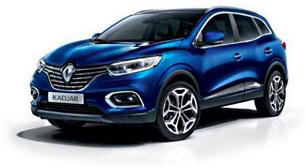
Yes, car spaces are small, or almost non existent, but the people that live there are as full-sized as people elsewhere and they often carry around just as much gear. What you need is a big, little car and the Renault Kadjar is that – a small SUV which is actually bigger than most.
The Kadjar is also French, and that’s appealing to us city folk because even though there are millions of us living in one square metre we like to think of ourselves as different, as individuals, cosmopolitan, metropolitan.
So the Kadjar looks perfect then, right?
Well, it’s good yes… in some ways, but after reading this you might prefer its Japanese cousin, the Nissan Qashqai. Let me explain...
Even years on from its initial launch and with only subtle changes to its main range, it’s really to Subaru’s credit that the XV feels just as capable and modern as any of its rivals.
This is not to say it’s perfect. We can’t recommend the base model, the maths don’t really work out on the hybrids, the only available engine is breathless, and it has a small boot.
But the XV’s excellent safety suite, driving dynamics, all-wheel-drive capability, quality finish and comfortable interior mean it’s hard not to be charmed by this little lifted hatch.
Our pick of the range? While the 2.0i-L is great value, we’d recommend you splurge to the 2.0i-Premium to get the full safety suite and extra garnish.
The Renault Kadjar Intens ticks a lot of the urban boxes. It’s small, which is good for navigating narrow city streets and parking in tight spaces, but it’s also spacious and practical. The Kadjar is fuel efficient for a four-cylinder petrol engine and it has that sophisticated French styling.
The Intens is expensive, though, and unless you absolutely have to have leather seats, a glass roof, and the Bose stereo I’d go for the mid-range Zen grade and save yourself $5K but still have all the same safety tech. That said the Intens has auto parking as standard which is a nice convenience for the city.
Safety could be better. The AEB system doesn’t have pedestrian and cyclist detection, rear cross traffic alert, or reverse emergency braking.
Finally, the dual-clutch automatic and 1.3-litre turbo-petrol engine while a fuel efficient combination, isn’t all that easy to live with and can make driving a less-than-smooth experience. The Nissan Qashqai’s combination of CVT auto and four-cylinder naturally aspirated engine is better suited to the urban jungle - something to think about there.
Now the scores, the Kadjar Intens gets the same mark for daily driving and its urban talents – it could be smoother to drive, but there’s still lots to like.