What's the difference?
For over thirty years, the Subaru Impreza has been an icon on Australian roads.
If you’re a member of the ‘PlayStation generation’ like me, there’s a very good chance you slapped P plates on one as your first car.
For Subaru the Impreza is more than that. Along with its WRX performance variant, it's the car which put Subaru on the map, raising it from a relatively unknown Japanese automaker to a global household name.
Things change, though, and despite 30-plus years of history as a beloved nameplate, the Impreza has gone from a best-seller to tumbling down the sales charts as buyers shuffle into small SUVs rather than hatchbacks or small sedans.
The question we’re looking to answer today is what this new-generation Impreza has to offer in 2024, and whether it is still worth a look.
Read on to see what we found.
KGM (formerly SsangYong) has revised its Musso range for 2026 with some new features and revised styling throughout the Australian line-up, as well as a name-change for this grade: the Advance which used to be the Adventure.
The updated Musso is a dual-cab 4WD ute with high and low-range gearing, an auto-locking rear differential and 3.5-tonne towing capacity, and all for under $50,000.
And with the optional XLV (extra long vehicle/version) pack, which our test vehicle has, it gets a longer wheelbase (110mm extra), a 300mm longer tub and 90kg of extra payload over the standard Musso (880kg rather than 790kg).
So, is the Musso an affordable alternative to the likes of Toyota HiLux and Ford Ranger?
The 2024 Impreza delivers on all the key things which have made the nameplate so well regarded for the last 30-odd years.
The issue is, buyer expectations have moved on. Hatchbacks need to do more than ever to compete with small SUVs, and with today’s fuel prices it’s far more valuable to offer hybrid rather than all-wheel drive.
This is why, despite the sixth-generation Impreza being a tidy high-tech offering with an admirable commitment to safety, I think it will ultimately continue to shrink its market share. This Impreza really is one for the fans.
The KGM Musso Advance is a large 4WD ute offering a decent amount of appeal for the price and it makes a lot of sense in XLV form.
It’s generally nice to drive, it’s comfortable and capable for a ute and – as with the Rexton – the Musso is another clear sign that KGM continues to improve its vehicles, albeit incrementally in some cases, in terms of quality and functionality.
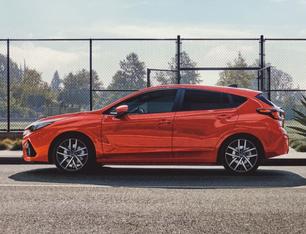
Over the years the Impreza has changed in its design and intention so much.
Once known primarily for its sporty sedan variants, today’s Impreza is a far more contemporary hatchback, forgoing the once wagon-like shape for something with the traditional bubble silhouette to align with its rivals.
For better or worse, it also syncs up with the rest of Subaru’s range, with the brand’s current design language on full show, but it also barely evolves from the previous-generation version from the outside.
It trades the chunky square light fittings from the previous car for something a bit more refined this time around, with a similar look and feel to the WRX and Outback.
Inside also gets a similar fit-out to other Subarus in the range, complete with a raised centre console, shapely dash, and the same huge screen from the Crosstrek and Outback which dominates the space and helps simplify things compared to the busy interior and multiple screens of the previous car.
It’s a cosy space with chunky comfortable seats and the signature bumper car steering wheel is a stand-out bit of Subaru design.
Even the base car with its plastic trimmed wheel and basic cloth trims in the door is basic in an almost refreshing way, but unlike some rivals manages to be comfortable, too, thanks to soft trims for your elbows in the doors.
The Musso is based on its SUV stablemate, the Rexton. It’s a body-on-frame 4WD ute, available only as a dual-cab, and its appearance is inoffensively pleasant.
Styling changes to the Advance include a black grille, black 18-inch alloy wheels, HID headlights (on short and XLV grades), and rear privacy tint.
It also has a black leather-look interior with black leather-look seats.
The Musso’s interior offers plenty of space for the driver and passengers and is neat and well laid out.
Build quality and fit and finish are impressive with a mix of durable plastic and soft-touch surfaces throughout including a leather steering wheel and leather-look seats in the Advance.
Living up to the adventure-ready Subaru promise, the Impreza's interior is quite functional.
Even though many controls have moved to the big central screen, there are individual buttons for temperature adjustment and a permanent touch function for fan speed on the lower third of the screen.
It would be nice to see a full set of physical buttons for climate functions, but this seems like a decent compromise.
Elsewhere there are large bottle holders in each door with a small accompanying pocket, two more rigid bottle holders in the centre console, a small tray behind them, and a huge armrest console box.
Under the multimedia screen there is a bay with a wireless phone charger, but like the Crosstrek, it is finished in a hard plastic material, which means your phone will easy slide around and out of the charging area in the corners, which seems like an oversight.
Adjustability is great, even in the base car, with flexible seats and a wide range of movement for the wheel, letting you easily find a suitable seating position. Width in the cabin is okay, but headroom is excellent.
The back seat offers a solid amount of room for myself behind my own seating position, at 182cm tall, but the middle position is no good for an adult thanks to the presence of a large raise in the floor to allow for the all-wheel drive system underneath.
Amenities for rear passengers are only okay in the base car, with a large bottle holder in the door and a further two in a drop-down centre armrest. There are no adjustable rear air vents or USB power outlets in the L, but outlets are added in the R and S.
Boot space is on the small side, with only 291 litres (VDA) on offer. The high floor means a limited amount of space with the luggage cover in place, although I was surprised to find we could fit the full three-piece CarsGuide luggage set once it was removed, so long as you’re okay not being able to see out the rear window.
Under the floor, the Impreza sports a space-saver spare wheel - a must-have for long-distance regional travellers.
There is the expected array of storage spots (glove box, door pockets etc), cupholders (two to the rear of the auto shifter) and charge points (two USB-C ports and a 12-volt plug point for driver and front passenger).
The seats are comfortable and supportive and, in general, KGM has maximised space in the cabin, yielding plenty of shoulder and legroom for driver and passengers.
The 12.3-inch touchscreen multimedia system works reasonably well although you do have to cycle through numerous menus and sub-menus to change some settings and I did have to try several times to pair my phone to it, so overall functionality is clunky.
Rear-seat passengers have access to directional air vents, but there are smart-device charge points.
The tub size is as follows: 1600mm long in the XLV (1300mm in the standard Musso), 1570mm wide (1100mm between wheel-arches) and 570mm deep. The tub has a plastic tub liner and four tie-down points.
For a direct comparison of dimensions: the standard Musso is 5095mm long with a 3100mm wheelbase while the XLV is 5405mm with a 3210mm wheelbase; the standard Musso is 1950mm wide and 1870mm high (the XLV is 1885mm). For reference, the Ford Ranger XLT dual-cab ute is 5406mm long (including rear bumper and tow bar receiver) with a 3270mm wheelbase.
The difference in dimensions between a standard Musso and the XLV version also means a difference in off-road angles so approach is 22.8° / 25° (XLV), departure is 23.4° / 20° (XLV) and rampover is 23° / 20° (XLV).
Minimum ground clearance is 215mm in a standard Musso and 220mm in the XLV, so the Musso XLV does stand taller off the ground than its regular stablemate.
Kerb weight is listed as 2090kg for the standard Musso and 2100kg for the XLV. Turning circle is 11.8m for the standard Musso and 12.2m for the XLV.
Now in sixth-generation form, the 2024 Impreza range has been trimmed down to just one hatchback bodystyle and three trim levels - the base L, mid-spec R, and top-spec S.
True to Subaru form these variants are all priced quite close together, and the base L comes with pretty much all the kit you’ll need, with the R and S grades adding mainly luxuries to the equipment list.
Now starting from $31,490, before on-road costs, the Impreza is not as affordable as the previous-generation version, and while it manages to pack a relatively high level of standard equipment, some of its key rivals are a bit cheaper in a segment where every dollar matters.
For example, you can get into a hybrid version of Toyota’s Corolla (Ascent Sport Hybrid - $32,110) for similar money to the entry level 2.0L, the Kia Cerato can be had for under $30,000 (Cerato S Auto - $27,060) while the outgoing Hyundai i30 is significantly cheaper in its most basic trim level (i30 Auto - $26,000).
What might make you think twice is the Subaru’s standard all-wheel drive, where all of its rivals are front-wheel drive, but in an environment where fuel costs are high, I can understand why people would prefer to see a hybrid version instead.
Unlike the Impreza’s Crosstrek small SUV relation, there’s no ‘e-Boxer’ hybrid variant.
Still, standard equipment is high even on the base 2.0L. Included are 17-inch alloy wheels, LED headlights, a massive 11.6-inch multimedia touchscreen with wireless Apple CarPlay and Android Auto and you even get a matching wireless phone charger.
Elsewhere the base car gets cloth seats with manual adjustment, a plastic steering wheel, analogue instrument cluster with a small digital display, and importantly, the majority of Subaru’s very good active safety equipment is standard.
So, what do you get for stepping up the range? At $34,990, the 2.0R adds premium cloth seat trim, additional charging ports in the rear, eight-way power adjust for the driver, heated front seats, a leather steering wheel and shifter, steering responsive LED headlights, and LED fog lights.
At the top of the range, the $37,990 2.0S adds a 10-speaker audio system, built-in sat-nav, an electric sunroof, and synthetic leather seat trim.
The cabin tech, safety, and standard all-wheel drive are the real draws, but you have to want them. The Impreza isn’t the stellar value buy it once was.
The KGM Musso is available in three grades - ELX, Advance, and the Ultimate. All three can be optioned up with an XLV Pack, which adds a 300mm longer tub giving you an additional 251L rear tub capacity, along with a 110mm longer wheelbase. XLV also increases maximum torque from 400Nm to 420Nm.
At the time of writing, our test vehicle, the Advance, has drive-away price of $48,700.
Standard features in the Advance include 12.3-inch touchscreen multimedia system (with wireless Apple CarPlay and Android Auto), 12.3-inch digital LCD instrument cluster, leather-accented heated and ventilated front seats with electric adjustment, 18-inch black alloy wheels, HID headlights, LED daytime running lights, and a suite of driver-assist tech, but more on that in the Safety section below.
Exterior paint choices include Grand White (no extra charge), Amazonian Green (metallic paint), Marble Grey (metallic paint), Pearl White (metallic paint) and Space Black (metallic paint). Metallic paint is available for $700.
The Impreza is equipped with just one engine and transmission for its sixth-generation, a 2.0-litre (FB20) four-cylinder horizontally-opposed ‘boxer’ engine mated to a continuously variable automatic transmission, driving all four wheels via the brand’s signature ‘symmetrical’ permanent all-wheel drive system.
The FB series is a development of the successful EJ series engines which lasted from 1989-2021. This more recent engine has new material science, heads, and seals which have helped the brand push service intervals out to 12 months rather than six, and should address issues which the older engines developed over time.
Power is on-par, but not a stand-out in the segment, with peak outputs of 115kW/196Nm.
The KGM Musso Advance with the XLV Pack has a 2.2-litre four-cylinder turbo-diesel engine – producing 133kW at 4000rpm and 420Nm from at 1600-2600rpm – it gets an extra 20Nm over the shorter version's 400Nm from 1400 to 2800rpm.
It has a six-speed automatic transmission, part-time 4x4 with high and low range, and an auto-locking rear differential.
This is a sluggish combination producing a generally lacklustre performance and the powertrain is not particularly efficient but, having said that, the Aisin auto is a reliable, well-proven transmission and the Musso ultimately does reasonably well with what it has.
The 4WD mechanicals and driver-assist tech actually work better in this package than they do in the Musso’s stablemate, the Rexton.
One issue with having a non-turbo, non-hybrid 2.0-litre engine with all-wheel drive is relatively high fuel consumption. The Impreza has an official combined cycle fuel consumption figure of 7.5L/100km which is less than impressive in today’s market of hybrids and downsized turbocharged engines.
In my week of mostly stop-start city driving, the test example drank 11.1L/100km, which is disappointing.
Mercifully, it is capable of running on 91RON unleaded. For those who care, the CO2 output is officially 170g/km which is well above the 140g/km it would need to be at to avoid the wrath of incoming vehicle emissions regulations.
Official fuel consumption for the Musso Advance with the XLV treatment is 9.0L/100km.
On this test, I recorded 11L/100km, but on the test I spent a chunk of time in 4WD high and low range.
The Musso has a 75-litre fuel tank, so going by my on test fuel-consumption figures, from a full tank, you could reasonably expect a driving range of about 681km.
But it is worth noting that I didn't have a lot of weight on board during this test – it was just me and the vehicle recovery gear – and you will have a lot more weight on board: your family or your mates, pets, camping gear, surfboards, kayaks, the whole kit and caboodle.
Have you driven a Subaru in the last 10 years? The drive experience here is pretty much uniform with the rest of the automaker’s range.
This means a lot of very appealing traits. For example, the new Impreza has a comfortable, compliant ride, really nicely weighted steering, and solid handling even on slippery surfaces courtesy of the all-wheel drive system.
The FB series engine also has a good bit of pull fairly early in the RPM range which makes it deceptively spritely, although power really hollows out the more you push it.
This makes it nice to drive around town, but less impressive when it comes to overtaking on the freeway.
This is reinforced by the continuously variable automatic which lends the engine a thrashy, rubbery character when pushed, but is nice and predictable at lower speeds.
The rev-happy engine is also quite noisy when a lot is asked of it, and like a lot of Japanese cars, but Subarus in particular, tyre roar picks up in the cabin above 80km/h.
It’s a comfortable and family-friendly drive, and I particularly like the way the plethora of active safety systems sit by the wayside and don’t interfere with the overall experience.
It is just a bit of a shame it doesn’t move the drive experience forward by a huge amount. The current Impreza doesn’t feel meaningfully different from the fifth-generation version which debuted in 2016.
On-road, the longer-wheelbase Musso is composed and comfortable with well-subdued NVH (noise, vibration and harshness) levels adding to an impressive overall sense of low-key refinement.
The engine and auto work reasonably well together, but as mentioned earlier this is a sluggish unit and it takes some urging to get it going. Pronounced lag from stand-still can be disconcerting, especially when you need plenty of zip to punch you into the traffic flow.
This ute’s suspension – double-wishbone, coil springs and stabiliser bar at the front, multi-link with coil springs at the rear – is firm, mostly controlled, but the Musso becomes jittery on irregular surfaces, such as lumpy back-roads bitumen and mildly corrugated dirt tracks.
One noteworthy annoyance: the Musso does not have adaptive cruise control.
Despite that, the Musso is actually quite reasonable for general driving duties.
As a 4WD, the Musso actually performs pretty well. It is a long wheelbase ute, so you have to drive it with consideration because you have to take into account its shallow off-road angles – approach, departure and ramp over – and it has quite a large overhang of tub behind the rear axle.
It has an auto locking rear diff, which is clunky in operation and I’d prefer a switchable diff-lock, which you could select whenever you want to, but otherwise it's effective in a workman-like kind of fashion.
Steering is not too shabby, it has a nice weight to it in all situations, whether you are on the bitumen or a dirt track. Turning circle on this long-wheelbase ute is 12.2m, but it feels nimble to steer around on the tracks.
The Musso has part-time four-wheel drive and high and low range 4WD gearing. It doesn't have a lot of power and torque in terms of the contemporary dual-cab ute market, but it does fine with what it does have; 420Nm in the XLV Musso gives it that little bit of extra punch over the standard Musso (400Nm) and that torque is available across a decent spread of revs.
If you intend to use your Musso as an off-road adventure vehicle or a weekend holiday machine, then it's handy to know that it's unbraked towing capacity is 750kg and its braked towing capacity is 3500kg and that's on par with the dual-cab ute market.
In terms of tyres, it’s the same story here as with most standard 4WDs – the Musso’s Nexen NPriz RH7 (255/60R18 108H) are not well-suited to anything other than light off-roading. The easy fix? Replace those tyres with some decent all-terrain tyres.
Payload is a listed 880kg (790kg in the standard Advance), GVM is 2980kg and GCM is 6480kg.
The majority of active safety equipment is standard across all three Impreza variants including auto emergency braking up to freeway speeds with reverse auto braking, lane support systems, blind-spot monitoring with rear cross-traffic alert, traffic sign recognition, lead vehicle start alert, driver attention alert, and adaptive cruise control.
Stepping up to the 2.0R or 2.0S nets you the front parking camera for a 360-degree parking suite, and high-beam assist for the LED headlights.
Expect the usual traction, brake, and stability controls, alongside the more modern torque vectoring system and an impressive suite of nine airbags. The new Impreza is yet to be rated by ANCAP.
The Musso does not have an ANCAP rating because it has not been officially tested.
As standard, the XLV Advance has six airbags, auto emergency braking (AEB), lane departure warning, trailer sway control, blind-spot monitoring, rear cross-traffic alert, front/rear parking sensors plus reversing cameras and more.
Adaptive cruise control is not offered on Mussos in Australia, only old school cruise control.
Subaru offers its fairly standard five-year and unlimited kilometre warranty on the Impreza, with 12 months of roadside assist included.
There is also a five-year fixed-price service program covering the first 75,000km, although it’s nowhere near as affordable as the Corolla or i30, coming in at an average annual cost of $464.64.
The Impreza needs to be serviced once every 12 months or 15,000km, whichever occurs first.
The MY26 Musso range is covered by a seven-year/unlimited kilometre new-vehicle warranty, and five years of roadside assistance.
A service is required every 12 months or 15,000km, whichever occurs soonest with cost per service either $418 or $522.
Note, KGM considers off-roading as an example of a “severe driving condition” and so your Musso may require more frequent servicing.
KGM Australia has more than 50 dealerships across the country with a decent spread across metro and regional areas. Rextons can be serviced at those dealers or at approved workshops.