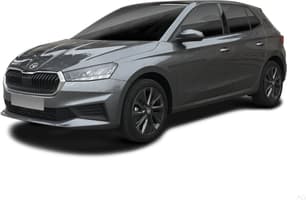
What's the difference?
The smallest car in Skoda’s local line-up is also its most affordable, but only just.
When the current generation Fabia launched with the halo Monte Carlo variant at almost $40,000, it was a bit of a surprise for a small hatch from what’s seen as an affordable brand.
Now, there’s a new entry-level version of Skoda’s bub and, while it’s not nearly as cheap as it once was, it offers a choice that’s more within reach for anyone keen on a premium small car.
Can the Fabia Select convince customers looking at the likes of the Mazda 2 or Suzuki Swift to go Euro and cross the $30,000 threshold?
Launching a new Chinese car company is easy, right? You just introduce an all-new brand, make the cars affordable and the sales just roll in. Right?
No, not right. Australians may be more open-minded to new brands than ever before, but we are still discerning and aren’t just suckered in by a cheap price tag.
Leapmotor has learnt this lesson already, with its first model, the C10 electric mid-size SUV suffering poor critical reviews thanks to its disappointing drive and over-active safety systems. As a result it has struggled to make a real impact in the sales race.
The subsequent B10 small SUV was an improvement and now the brand is launching its first hatchback, the B05. It promises to be something different, because it’s the first Leapmotor model to be shaped for the European market and not China.
That’s because Leapmotor International is actually a joint-venture between Chinese carmaker Leapmotor and US-Euro juggernaut, Stellantis (the conglomerate that includes Alfa Romeo, Fiat, Peugeot, Opel, Jeep and more).
So the B05 is, in theory, the best of both worlds - fine-tuned in Italy and built in China. Which should mean it drives like a European car but doesn’t carry a European car price.
But does it live up to these lofty ambitions? Read on to find out.
Once you get past the shock of the Fabia no longer being a sub-$25K car (because let’s face it, what is anymore?), the fact that it remains refreshingly simple to live with and engaging on the road should be celebrated.
It has its downsides if you need space, and you can buy a light (or even small) SUV for the same price, but you’ll be compromising in other areas.
The Skoda Fabia can’t do everything, but what it can, it does well. Plus, it’s certainly less common than the similarly priced Toyota Yaris.
Now I know how my school teachers felt. There is a lot of potential in the Leapmotor B05, but the brand needs to study harder and apply itself in some key areas to really put in its best performance.
There is so much potential, there is definitely a good car underneath it, and the brand also deserves credit for the improved interior design.
But there is also some important work to do to make it really enjoyable and a more relaxing drive. Given the rate of improvement from the C10 to the B05, there is every indication that Leapmotor could soon find itself becoming more popular in Australia.
Note: CarsGuide attended this event as a guest of the manufacturer with travel, accommodation and meals provided.
The Fabia’s design hasn’t departed dramatically from its predecessor, but the evolution into the current generation has the little Skoda looking more mature and smoother than before.
Some elements like its grille and headlights are a little sleeker and the car looks less boxy, but still has a unique Skoda design language that’s instantly recognizable.
Its chrome grille trim and its set of unusual 16-inch alloy wheels are the clues that this is the entry Select, plus the lack of much badging.
Inside, the change in generation is most obvious in the step-up in materials and some of the aforementioned tech (screens in particular), though the steering wheel is a carry-over even if it doesn’t look dated.
The new instrument display cowl which features the model name on its side, the round air vents, and the fabric across the dash bring the interior into the current decade, though the centre stack’s modernity is betrayed by climate controls that could have existed in 1998.
There are a fair few hard plastic surfaces, though none of them are in poorly thought-out places and don’t let the cabin down too much.
While the B05 was very much driven by the European side of the Leapmotor International operation because of its preference for hatchbacks, there’s no doubt it has a distinctive family look to sit nicely alongside the B10 and C10 SUVs.
The company says it has a ‘coupe silhouette’ and a ‘wide-body stance’ to give it a sporty look, which also helps it cut through the air better and help with range. While it’s very much a conventional five-door hatch, it does look well proportioned and inoffensive, which is a good place for Leapmotor to find itself in these early days in Australia.
But to help it stand out and make sure you don’t think this is a plain, vanilla hatchback, it comes in the distinctive Lightning Yellow paint as standard. It’s a bold move, but this is the hero colour used in all marketing material, and clearly Leapmotor hopes the yellow will help give the B05 some cut-through.
And as a bonus, if you don’t want a yellow car, it costs $990 more - even for plain white.
Inside it’s relatively simple - for better and worse.
One of the criticisms of the C10 I had was the extreme simplicity of the cabin. Every surface was seemingly covered in the same terracotta colour trim and it lacked definition, and that made it feel cheap.
For the B05 there are more varied trim elements - around the cupholders, door trims and dashboard - which make for a more interesting and polished design.
From an ergonomic perspective, the seating position lacked enough adjustment for me to get really comfortable, in particular the under thigh support, so there are some design areas where Leapmotor can improve.
However, overall the finish and the design of the cabin is another step forward for the brand.
There are cars in the market that, for around or not much more than $30,000, seem like a bargain given the perceived value of features like big touchscreens and (synthetic) leather.
The Fabia Select doesn’t have those things, but everything in it makes sense and, more importantly, everything works well.
For example, as much as I point out the dated-looking air conditioning controls, the reality is they're much easier to use than an in-screen menu requiring the same amount of attention as replying to a text while driving - something that is rightfully illegal.
Simple controls on the steering wheel, a touchscreen that doesn’t require much attention, a clear driver display and a few shortcut buttons around the gear selector mean you can focus more of your attention on driving, without lacking any of the convenience or features you’d expect in a new car.
Wireless phone mirroring for Apple CarPlay and Android Auto add to this, as you can bypass Skoda’s (fine, but basic) multimedia software easily.
The lack of wireless phone charging is a shame, but not a deal-breaker, as the space under the centre stack is conveniently sized. The same can’t be said for the tiny storage bin under the centre armrest, though.
However, the glove box and door card storage is generous and there’s the Skoda-standard umbrella in the door that’s accessible when open.
The seats in the Fabia have decent bolstering and are ergonomically sound, manual adjustment is easy enough and there’s a turning wheel rather than a lever with increments to adjust the backrest.
Given the Fabia’s diminutive stature relative to most vehicles on the road, it shouldn’t be a surprise that the back seat isn’t the most spacious. But as an average-sized adult it feels like the kind of space I’d be comfortable in for a short trip, with adequate headroom, knee room and even a vent.
There’s no centre armrest, though, and the seats aren’t as comfortable as the fronts.
Behind the 60/40 split-fold there’s a generous (for a hatch this size) 380-litre boot with bag hooks, though the floor has some mildly intrusive angled plastic elements.
Impressively, the Fabia has a spare tyre rather than a repair kit, so kudos to Skoda for not taking the cheap (and less safe) option.
Technology is clearly a key selling point for Leapmotor, with a lot of its marketing presentation focused on a younger demographic.
It certainly has a clean and straightforward interior, but that’s what’s expected of most modern cars, but in particular the Chinese. There are the two screens for all information and entertainment, but almost no buttons or switchgear.
It means you need to either rely on the voice command, which can be hit and miss, or navigate the multimedia screen menus or remember what each of the multi-purpose buttons and dials on the steering wheel do.
In short, it’s not a particularly user-friendly car to drive, especially when you’re new and learning its controls.
But there is some interesting technology. Starting with the digital key and NFC card, which completely replaces a traditional key fob. It’s not going to please everyone, as unlike typical keyless ignitions that work on proximity, to turn on the B05 you need to place the NFC card in the smartphone charging tray, you can’t just leave it in your pocket.
Alternatively you can set up a pin code that you enter on the multimedia screen to get the car started. You can also share that pin code, and a digital key via the Leapmotor app, that allows your partner, kids or friends to drive the car if you’re not there to hand over the NFC card.
You can even geo-fence it, setting a radius on the app so you can get an alert if the kids or friends stray too far.
The B05 also comes with an e-SIM and its own data plan - 2GB per month - with Leapmotor footing the bill for at least the first three years. However, there are no clear plans for what happens after that date. It means you can run apps, such as the included Spotify and TikTok, through the multimedia screen without connecting your phone.
Another technological selling point is the ‘Automated Routines’, which can be programmed into the car. So, for example, if the ambient temperature reaches a certain degree, it can automatically turn the air-conditioning to a preselected temp.
As for the space, it’s a well-packaged car, with good room front and rear. You’ll get two adults or teenagers, and three smaller kids, in the back. Rear seat occupants in the Design get a centre armrest with cupholders (no such luck for Style buyers) and there are air-con vents, a USB-A and USB-C port as well as a small pull-out storage spot that can double as a tissue dispenser.
As for the boot, it measures 357L, with the space to expand to 1205L if you drop the rear seats. However, there is no spare tyre, only a puncture repair kit if you find yourself with a flat.
The Skoda Fabia has fallen prey to the same upward-creeping prices as many other light cars have, quite hard.
What was a sub-$25,000 car in its previous generation’s entry grade is now a $32,390 offering, plus on-road costs.
For an entry-level light hatch, the Fabia Select has a decent list of features, though is decidedly more basic than the already-launched Monte Carlo ($39,690 MSRP).
The headline tech features in the base Fabia include an 8.25-inch touchscreen covering multimedia functions, with wireless Apple CarPlay and Android Auto, an 8.0-inch driver display, two USB-C ports, plus drive mode selection and a host of safety features (covered later in this review).
For reference, the Monte Carlo gets a larger 10.25-inch digital instrument cluster and a 9.2-inch multimedia touchscreen.
The Select makes do with manual-adjust cloth seats, but does have keyless entry and start, a leather ‘sports’ steering wheel, automatic windscreen wipers, an auto-dimming rear view mirror and auto LED headlights and LED tail-lights.
Skoda says the Select’s features list aims to line up as “similar to rivals’ mid-specification models” and it’s about bang on. But its price might still be a turn-off for some seeking a budget-friendly light car.
Chinese cars have built their reputation on value, which is where Leapmotor has an obvious advantage over Stellantis stablemates like Alfa Romeo, Peugeot and Jeep which are not known for being particularly cheap.
Having said that, the B05 is not the cheapest hatch you can buy, and certainly not the cheapest electric hatch, but from launch the brand is offering drive-away deals of $35,990 for the entry-level Style and $39,990 for the more generously equipped Design.
Rivals include the MG4, GAC Aion UT and BYD Dolphin but none of them have the traditional low-slung hatch shape of the Leapmotor.
The Style is not the most generously equipped small car you’ll find, but it does have all the essential areas covered. The Design not only has a larger battery but also a bit more gear.
B05 Style standard equipment:
B05 Design standard equipment, in addition to Style:
Notably, Leapmotor does include two different charging cables - Type 2 and 3 - as standard, which is surprisingly rare for modern EVs.
The Fabia’s turbocharged 1.0-litre, three-cylinder, petrol engine makes 85kW and 200Nm in this guise, mated to a seven-speed dual-clutch transmission driving the front wheels only.
Given the Fabia weighs 1265kg, getting to 100km/h in under 10 seconds - which it should be able to do, just - might depend on how many passengers you have.
While it’s not very fast or powerful, the Fabia’s outputs sit about average for its class and price.
The B05 is powered by a 160kW and 240Nm electric motor which, unlike most hatches these days, drives the rear wheels. That obviously has a major impact on its dynamic performance, but we’ll get to that in a moment.
That power is enough for the B05 to accelerate from 0–100 km/h in 6.7 seconds, using it's launch control function. Which is good without being particularly rapid, but this is not a hot hatch, so you shouldn’t expect punchy performance.
The Fabia has a 5.0L/100km combined cycle (urban/extra-urban) fuel consumption figure under WLTP testing, with a minimum 95RON premium fuel grade required.
With its 42-litre fuel tank, that means you could hypothetically expect to cover a touch more than 800km before running out of fuel, though that seems unlikely in the real world.
Despite a particularly lively drive undertaken purely for testing purposes, the highest fuel consumption the trip computer displayed was 7.7L/100km, which isn’t so bad when you consider the Fabia’s not likely to be driven hard most of the time.
While the Style and Design have the same motor, the two different trim levels get different batteries.
The Style features a 56.2kWh lithium phosphate battery (LFP) which provides up to 410km of driving range, according to the WLTP test cycle. While the Design gets a larger 67.1kWh LFP battery that extends the range to a theoretical 482km.
Maximum charging is 156kW and 174kW DC for the two models, respectively. This means the Design can charge from 30-80 per cent in approximately 18 minutes.
If you’re someone who doesn’t need a big car and likes an engaging drive, the Fabia ticks those boxes.
In fact, it feels like it punches above its weight. Well, not literally, because while it actually weighs in at over 1.2 tonnes, it feels lighter than even that.
Tight corners don’t faze the Fabia, and its steering and suspension both feel more dialled-in than a car with 85kW has any right to.
Yep, even though its engine is only slightly more powerful than some budget sports cars from the 1980s it feels peppier than it should.
It has some low-speed hesitancy thanks to its transmission - taking off from a stop sign if you’re not in Sport mode can be annoying - but with shift paddles (or a manual gearbox… ) the Fabia could be a hidden gem for enthusiasts.
Its suspension is firm, but not sharp enough that it allows bumps and rough roads to make their way into the cabin as shocks or rattles, and even holds its own on unsealed surfaces at sensible rural speeds.
The Fabia feels playful even on a commute, and the follow-through from the rear-end on a spirited bit of cornering speaks volumes about its chassis, even in urban driving.
This very much depends on how the safety systems are behaving, because it dramatically changes how you experience the B05.
Getting the positives in first, as part of the European focus of the B05 it was tested and had its handling tuned at the Balocco proving ground in Italy, which is where Alfa Romeo has tuned its cars for decades.
This underlines the Stellantis influence on the B05, because hatchbacks are not popular in China so it is very much focused on the European audience. Which should be more inline with traditional Australian tastes.
The combination of this European influence with the rear-wheel-drive layout means the B05 can be a genuine pleasure to drive, even on the winding mountain and flowing country roads we experienced it on.
To be blunt, the roads we drove in the B05 would have been insufferable in the C10 I experienced from Leapmotor in the past.
There are three different settings for the acceleration, steering and regenerative braking, so you can tailor it between sporty and comfort modes, depending on the conditions and your preference.
It’s by no means perfect, the steering could be improved to make it more direct and responsive, but for what is a hatchback and not a hot hatch, the B05 impresses. The rear-wheel-drive layout helps it feel balanced and responsive in a way front-wheel-drive hatches simply aren’t.
Unfortunately, this improved dynamic experience is largely spoiled by the poorly calibrated and integrated active safety features. The primary culprit is the lane keeping assist, which tugs at the wheel and sounds an alarm anytime you even get close to a lane marking.
Even if you try turning it off it keeps turning itself back on unless you also turn off the driver attention monitoring system. Putting aside the obvious dangers and pointlessness of turning safety systems off, it is clear that Leapmotor still has a lot of work to do with calibrating this kind of technology.
Even though the Stellantis side of the operation did the ride and handling tuning, the Chinese-based team at Leapmotor still did the safety calibration. Perhaps drawing on the experience from the likes of Alfa Romeo, Peugeot, Opel, etc would be beneficial in making sure the driving experience isn’t spoiled by intrusive safety technology.
The Fabia wears a maximum five-star ANCAP safety rating from assessment in 2021, under recent but now-surpassed criteria.
That’s not to say its safety kit is outdated, as occupant protection scored well (58 per cent for adults, 81 per cent for children) while pedestrian and active safety were also adequate (70 ad 71 per cent, respectively).
The Fabia Select comes with autonomous emergency braking (AEB), pedestrian and cyclist detection, multi-collision braking, driver monitoring, lane assist, rear cross-traffic alert and six airbags - though no front-centre airbag.
It also features cruise control, though it’s not adaptive and requires a little more attention than most new cars - not necessarily a bad thing, mind you.
On the road, its safety tech is unobtrusive, leaving you to focus on driving while knowing there are features there to keep you safe should the unexpected happen.
Putting the lane keeping assist aside for a moment, the B05 actually has a pretty comprehensive suite of safety features as part of the LEAP Pilot system. This incorporates all the usual safety technology you expect in a modern car.
In addition to this, there’s also:
All this is enough for the B05 to score a five-star ANCAP rating (based on a EuroNCAP test), and notably it was tested to the 2026 protocols. That makes it one of the first to achieve this new, more strict crash testing procedure, as the majority of cars rated this year have been to the previous protocols.
However, and not to be unkind to ANCAP, but the fact that the B05 scored a 99 per cent rating and reportedly performed “very well” for its lane keeping assist during the testing is a glaring problem. Based on my experience with the car it suggests there is still a gulf between the testing procedure and the real world, which is not good for Australian customers who are not getting clear information.
A system that scores 99 per cent shouldn’t be something you’re eager to switch off, it should be seamlessly integrated into the car and not disturb the driving experience unless the driver needs it.
Instead, at one stage during our test drive, a car on the opposite side of the road drifted into our lane and when we attempted to steer left to avoid a head-on collision, the lane keeping tried to correct course back to the right which could have resulted in an accident.
While this safety technology is undoubtedly worthwhile, as motorists we should be demanding a higher standard from both manufacturers and the safety bodies.
Skoda offers a seven-year/unlimited kilometre warranty on all its cars, which is becoming more common in the industry but is quite competitive for a European brand.
The Fabia is also able to be covered by a seven-year servicing pack for $3650, that being the total price you’d need to pay for the first seven years of servicing (occurring every 12 months or 15,000 kilometres, whichever comes first). In other words $521 per workshop visit.
Skoda also offers 12 months of roadside assistance from the new vehicle warranty start date, and another 12 months is topped up every time you service with Skoda.
Leapmotor offers a respectable, but by no means segment leading, six-year/150,000km warranty plus an eight-year/160,000km battery warranty as well as eight years roadside assistance and eight years of capped-price servicing.
As for how much that servicing will cost you over the eight years, it works out at a cost of $2980. A minor service costs $215 but the major ones are up to $470, and they are due every second year.
While we’re discussing ownership, one of the reasons for the brand’s slow growth in Australia is the fact it has a limited number of places where you can actually buy one. Leapmotor only has 25 dealers and service centres in Australia (at the time of publication), and while there are plans to expand, it does leave it lagging behind many of its competitors.