What's the difference?
An American all-electric car brand with a unique take on the automotive industry, an up and down share price and a cheaper model in its future plans. You could be mistaken for thinking I’m talking about Tesla, but I’m not.
Recently CarsGuide got the opportunity to experience an alternative electric car brand, and one that, despite having many similarities to Tesla, is also in many respects its polar opposite.
I’m talking about Rivian, which is very much behind Tesla in terms of sales, market cap and just about every other measure. But what it does have is a compelling line-up of electric vehicles, with plans for expansion, including an eventual entry into Australia.
Back in 2023 we drove the brand’s ute, the R1T, but on a recent trip to Los Angeles we sampled the brand’s other model, the R1S SUV. It was an eye-opener to see how far the brand has come in two years and showcased just how different Rivian is from Tesla.
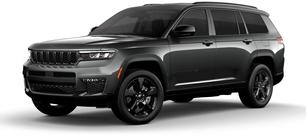
The Jeep Grand Cherokee has always been big. But if you want to carry more than five people, not big enough. Which is where the all-new, fifth-generation model comes in.
It’s the Grand Cherokee L. Jeep’s first-ever seven-seat version of its flagship SUV.
It’s set to compete with top-spec versions of mainstream models like the Hyundai Palisade and Toyota LandCruiser Prado, as well as premium full-size family trucksters like the Land Rover Discovery and Volvo XC90.
Jeep invited us to the Grand Cherokee L’s Australian launch to get a first taste of how it measures up to local conditions.
While there are some obvious signs that the R1S is Rivian’s first mass-market vehicle, the good news for the company is that its problems are not impossible to overcome. The suspension needs retuning to improve the ride quality and the multimedia system’s software needs upgrading. But even with those issues the R1S left a positive impression.
This is a very stylish SUV with great space and excellent performance, that also happens to be electric, rather than relying on being electric as its primary selling point.
Rivian has put more effort into the design and finishes than many of its EV rivals and the result is a vehicle that can genuinely compete with the established premium players with more credibility.
The only catch is there’s no clear timeframe for when, or even if, this generation of R1S will make it to Australia. The brand has repeatedly spoken of its hopes of entering the market here without locking anything in, but given the current state of the EV sales it may pay off to wait until the conditions are right for a new, premium player to try its luck here.
Jeep’s aim with this car is to lift the Grand Cherkee to a more premium level, and that’s about brand equity and badge credibility as much as it is the vehicle itself.
The seven-seat L has stepped up in price, but also in practicality, refinement and equipment, while maintaining serious off-road ability.
Does it have what it takes to tempt people away from, say, the German Big Three? That’s a tough ask, but this Jeep certainly has more of what it takes to make that a real possibility.
For mine, the entry-level Night Eagle is the pick. Well equipped, heaps of safety and plenty of off-highway prowess.
Note: CarsGuide attended this event as a guest of the manufacturer, with travel, accommodation and meals provided.
Design is another area where Rivian has carved out a unique position for itself. Whereas other brands, including Tesla, have focused on simplicity and aerodynamic efficiency, Rivian has given the R1T a unique style that looks interesting, different and most definitely not plain.
The oval daytime running lights make every R1S and R1T stand out from a mile away, even on LA’s busy freeways. The overall design is high quality and manages to strike a good balance between aesthetics, aerodynamics and practicality - even if it doesn’t suit everyone’s personal taste.
The cabin is worth highlighting in particular, because rather than go for the ‘minimalist’ look that so many brands are going for these days, with as little switchgear and different trims as possible to keep costs down, Rivian has opted for something more complex and, frankly, more impressive.
There’s a level of craftsmanship, a great mixture of premium materials (including some striking light wood options) that make the R1S feel like a stylish and relaxed environment inside the cabin. Our particular example had a great mixture of colours, textures and patterns that really elevated the cabin experience.
The technology is also nicely integrated into the design, rather than being the focal point, like so many other modern electric vehicles. It still offers the same level of technology - a pair of screens - but doesn’t rely on them to carry the design of the interior.
A decade. That’s how long the previous Grand Cherokee was on sale in Australia, Which is ages, but also testament to the quality of that fourth-generation car’s design.
And there are echoes of it in this new model’s exterior. The overall proportions are similar, although the track is increased by 36mm, and the overriding impression is that key elements have been made slimmer and wider for a more contemporary look.
For example, the headlights, LED on all models, are shorter, but longer, while the signature seven-bar Jeep grille has been truncated a little and stands more upright.
Character lines along the side of the car are softer, and the rear follows the same slimline philosophy. But it’s inside where the biggest steps have been taken.
The dash layout and hardware have been transported from the relative Dark Ages to a clean and simple approach dominated by this broad centre console, topped by a sleek media screen.
The screen measures 8.4 inches in the entry-level Night Eagle, stepping up to 10.25 inches in the upper grades.
The latest, configurable, digital instrument cluster enhances the low-key tech vibe, and there’s a sensible mix of on-screen controls and physical dials and buttons. That said, there are a lot of buttons across the lower part of the centre stack and steering wheel.
The rest of the interior is a blend of simple lines and a subtle colour palette, including piano black highlights. It feels more mature and premium than the car it replaces.
The R1S comes standard as a seven-seat SUV, split across three rows (two in the first row, three in the second row and two in the third row). Space across the three rows is fairly typical for an SUV of this size, which is to say generous up front, good in the second row and a little bit tight in the back.
What is good though, is the length of the cabin allows for quite a spacious boot even with the third row in use, which is definitely not something all seven-seat SUVs can claim. Using a direct conversion from Rivian’s specifications that list cargo capacity in cubic feet, the R1S has a claimed 498 litres with the third row in use and up to 1331L with the third row folded down. There’s also 314L under the bonnet and another 144L underneath the boot floor (although that comes at the expense of a spare tyre).
As mentioned in design, Rivian has nicely integrated the technology into the cabin, with the 12.3-inch digital driver display and 15.6-inch central multimedia touchscreen feeling like a natural part of the car rather than a centrepiece. Rivian has also managed to incorporate eight USB-C charging ports spread around the cabin to keep everyone’s devices charged up.
However, while the technology is nice from an aesthetic design perspective, the same cannot be said about its useability. Like Tesla, Rivian has opted to go it alone with its multimedia system and has developed its own Google-based software that is not compatible with either Android Auto or Apple CarPlay. That would be acceptable, although still disappointing, if the system worked as well as Tesla’s, however the Rivian system is very slow. It repeatedly took several seconds to load between the various functions, which may not sound like long, but when you’re trying to get back to the navigation so you don’t miss your freeway exit a few seconds can make a big difference.
But, honestly, in this day-and-age, systems like this should work quickly and seamlessly, so it’s an area Rivian needs to improve.
On a positive note, Rivian does have some cool accessories for the R1S including what it calls a ‘Camp Speaker’ which is a US$400 option that it integrates into the sound system but is also removable, so you can pull it out of the centre console and listen to your music if you’re around the campfire or having a picnic.
When it comes to practicality, thoughtful, family-friendly touches include large door apertures, with the doors themselves opening right out to 64 degrees, as well a second row seat able to move fore and aft to balance passenger and/or cargo space.
Up front there are big bins in the doors with space for large bottles, a pair of decent size cupholders in the centre console, a two-tiered storage box between the seats that doubles as an armrest, and a covered wireless charging bay in front of the gearshift.
For connectivity and power there are two USB-A and two USB-C ports, as well as an ‘aux in’ socket, and a 12-volt outlet.
Jump into the second row, and sitting behind the driver’s seat set for my 183cm position, I enjoyed heaps of headroom and hectares of legroom, remembering it’s possible to slide the middle seat forward to give third row passenger more room, or increase load space.
Again, there are generous pockets in the doors with space for large bottles, map pockets on the front seatbacks, a fold-down centre armrest containing two cupholders, and rear seaters have their own ventilation control.
The dual USB-A and USB-C ports are repeated in the back, and there’s a 230-volt AC socket for three-pin plugs.
Access to the third row is helped by a roll and fold function in the second row, and once back there space is generous and the amenities are civilised.
I could sit bolt upright without any head clearance issues, and legroom is good. There are bottle holders on each side, adjustable ventilation in the C-pillars, small storage pockets, and yet more USB outlets.
And how’s this for a parent’s dream? ‘Fam Cam’ (optional on the Limited and standard on the Summit Reserve) is an adjustable rear seat monitoring camera able to switch between all second and third row positions. No more craning around and taking your eyes off the road to check what’s going on back there.
Even with all seven seats upright, boot space is 487 litres. Fold the 50/50 split third row and that grows to 1328L, and with the second (40/20/40 split) and third rows down you’ve got 2395L, enough room to start a boutique furniture moving business.
The loading height is user friendly, there are multiple tie-down hooks and a 12V outlet, there’s no lip to get over the top of, and a power tailgate, standard on all grades and hands-free on the Summit Reserve, is always welcome.
The Grand Cherokee L is rated to tow a braked trailer up to 2.8 tonnes, although that’s reduced to 2.3 tonnes in the Summit Reserve, partly due to the standard air suspension. And off-roaders rejoice, the spare is a full-size (18-inch) steel rim.
When we drove the R1T in 2023 Rivian was still in the ramp up stage of production and was limited with what it could offer customers. Fast forward to 2025 and the brand now has both the R1T and R1S available with dual or tri motor powertrains, with a quad-motor powertrain expected by the end of the year.
The R1S Dual Standard begins the range at US$75,900 (approx. A$118,000), the R1S Dual steps it up to US$83,900 (A$130k) and the R1S Tri-motor completes the current line-up at US$105,900 (A$165k). While those prices are definitely in the premium end of the market the R1S is actually cheaper than the Tesla Model X, which is still on sale in the US market, and starts at US$86,630 (A$135k) and stretches to US$101,630 (A$158k).
For more context, the Audi Q8 e-tron starts at US$74,800, the BMW iX from US$87,250 and the Mercedes-Benz EQE from US$77,900.
Standard equipment across the range includes the 12.3-inch digital instrument display, 15.6-inch multimedia touchscreen, dual-zone climate control, heated and ventilated front seats, heated steering wheel, eight-way power adjustable driver and passenger seat and panoramic glass roof, so it certainly has premium levels of equipment.
We drove the range-topping RS1 Tri-motor which, aside from an extra motor, gets standard 22-inch alloy wheels, a dynamic glass roof, a soft-touch suede textile headliner as well as unique colour and trim options.
This three-row L, scheduled to go on sale mid-year, is the first of several versions of the Grand Cherokee set to arrive in 2022.
Our very own Chesto has driven the five-seat version in the US, specifically the plug-in hybrid 4xe, another first for the model, set to hit showrooms in the second half of the year.
But for now, the seven-seat L is the focus, offered in three grades starting at just over $80K, before on-road costs, and topping out at roughly $115,000.
This is part of Jeep’s stated aim to move upmarket, and aside from the safety and drivetrain tech covered a little later, the entry-level Night Eagle at $82,250, before on-road costs, features suede and leather-appointed seat trim, eight-way electrically-adjustable and heated front seats, a heated steering wheel, sat nav, an 8.4-inch multimedia screen, a 10.25-inch instrument display, six-speaker audio (with Apple CarPlay and Android Auto connectivity), three-zone climate control, a rear-view camera, keyless entry and start, adaptive cruise control, auto LED lights, 20-inch alloys, a power tailgate, and more.
Step up to the Limited ($87,950) and the media screen increases to 10.1-inch, the seat trim is even plusher ‘Capri’ leather, there’s a multi-memory seat function for the driver, the front seats are ventilated and the second row is heated, pull-up shades are added to the rear side windows, the audio system has three extra speakers with a 506W amp (and active noise control), plus there’s ambient interior lighting, and auto high beam.
Opt for the top-shelf Summit Reserve ($115,450) and the rims are even bigger at 21 inches, the front seats are 12-way electrically-adjustable, open pore wood trim is added to the dash, doors, and steering wheel, the climate control is four-zone, the front seats feature a configurable massage function, the stereo is pumped up to a 19-speaker, 960-watt package, there’s a dual-pane sunroof above your head, and the ‘Palermo’ leather seat trim is quilted. There’s more, from Berber floor mats to a hands-free tailgate, but you get the idea.
Overall, despite a solid asking price, generous standard equipment helps substantiate a category competitive value package.
As mentioned earlier, there are currently three versions of the R1S available, each with a different powertrain.
The Dual Standard AWD has, unsurprisingly, dual motors (one at the front and one at the rear) which make a combined 397kW/827Nm. That’s enough for it to launch 0-60mph (0-96km/h) in just 4.5 seconds. The R1S Dual AWD has the same power, torque and acceleration figures, however it gets Rivian’s Large battery, which we’ll detail below.
The Tri-Motor AWD obviously has three motors, one on the front axle and two on the rear, which naturally provide more power, 633kW/1495Nm. With so much power and torque the Tri-motor is wickedly fast, taking just 2.9 seconds to launch 0-60mph.
If, for some reason, the Tri-Motor isn’t fast enough for you, Rivian has released the details on the Quad-Motor. It will have two motors on each axle providing a staggering 764kW (that’s 1025-horsepower!) and 1624Nm, enough to rocket it from 0-60mph in just 2.6 seconds and across the quarter mile in 10.5 seconds.
All versions of the Grand Cherokee L are powered by a 3.6-litre naturally-aspirated V6 petrol engine producing 210kW at 6400rpm, and 344Nm at 4000rpm, driving all four wheels through an eight-speed auto transmission and a transfer case - single speed on the first two models and two-speed on the Summit Reserve flagship.
The evergreen Pentastar V6 is a naturally-aspirated, all-alloy, quad-cam design featuring dual variable valve timing and sequential-injection.
If you want more grunt? Yes, there’s a 5.7-litre Hemi V8 available in this new Grand Cherokee. But it’s in the States, not here. There’s no diesel option, either. But as mentioned earlier, a plug-in hybrid, the 4xe (four-by-e) is coming later in 2022.
Rivian offers three different battery types across the three variants, each with a different driving range. The R1S with the Standard battery (92.5kWh) has a claimed 434km driving range, the R1S Dual with Large battery (109.4kWh) extends that to 530km, while the Tri-Motor comes standard with the Max battery (141.5kWh) that has an impressive 597km of range.
It is worth noting, though, that those range claims are based on US EPA estimates, rather than either the WLTP or NEDC methods usually used.
Charging times vary depending on the type of charger used, in the US Tesla has given access to its network to other EV brands and the Rivian is available with a plug adaptor to use a Tesla charger. The R1S is capable of charging up to 220kW, which means it takes approximately 40 minutes to take the battery from 10 to 80 per cent.
Jeep’s official fuel economy figure for the Grand Cherokee L on the combined cycle is 10.6L/100km, the 3.6-litre V6 emitting 243g/100km of CO2 in the process.
Given the specific on and off-road combination of the launch drive we’ll wait until we can evaluate the car over a longer period to quote an ‘on test’ number.
Worth noting stop-start is standard, and in the name of weight saving, the car’s bonnet and tailgate are aluminium. Still weighs around 2.2 tonnes, though.
The tank holds 104 litres, which using the quoted consumption number, translates to a range of around 980km.
The R1S and R1T are Rivian’s first mass-produced cars, and it shows. It’s not all bad news by any stretch, but there are some major issues the brand will need to address in the future if it wants to succeed globally (or even just in the US).
The biggest issue is the ride, which just doesn’t feel as well resolved as the more established brands that have been designing, developing and building cars for decades. The R1S isn’t bad to drive by any stretch, but the ride is too firm at times and it also lacks control and feels too soft at others.
All R1S grades come standard with Air Suspension that has multiple levels of firmness and can adjust the ride height. However, in the ‘normal’ setting the ride feels too busy, with the heavy (3096kg) SUV skittering over the imperfections in the road rather than absorbing them. The problem is, if you adjust the suspension to the softer setting it lacks control and has a tendency to bounce over bigger bumps and take a few seconds to settle. This was particularly noticeable on LA’s concrete freeways, but it would be an issue on any road with undulations or joints.
But while the ride needs improvement, the R1S has strengths in other areas - namely performance. The Tri-motor AWD we sampled had immense punch from its three motors and it certainly felt like 633kW and 1495Nm was on tap. We didn’t test its acceleration claim officially, but any take-off could be made into a rapid one with just a squeeze of the accelerator pedal.
The R1S is also capable of towing up to 3500kg, so it’s a strong and capable SUV too, rather than just a speedy EV.
Another strength is the regenerative braking system. There are multiple settings but we found the lowest regen was the best option, as it still provides powerful regen but is more progressive than the more powerful modes.
In driving the new Grand Cherokee the first thing you recognise is the Pentastar V6’s characteristic induction sound. That’s not to say it’s overly loud, just familiar.
But in terms of what it delivers, nearly 90 percent of the engine's peak torque is available from 1800 to 6400 rpm, so you’ve got that mid-range pulling power which is as nice on the highway as it is around town, but also good for people that are into towing.
The eight-speed auto is nice and smooth, as well, and even though it’s a conventional torque-converter unit, manual shifts through the steering wheel paddles are quick.
Suspension is multi-link front and rear, with the top-spec Summit Reserve picking up air suspension and active damping. Major components are alloy to reduce unsprung weight but you can certainly feel the scale of this car.
It’s 5.2 metres long and weighs roughly 2.2 tonnes, so you’re guiding this sizeable machine along the road. It’s not an involving drive, we’re not in sports car territory here. But it feels stable and predictable in cornering, and body control is well buttoned-down.
The electrically-assisted steering’s weight is nice from parking speeds right up to freeway velocity, but road feel through the wheel is relatively modest.
In terms of the seating position, you do feel as though you’re sitting up and on, rather than down and in the front seats. But when it comes to support, after hours behind the wheel, including off road, the front chairs remained comfortable.
This is a big vehicle, that will often have a boat, van, or something else substantial hitched to the back of it, and the brakes are suitably specified.
Big discs are ventilated all around, clamped by two piston calipers at the front and singles at the rear, and on the off-road section of the launch drive we were by necessity leaning on the brakes for long periods of time.
You could occasionally smell that they were working hard, but the pedal remained firm all day, without a hint of fade.
Speaking of off-highway performance, as part of its development program Jeep tested this new Grand Cherokee in remote parts of Australia, with more than 60,000 km under the wheels of various prototypes. Likely a big help in setting up the local spec.
And that spec is, four-wheel drive in all models, as well as a single-speed transfer case in the Night Eagle and Limited, with the latter also featuring the ‘Selec-Terrain’ traction management system, controlling torque split (up to 100 per cent of drive to either axle), as well as the brake calibration, steering, suspension, throttle, transmission, transfer case, traction control, stability control, and ABS settings.
The Summit Reserve boasts a two-speed transfer case, with low-range reduction, as well as traction management and air suspension with electronic adaptive damping.
The air suspension incorporates five height settings - Normal, Off-road 1 (40mm lift), Off-road 2 (60mm lift), Park (46mm lower), and when in sport, Aero (21mm lower).
In typical Jeep fashion we attacked challenging fire and forestry trails on the launch drive and a couple of things emerged.
First, on street-focused tyres this car does incredibly well off-highway. And second, the ‘Quadra-Trac II’ 4x4 system with low-range capability in the Summit Reserve, combined with the crawl control function, makes a significant difference. You find yourself feeling that bit more composed and confident tackling very rough sections.
Also in the Summit Reserve, a low-set, forward facing camera allows you to see what’s actually happening at the front wheel via the central media screen, and in the Off-road 2 setting the car feels like it’s up on stilts and able to tackle anything in its way.
And for those that really want to get amongst it, the body clearance data is below.
The R1S comes loaded with safety equipment across the range, including eight airbags, adaptive cruise control, autonomous emergency braking, blind spot monitoring, forward collision warning, lane departure warning, lane keeping assist and rear cross-traffic alert.
It also comes with what’s called the ‘Rivian Autonomy Platform’ that includes 11 cameras and 12 ultrasonic sensors for mild-autonomous functionality in specific circumstances, such as freeway driving or on well-marked roads.
The Grand Cherokee L is yet to be assessed by ANCAP, but Jeep has upped its active safety game with standard crash-avoidance tech including, AEB with cyclist and pedestrian detection, lane keep assist, ‘Intersection Collision Assist’, adaptive cruise, as well blind-spot monitoring, rear cross-traffic alert, traffic sign recognition, tyre pressure monitoring, and ‘Drowsy Driver Detection.’
The Summit Reserve adds Level 2 driving assistance features, a 360-degree camera view, self-parking assist (parallel and perpendicular), and more.
If an impact is unavoidable, there are eight airbags on-board - dual front, front side, front knee, and full-length side-curtain.
There are three child seat top tethers across the second row, with ISOFIX anchors on all three positions. And there are top tethers on both third row seats.
Rivian offers a four-year/80,000km warranty for the R1S vehicle as a whole, as well as a separate battery pack and drivetrain specifically. The Standard battery is covered for eight years/190,000km while the Large and Max batteries are covered for eight years/240,000km.
As for servicing, Rivian uses an app-based system, which allows owners to schedule a service at any time via the app and then either have a Rivian technician come to your home for a small service or drop it off at a service centre if it’s a bigger job. The app is also connected to the car, so if the car’s own diagnostic system recognises a problem, it can prompt you to book a service proactively.
Jeep covers the Grand Cherokee with a five-year/100,000km warranty, which is behind the five-year unlimited kays cover which is pretty much standard in the mainstream market now.
But you do receive 12 months complimentary roadside assistance, which is renewed for another year every time you service your vehicle at an authorised Jeep dealer.
Service is recommended every 12 months or 12,000km, and capped price servicing is available for $399 annually for the first five years. Not bad for a car of this scale and complexity.