What's the difference?
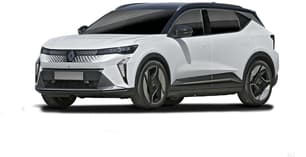
What’s 15 years between friends? Well, in this instance quite a lot because this is the all-new, pure-electric Renault Scenic E-Tech small-medium SUV.
The Renault Scenic we knew here until the late noughties was a petrol-powered, five-seat family car or an upright, seven-seat people mover.
But this is an altogether sleeker proposition, priced and specified to compete with other electric SUVs like the BYD Sealion 7, Hyundai Elexio, Kia EV5, Skoda Elroq and Zeekr 7X.
So, could this fresh Euro contender have what it takes to steer you away from such an impressive set of pure-electric competitors?
We attended its local launch to find out.
The Toyota Tundra, made in America for Americans, was launched in 1999 and since then Toyota Australia has fielded a steady stream of enquiries from car buyers and automotive media about the possibility of its full-size US pickup being available in local showrooms.
Production of RHD Tundras at Toyota’s San Antonio plant in Texas never stacked up as a viable business case for Toyota until 2015, when the Walkinshaw Automotive Group (WAG) commenced OEM-certified right-hand-drive remanufacturing of Ram pick-up trucks (and later Chevrolet Silverados) in Melbourne.
This development finally opened the door to an ‘Australianised’ version of the Tundra, which went on sale late last year after a six-year joint development program with WAG that was a world-first for Toyota.
The Tundra’s local two-model range comprises the entry-level Limited and the new top-shelf Platinum grades, with more power and torque than local ‘1500 class’ US pickup rivals. So, we recently put the fresher Premium model to work for a week, to see how it measures up from a tradie’s perspective.
The Renault Scenic E-Tech is lining up against some heavy-hitting competitors, but Renault Australia admits it has one top of mind - the Kia EV5. The Kia’s a quality package and if you’re in the market for a mid-size electric SUV, you’ll no doubt have it on your shopping list. And you should have a look at this slightly smaller car, as well. It has the refinement, practicality and safety to stand up confidently in a rapidly expanding segment.
Note: CarsGuide attended this event as a guest of the manufacturer, with travel, accommodation and meals provided.
The Tundra Platinum is a good-looking and well-engineered RHD full-size US pickup which stands apart from local competitors with its unique hybrid drivetrain and unmatched power/torque outputs. However, it also comes with a conspicuously high purchase price, which given the quality of local Ram, Chevrolet and Ford competition could be a deal-breaker for some.
There are some design tips of the hat to Scenics past in this latest electric version, including blacked-out door pillars and a recognisably angular C-pillar treatment.
But despite the fact it debuted at the Munich IAA Motor Show in late 2023, from its slimline headlights and jagged grille to its sculpted flanks and saw tooth rear end, this fifth-generation Scenic looks contemporary from every angle.
A highlight is the large Renault diamond logo sitting at the centre of a faux upper grille, surrounded by a multitude of the same elongated hexagon shape as a cool recurring graphic, the pattern merging neatly into the headlights.
Speaking of which, the LED beams can be set to produce an elaborate welcome sequence as you approach the car.
The interior feels slick and screen-rich but not at the expense of user-friendly physical controls for audio, ventilation and other commonly used functions.
Recycled fabric on the dashboard and headliner looks and feels good while doing its bit to suppress cabin noise.
Speaking of which, the Scenic is Renault’s poster child for the use of recycled materials in its construction and end of life recyclability.
Everything from ferrous components consisting of 37 per cent recycled materials to a bonnet and doors made of up to 80 per cent recycled aluminium.
The dashboard cowling is made from kenaf, a plant fibre similar to jute; the steering wheel cover is 51 per cent bio-sourced; the cockpit uses 26 per cent recycled plastic; the storage bins in the door panels are 45 per cent recycled fibre, the floor mats are 54 per cent recycled plastic bottles and the seat upholstery is 100 per cent recycled fabric. The list goes on and on, but you get the idea.
This is a substantial vehicle with bold, bluff-fronted styling characterised by an enormous grille that has an imposing presence wherever it roams.
Toyota's TNGA-F ladder-frame chassis platform is shared with the LandCruiser 300 Series and Prado models, but the big American has a much longer 3700mm wheelbase, spans almost six metres in length (5955mm) and is more than two metres wide (2040mm). However, it’s less than two metres tall (1985mm), so it can access underground and multi-storey carparks.
It rides on double-wishbone coil-spring front suspension and a multi-link coil-spring live rear axle, with electric power-assisted rack and pinion steering and big four-wheel disc brakes.
Off-road credentials include 216mm of ground clearance, 23 degrees approach and 21 degrees departure angles – which are ample for accessing rugged worksites – while the turning circle is an expansive 15 metres.
The interior, with its panoramic sunroof, has a spacious and airy ambience, enhanced by contrasting blue stitching on its leather-appointed upholstery.
Although the cabin has a high standard of fit and finish, as you’d expect from Toyota and WAG, it doesn't look and feel quite as lavish as the sumptuous interiors found in its top-shelf US rivals. The centre console lid in particular feels too light and plasticky for a vehicle in this price range.
In terms of how it all works in practice, at just under 4.5m long, close to 1.9m wide and less than 1.6m tall with a 2785mm wheelbase, the Scenic is more compact than the larger BYD Sealion 7 or Zeekr 7X, for example.
But there’s plenty of breathing room up front, with the centre screen angled towards the driver enhancing the cockpit feel for the one doing the steering.
There are large carpeted bins in the doors with room for bottles and a lidded storage box between the seats doubles as a centre armrest. That lid slides forward by 70mm to cover a small storage cubby under the front of it, which is a handy trick.
Locating the gear selector on the right-hand side of the steering column liberates extra space for a centre cupholder and large console storage bin. There’s a generous glove box and a wireless smartphone charger under the centre screen includes a rubberised base and two lugs to stop devices sliding around. Power and connectivity runs to two USB-C ports and a 12-volt socket.
Moving to the second row, sitting behind my 183cm driving position, while toe room is a little tight (with the driver’s seat set low down), there’s heaps of leg and headroom as well as enough shoulder room (and foot room thanks to a flat floor) for three adults on short to mid-length trips. A pair of adjustable centre air vents is also a welcome inclusion.
Storage includes door bins (again with room for bottles), large and device-sized pockets on the front seat backs and the pièce de résistance is the evocatively named ‘Ingenious armrest’, which includes a storage area and two cupholders at the base of articulated horizontal arms that allow passengers to mount a phone or tablet at various angles in rubberised slots for joint or solo viewing.
It is, indeed, ingenious and four USB-C plugs (two in the armrest, two near the air vents) mean back-seaters won’t be short of power options.
Boot volume with the rear seats upright is useful at close to 545 litres (VDA), expanding to around 1670L with the 40/20/40 split-fold second row lowered. A power tailgate is standard across the range.
There are bag hooks, tie-down anchors, lighting and a 12-volt socket back there, although for V2L (vehicle to load) functionality you’ll need an accessory adapter to plug into the charge port.
Maximum braked trailer towing capacity is a handy 1100kg, but there’s no spare tyre, only a repair/inflator kit, which isn’t good enough.
With its 2834kg kerb weight and 3536kg GVM, the Platinum has a 702kg payload limit which is modest compared to smaller 4x4 utes with genuine one-tonne-plus capabilities.
However, it’s rated to tow up to 4500kg of braked trailer on a 70mm ball and with its substantial 7980kg GCM (or how much weight it can legally carry and tow at the same time) that would require only a small drop in payload from 702kg to 646kg to avoid exceeding the GCM. So, that’s a practical set of numbers if you ever need to tow the maximum 4.5 tonnes.
The load tub is 1660mm long, 1491mm wide and 531mm deep, with 1237mm between its rear wheel-housings allowing either a standard Aussie or Euro pallet. It’s accessed through a power tailgate, which can be operated from the driver’s seat if required.
The tub’s internal surfaces are protected by a composite drop-in liner, with handy slots moulded into each side for vertically inserting planks of wood to serve as lateral load-dividers if required.
The Platinum's tub also has unique hooded LED lighting in each sidewall, plus there’s fixed load-anchorage points front and rear at mid-height (would be better if just above floor height) and rails with adjustable sliding anchorages along the top of the front and side walls for securing taller loads.
Cabin storage includes two 600mL bottle-holders and storage bins in each front door plus a decent-sized single glovebox, a 12V dash socket and an overhead glasses-holder.
The centre console offers open storage up front including a wireless phone-charging pad, plus a pair of small-bottle/cupholders in the centre and a large lidded box at the back containing USB ports.
The large rear doors, with pull-up privacy screens on their windows, provide wide entry to the rear bench seat. There’s enough shoulder room for three adults and even tall passengers enjoy ample legroom, although those seats in the centre must contend with a transmission hump, which is absent in its flat-floored rivals.
There’s two 600mL bottle-holders and a bin in each rear door, plus large pockets on each front seat backrest and two more bottle/cupholders at the rear of the centre console, which also has controls for rear seat heating/cooling, plus USB ports and adjustable air-vents.
If travelling with two, the centre seat backrest folds down to provide a comfortable armrest and two more bottle/cupholders (that's 14 in total), so drink storage is well catered for in this cabin.
The rear seat’s 60/40-split base cushions can also swing up and be stored vertically for more internal luggage space, but there’s no storage compartments underneath as this space is occupied by the hybrid drivetrain’s battery, with large vents on either side providing it with ample ventilation.
Our only criticism of the rear seating is limited headroom for tall people, caused by a deep contour in the roof-lining to accommodate the Platinum’s sunroof.
This contour sits very close to foreheads and limits head space. So, if you have tall passengers, they might get cranky on long drives, particularly those seated in the slightly higher centre position with (like me) the top of their head pressed firmly into the roof lining.
The Scenic E-Tech starts from $55,990, before on-road costs, for the entry-grade Techno. Then there’s the Techno Long Range for $59,990, BOC, while the flagship Esprit Alpine comes in at $65,990.
That’s sharp relative to competitors and follows the brand getting a reality check with the Megane E-Tech after it launched here in late 2024, Renault shaving $10,000 off its price only a few months later.
Equipment highlights across the line-up include a 12-inch multimedia touchscreen, a 12.3-inch driver display, sat-nav, adaptive cruise control, a 360-degree surround-camera view, all LED exterior lights, wireless Android Auto and Apple CarPlay and six-speaker Arkamys audio.
There’s also dual-zone climate control, an electric tailgate, auto-folding side mirrors, cloth upholstery, heated front seats and steering wheel, 48-colour ambient interior lighting, keyless entry and start and 19-inch alloys (on the Techno models).
Then you can fold in over-the-air updates, access to remote services via the ‘MyRenault’ app and Google In-Built that enables voice-control for up to 70 car functions.
The Esprit Alpine ups the ante with 20-inch rims, nine-speaker Harman Kardon audio, synthetic leather and cloth seat trim, six-way power adjustment (with memory settings) for driver and front passenger seats, a massaging driver’s seat, brushed metal pedal covers and facial recognition for seat and mirror settings.
In short, the Scenic is well-equipped relative to its competitive set and cost of entry, with Renault confirming there are mainly demonstrator cars in dealers at the moment, with the majority of stock landing in late May or early June this year.
There are three optional paint choices - metallic ($800), two-tone ($1000) and matt ($1200), the latter exclusive to the Esprit Alpine.
Our recently launched Platinum test vehicle is, like its Limited sibling, available only with Toyota’s ‘i-FORCE MAX’ hybrid powertrain, which combines a 3.5-litre twin-turbo V6 petrol engine, electric motor-generator, traction battery and 10-speed automatic transmission, for a list price of $172,990 plus on-road costs.
That pricing is $17,000 more than the Limited and considerably higher than Australian premium-grade RHD rivals including the Ford F-150 Lariat LWB ($140,945), Chevrolet Silverado 1500 ZR2 ($141,500) and Ram 1500 Limited ($159,950). Note the F-150 has temporarily been withdrawn from sale in Australia due to an ADR compliance issue.
The Tundra Platinum shares numerous standard features with the Limited, including 20-inch alloy wheels (although the Platinum’s wheel design is unique) with 265/60R20 tyres and a 245/75R18 ‘space saver’ spare (to optimise its underfloor-mounted ground clearance), LED lighting, heated door mirrors, an automatic ‘active’ front spoiler, side steps, a power tailgate, a tub liner, a 3500kg towing kit and front/rear parking sensors to name a few.
The cabin has smart entry/start, dual-zone climate, front seat heating/cooling, a leather-accented steering wheel and shifter, a 12.3-inch driver’s digital instrument cluster, a 12-speaker JBL audio system with a 14-inch multimedia touchscreen and multiple connectivity including Apple/Android devices, wireless phone charging, power sliding rear glass, five USB ports and more.
The Platinum adds not only its unique black-painted alloy wheels but also a bold mesh grille design with dark chrome surround, black body detailing, tailgate spoiler and rain-sensing wipers.
The cabin gets a full-length panoramic sunroof and leather-accented trim, with the front seats equipped with 10-way power adjustment including a massage function. There’s also heating/cooling for the outer rear seats, heated steering wheel with power tilt-reach adjustment and 10.9-inch colour head-up display.
Like its Megane E-Tech sibling, the Scenic E-Tech uses an excited synchronous motor which Renault says is more efficient than the more commonly used permanent magnet type, with the bonus that it uses no rare earth materials.
The entry-level Scenic E-Tech Techno's fitted with a 60kWh NMC battery. Its electric motor transfers 125kW and 280Nm to the front wheels and Renault claims a 0-100km/h time of 8.6 seconds.
The Techno Long Range and top-spec Esprit Alpine pack an 87kWh battery and a more powerful motor, raising outputs to 160kW/300Nm and lowering the 0-100kmh sprint time to 7.9 seconds.
The Tundra’s powertrain consists of a 3.5-litre twin-turbocharged V6 petrol engine that produces 290kW of power at 5200rpm and 649Nm of torque between 2400-3600rpm.
This is paired with an electric motor mounted directly behind, which produces 36kW/250Nm and draws its electrons from a 6.5Ahr Ni-MH (nickel metal hydride) battery located beneath the rear seat.
Their combined output is 326kW and 790Nm, which is more power and torque than any of its local rivals and therefore appealing for those who need to haul and/or tow heavy loads.
Its refined 10-speed torque converter automatic offers the choice of sequential manual-shifting, a dedicated Tow/Haul setting and three drive modes comprising Normal (default), Sport and Eco.
The 4WD system is part-time, dual-range with 2H (2WD High Range), 4H (4WD High Range) and 4L (4WD Low Range). There’s also an automatic limited-slip rear differential, but unlike its competitors no full-time AWD mode is available.
Official energy consumption numbers for the combined (urban/extra-urban) cycle are close between the two powertrains at 16.3kWh/100km for the Techno and 16.8kWh/100km for the Techno Long Range and Esprit Alpine, which are bang on average for the class.
Range for the standard Techno is 430km, which is at the lower end of expectations for a medium electric SUV but adding the bigger battery pushes that number out to 625km, which is much healthier and useful day-to-day.
On the launch drive program, which took in some urban but mostly rural B-road running, we saw an average consumption figure of 17.1kWh/100km in the Esprit Alpine, which is pretty good in those conditions.
The car’s 400V electrical architecture allows for DC charging at up to 130kW for the entry model and 150kW for the bigger-battery variants.
At that speed, claimed 15-80 per cent charge times are 32 and 37 minutes, respectively. Not the best, not the worst. AC charge capability is 11kW on all models and a Mode 3 charging cable is included.
With the Tundra’s GVM rating exceeding 3.5 tonnes, Toyota is not required under current ADRs to publish fuel consumption figures. Even so, we covered a total distance of 298km, which comprised a mix of suburban, city and highway driving of which about one third was hauling a near-maximum payload.
When we stopped to refuel, the dash display was claiming average combined consumption of 14.1L/100km, but our own figure calculated from fuel bowser and tripmeter readings was 15.8, which is in the same ballpark as mid-teen figures we’ve achieved in its six and eight-cylinder rivals.
Therefore, based on our own figure, the Tundra Platinum has a real-world driving range nudging 800km from its big 122-litre tank, which according to Toyota requires minimum 95 RON petrol.
Renault says the entry-grade Scenic Techno will accelerate from 0-100km/h in 8.6 seconds with the more powerful Techno Long Range and Esprit Alpine lowering that number to 7.9sec. So, it’s quick without being scary fast.
It’s certainly nippy in traffic and at the risk of stating the bleeding obvious, quiet. Even in the context of premium EVs the Scenic is quiet and refined.
Suspension is strut front, multi-link rear and the car feels super planted. The launch drive took in some reasonably rapid twisting corners and there’s no hint of lateral movement in the car. Body roll is minimal, too.
Tyres are energy-efficient Michelin e.Primacy (Techno - 205/55x19 / Esprit Alpine - 235/45x20) and the steering is quick with a relatively low number of turns lock-to-lock. It’s never jerky or too sharp. Rather, it means the car starts to turn into a corner the instant you apply steering lock.
That said, the feel between your hands on the wheel and the front tyres on the road is less than intimate.
There are four drive modes - ‘Comfort, ‘Eco’, ‘Sport’ and ‘Custom’. None of them adjust the suspension tune, it’s more about accelerator response and we found Comfort delivers the best blend of right-foot urgency and overall composure.
Most of the braking you’re going to do will be courtesy of the regenerative system and there are five levels, adjustable via steering wheel paddles, including the most aggressive single-pedal mode.
The one-pedal setting pulls the car up nice and progressively and if you do need to use the physical brakes, they’re ventilated discs all around. Some bite on initial application, but even on downhill corner sections, leaning on them quite hard, they perform well without drama.
Under the heading of miscellaneous observations, you can sense the ADAS (Advanced Driver Assistance Systems) including functions like lane-keeping assist doing their thing occasionally, but it’s all quite subtle, which is a good thing.
The Esprit Alpine’s sports front seats remained grippy and comfortable after a couple of hours behind the wheel. And it’s worth noting the Scenic’s relatively compact 10.9-metre turning circle helps in slow-speed manoeuvring.
Speaking of which, some of the modes in the audio system and external warning sounds for pedestrian safety have been designed by French composer and performer Jean-Michel Jarre, noted for his electronic, ambient-style music. Hats off to Renault for commissioning him.
The side steps are set close to the sills and, therefore, a bit narrow for size 12 boots, but big handles on the A and B pillars assist climbing aboard, where you’re rewarded with a spacious driving position with multiple adjustments.
The analogue-flavoured RHD dash module has numerous physical dials, buttons and switches, which thankfully leaves minimal reliance on distracting touchscreen prompts. Some items, like the left-hand-side indicator stalk and HVAC controls, are biased towards LHD, but you soon get used to these idiosyncrasies.
Its excellent steering feel, braking response, supple but responsive four-coil ride quality and effective noise insulation are what we’ve come to expect from WAG’s extensive remanufacturing process. In the Tundra’s case, it uses many original equipment components from existing Toyota 4WD vehicles and OEM suppliers.
The V6 engine produces a meaty V8-style soundtrack, with a melodic throb at idle and a guttural roar at full throttle. From standing starts, the abundant torque gets more than 2.8 tonnes of pickup to triple-digit speeds in about six seconds, which is comparable to Ford's sporty Ranger Raptor.
The hybrid drivetrain displays excellent refinement, as it continuously and seamlessly switches between petrol and electric power to optimise performance and economy. The Tundra is also an effortless highway cruiser, with negligible tyre and wind noise at 110km/h allowing conversations at loungeroom levels.
To test its load-hauling ability we strapped just over 500kg into the load tub, which with our two-man crew equalled a total payload of 675kg that was nudging its GVM limit. The coil-spring rear suspension only compressed 50mm, leaving ample bump-stop clearance and no risk of bottoming-out on our test route.
It made light work of hauling this payload in city and suburban driving and didn’t seem to notice it had anything in the load tub on our 13 per cent gradient, 2.0km set-climb at 60km/h.
Engine-braking on the way down, in a manually-selected second gear, wasn’t as robust as expected given the assistance of regenerative braking, but the large four-wheel disc brakes were more than capable of keeping speeds under 60km/h when called upon during the descent.
The Scenic E-Tech has a maximum five-star ANCAP rating from assessment in 2022 with active crash-avoidance tech including AEB (with pedestrian and cyclist detection and junction assist), adaptive cruise control, lane departure warning and lane-keep assist, blind-spot detection, traffic sign recognition, a 360-degree camera view, rear cross-traffic alert, driver fatigue monitoring and tyre pressure monitoring as well as front, side and rear parking sensors.
If a crash is unavoidable, there are seven airbags onboard including a front centre bag and for child seats there three top-tether points across the second row with ISOFIX anchor in the outer positions.
Like its local US competitors, the RHD Tundra does not have an ANCAP rating but comes with a suite of passive and active safety features. These include eight airbags, AEB with day cyclist detection and day/night pedestrian/oncoming vehicle detection, lane-keeping, trailer sway control, trailer back-up guide with straight path assist (makes reversing a trailer easy and safe), blind-spot monitoring, rear cross-traffic alert, front/rear parking sensors, panoramic view monitor and more. The rear seat has two ISOFIX and two top-tether child-seat anchorages.
Warranty is five years/100,000km, which is well off the market pace with many competitors at seven, eight and up to 10 years conditional. The battery warranty at eight-year/160,000km matches the market.
Roadside assistance is included for five years, service is recommended every 12 months/30,000km and fixed price servicing is available at a reasonably sharp average of $325 per workshop visit for the first five years.
Renault has 52 dealers across the country covering major cities and key rural areas.
The Tundra comes with Toyota’s five-year/unlimited-kilometre warranty, which is class-leading.
Scheduled servicing is six months/10,000km whichever occurs first, with capped-pricing of $450 per service for the first five years/100,000km. So, that’s $900 annually, if serviced twice a year as scheduled.
Toyota currently has 275 dealers across its vast network located in metro, rural and regional areas. Toyota dealerships are also service centres.