What's the difference?
The Dacia Duster, a well-liked small SUV in Europe, has been available in overseas markets for about 15 years and it’s now here, albeit rebadged as the Renault Duster.
At a time when people increasingly want to escape the modern-day rat race, vehicles such as the Duster offer a family- and budget-friendly way of achieving just that.
A new small 4x4 that actually might be somewhat capable off-road and with a manual gearbox? How refreshing.
But is the Duster a legitimate rival for something like the Suzuki Jimny?
Read on.
Mercedes-AMG left tongues wagging when it unleashed the original 45 series onto the automotive world seven years ago. It took many forms, including the pioneering A 45 hatch and the unconventional GLA 45 SUV.
That said, we’re here to talk about the third member of that family, the CLA 45 sedan (or coupe if Mercedes-AMG is paying your wage). And no, we don’t mean the old model.
Indeed, the second-generation CLA 45 is here, and it’s packing the most potent series-production four-cylinder engine to date – a title Mercedes-AMG has, of course, held before.
So, is the new CLA 45 a big-step up over its standard-setting predecessor? While it certainly helps that it is now only available in hard-hitting S form in Australia, the only way to really find out is to put it to test. Let’s go!
The Renault Duster 4x4 Evolution (manual) is a driver’s car. Lots of fun for day-to-day duties and a real visceral experience if you like to have a few laughs on loose-dirt and gravel tracks. And it’s adequately capable for off-roading adventures. It also has more than its fair share of cheeky charm.
Obviously it’s not anywhere near the most capable off-road vehicle available. That’s not what it’s intended to be. But it’s one of the most fun to drive on- and off-road.
And for $36,490 (excluding on-road costs), you’ll still have cash enough for a set of all-terrain tyres and some accessories.
The new CLA 45 S has knockout performance to match its knockout looks, neither of which are much of a surprise given the ingredients involved.
That said, it is far from perfect, with questions raised over its value and practicality. And for those reasons, we’d be buying the A 45 S hatch instead.
Is the new CLA 45 S worth such a hefty premium over its non-S predecessor? Tell us what you think in the comments below.
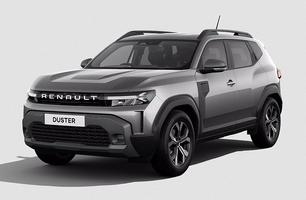
From the outside, the Duster 4x4 Evolution has that special ‘something’ that draws your eye. It’s unassuming, yet somehow eye-catching.
It’s a chunky little AWD with ‘Renault’ across the front grille and its raised stance gives the Duster a rugged presence.
Hard angles and nifty touches, such as the concealed rear door handles on the C-pillar, add to its funky exterior.
The Duster’s interior continues the minimalist theme with hard plastic surfaces everywhere – including the dash and door armrests – and black and grey cloth upholstery, all amid a neat but uncluttered layout.
The 10.1-inch multimedia touchscreen , angled slightly towards the driver, dominates up front and caps off what is an unpretentious, functional cabin.
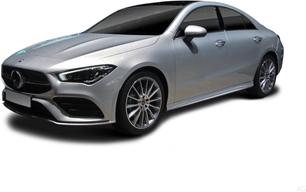
There’s simply no mistaking the CLA 45 S from its CLA siblings. It’s angry and stylish, at the same time.
Up front, Mercedes-AMG’s signature 'Panamericana' grille insert is large and in charge, flanked by adaptive 'Multibeam' LED headlights that incorporate sinister-looking daytime running lights (DRLs).
The real action, however, is happening below, where the AMG body kit starts to come into frame. It’s delightfully chunky and highlighted by cavernous side air intakes, which hint at the sledgehammer residing beneath a bonnet featuring prominent power domes.
Around the side, the CLA 45 S does its best impersonation of a coupe, with a sloping roof line and a curvaceous glasshouse. It also brings the aggro with a particularly sporty set of 19-inch alloy wheels, which flank pointy side skirts.
At the rear, the CLA 45 S again hints at its performance level, this time with a bootlid lip spoiler, although look past its LED tail-lights and you’ll find the star of the show, a furious diffuser that houses the quad 90mm tailpipes of the AMG sports exhaust system.
Inside, the CLA 45 S is pretty special. While the CLA certainly provides the building blocks, it goes a step further with a number of unique touches.
Your eyes are immediately drawn to the wickedly cool 'Dinamica'-trimmed AMG Performance steering wheel, which not only has paddle-shifters, but also features two ‘display buttons’ that make adjusting vehicle settings on the fly super easy.
Then there are the front sports seats, which are covered in Lugano leather upholstery alongside the armrest door inserts, while artificial cow hide trims the upper dashboard and door shoulders.
Hard plastics? You’ll need to look lower than the soft-touch middle dashboard to find them, as they are primarily confined to the lower sections of the cabin. And yes, some of the switchgear is very cheap for a six-figure performance car.
One personal bugbear, though, is the liberal use of gloss-black trim for the centre stack and console. Not only is it a fingerprint magnet, but it scratches easily, too. The brushed stainless-steel and silver accents elsewhere are nice, though.
While stainless-steel sports pedals also help to make the CLA 45 S stand out from the CLA crowd, it is otherwise a carbon-copy of its siblings, which is no bad thing.
Of course, the headline act is the pair of 10.25-inch displays, with one a touchscreen that is partially concealed by the steering wheel, while the other is a digital instrument cluster.
The former delivers the now-familiar 'MBUX' multimedia system, which is still at the cutting edge when it comes to functionality, especially with its always-on natural voice recognition, which is as good as it gets, albeit not perfect.
There are, of course, more input methods, with two small touchpads located on the steering wheel, while a larger item sits on top of the centre console, supported by a palm rest. There are also shortcut buttons and physical climate controls.
The interior in Evolution trim matches the Duster’s no-nonsense adventure-focussed approach. It’s spartan but user-friendly.
The front seats are manually adjustable and the cloth upholstery looks like it’s hard-wearing and likely able to cope with the utter messiness of life.
I had trouble getting my phone to work via the 10.1-inch multimedia unit, but otherwise I have few complaints about the system as it’s easy enough to operate. There’s a wireless-charging pad below the screen. There are also two USB-C charging ports up front and two for rear-seat passengers, as well as two 12-volt sockets one in the front and another in the rear cargo area.
There is a mix of physical buttons and on-screen controls to operate various in-cabin functions, such as air-con.
For storage there is a glove box, a deep centre console, two cupholders, and a small shelf for your pocket clutter.
The second-row seats are roomy enough for two adults or three teens across the row and while passengers there have access to two USB-C charging ports and air vents, there’s no fold-down centre armrest.
The rear cargo area is accessed via a manual tailgate and is claimed to offer 358 litres of cargo volume when the rear seat is in use and 1424 litres when the second-row seat is stowed away.
Payload in the Duster Evolution 4x4 is listed as 503kg. The cargo area has a light, cargo hooks and a 12V socket. This Duster has a 215/70 R16 spare stored underfloor.
Measuring 4693mm long, 1857mm wide and 1413mm tall, the CLA45 S is actually similar in size to a C-Class but not quite as practical.
Cargo capacity is pretty good, at 460L, but can be increased via the 40/20/40 split-fold three-seat rear bench stowed – an action that can be performed via the boot’s manual release latches, although it doesn’t tumble forward by its lonesome.
Speaking of the boot, four tie-down points are on hand for to help loose loads alongside two side storage nets. Bulkier items will have to contend with a tall load lip. That said, the boot’s aperture is much wider than before, which is good news.
In-cabin storage options are okay, with the glove box decently sized and the map pockets of the net variety, while the central bin is fairly average, although it does house two USB-C ports.
There’s also a standard sunglasses holder and a cubby in front of the centre console’s two cupholders. It isn’t that useful, though, as the wireless smartphone charger takes up most of space alongside a USB-C port and a 12V power outlet.
The front door bins can accommodate two regular bottles each, while their counterparts in the rear take only one apiece. That said, the second row does have a fold-down armrest with another pair of (flimsy) cupholders.
Rear occupants don’t have a whole lot of room to play with, though. Legroom behind my 184cm driving position is pretty decent, at around four centmetres, but headroom is not. In fact, it’s non-existent sitting upright, with the panoramic sunroof not helping matters.
Toe-room is also at a premium alongside precious footwell space, which is reduced by the tall transmission tunnel. As such, the second row is best for up to two adults or three children at a time.
And if there are three occupants abreast, they’ll have to compete for the two USB-C ports, which are located in a fold-out cubby below the central air vents at the rear of the centre console.
For reference, child seats can be fitted in the second row thanks to top-tether and ISOFIX anchorage points, although both are only available for the outboard seats.
The 2026 Renault Duster is available as a 4x2 (automatic) or 4x4 (with a six-speed manual) in two trim levels – the Evolution and the Techno – with a choice of a turbocharged 1.3-litre four-cylinder engine (for the 4x2) or a turbocharged 1.2-litre mild-hybrid three-cylinder engine (for the 4x4).
Our test vehicle, the 4x4 Evolution, has a manufacturer suggested retail price of $36,490, excluding on-road costs.
Standard features include a 10.1-inch multimedia touchscreen (with wireless Apple CarPlay and Android Auto), a wireless smartphone charger, 7.0-inch digital instrument cluster, six-speaker Arkamys sound system, dual-zone climate control, 17-inch alloy wheels, Continental Cross Contact 215/65 R17 tyres and a 215/70 R16 spare.
There’s also a range of accessories available including Rhino Rack and Thule storage platforms and racks.
Exterior paint choices include the no extra cost 'Solid White' as well as 'Khaki Green', 'Pearlescent Black', 'Terracotta', 'Cedar Green', 'Sandstone' and 'Shadow Grey'. All metallic or premium paint adds $750 to the Duster’s price.
Priced from $111,200 plus on-road costs, the CLA 45 S is a staggering $20,530 dearer than its non-S predecessor. Yep, it’s a hard number to digest at first, but Mercedes-AMG says the premium is justified due to a significant step-up in specification.
Standard equipment not already mentioned includes dusk-sensing lights, rain-sensing wipers, a tyre repair kit, power-folding side mirrors with heating, rear privacy glass, satellite navigation, Apple CarPlay and Android Auto support, digital radio, a 590W Burmester sound system with 12 speakers, keyless entry and start, dual-zone climate control, power-adjustable front seats with heating, an auto-dimming rearview mirror and LED ambient lighting.
Key options include the $2490 'AMG Aerodynamics Package' (high-gloss black front splitter, aero flics and larger bootlid lip spoiler), $3290 'AMG High Performance Seat Package', $790 cooled front seats and $790 'Communications Package' (windshield-projected head-up display). Only the latter was fitted to our test vehicle alongside no-cost 'Polar White' paint.
The CLA 45 S only has one direct rival, the $86,500 Audi RS3 sedan, although the $106,900 BMW M2 Competition coupe is more or less in the same league. Either way, the CLA 45 S is in another league when it comes to price and performance.
But you could also opt for its A 45 S hatch sibling for ‘just’ $93,600…
The Duster 4x4 Evolution has a 1.2-litre three-cylinder turbo-petrol engine with a 48V mild-hybrid system (producing 96kW at 4500rpm and 230Nm at 2250rpm) matched to a six-speed manual gearbox.
As I said earlier, a new small 4x4 SUV with off-road capability and a manual gearbox is refreshing.
This Duster has an all-wheel drive system and the little 1422kg SUV can do the 0-100km/h sprint in a claimed 11.94 seconds.
The CLA45 S is motivated by the most potent series-production four-cylinder engine yet.
The 2.0-litre turbo-petrol unit punches out an astounding 310kW of power at 6750rpm and a significant 500Nm of torque from 5000-5250rpm – a marked 30kW/25Nm improvement over its non-S predecessor.
It’s also worth noting Mercedes-AMG performed “torque shaping” to make the new engine’s output delivery (or curve) akin to that of a naturally aspirated unit. This attitude also led to a screaming redline of 7200rpm.
An eight-speed dual-clutch automatic transmission is responsible for swapping gears, while Mercedes-AMG’s fully variable '4Matic+' system sends drive to all four wheels, although it does have a 'Drift Mode' that effectively disengages the front axle.
With the help of standard launch control the CLA 45 S sprints from a standstill to 100km/h in four seconds flat, while its top speed is electronically limited to 270km/h.
Official combined cycle (urban/extra-urban) fuel consumption is 5.7L/100km.
On test, we recorded 6.7L/100km but we did do a half-day of light off-roading.
This Duster 4x4 has a 55-litre fuel tank so, going by that on-test fuel figure, you could reasonably expect a driving range of about 820km out of a full tank.
The turbocharged 1.2-litre mild-hybrid three-cylinder engine requires 95 RON premium unleaded petrol.
Fuel consumption on the combined-cycle test (ADR 81/02) is 8.9 litres per 100 kilometres for the CLA 45 S, while its claimed carbon dioxide emissions are 202 grams per kilometre. Both are pretty keen given the level of performance on offer.
In our real-world testing, we averaged 12.0L/100km over 270km of driving evenly split between city traffic and highways. This result was somewhat inflated by some ‘spirited’ driving but is certainly something we can learn to accept.
For reference, the 51L fuel tank in the CLA 45 S takes 98 RON premium unleaded petrol at minimum.
My kids are learning to drive in a manual because I reckon being able to drive a manual vehicle remains an important skill to have. I only own manual cars at this point in time and it’s nice to see new cars with manual gearboxes haven’t been done away with just yet.
This all-wheel drive adventure machine is light at 1422kg and punchy, working through a turbocharged 1.2-litre mild-hybrid three-cylinder engine (producing 96kW at 4500rpm and 230Nm at 2250rpm) and a six-speed manual gearbox.
It’s sporty, with precise steering, crisp throttle response and nicely controlled ride and handling. And it’s a whole lot of fun to drive on sealed surfaces.
Throwing it around corners at (legal) speed is a barrel of laughs and driving on fast loose-dirt tracks is damn good for rally-style hilarity, all with the gruff backing track of this little AWD’s tractable petrol engine. Driving the 4345mm long, 2069mm wide and 1650mm high Duster feels like you’re punching a go-kart around a track, in a good way.
The Duster’s suspension deserves a mention here because this package, including an independent multi-link set-up at the rear, yields a firm but well-balanced overall feel.
Its tight turning circle makes it supremely easy to accomplish quick manoeuvres without fuss and it’s also a cinch to park.
Visibility from the driver’s seat is somewhat reduced through different angles to the rear and back along the vehicle’s side, but you get used to that. It doesn’t help that the camera view is muddy looking on the screen.
Those niggles aside, did I mention it’s fun to drive?
It’s not too shabby in low-speed off-road scenarios, either. The Duster is similar to Subaru’s Crosstrek and XV or the Jimny, in that this Renault’s intended use is not as a hardcore rock-crawling beast, it’s not engineered for that sort of thing.
The Duster's all-wheel drive system is well calibrated and quietly effective at detecting wheel-slip and delivering a smooth response. Driven with care, this AWD SUV is capable of off-roading at a level that will surprise some.
It has a 4x4 terrain control system with five modes – 'Auto', 'Eco', 'Mud & sand', 'Snow' and 'Off-road' – as well as a hill descent control system. None of these are engineered to turn the Duster into an off-highway mongrel but they ensure it's able to cope with mild to less-mild off-roading.
The Duster’s ground clearance (212mm) and off-road angles (31-degree approach and 36-degree departure) make it better suited to tackling off-road terrain of the light-to-moderate variety rather than door-sill deep mud holes and the like.
For reference, the Suzuki Jimny has 210mm of ground clearance and approach and departure angles of 37 and 49 degrees. The Crosstrek has 220mm of ground clearance, and approach and departure angles in the off-road-focussed Wilderness of 23.5 and 25.5 degrees.
But it’s still very capable if driven with consideration and well within the limits of its physical dimensions and off-road traction control.
Light off-roading (well-maintained gravel roads and dirt tracks in dry conditions) is fine because that’s well within the Duster’s capabilities and it results in little to no wear and tear on the vehicle.
While the Duster can handle short bursts on firm-packed sand (which I test here), sand-driving puts extra stress on any vehicle, and AWDs don’t have a lot of ground clearance, so they’re prone to bellying out on tall crests in between deeper wheel ruts on a beach.
My advice? Avoid anything beyond a well-maintained dirt track in dry weather and don’t take on any ‘4WD/ high ground clearance only' tracks, prolonged sand-driving or rock-crawling. Anything more rigorous than that and you risk damage to the vehicle’s underbody at a minimum, and mechanical damage and personal injury at worst. You’ve been warned.
The Duster’s off-road capabilities could easily be further enhanced with a set of decent light truck all-terrain tyres but, be aware, even aggressive rubber won’t turn it into a gung-ho off-roader.
For the record, it has unbraked trailer towing capacity of 750kg and braked towing capacity of 1500kg. Maximum towball download is listed as 75kg.
A bonus for Duster owners is that it can be kitted out for adventure via either Renault’s range of accessories – including all-weather floor mats, roof box, roof racks etc – or through Australia’s aftermarket industry.
When it comes to sheer driving pleasure, the CLA 45 S is a huge step-up over its non-S predecessor.
Of course, the 2.0-litre turbo-petrol four-cylinder engine will steal all the headlines, and rightfully so; it’s the most potent unit in its class by some margin.
In reality, it absolutely slaps. Simply put, acceleration is addictive, and not just because of the outputs, but also the way in which they’re delivered.
The CLA 45 S does its best impression of natural aspiration, and I can’t help but award it an automotive Oscar.
Don’t get me wrong, performance is still strong down low (despite a hint of turbo lag), with it progressively building into, and through, a hard-hitting mid-range before reaching a knockout top end that you’ll want to revisit time and time again.
That said, it does take two to tango, and what a dancing partner the eight-speed dual-clutch automatic transmission is.
It’s almost flawless, with its gear changes stereotypically super quick but uncharacteristically buttery smooth at the same time.
Responsiveness is another strong point, although it does sometimes have difficulty recognising when the fun is over, as it can hold onto the short lower gears for a little longer than necessary.
And despite our initial fears, the CLA 45 S is still very, very vocal, with its sports exhaust system serving up plenty of aural pleasure, albeit not quite as much as the original CLA 45.
The soundtrack is booming and is complemented by plenty of pops on downshifts and the overrun as well as frightening crackles when aggressively up-shifting . But these theatrics require the Sport Plus drive mode to be engaged, which opens up an all-important exhaust valve.
Given the level of performance on offer, you’d be right to assume the CLA 45 S has a firm ride, but it’s actually better balanced than most.
The 'AMG Ride Control' sports suspension on hand consists of MacPherson-strut front and multi-link rear axles with three-stage adaptive dampers, which progressively stiffen things up.
However, all is relatively comfortable, even in the stiffest setting. In fact, only sharper edges are felt. It’s more than liveable, especially considering the benefits of the trade-off.
Speaking of which, the CLA 45 S loves to eat up corners. Handling is more or less neutral when pushing hard, at which point its 1687kg kerb weight starts to be felt.
Nonetheless, body control is very strong, partially thanks to the reinforced chassis, with only a hint of roll encountered when cornering with intent.
A lot of the credit has to go the fully variable 4Matic+ all-wheel drive system with rear torque vectoring, which provides outstanding grip, even in the poorest of conditions.
In fact, it bestows such confidence you'll want to push harder to try and find the limits of adhesion. A staggering effort.
The CLA 45 S isn’t without its flaws, though, with the electric power steering on tap good but not great.
It’s speed-sensitive and has a variable ratio, which mean it’s pleasingly light in hand at low speed and noticeably heavier at high velocity, with the latter exacerbated when playing with the available drive modes.
Either way, it’s nice and direct and provides a good amount of feedback through the wheel, but we feel Mercedes-AMG could’ve taken it even further in these two departments to really mix it up with genuine sports cars.
What isn’t half-baked, though, is the 'AMG High Performance braking system', which consists of 360 x 36mm front and 330 x 22mm ventilated discs with six-piston fixed and single-piston floating red callipers respectively.
This set-up washes away speed with ease, instilling the driver with even more confidence when tackling a winding road, while pedal feel is good. Yep, the CLA 45 S decelerates nearly as well as it accelerates.
The Renault Duster 4x4 Evolution (manual) does not have an ANCAP safety rating because it has not been tested.
Standard safety gear includes six airbags, AEB, driver attention alert, lane-keep assist, lane departure warning, traffic sign recognition, rear parking sensors and a reversing camera.
The Duster range does not have adaptive cruise control (only regular ol’ cruise control) or rear cross-traffic alert.
The rear seat has two ISOFIX points and three top-tether child-seat anchorage points.
ANCAP awarded the CLA range (excluding CLA35 and CLA45 S) a maximum five-star rating in 2019.
Advanced driver-assist systems (impressively) extend to autonomous emergency braking, lane-keep assist, active blind-spot monitoring, cross-traffic alert, adaptive cruise control, traffic sign recognition, high-beam assist, driver-attention alert, hill-start assist, tyre pressure monitoring, park assist, surround-view cameras and front and rear parking sensors. Yep, you’re not left wanting here.
Other standard safety equipment includes nine airbags (dual front, front and rear side, and curtain plus driver’s knee), the usual electronic traction and stability control systems, anti-skid brakes (ABS) and brake assist (BA), among others.
A five-year/unlimited-kilometre warranty with five years of roadside assistance applies to the Duster. That's average for the mainstream market.
Servicing appointments are set at 12 months/30,000km intervals, whichever occurs soonest.
Capped price servicing applies to the first five services with a total cost calculated at $2475 for the all-wheel Duster, with an average per-service cost of $495, which is getting up there for a car in this price bracket.
Renault has more than 70 dealerships across Australia.
Like all Mercedes models, the CLA 45 S comes with a five-year/unlimited-kilometre warranty, which sets the standard in the premium market. Better yet, five years of roadside assistance is also bundled in.
CLA 45 S service intervals are every 12 months or 20,000km, whichever comes first. A three-year/60,000km capped-price servicing plan is available for $3750, which is not cheap. That said, its pricing can be reduced by $750 if paid upfront alongside the vehicle.