What's the difference?
I'm going to reveal something of myself here - I used to be a RenaultSport Clio owner. This is what the purists call what we now know as Clio RS, and I find myself constantly corrected yet unrepentant. It was a 172 - a nuggety three-door with wheels that looked too small, a weird seating position and a 2.0-litre naturally aspirated engine that was big on torque as long as you belted it.
It was a classic and you could still see the links back to the epoch-making Renault Clio Williams, that blue and gold Mk 1 Clio we never saw in Australia that redefined the genre. The current Clio has been around for four years now and I even drove this current RS Clio at its launch in 2013, memorable for the sudden bucketing rain that drenched the circuit and made things very interesting indeed.
This Clio was a big change from the cars that went before - slimmer-hipped, less aggressive-looking and with a 1.6-litre turbo engine, five-door-only body and (gasp!) no manual, just Renault's twin-clutch EDC transmission. It was a hit, at least with enthusiasts. Back then it was the dawn of a golden age in small hot hatches. But that was then, this is now. With a small power bump and a couple of features thrown in, is the ageing RS still at the pointy end?
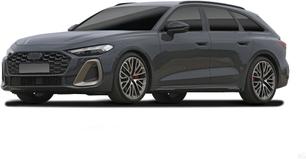
The Audi A5 has done something naughty. It’s replaced the Audi A4.
Or at least that’s the case for now after the Ingolstadt brand made a bit of a mess of its naming strategy.
Essentially, the Audi A5 is now available as a sedan or a wagon, and the next A4 coming soon will be electric. The previous A5 was a swoopier two-door coupe or four-door gran coupe style model. So the A5 is now effectively Audi’s main BMW 3 Series or Mercedes C-Class and CLA rival.
Plus, the Audi S5 is also here to cater to performance car fans.
Can a new platform, a sleek, fresh look and a techy interior do the job?
We’ve been pedalling around the Victorian countryside in the hopes of finding out.
Stick with me, and I reckon we’ll get to the bottom of it. The question about the car, that is, not the bottom of Victoria.
The Clio RS is still a ton of fun and in Cup spec, probably the best compromise between price and livability. Despite its advancing years (it turns five this year, so ready to start kindy) and big brother Megane hogging the limelight with a fancy new model on the way, the Clio is a stayer. It's missing some frustratingly obvious things like CarPlay, AEB, rear airbags and rear cross-traffic alert, but it's hardly alone in the segment.
With the departure of the Fiesta ST, though, the Clio returns to the top of the list of best small hot hatches on sale today.
The Audi A5 remains a convincing option in the premium mid-size sedan category, even with the near-$10K price increase over its equivalent grade A4 predecessor.
Even in its base spec, it’s a lovely thing to drive and adds enough new kit to be a reasonable option when it comes to value. In terms of tech usability, it stands out from rivals. Practicality is still king for Audi.
But for the heart-over-head types, the S5 is fast and fun while remaining a comfortable cruiser and the price is decent. On a personal note, a six-cylinder wagon? That's a big yes from me.
For the time it’s available, it’s hard to go past the value on offer in the S5 Edition One. Getting an AWD V6 with that kind of capability for under $100K is something that's sure to tempt buyers. If it doesn’t, we need to take a good look at ourselves.
Note: CarsGuide attended this event as a guest of the manufacturer, with meals provided.
The Clio is a handsome small car but nothing out of the ordinary until you apply the very cool Liquid Yellow paint. That hue really is quite something and works even better with the black alloys of the Cup chassis.
The car has some lovely surfacing and in a recent-ish refresh, the slightly odd headlights were reworked, as were the front and rear bumpers which now link to the RenaultSport Megane. Sorry, Megane RS. The RS flag signature lighting is a nice touch, acting as DRLs at the bottom corners of the front bumper.
The lovely organic shapes of the Clio's sides still look good and the rather tough rear end with the chunky diffuser leaves you in no doubt that it's the proper RS not the halfway-house, 1.2-litre GT-Line.
Inside is starting to look its age, but graceful, a bit like Jamie-Lee Curtis' or George Clooney's embrace of grey hair. There are still some of the sharp edges I didn't like. It's certainly a Renault to look at and ergonomically works pretty well. One thing that has been fixed at some point is the switch on the gear selector - it won't bite you if you curl your finger underneath when you press it. You might think that's a small thing, but when you did it, damn it hurt.
The A5 incorporates Audi’s new design language in a way that makes the 2026 model stand out from Audi’s older offerings, but we won’t know how well it works in the family until more new-gen Audi cars arrive.
For now, the A5 is a generally handsome car. It very much looks like an Audi from the front, even a recent A4 if you only very quickly glanced.
The aforementioned S line styling does plenty in making even the base Audi A5 look like a properly luxe thing. There were a few double-checks at the launch to make sure drivers were getting into the right cars.
Fortunately the new car’s designers refrained from busying up the car with trim, the only big features being the side vents at the front.
But even in Avant form the S5 looks athletic, quad-exhausts in the lower bar and the angular rear bodywork moving away from the previously softer, more rounded look Audi had gone with before.
Inside, the changes are arguably more obvious. The A5 is now much more ‘screeny’ than before, especially if optioned with the passenger-side touchscreen.
It’s still decidedly Audi in its layout and design, with geometric shapes on the steering wheel, screen housing, door cards and even on the gear shifter, which is no longer the more traditional handle-type.
The Clio's interior is certainly snug. Rear seat passengers do okay for legroom but headroom is a mite marginal with the falling roofline for six footers. There are no cupholders out back, that curious French habit of supplying just a couple of cup receptacles of different and weird sizes persists. The front doors have space for bottles, the rears do not.
The boot is class-competitive at 300 litres (worth knowing the Trophy loses 70 litres to the Cup) and with the seats down stretches to a claimed 1146L.
…and that gear selector is a bit indicative of the new A5’s interior. It’s now more of a switch that requires a little more attention than the traditional shifter, just like the way the more screen-focused interior requires a little more of your eyeball time than physical buttons.
Don’t get me wrong, as far as screens in modern cars go, Audi seems to have made it as easy as possible to use the new-gen software in the A5. The menus are clear, there are good shortcuts and there’s no lag… but buttons are always better when your focus needs to be on the road.
Fortunately the driver display is nice and clear, it’s a good update on Audi’s ‘Virtual Cockpit’ and you can set it to display important information without looking too busy.
Ergonomically, the way the central screen is angled towards the driver, the centre console layout and the small control panel on the door for lights, mirrors and the like all seem to be well considered and mean you don’t have to awkwardly reach for anything.
There are a few quirks specific to the A5 and S5, one being that if you opt for the panoramic sunroof, it comes with a transparency switch rather than a physical cover, so it doesn’t do much to keep the light out.
It’s also good to note that the passenger screen - again, if optioned - turns to privacy mode when playing media so as to not distract the driver. Pretty handy!
Behind the front row, a regular-sized adult should have enough room to sit comfortably for a decent amount of time without feeling cramped. The light through the sunroof comes in handy here.
Behind that is a 445L boot in Sedan form, or 1299L with the rear seats folded down. As an Avant, the space increases to 448L and 1396L respectively.
The iconic 'Liquid Yellow' ($750 option) Clio I had for the week was the Cup spec chassis. The Clio RS 200, as it is officially known, comes in two specs - Sport and Cup - and there's a Trophy 220 at the top of the range. I had the Cup, which retails at $32,490 (plus on-road costs). The RS220 Trophy, with a bit more poke and stuff, weighs in at $38,990 if you're interested.
The Cup spec is heavily based on the more affordable ($30,990) Sport, which means you get 18-inch alloy wheels (painted black, so watch those kerbs), climate control, four speaker stereo, keyless entry and start (the "key" is still that unwieldy keycard style thing), reversing camera, cruise control, front and rear parking sensors, fog lamps, LED daytime running lights, sat nav, auto LED headlights, auto wipers, launch control, leather bits and pieces and a tyre inflation kit instead of any kind of spare.
The 7.0-inch 'R-Link' touch screen software runs the four speaker stereo with DAB digital radio, Bluetooth and USB. If you get the optional RS Monitor, there is a full-on telemetry system from which you can save your, er, "track day" data and overlay in Google Maps to compare with your mates' or past efforts. You can also change the piped-in engine sound to various different sound effects which are delightfully silly.
Android Auto is part of the breathtaking $1500 'Entertainment Pack' option that includes RS Monitor (which used to be standard) and no, there's no Apple CarPlay. Leather is a further $1500.
Bottom line is that you do get a decent spec bump from the $30,990 Sport along with the more capable (and less comfortable) Cup chassis.
The new Audi A5 range starts from $79,900 before on-road costs for the standard A5 Sedan, though the rest of the models available at launch are all S5 variants. A more powerful A5 with 200kW and quattro all-wheel drive will come later, as well as a 270kW plug-in hybrid A5 quattro variant.
For now, the sole A5 in the line-up is well equipped for the price, coming with standard 19-inch alloy wheels, matrix LED headlights with adjustable lighting signatures, keyless entry and digital key via Audi’s app, electric bootlid (or tailgate, given its liftback style) and S line styling as standard.
Interior features include sports seats in real and synthetic leather, heated and electrically adjustable up front, leather steering wheel, tri-zone climate control, a 14.5-inch OLED multimedia touchscreen and 11.9-inch driver display, wireless phone charging as well as wireless Android Auto and Apple CarPlay.
The A5 can be optioned with a Style pack for $3000 which adds 20-inch wheels, tinted glass and black exterior trim. There’s also a Premium pack for $3769 which adds a head-up display, high-power USB ports, a Bang & Olufsen sound system, ambient lighting and front door acoustic window glazing.
The other key variants in the line-up from launch are the S5 Sedan and S5 Avant, coming in at $114,900 and $117,900 respectively. Aside from the more advanced drivetrains, the S5s also gain plenty more features over the A5 including 20-inch Audi Sport alloy wheels, selectable OLED rear lights, tinted windows and more paint colour options.
Inside, Nappa leather-upholstered seats gain cooling and massage functions up front, the steering wheel is heated, and there’s ambient lighting with a ‘dynamic interaction light strip’ that changes colour based on vehicle functions like indicating or changing temperatures.
There’s also a head-up display, high-power USB outlets, a Bang & Olufsen sound system and, perhaps most notably, a 10.9-inch touchscreen for the front passenger as standard. It’s a $1500 option in the A5.
Audi also has a launch variant of the S5, the Edition One, which comes at a lower price and a trim spec closer to the A5, but with the S5’s performance. It has non-adjustable sport suspension, for example, and to score much of the main S5’s kit requires cost-options or option packs.
But the prices are tempting, just $99,900 for the S5 Edition One Sedan or $102,900 for the Avant, $15,000 less than their same-power siblings. For an extra $6000, you can add a head-up display, high-power USB ports and the Bang & Olufsen sound system to the Edition One.
Comparing the entry A5 to the recent entry-level A4, the new A5 wears a price increase of $8000 (the ageing A4 is $71,900), but has more power and a much more modern interior. On price alone it seems a steep jump, but the value is still there compared to rivals. A Mercedes C200 currently starts from $89,900, while a BMW 330i is $92,900.
The 200-equipped RSes pony up 147kW/260Nm, which is pretty much bang-on the obvious competition (Peugeot 208 GTI and the outgoing Fiesta ST), driving the front wheels through Renault's six-speed EDC twin-clutch. Unlike those two, there is no overboost function.
Dieppe's finest sprints from 0-100km/h in a claimed 6.7 seconds, pulling along a kerb weight of 1204kg.
The Audi A5 is powered by a four-cylinder turbo-petrol engine which powers the front wheels via a seven-speed dual-clutch automatic transmission. It makes 150kW of power and 340Nm of torque, and should, Audi says, propel the A5 to 100km/h in 7.8 seconds before (eventually) reaching a top speed of 248km/h.
The S5, in all its variants, is powered by a 3.0-litre turbo-petrol V6 which is assisted by a mild hybrid system. It produces 270kW and 550Nm, sending that to all four wheels via a similar seven-speed dual-clutch.
The S5 is much quicker as a result - 100km/h comes along in just 4.5 seconds according to Audi, before reaching a 250km/h top speed.
Renault claims 5.9L/100km on the combined cycle but, yeah, nah. My week was admittedly filled with plenty of horseplay and spirited driving, yielding 11.4L/100km. If you were careful you may fare better - but not that much better.
The fuel tank is a fairly standard 45 litres. It requires 98RON premium unleaded.
Audi claims the A5 uses 6.9 litres of fuel per 100km, which should theoretically deplete the 56-litre fuel tank after 811km of driving. We couldn’t test this on the launch, but reaching claimed fuel efficiency figures remains an elusive challenge.
The S5, according to Audi, comes with an impressive 7.1L/100km figure in Sedan form, or 7.2L/100km as an Avant. That’s 788km and 777km of theoretical driving range if you’re up for a challenge.
The RS has always had a belter of a chassis. The Cup chassis became a thing just over a decade ago and is lauded by the fans as The One To Have. I've not always been convinced of this as my earlier drives of the Cup-equipped machines have usually been in close proximity to the Sport chassis.
The Cup is slightly lower than the Sport, with 15 per cent stiffer springs and dampers and perhaps more importantly it scores 18-inch wheels with Dunlop Sport Maxx RT2 tyres, which you can reasonably expect to be a bit firmer than the 17s with Goodyear F1s on the Sport. And they are.
However, in most situations, the Cup chassis is perfectly benign. You certainly feel the bumps and lumps, but you haven't bought a Cup chassis for Lexus-like isolation. It's certainly sharper than the Sport chassis and when you're really giving it a go around the bends, the comfort deficit is more than made up for by the extra grip and poise.
The RS has always had a belter of a chassis.
The chassis is aided and abetted by a torquey 1.6-turbo that cheerfully...no, gleefully spins to the redline which could do with another thousand revs, but that's forced induction for you. The aluminium shift paddles need a good positive pull to get a gear, but that gear is delivered quickly and effortlessly. The Clio is a great deal of fun in Sport and Race modes, with throttle mappings and gearshifts becoming more aggressive as you switch through the modes.
The brakes are tremendously effective and the electronic limited slip diff (*cough* brake-based torque vectoring) ensures you'll hit your apexes and the tyres spend more time gripping than spinning.
But it's not all hairpins and off-camber left-right-lefts, is it? Plenty of owners have to live with the car in traffic day to day. Driving the Cup in isolation, I've changed my mind about it. I reckon it's the best of the two chassis settings. The city ride is better than decent, with the hard edges potholes chamfered off by the dampers and decent compliance. It's not too noisy, either.
One of the first press cars I ever drove as an even younger lad than I am now was the circa-2017 Audi S4.
Without the perspective of all the many, many cars I've since driven, that S4 blew my mind a little bit with its combination of capability and refinement.
Now, with the context of most of the cars available to the Australian buyer in mind, it’s reassuring to get into this new generation and find that the mid-size Audi torch has been gracefully passed on.
Audi says the new generation, sitting on its new platform, has more focus on balanced driving dynamics, steering precision and steering feel. Without sacrificing comfort, Audi wants the A5 to be a sharper driver’s car.
It might not gel with the Euro tradition of a rear-drive executive sedan given the base A5 is front-wheel drive - the brand of course focusing on its quattro all-wheel drive system - but the A5 is decidedly agile for its size.
Compared to the S5 especially, as the A5’S 1770kg plays the S5’s 2025kg in Sedan form (2040kg as an Avant). It’s a noticeable weight difference, and it makes the A5 more playful without getting properly ragged.
It also rides on smaller 19-inch wheels and would overall probably make for the better daily driver. Even without the all-wheel-drive traction and extra power the S5 offers, the A5 makes a good case for properly plush commuting. Its 150kW isn’t lacking by any means, and that 340Nm does plenty to help when overtaking.
Its suspension feels well damped, keeping the road’s imperfections out of the cabin without numbing the ride and leaving you without feedback. The steering is similarly direct without being too heavy, making the A5 feel athletic for its size.
But for all the A5’s strengths, there is something undeniable about a six-cylinder European sedan (or wagon). The S5 is heavier, sure, and therefore not as naturally nimble, but it makes up for it. And it’s not just the extra power and mild-hybrid assistance.
It’s a great highway cruiser for a start, but it also adds the confidence of all-wheel drive to a trip, which proved extremely useful on the very rainy winter day we tested it. It holds up well on rough surfaces despite the bigger wheels and extra heft, plus it doesn’t feel out of hand when cornering fast, rolling into a predictable understeer rather than quickly losing traction.
But if you’re in any way conscious of your budget, consider the Edition One. It doesn’t lack any of the key things that make the S5 great, and you get to pocket enough money to buy a second used car.
On board the Clio is four airbags (no curtain coverage for those in the rear), ABS, stability and traction controls, a reversing camera and two ISOFIX points along with three top-tether anchors.
The Clio was awarded a five-star ANCAP rating in November 2013.
The A5 and its S5 variants share the same safety features, with the full suite of Audi’s more-than 30 safety and driver assistance systems standard across the line-up.
Physically, the A5 has nine airbags and has been crash-tested by Euro NCAP, the firm awarding it five stars. There's no local ANCAP score as yet.
Some of the key safety features in the A5 and S5 models include a driver attention alert, seatbelt reminders, tyre pressure indicator, adaptive cruise control, lane departure warnings and lane assist, front braking assist, front and rear cross-traffic alert, speed limit sign recognition, surround view cameras and park assist with front and rear parking sensors.
There are also ISOFIX points for fitting child seats to the rear outboard seats.
Renault says it was the first European maker to offer a five-year/unlimited kilometre warranty in Australia, and who are we to argue? The package also includes up to four years of roadside assist and three years of capped-price servicing.
Renault expects to see you just once a year or every 20,000km, which gives you a bit more headroom than some similar service plans, at least on the mileage. The first three services will cost no more than $369 unless you need a new air filter ($38) or pollen filter ($46). At 60,000km or four years you'll cop $262 for a set of spark plugs. The company's website also suggests if the Clio doesn't like the state of its oil, it will beep at you until you have that attended to.
Audi’s five-year/unlimited kilometre warranty is starting to fall behind the industry standard, though is about normal for a premium brand. On top of this, customers can opt to purchase extra years of warranty up to a maximum nine years which costs $3590.
Audi does also offer 12 years of bodywork manufacturing warranty against corrosion or perforation. There’s also five years of Audi roadside assistance.
Servicing intervals for the A5 come in at every 15,000km or 12 months, with customers able to purchase fixed-price servicing plans at a discount compared to paying per service.
A five-year servicing pack for the A5 Sedan is $3360, and for the S5 it’s priced at $3540.