What's the difference?
I'm going to reveal something of myself here - I used to be a RenaultSport Clio owner. This is what the purists call what we now know as Clio RS, and I find myself constantly corrected yet unrepentant. It was a 172 - a nuggety three-door with wheels that looked too small, a weird seating position and a 2.0-litre naturally aspirated engine that was big on torque as long as you belted it.
It was a classic and you could still see the links back to the epoch-making Renault Clio Williams, that blue and gold Mk 1 Clio we never saw in Australia that redefined the genre. The current Clio has been around for four years now and I even drove this current RS Clio at its launch in 2013, memorable for the sudden bucketing rain that drenched the circuit and made things very interesting indeed.
This Clio was a big change from the cars that went before - slimmer-hipped, less aggressive-looking and with a 1.6-litre turbo engine, five-door-only body and (gasp!) no manual, just Renault's twin-clutch EDC transmission. It was a hit, at least with enthusiasts. Back then it was the dawn of a golden age in small hot hatches. But that was then, this is now. With a small power bump and a couple of features thrown in, is the ageing RS still at the pointy end?
In a world where car upgrades often feel like saying, “Can I upsize that?”, it’s refreshing to hop into the updated Audi S3 Sportback.
The flagship RS 3 may still be the holy grail of hot hatch dreams, but with boosted engine outputs and upgraded tech, the S3 is stepping up.
Is the S3 Sportback the smarter pick over pricier rivals? It delivers serious performance and polish without stretching into RS 3 territory. With fierce competition in the segment, let’s see what this contender brings to the table.
The Clio RS is still a ton of fun and in Cup spec, probably the best compromise between price and livability. Despite its advancing years (it turns five this year, so ready to start kindy) and big brother Megane hogging the limelight with a fancy new model on the way, the Clio is a stayer. It's missing some frustratingly obvious things like CarPlay, AEB, rear airbags and rear cross-traffic alert, but it's hardly alone in the segment.
With the departure of the Fiesta ST, though, the Clio returns to the top of the list of best small hot hatches on sale today.
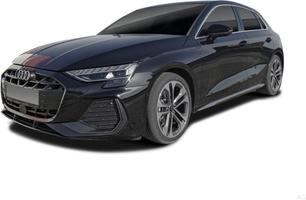
The updated Audi S3 Sportback is a fun-sized dynamo with impressive outputs and athletic road manners. It’s missing a few premium features, but its compact size paired with a gutsy engine makes it a compelling option for drivers who don’t want to compromise on performance (just space).
The Clio is a handsome small car but nothing out of the ordinary until you apply the very cool Liquid Yellow paint. That hue really is quite something and works even better with the black alloys of the Cup chassis.
The car has some lovely surfacing and in a recent-ish refresh, the slightly odd headlights were reworked, as were the front and rear bumpers which now link to the RenaultSport Megane. Sorry, Megane RS. The RS flag signature lighting is a nice touch, acting as DRLs at the bottom corners of the front bumper.
The lovely organic shapes of the Clio's sides still look good and the rather tough rear end with the chunky diffuser leaves you in no doubt that it's the proper RS not the halfway-house, 1.2-litre GT-Line.
Inside is starting to look its age, but graceful, a bit like Jamie-Lee Curtis' or George Clooney's embrace of grey hair. There are still some of the sharp edges I didn't like. It's certainly a Renault to look at and ergonomically works pretty well. One thing that has been fixed at some point is the switch on the gear selector - it won't bite you if you curl your finger underneath when you press it. You might think that's a small thing, but when you did it, damn it hurt.
The S3 Sportback may be a small car, but its S design features, like the stylised blackout grille, matrix LED headlights, and 19-inch alloys with red brake calipers, give it a distinctly athletic and fun-loving vibe. It’s compact, but definitely not diminutive and carries serious road presence. It’s hot hatch meets fun-size.
Inside, the S3 looks fabulous. Integrated ambient lighting, a sharp dashboard treatment and a driver-focused cockpit all lend it a premium feel.
The front seats look properly sporty with their integrated headrests, and the quilted Nappa leather upholstery feels great, especially with the eye-catching red contrast stitching.
As for technology, it’s as high-end as you’d expect with a 10.1-inch touchscreen multimedia display and 12.3-inch digital instrument cluster taking centre stage.
The only drawback? No sunroof. Combined with the black headliner and compact cabin, it can feel a little gloomy at times. Still, it’s a cabin you’ll enjoy spending time in.
The Clio's interior is certainly snug. Rear seat passengers do okay for legroom but headroom is a mite marginal with the falling roofline for six footers. There are no cupholders out back, that curious French habit of supplying just a couple of cup receptacles of different and weird sizes persists. The front doors have space for bottles, the rears do not.
The boot is class-competitive at 300 litres (worth knowing the Trophy loses 70 litres to the Cup) and with the seats down stretches to a claimed 1146L.
Like most hatches, the front row enjoys the most space. While it’s cosy, it never feels cramped. The seats are firm yet comfortable, thanks to their adjustability and expandable under-thigh supports. Access is fairly easy with wide door apertures, though the low seating position might earn a few grunts, especially from taller folks.
Storage up front is well sorted, with a glove box, a small centre console, a dedicated phone cradle and a couple of cup and bottle holders. It’s about what you'd expect for a car this size, but it's enough to keep things tidy.
There are plenty of charging options, with two USB-C ports in each row and a wireless charging pad up front.
The multimedia system is intuitive and easy to use. The touchscreen is responsive, and wireless Apple CarPlay connected without fuss and stayed connected all week. Wireless Android Auto is available, too.
Built-in sat nav is clear, and I love the way directions pull through to the digital instrument panel. The Sonos sound system? Pretty darn good. My son and I had more than one mini-concert on the school run.
As for the rear row, it definitely reminds you this is a small car. At 168cm, I found it on the cramped side of cosy and my husband just laughed when I asked him to try it! The wheel arch also cuts into the door aperture, making access a little awkward. Best to think of it as occasional adult seating. But given the size, that’s no surprise.
Amenities in the back are decent with a couple of map pockets, cup and bottle holders, as well as a fold-down armrest, those USB ports and rear temperature control (but curiously, no fan control). The seats are comfortable enough, but space is limited. Realistically, it’s best suited for two passengers, not three.
Boot space is quite practical. The wide opening and manageable load lip height make it easy to slide items in and out. It offers 325L of space, less than its key rivals, but expands to 1145L with the rear seats folded flat. The handy 40/20/40 split also adds versatility. Under the boot floor, you’ll find a tyre repair kit.
The iconic 'Liquid Yellow' ($750 option) Clio I had for the week was the Cup spec chassis. The Clio RS 200, as it is officially known, comes in two specs - Sport and Cup - and there's a Trophy 220 at the top of the range. I had the Cup, which retails at $32,490 (plus on-road costs). The RS220 Trophy, with a bit more poke and stuff, weighs in at $38,990 if you're interested.
The Cup spec is heavily based on the more affordable ($30,990) Sport, which means you get 18-inch alloy wheels (painted black, so watch those kerbs), climate control, four speaker stereo, keyless entry and start (the "key" is still that unwieldy keycard style thing), reversing camera, cruise control, front and rear parking sensors, fog lamps, LED daytime running lights, sat nav, auto LED headlights, auto wipers, launch control, leather bits and pieces and a tyre inflation kit instead of any kind of spare.
The 7.0-inch 'R-Link' touch screen software runs the four speaker stereo with DAB digital radio, Bluetooth and USB. If you get the optional RS Monitor, there is a full-on telemetry system from which you can save your, er, "track day" data and overlay in Google Maps to compare with your mates' or past efforts. You can also change the piped-in engine sound to various different sound effects which are delightfully silly.
Android Auto is part of the breathtaking $1500 'Entertainment Pack' option that includes RS Monitor (which used to be standard) and no, there's no Apple CarPlay. Leather is a further $1500.
Bottom line is that you do get a decent spec bump from the $30,990 Sport along with the more capable (and less comfortable) Cup chassis.
The A3 Sportback comes in three trim levels, with the S3 technically sitting in the middle, just below the performance-focused RS 3. It's priced from $78,800, before on-road costs, and it shares the same platform and underpinnings as the Volkswagen Golf R. Surprisingly, our test vehicle isn’t significantly more expensive than its Golf R rival which comes in at $70,990 MSRP.
That makes it a more affordable option when compared to premium rivals like the BMW M135 xDrive which starts at $83,600 MSRP and the Mercedes-AMG A35 which comes in at $89,700 MSRP.
The update sees engine outputs improve with it gaining 17kW and 20Nm of torque, resulting in a total of 245kW and 420Nm.
Feature highlights include 19-inch alloy wheels, red brake calipers, electrically-adjustable and heated front seats (with expandable under-thigh support), rear privacy glass, quilted Nappa leather upholstery and 'S Sport' suspension with damper control which lowers the ride height lowered by 15mm.
The updated technology is well-rounded and now comes with wireless Apple CarPlay and Android Auto. There's also three-zone climate control, a 10.1-inch touchscreen multimedia display, a 12.3-inch digital instrument cluster, digital radio, four USB-C ports, a wireless charging pad, built-in satellite navigation and a 15-speaker Sonos 3D sound system.
Still, despite its premium hot hatch status, this grade skips a few luxury touches. Ventilated front seats, a heated steering wheel, heated rear outboard seats and a sunroof are all missing. The BMW M135 xDrive, notably, includes all of these as standard.
Even the powered tailgate with kick-functionality is an optional extra here, adding $660 to the price. At this level that should be standard.
The 200-equipped RSes pony up 147kW/260Nm, which is pretty much bang-on the obvious competition (Peugeot 208 GTI and the outgoing Fiesta ST), driving the front wheels through Renault's six-speed EDC twin-clutch. Unlike those two, there is no overboost function.
Dieppe's finest sprints from 0-100km/h in a claimed 6.7 seconds, pulling along a kerb weight of 1204kg.
The S3 Sportback wears the quattro badge proudly, meaning it’s all-wheel drive and it pairs a tweaked seven-speed automatic transmission with a 2.0-litre turbocharged, four-cylinder petrol engine.
This update brings a bump in performance over the previous model, including the addition of a rear torque splitter. Power is now up to a gutsy 245kW and 420Nm of torque, launching the S3 from 0 - 100km/h in just 4.7 seconds. That’s proper hot hatch territory.
Renault claims 5.9L/100km on the combined cycle but, yeah, nah. My week was admittedly filled with plenty of horseplay and spirited driving, yielding 11.4L/100km. If you were careful you may fare better - but not that much better.
The fuel tank is a fairly standard 45 litres. It requires 98RON premium unleaded.
The S3 Sportback has an official combined fuel consumption figure of 7.9L/100km and a 55-litre fuel tank, giving it a theoretical driving range of up to 696km.
Its key rivals hover around similar numbers, so it's right on the mark for the segment. After a mix of long-distance drives and my usual urban errands, my real-world figure came in at 8.0L/100km - very close to the claim, which I’m pretty happy with.
The RS has always had a belter of a chassis. The Cup chassis became a thing just over a decade ago and is lauded by the fans as The One To Have. I've not always been convinced of this as my earlier drives of the Cup-equipped machines have usually been in close proximity to the Sport chassis.
The Cup is slightly lower than the Sport, with 15 per cent stiffer springs and dampers and perhaps more importantly it scores 18-inch wheels with Dunlop Sport Maxx RT2 tyres, which you can reasonably expect to be a bit firmer than the 17s with Goodyear F1s on the Sport. And they are.
However, in most situations, the Cup chassis is perfectly benign. You certainly feel the bumps and lumps, but you haven't bought a Cup chassis for Lexus-like isolation. It's certainly sharper than the Sport chassis and when you're really giving it a go around the bends, the comfort deficit is more than made up for by the extra grip and poise.
The RS has always had a belter of a chassis.
The chassis is aided and abetted by a torquey 1.6-turbo that cheerfully...no, gleefully spins to the redline which could do with another thousand revs, but that's forced induction for you. The aluminium shift paddles need a good positive pull to get a gear, but that gear is delivered quickly and effortlessly. The Clio is a great deal of fun in Sport and Race modes, with throttle mappings and gearshifts becoming more aggressive as you switch through the modes.
The brakes are tremendously effective and the electronic limited slip diff (*cough* brake-based torque vectoring) ensures you'll hit your apexes and the tyres spend more time gripping than spinning.
But it's not all hairpins and off-camber left-right-lefts, is it? Plenty of owners have to live with the car in traffic day to day. Driving the Cup in isolation, I've changed my mind about it. I reckon it's the best of the two chassis settings. The city ride is better than decent, with the hard edges potholes chamfered off by the dampers and decent compliance. It's not too noisy, either.
The S3 Sportback sounds as mean as it looks, and it delivers on that promise with effortless grunt. Acceleration is immediate, with plenty of power on tap when you need it. It’s just fun all around.
The lowered sports suspension and wide tyres do bring some extra noise into the cabin, even at lower speeds. You might find yourself repeating things to rear passengers now and then, but it never feels overwhelming.
Steering and suspension are on the firmer side, so yes, you’ll feel the bumps but the payoff is sharp, responsive handling. Quick lane changes and winding coastal roads are where this car shines.
Visibility is about what you’d expect from a low-slung hot hatch. The pillars don’t obstruct the view, but sitting beside a towering SUV at the lights can make you feel a bit... compact.
Cornering is a strong suit, thanks to the car’s wide stance and AWD system. It feels confidently planted in most conditions. That said, I noticed the occasional wobble through the rear frame on rough sections in heavy rain.
Its compact size makes parking a breeze, especially with the help of multiple sensors. The reversing camera is crisp, but at this price point, the lack of a 360-degree camera view feels like a missed opportunity.
On board the Clio is four airbags (no curtain coverage for those in the rear), ABS, stability and traction controls, a reversing camera and two ISOFIX points along with three top-tether anchors.
The Clio was awarded a five-star ANCAP rating in November 2013.
The S3 isn’t covered by its 2WD sibling's maximum five-star ANCAP safety rating but it is well-equipped with safety features all the same.
Safety equipment includes blind-spot monitoring, side exit assist, rear cross-traffic alert, lane departure alert, lane keeping aid, park assist, reversing camera, front/rear parking sensors, forward collision warning, autonomous emergency braking and adaptive cruise control with stop and go function.
It also has six airbags but misses out on a front centre airbag. None of the driver assist systems are intrusive to daily driving, which I always like.
The rear row has ISOFIX child seat mounts and three top-tether anchor points but only two child seats will fit.
Renault says it was the first European maker to offer a five-year/unlimited kilometre warranty in Australia, and who are we to argue? The package also includes up to four years of roadside assist and three years of capped-price servicing.
Renault expects to see you just once a year or every 20,000km, which gives you a bit more headroom than some similar service plans, at least on the mileage. The first three services will cost no more than $369 unless you need a new air filter ($38) or pollen filter ($46). At 60,000km or four years you'll cop $262 for a set of spark plugs. The company's website also suggests if the Clio doesn't like the state of its oil, it will beep at you until you have that attended to.
Audi backs the S3 Sportback with a five-year/unlimited kilometre warranty, which is on par with its European rivals. A five-year pre-paid servicing plan is available for $2890 which is cheaper than pay-as-you-go and reasonable for the class.
For those looking to go the extra mile, the 'Audi Advantage' package lets you extend the warranty and capped-price servicing by an additional two years, which represents solid value overall.
Servicing intervals are every 12 months or 15,000km, whichever comes first.