What's the difference?
Before the 1980s, when air travel was expensive, the humble Australian family car had to be able to tow a big boat or caravan in order to take the brood on holidays across our vast, sunburnt land.
Many turned to oversized American barges, like the Dodge Phoenix and the Pontiac Parisienne. People loved their massive dimensions, huge interiors, endless torque and look-at-me status.
And guess what? They still do. And even the same carmakers remain today, thanks to Chrysler’s Ram 2500/3500 Heavy Duty (HD) – which grew out of Dodge – and General Motors’ Chevrolet Silverado 2500 HD.
Now, the Ram HDs, which were also the first of the modern American remanufactured trucks in Australia back in 2015, have come in for an overhaul.
How do the latest 2500/3500 stack up? Keep reading.
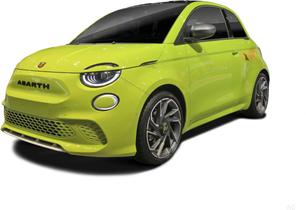
Meet the Abarth 500e, the mad-hatter sibling to the very good and all-electric Fiat 500e, and the Italian brand's first attempt at a bonafide EV hot hatch.
It's tiny, tough and – despite the lack of engine and exhaust – it burbles manically when you fire it up.
So does this mean Italy’s pint-sized, petrol-powered icon has a future in the all-electric era? Let’s go find out.
If you're a grey nomad with a massive caravan searching for something to do the big lap in, or a big boater seeking an effortless weekend getaway machine, then this sort of ute makes sense. The HD series shows just how much more muscle is available, for those who genuinely need it.
But if towing or hauling to the max isn’t your priority, then the far-more dynamic – and class-leading – Ram 1500 series does everything else with much-greater aplomb.
Note: CarsGuide attended this event as a guest of the manufacturer, with accommodation and meals provided.
It’s not perfect, but it’s everything a hot hatch should be in the electric era — engaging, exciting, and, above all, fun.
You can spot the HD facelift by the bi-LED headlights and bulgier bonnet, while chrome’s been replaced by black trim inside and out, including in the restyled grille, alloy wheels and side steps, for a more-modern appearance.
Both models are identical bar the badging. However, while they share a tri-link solid front axle system, the 2500 HD features coil-spring rear suspension, while the super heavy-duty 3500 HD relies on leaf springs. That’s for it to achieve maximum pulling and hauling capability.
Inside, the already-contemporary dashboard, with its 12-inch Tesla-esque portrait touchscreen, remains much the same as before, except for a few detail updates to accommodate the big new centre console, twin wireless charger housings, extra USB ports and restyled electronic instrument cluster.
Otherwise, it’s as vast as ever.
I’m just going to come right out and say it — I love the look of the Abarth 500e, even if the colour of our test car should be renamed Acid Trip, rather than Acid Green.
I love its perfectly proportioned, hunkered-down hot-hatch styling, the new ABARTH lettering on the body, and the new scorpion logo pasted to the side.
Basically, if you can look at the Abarth and not smile, then you need to find more fun in your life.
Inside, it’s a predictably cramped-feeling space, but it’s all nicely laid out, and the more I use them, the more I like the horizontal drive controllers that don’t eat up the little space you have with a traditional shifter. The materials are a bit hit and miss, though.
As with all Walkinshaw Automotive Group utes (that includes the Silverado), the Ram HD’s fit and finish seem exemplary, with an insider suggesting the quality may exceed the North American factory original.
This is no small feat. Ateco Automotive, the instigator and original importer of over 35,000 (and counting) remanufactured left-hand to right-hand-drive DS, DT and DJ full-sized utes in Australia since the first 2500 HD rolled off the Melbourne production line in 2015, says “between 400 and 500” unique engineering pieces are necessary.
Compared to the pre-facelift versions, the DJ Series II sees a switching out of the old front bench seat, which meant the earlier versions were six seaters, to shapelier individual items. Apparently, comfort and convenience are what buyers prefer, since a large centre console with armrest is now included. It’s certainly seems plush and luxurious inside.
Along with greater storage, the Ram’s electronic instrumentation is new and the multimedia system has been updated, with extra USB ports as well as twin phone chargers.
The driving position might be compromised for some by a lack of reach adjustability for the steering column (unlike in the DT 1500), and the foot-operated park brake seems like an anachronistic nowadays, but otherwise everything is easy to reach and operate – despite being scattered all about – after you’ve learned what all the buttons and switches do.
Meanwhile, the now-fixed seats can accommodate a trio of burly occupants no problems due to the sheer width of the cabin.
Included are air vents, extra USB ports, a sliding back window and storage underneath the seat cushions and within a special floor compartment.
Owners can also create a raised floor section, by tilting both cushions up and folding down two corresponding bases for a flat and even load area, with additional hidden storage within the now-covered footwells.
Overall, the Ram’s cabin balances convenience and utility quite well.
Further back, the tub length is 1938mm, width is 1687mm and 1295mm between the wheel arches and height is 511mm. This compares to the Silverado 2500’s superior corresponding figures of 2089mm/1814mm/1317mm/533mm, respectively.
A swing-away step is provided to help tub access, as well as a spray-in bedliner, strut-assisted tailgate-close and 12-pin towbar fitted as standard.
Maximum towing capacities vary from 3.5 tonnes to an unmatched eight tonnes with the correct accessories. The 2500’s payload is 785kg while the 3500 more than doubles that. And standard exhaust brakes help with braking on long descents when fully laden.
Which brings us to the heart of the matter. Muscle.
While I like the addition of the central screen, it’s surprisingly annoying to use — I found myself jabbing at the buttons again and again before it reacts. You need a Stephen Hawking-level intellect to figure it all out.
I was trying to turn off the Abarth Sound Generator, which I'm reliably informed is possible, but after about five minutes digging through sub-menus, I abandoned all hope.
Normally I’d spend a bit of time exploring the back seat, but frankly, once in there I didn't really feel like spending excess time back there.
The Abarth 500e is only around 3.6m long, 1.7m wide and 1.5m tall, and suffice it to say, the space is tight, and you’ll only be using the two seats in the back in an emergency, or for the smallest of kids.
The boot is pretty tiny, too, starting at 185 litres (VDA) with the rear seats up, but growing to 550L (VDA) with the split-fold rear seat lowered.
So, not much to write home about. But criticising the tiny Abarth for a lack of practicality is like criticising a horse because it can’t swim – it’s not really in its job description.
Coded as the DJ, the 2500 and even heavier-duty 3500 differ significantly compared to the DT-series 1500, and use many of the body, chassis and mechanical components from the previous-gen DS-series 2500/3500 HD. Hence the unique model code.
Only launched in North America earlier this year, the DJ Series II kicks off from $172,950 (all prices are before on-road costs) for the 2500 HD. That’s the same old retail figure as before, despite the newcomer ushering in a minor facelift, major muscle boost and more kit, although the Silverado 2500 HD is still cheaper, at about $5K less, while the old runout versions now start from under $170K driveaway.
It’s also worth keeping in mind that the Ram 3500 HD has no direct rival in Australia.
As you’d expect, many luxury features are standard, such as heated and vented front seats with driver’s side memory, leather upholstery, retractable exterior mirrors, a surround-view monitor and adaptive cruise control. Upgraded driver-assist safety systems have also been added. More on those later on.
The newly-added items include a sunroof, centre console bisecting the front seats, a 12.3-inch instrument display, wireless Apple CarPlay/Android Auto, dual smartphone chargers, eight USB ports and traffic sign recognition.
So, no more three-person front bench. And it seems the reclining rear seat has been binned for a fixed-position item.
Ok, so bonkers thing number one: This Abarth 500e might look like it could fit in your pocket, but it is priced like a much bigger vehicle, starting at $58,900 plus on-road costs for the Turismo variant, increasing to $60,500 for the limited-edition Scorpionissima.
Outside, either trim gets 18-inch diamond-cut alloys, LED lighting all around, a fixed glass roof, the new e-latch front doors (meaning you can just push a button to open the door) from the 500e, along with some performance-focused add-ons, like a front splitter, greyed-out mirror caps, rear disc brakes and new front and rear bumper treatments.
Inside, there’s a leather-and-Alcantara steering wheel, sports seats, aluminium pedals and climate control, while on the tech front, a central 10.25-inch central screen pairs with a wireless charger and wireless phone mirroring, while a second 7.0-inch Driver Display Screen gives you all your driving data.
Oh, and there’s what the brand calls an Abarth Sound Generator, which is all kinds of crazy, but we’ll touch on that in a moment.
The difference between the Scorpionissima and the Turismo, by the way, is style led, with Abarth decals down the sides, and a certificate of authenticity confirming yours is one of 1949 vehicles sold around the world.
Under the now-bulgier bonnet may be the torquiest engine money can buy, at least in something that does not require a special driving license. Or pilot's licence.
Completely overhauled with a redesigned engine head, larger intake and exhaust valves, a new turbo, heavier-duty pistons, a higher-pressure fuel system and upgraded intake manifold amongst other changes, the Cummins-sourced 6.7-litre in-line six-cylinder turbo-diesel unit now delivers 313kW of power at 2800rpm and 1458Nm at 1800rpm.
Formerly making 276kW and 1152Nm, the new figures are 13 per cent and 26 per cent better than before (respectively), reducing the power gap with the Silverado’s 350kW/1322Nm 6.6L V8 turbo-diesel, while easily leap-frogging it for torque.
At 3710kg (kerb), the HD’s power-to-weight ratio improves significantly despite putting on about 100kg, from 76.5 kW/tonne to 84.4kW/tonne.
Meanwhile, a ZF-supplied eight-speed auto replaces the old six-speed unit. It’s now a second faster to 100 at under 7.3 seconds and the spread of extra gears should improve highway fuel consumption, albeit slightly.
Drive is sent to the rear wheels in two-wheel drive (2WD) mode in most cases. However, 4WD High (4H) is also available via a part-time dual-range transfer case and is selectable on-the-fly, though it is not recommended for operation above 80km/h, while 4WD Low (4L) is for rougher terrain at very low speeds.
There’s a single front-mounted electric motor providing the go here, with a total 113.7kW and 235Nm on offer fed through the single-speed gearbox, which is enough to push the 500e from 0-100km/h in 7.0 seconds.
Happily, the way that power is delivered makes it feel faster, and that Sound Generator does a pretty good impersonation of a petrol-powered hot hatch, rising and falling with your inputs.
Ram says the Australian Government doesn't mandate an official combined fuel consumption figure for full-sized utes like these, so there is no average economy number for us to share.
But the trip meter in two of our test vehicles said it consumed between 15 litres per 100km and 15.6L/100km of diesel fuel, and both had not been towing a trailer or load since being reset.
Despite the new ZF eight-speed auto’s revised final drive ratio (now 3.42:1 instead of 3.73:1) to help improve efficiency, clearly this is no Toyota Prius.
Based on those trip computer numbers, expect the 117-litre fuel tank to provide about 760km between refills. Handily, the 28.4L AdBlue reservoir comes with its own tank display on the dash.
Right, there’s one obvious downside to the Abarth experience, and that is that it is fitted with a 42kWh battery that delivers a claimed 253km of driving range.
It’s worth noting that there are three Drive Modes — Turismo, Scorpion Street and Scorpion Track — and that only the first one will deliver the maximum range, because it limits inputs to 100kW and 220Nm.
Engage the other two — I’ve had it locked in Scorpion Track, for example, which gives you all of the power and deactivates one-pedal driving — and you can expect those numbers to drop.
When it comes time to charge, the Abarth 500e is set up for 85kW DC fast charging, which should take you from flat to 80 percent charged in around 35 minutes, as well as a maximum 11kW AC charging, which takes just over four hours to get to fully charged. Or you can plug it into a regular socket, which means more like 15 hours to recharge.
One last caveat: I actually wasn't able to get it to charge, which curtailed my adventures a little bit. I tried three chargers, all of which conjured an error message on the screen, and after a quick call to the folks at Abarth it transpired that a quick software update is required.
The Ram HD’s column shifter and foot-operated park brake say it all. This is a big, floaty and, at times, old-fashioned American truck, and that is certainly how it feels from behind the wheel.
2500 HD first.
From the initial burble of the forced-induction in-line six diesel, you can feel the torque simmering restlessly within. Slot the awkward selector into Drive, and – depending on how much heft you’re hauling – the Ram will lurch off the line like a startled bull, and before you know it, you’re bounding along.
If lightly laden, you’ll even momentarily spin the rear wheels in the lower ratios – second (the start-off gear; first’s for lugging only), third and maybe even fourth if the surface is slippery enough, though the traction controls will quell anything more than a bit of a bum wiggle.
From there on in, on a straight piece of highway anyway, the 3.7-tonne ute just strides along effortlessly, picking up the pace with ridiculous ease as required. You’re soon aware that the cruise control is vital if you’re going to keep your licence.
If you’re wondering how different the HD feels compared to the related regular Ram 1500, the first corner will serve up some answers soon enough.
The steering is light and reassuringly measured in response, but also numb and less precise than expected, if not quite vague, meaning you need to feed in inputs carefully. Especially at speed. Rushing it in, or blundering through a tighter turn carelessly, will have the laws of physics reminding you of this truck’s length and girth, and not to mention maybe the long arm of the law on your tail as well before long. Anyway, other road users will soon let you know as well. Take it easy.
Over the varied and at-times tight rural roads of Victoria’s Gippsland region, the endless pitter-patter of the unladen suspension, combined with the constant pitching from the body and trigger-happy brakes, resulted in motion queasiness, if not sickness. We’ve been assured that with a load as intended, everything including our internal sense of balance should settle down. Which makes sense. A boat or caravan out back should provide the anchoring effect required.
Back on straighter and smoother ground, where the 2500 smothers and smooshes most things before it, you’ll be glad for the commanding vision aided by the massive mirrors and surround-view cameras, helping to boost driver confidence, particularly when weaving through traffic or in parking scenarios.
But the compromises demanded for the ability to haul up to eight tonnes means this is a very niche proposition.
Which is why Ram insisted on us testing the sole 3500 HD with a 3.5-tonne caravan hitched out back, on the ex-Holden speed loop at Lang Lang.
This was a test of acceleration and control, and – again – we managed to spin the rear wheels in the lower gears.
Likewise, all that torque was delivered without struggle or strain, and almost immediately the 3500 was sitting steadily at 110km/h. The planted chassis and various electronics seamlessly kept everything in line.
But the track surface was too calm to assess the ride comfort from the leaf-sprung suspension, and we weren’t allowed to venture on to public roads.
Returning back to base, we even forgot all about the caravan quietly shadowing our every move out back, which is a sign of the 3500’s towering towing confidence.
Which is exactly what it says on the tin.
Remember what I said about how just looking at the Abarth should put a smile on your face? Well, driving it paints on an even bigger grin, and it starts as soon as you fire it up.
While most EVs start silently, leaving you wondering if they're on at all, the Abarth takes a different approach, instead leaning on its sound generator, modelled on the exhaust note of the 695, to give you a throaty rumble when you fire it up. It even revs! And yes, you can turn it off (apparently), but why would you?
On the road, electric drive has actually improved the Abarth experience, I reckon, because all the harshness of the drivetrain has been ironed out, instead just leaving this smooth, potent flow of power every time you plant your right foot, with no gear changes or harsh vibrations to get in the way.
The steering is predictably direct, too, and the whole vehicle feels nimble and quick to react to your inputs.
It’s honestly the kind of car that’s fun driving anywhere, be it suburban streets or twisty backroads, and despite having a couple of options parked at my house, I found myself pulled to the Abarth for all of my trips.
Downsides? The ride is firm but comfortable on most roads, but downright uncomfortable when you clang over bumps or road imperfections. You’ll have to decide if that’s a price to high to pay, but I can live with it for the trade off. And while the cabin tech looks nice, but is fiddly and annoying to use.
Finally, the range relegates the Abarth to a second car, or for those who rarely leave the city. Which is a big ask at the price point.
Neither ANCAP nor Euro NCAP have tested any full-sized American utes at this stage.
However, the 2500 HD is alone in its class in having a National Highway Traffic Safety Administration rating for 2025, scoring four out of five stars.
For the Series II upgrade, the autonomous emergency braking system now includes cyclist and pedestrian detection and braking, the traffic-sign recognition tech is new, whilst rear-cross-traffic alert, blind-spot monitoring, a 360-degree view camera and tyre-pressure monitors continue. No operation parameter data for the AEB is provided.
Plus, dual front, front side and curtain airbags are fitted, along with three child-seat restraining top-tether points and a pair of ISOFIX latches in the rear outboard seats.
The Abarth 500e is fitted with six airbags, and decent suite of active safety stuff, like AEB, Lane Keep Assist, Traffic Sign Recognition, Blind Spot Warning, auto high beam and and an attention monitor. It’s all pretty subtle, though, and it didn't bing or bong at me once, which was wonderful.
It scored four stars when tested by Euro NCAP.
So, here's where the news may not be so good for potential HD buyers, because the Ram’s warranty is well below its main competitor.
Now it is the sole US full-sized ute with a three-year, 100,000km warranty, instead of the five-year/unlimited-kilometre coverage offered by the others.
And don’t forget, this is the era where (albeit smaller) utes from Kia have seven years while Mitsubishi, Nissan and MG are up to 10 years (conditionally).
Service intervals are at just six months or 12,000km and there are no capped-price servicing options either.
As a result of trailing the competition so badly in these key areas, the Ram HD’s overall rating has been dragged down significantly.
Along with the 75 Ram dealers throughout every state and territory in Australia, there are an additional three garages that will service the vehicles.
It’s an interesting ownership proposition, because the car is covered for three years or 150,000km, which is underwhelming and then some compared to the warranty offerings of its competition, but there is capped-price servicing, at $300 per visit, required every 12 months or 15,000km, which lasts 10 years.
The battery is covered for eight years or 160,000km.