What's the difference?
This might be the biggest gamble in Porsche's history. It's the latest version of its best-selling car, the Porsche Macan, only this one has a very big difference.
You see, this time, it’s all-electric. There is not an internal-combustion engine (ICE) in sight. And that makes climbing into an entry-level Macan significantly more expensive than ever before.
So, will this bold shift help or hinder the Macan in Australia? And is this the country’s best all-electric SUV?
There’s only one way find out.
Tesla started from nothing to become one of the most recognisable brands across the automotive industry in less than two decades. Rivian is hoping to do the same.
If you haven't heard of Rivian that's okay, it's currently only available in the US market. It shares a lot in common with Tesla, though - a charismatic founder and CEO, a focus on electric vehicles and plenty of hype around the brand.
To find out if the hype is justified, CarsGuide.com.au was able to organise an exclusive preview drive of the brand's R1T electric pick-up in Los Angeles recently. The R1T is one of two models Rivian has entered the market with, the other is the R1S large SUV.
This is a far cry from company founder RJ Scaringe's original vision, the R1 - a mid-engined hybrid coupe sports car. Instead, Scaringe switched focus to the pick-up and SUV markets, which provided a much larger audience and helped attract investment from the Ford Motor Company and Amazon to get the company up and running on an industrial scale.
Rivian is still a few years from making it to Australia, but make no mistake, the company has been committed to global expansion for years. As far back as April 2019 a company representative told CarsGuide it believes there's a good opportunity for the R1T and R1S to find an audience in Australia.
So, with that in mind, we drove the R1T to find out if it has what it takes to make its mark with Australian ute buyers.
There is no doubting the substance of the Porsche Macan Electric. Its ride, steering and poise make it a joy to drive on twisting roads, and it ticks the practicality boxes, too.
The only lingering question is whether enough people are ready to make the all-electric switch. Only then will we know if Porsche's Macan gamble has paid off.
Note: CarsGuide attended this event as a guest of the manufacturer, with travel, accommodation and meals provided.
Having finally experienced the Rivian R1T from the driver's seat I think this is a ute that would have plenty of appeal in the Australian market. Not as a competitor to a Toyota HiLux Workmate or similar working-class ute, but as an alternative to the likes of the HiLux Rogue, Ford Ranger Raptor or even the new Ranger Platinum.
This is a high-end, luxury ute that also happens to be electric, which only expands its appeal. It has seriously impressive performance and, while we didn't get to test them first-hand, strong off-road credentials. Add to that a premium look and feel to the cabin and loads of practicality and it's easy to see this finding an audience here.
The biggest question will be cost, because even at a direct price conversion (which isn't a clear reflection of shipping and local tariffs) the R1T will start well over $100,000. Even by today's standards of six-figure US utes like the Chevrolet Silverado 1500 and incoming Ford F-150, that will be a hard sell and could restrict its chances.
Which would be a shame because while Tesla has a clear head start in Australia, it's possible for Rivian to follow in its wheel tracks and have plenty of mainstream success.
Note: CarsGuide attended this event as a guest of the manufacturer, with travel, accommodation and meals provided.
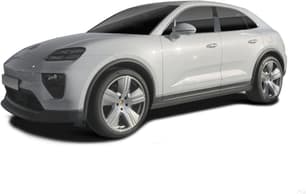
The Macan Electric looks sharp, all aerodynamic and swept-back like a range-maximising electric SUV should.
There’s functional method behind all this swoopy styling, too. The headlights look as though they’ve been chiselled into the body work, and at the grille, you’ll find active venting to help with cooling when needed.
There is also a sizeable front splitter that looks very much like the Macan is sticking its jaw out. All of which is to assist with aero and range.
It’s also a dual charging port layout with access left and right, though the latter is AC charging only, while the one on the left does both.
Step inside the Macan and you’ll find a familiar and very welcoming space. I especially like the twin-screen set-up that looks great in the way it's kind of embedded into the dash. Each is big, clear and easy to use.
I also really like the control panel that gives you quick-button access to the climate control, and the haptic feedback is next level, with the whole screen clicking in or out whenever you hit a button.
That said, in Turbo-guise you’re dropping almost $200,000, and some of the materials feel too hard and plasticky at that price point.
There's a lot to say about the design of the R1T. Unlike Tesla, which has gone radical in the design of its Cybertruck, Rivian clearly made a decision not to be too polarising but also leverage the advantages of electrification. The result is a ute that stands out even amid the glut of pick-ups on American roads.
Rivian also opted not to compete directly with the massively popular Ford F-150, Ram 1500 and Chevrolet Silverado in the US, instead sizing the R1T in what's considered the 'compact pick-up' market in the US. That makes it pretty much on par with the likes of the Ford Ranger and Toyota HiLux that we flock to in Australia. The R1T measures 5514mm long, 2077mm wide and 1986mm tall, which compares to 5446mm, 1852mm and 1977mm for the Ranger dual-cab.
Inside, like so many modern cars (and not just EVs), Rivian has opted for a minimalist design aesthetic, running almost every function through the central multimedia touchscreen, with only two physical buttons in the entire cabin, a pair of dials/buttons on the steering wheel and a pair of stalks behind the wheel (left for the indicators and right for the gear selector).
There isn't even a button to alter the power adjustable steering column, instead steering wheel position and mirrors are controlled via the touchscreen and the dials on the wheel. You have to select what function you want and that activates the wheel switches, allowing you to adjust for both reach and height.
It's arguably an unnecessarily complex system for something that should be simple, but for owners that can most likely do it once and then save their preferred position it's ultimately not a big deal; still, would one small button set on the steering column have been that complicated?
As you should expect for the price, the R1T quad-motor has a premium look and feel to its interior. The synthetic leather and dark ash wood make for a luxury car feeling, feeding to that simplistic but very hi-tech and polished design aesthetic.
There is a little open-sesame magic at play with the Macan, and that starts at the frunk, where, if you lovingly caress the bonnet, it will automatically pop open for you, revealing an 84-litre storage space.
Rubbing the charging port will see it slide open, too, but just in case you’re not the kind of person who likes to fondle their car in public, you can use the key.
The Macan’s boot is a little more traditional, opening to reveal 540 litres (but just 480 litres in the 4S or Turbo) of storage with the rear seats in place, with a wide, flat and very useable area for your goodies.
The back seat of the Macan feels spacious enough, without being outstanding. There’s more than enough space for my 175cm frame, with enough knee and head room, but the way the middle console juts out will definitely eat into leg room for any middle-row passenger.
Elsewhere you get air-con controls with vents, along with bottle storage in each of the doors. There is also a pull-down divider that’s home to two extra cupholders.
This is one of the areas that Rivian has excelled at and it makes the R1T a real standout in its class. Because it's a bespoke design there are a number of clever practical features around the cabin.
Starting with the Bluetooth speaker that slides out of the centre console. So you can play your music through the car's speakers or, when you leave the car, take your tunes with you. The sound system is another in-house Rivian set-up, like the multimedia, with the company splitting with original partner, audio specialist, Meridian.
Other clever interior touches include the charging pad (complete with tiny Rivian logo pattern), a sizable centre console box and a torch recessed in the door. There are also a power outlets in the cabin, rather than just USB ports, so you can charge your electronics on the move.
Rivian has also developed a 'Pet Mode' for the cabin, which the company claims allows owners to safely leave their pets in the car. The system allows the air-conditioning to keep running, even while the ignition is off, so your pet doesn't get overheated or freeze, and the media screen displays a message saying that your pet is okay (so no good Samaritan smashes your window to save your animal friend).
The R1T's other major party trick is the 'cargo tunnel' that runs the width of the car, taking advantage of the empty space between the cabin and the tray. This is a unique feature for the R1T, allowing for an extra 331 litres of lockable storage, which can be accessed on both sides or through the cabin via the rear seats.
Rivian even showed off a 'Camp Kitchen' that could slide in and out of the tunnel. This elaborate accessory was designed to make camping easier, featuring an induction cooktop, sink and crockery, but it has since been removed from the company's website as it is reportedly redesigned. Hopefully it's available again by the time the R1T makes it to Australia.
This would work in tandem with the 'Camp Mode' function that lets the ute self-level its suspension so the body is flat on uneven ground and turns off the exterior lights and sounds not to distract others, while still allowing you to use the power outlets in the tray and cargo tunnel.
As for the space in the cabin, it's good in the front and rear. With a 3449mm wheelbase there's generous room for the rear occupants that allows for two adults to sit in comfort, and Rivian claims it's wide enough for three child seats.
As for storage, in addition to the cargo tunnel, there's under bonnet storage measuring 314 litres, so there's plenty of out-of-sight space despite it being a ute.
The tray measures quite square, at 1374mm long and 1297mm wide, but Rivian has designed the tailgate to sit flush with the tray bed, which can extend the usable length to 2131mm.
The tray itself has several handy features. These include multiple power outlets and an air-compressor, so you can add extra pressure to your tyres if you let them down to go off-roading or pump up camping equipment.
Underneath the tray is the housing to keep the spare tyre on the off-road package, but as a spare isn't available on all models as standard, it can be used as storage for wet or dirty items because it's washable and has a drainage hole.
The Macan arrives with four trim levels, the entry-level Macan, the Macan 4, Macan 4S and then the flagship Macan Turbo. The latter is just a name Porsche now applies to its go-fast models — obviously there isn’t an actual turbo in action.
The new electric range opens with the Macan, which lists at $128,400, before on-road costs. A reminder here that the old entry-level Macan with an ICE powertrain would have set you back less than six figures, so this one represents quite the jump.
Now, it should be pointed out that you can still buy the previous-generation ICE Macan, at least until supply runs dry. The brand isn’t getting any more, but suggests there are enough in the country to satisfy demand until around Q2 next year.
Next is the 4, which is $134,400 and adds a second e-motor. Then comes the 4S, yours for $149,300, before the range tops out with the Turbo, which climbs to $184,400. All prices before on-road costs.
Those are big numbers, but at least Australian-delivered cars are some of the best-specified on the planet.
That starts with the Macan, which gets a 12.6-inch digital instrument cluster, and a second 10.9-inch central touchscreen with Apple CarPlay and Android Auto.
It rides on 20-inch alloys, has synthetic-leather seats that are heated up front and Australian cars get things like the clever 'Porsche Active Suspension Management' (PASM) system as standard.
Next up is the Macan 4, which adds a second electric motor, but otherwise largely mirrors the base car’s spec. Next on the list is the 4S, which rides on a different 20-inch alloy, picks up LED matrix headlights, sports a better Bose stereo, a panoramic roof and four-zone climate control.
Finally, the Turbo is the big dog of the electric Macan range, packing serious power, but also arriving with its own 20-inch alloy wheel design (with 21-inch wheels a no-cost option) — an augmented reality head-up display, and things like the 'Porsche Electric Sport Sound', the 'Sport Chrono Package' and a performance-focused 'Sport+' drive mode.
As many of these new car companies have found, including Tesla with its long-gestation periods for the Model 3, Model Y and now Cybertruck, mass-producing motor vehicles isn't an easy task. So, to simplify things and help get its business up and running, Rivian has focused on a single R1T variant for the US market initially.
This is the range-topping quad-motor R1T, with four electric motors (two per axle), which is priced from US$89,000 (approx. A$139,000)
That should give you an idea of where Rivian has positioned the R1T in the US market. This isn't a 'working-class ute'. This is one of the new breed of lifestyle vehicles that have become increasingly popular in the US and Australia.
Rivian has plans for a more affordable dual-motor (one per axle) model, which will start at US$73,000 (approx. A$114,000), and be able to be upgraded with a 'Performance' motor package for US$5000 or the choice of a 'Large' battery for US$6000 (approx. A$9000) or the 'Max' battery for US$16,000 (approx. A$25,000). We'll explain the technical difference between those motors and batteries below.
As for standard equipment, the R1T comes with a 21-inch alloy wheel and 'road' tyre, a built-in air-compressor, 'Gear Guard' security cable (again, we'll explain in-depth later), synthetic leather trim, dark ash wood inlays, heated and ventilated seats and a heated steering wheel.
Notably absent is Apple CarPlay and Android Auto, with Rivian preferring its own bespoke Google-powered system.
There is an 'All-Terrain' package available, too, which swaps out 20-inch alloys with all-terrain tyres, underbody protection and a full-size spare, that's stored under the tray.
Rivian also offers a variety of accessories including MaxTrax recovery boards, first aid kits for humans and pets and an off-road recovery kit that includes straps, hitch link and gloves.
The company has also partnered with Yakima, an American company that specialises in adventure accessories, to offer a roof-mounted tent for the R1S (but doesn't currently offer it on the R1T configurator).
And if that's not enough accessories for you, Rivian sells a huge array of branded merchandise via its website, including shirts, hats, chargers, bike mounts, drink bottles and even pet gear.
The entry-level Macan is equipped with a single rear-mounted electric motor, and it will make a total 250kW (265kW with launch control activated) and 563Nm, which is enough to push the cheapest Macan to 100km/h in 5.7 seconds.
The 4 then adds a second electric motor for AWD, upping the grunt to 285kW (300kW with the launch function) and 650Nm, and drops the sprint to a brisk 5.2 seconds.
The 4S is probably the performance sweet spot, with its dual-motor set-up generating 330kW (380kW in launch) and 820Nm, and a blistering sprint of just 4.1 seconds.
But the Macan Turbo is a true monster. We’re talking 430kW (470kW with launch control), 1130Nm and a sprint to 100km/h that’s as fast as a Carrera Cup race car – just 3.3 seconds.
It’s twin-motor, all-wheel drive and offers the kind of brutal acceleration that gives you a little facelift every time you step on the accelerator.
There are three main powertrain options for the R1T - Dual-Motor AWD, Performance Dual-Motor AWD and Quad-Motor AWD.
Even as the entry-level model the Dual-Motor AWD makes 397kW/827Nm and can sprint from 0-60mph (96km/h) in just 4.5 seconds.
The Performance Dual-Motor AWD steps things up to 495kW/1123Nm and a sprint time of 3.5 seconds, while the Quad-Motor makes a very potent 622kW/1231Nm and takes just 3.0 seconds to run 0-60mph.
The Quad-Motor we tested comes standard with eight 'Drive Modes' that adjust the ride height, suspension stiffness, brake regeneration, stability control and torque distribution. The eight modes are - 'Sport', 'Off-Road Drift', 'All Purpose', 'Off-Road Auto', 'Off-Road Rock Crawl', 'Off-Road Rally', 'Conserve' and 'Towing'.
The ability to change torque distribution is the key function, as it allows for a wide variety of driving characteristics. For example, in Sport and Off-Road Drift it can send the majority of the power to just the rear wheels, allowing the R1T to perform like a rear-wheel drive vehicle. While in the Conserve setting it can send power only to the front motors to save energy. Or in the Rock Crawl setting it can send power to individual motors to help climb over obstacles.
Every Macan is fitted with a big 100kWh lithium-ion battery, which helps deliver a solid driving range no matter which one you choose.
The entry-level Macan will cover the most distance, at a claimed 654km, while the 4, 4S and Turbo will travel 624km, 619km and 616km, respectively.
The Macan rides on an 800V architecture, and is set up for 270kW DC high-speed charging, which will take 21min to go from 10 to 80 per cent. It will also accept 11kW AC charging, which should take 10 hours to go from empty to full.
Worth noting, though, that most home wall boxes are around 7.0kW, which means a full charge would take more like 13 hours plus.
The range of the R1T depends on how much you're willing to spend. The standard battery provides 435km for the Dual-Motor AWD but if you pay for the Large battery that extends to 560km while the Max battery buys you a range up to 640km.
The Performance Dual-Motor comes standard with the Large battery, so it has a range of 560km with the option of 640km with the Max battery.
The Quad-Motor comes equipped with the Large battery as standard and has a 530km range, but it isn't available with the Max battery.
Rivian claims the R1T has a 220kW max charging rate on a DC fast charger. The company is rolling out its own network of charging stations in the US but crucially it also recently signed a deal with Tesla.
A new 'Magic adapter' is now available so Rivian owners can access Tesla's network of more than 12,000 chargers in the US. Hopefully that deal carries across to the Australian market when Rivian arrives here.
Porsche seemed at pains to prove that, though the all-electric Macan has lost its ICE heart, it's still worthy of the badge, and still very much a Porsche.
First stop, then, was the Norwell race circuit in Queensland, to put the Macan through its paces with 0-100km/h sprints, drifting (well drift attempts... ) on a watered-down skid pan and finally some high-speed running on the circuit.
And two things immediately became very clear. The first, and most obvious, was that, like the first men on the moon, we were likely among only a handful of people that might ever take their all-electric Porsche mid-size SUV to a race track. And second, this is one seriously sorted electric car.
Happily, for the many (read: every) owners who won't be pulling out of a pit garage at their next local track day, the Macan is actually more enjoyable on the road than it is on the track.
On the latter, there's a freedom to push too hard – what with the lack of trees, guard rails or oncoming traffic – and cracks do appear, mostly from the screaming tyres struggling with the two-tonne-plus weight.
But on public roads, where a thick fog of consequence prevents you pushing too hard, the Macan is a gem.
Porsche tends to have a knack for these things, I know, but the Macan is a seriously smooth and satisfying drive.
The ride is bang-on (comfortable enough on rougher surfaces, firm and grippy enough on twisting roads) and the steering is direct and confidence-inspiring.
Body-roll has been largely banished, too, with the Macan staying flat, stable and satisfying, even on the tighter stuff.
In much the same way the ICE Macan defined what it meant to be a driver's SUV, I think this one does the same in the EV space. And the fact that it does it with five seats and a decent boot is a sizeable bonus.
But there's no denying it lacks in the emotion department. That sense of excitement, the sound track, the hard-to-define fizz – as competent its this, and as weaponised as the EV powertrain is – it does feel a little clinical, like a tool doing its job and doing it well.
One important caveat. We've driven the 4 and Turbo to date. The entry-level Macan and the mid-tier 4S are still incoming. And I suspect I wouldn't be dropping my deposit on the Turbo.
Yes, the power is ridiculous, but I don't reckon you need it. For me, the 4 is more than enough, but I suspect the real performance sweet spot will be with the 4S.
Like all EVs the R1T manages to combine rapid performance with a whisper-quiet powertrain, but what stands out is how refined the Rivian feels. For a car company's first effort the level of isolation you feel from the outside world is impressive. It doesn't have any of the squeaks, rattles and mechanical groans that plagued some other start-up EV car companies in their early days.
Instead, the R1T feels like a very complete and well resolved package. Like many modern EVs, starting it up is as simple as climbing into the driver's seat, with a sensor immediately preparing the car for you to head on your way without needing to press a 'start/stop' button.
Tap the gear selector stalk down for 'Drive' and you immediately experience the immense torque from Rivian's quad-motor powertrain. Even at suburban speeds you get a sense of the power that lurks beneath the surface of this ute.
Once we found a safe spot to unleash the full potential of the four motors they did not disappoint. It has the kind of sickening acceleration that we've come to expect from electric vehicles, with Rivian's 0-60mph (0-96km/h) claim of just 3.0 seconds feeling completely legitimate.
The regenerative braking is extremely powerful, and that's a pro and a con. That's because there are only two modes - standard and strong - but even in the lower setting there's powerful retardation as soon as you release the accelerator. This is very much an EV that can be driven on one pedal, which is fine, but it does take some getting used to.
A number of carmakers have begun offering much lower levels of regen braking, which allow you to drive more like a conventional internal combustion engine vehicle by using both the accelerator and the brake pedal, so perhaps a lower setting is something Rivian will have to consider in the future.
It also doesn't help that adjusting the regen braking is another function that requires you to dive back into the touchscreen menu, rather than using steering wheel-mounted paddles like other EVs have adopted.
The ride felt quite firm on the streets of Los Angeles, but that's not entirely surprising for what is a very heavy vehicle (it tips that scales at just over 3250kg) that's riding on 21-inch alloy wheels. However, given air suspension is standard across the range, it feels like it could be tweaked to make for a more compliant ride, especially on Australia's choppy roads.
The standard air suspension also allows for a variety of ride heights for improved off-road performance, with R1T able to adapt from as low as 241mm in 'Sport' mode all the way up to 378mm in its 'rock crawl' setting.
The Porsche Macan Electric is yet to be assessed by ANCAP, or by Europe’s NCAP, but it doesn’t appear to be missing any key equipment from its safety list.
That includes curtain airbags that extend all the way to the boot, AEB with pedestrian detection, lane keeping assist, a surround view camera and 'Intersection Assist'.
The R1T comes fitted with the usual array of airbags and passive safety systems, but Rivian founder Scaringe spent years working on autonomous vehicles as he built up his company so there's an array of active safety features that make the ute semi-autonomous.
Rivian calls this system 'Driver+' and it features all the now-normal active safety items like autonomous emergency braking, adaptive cruise control, lane change assist, lane keeping assist and blind-spot warning. The combination of these systems allows for some mild autonomous functions under the right circumstances.
Another interesting safety feature is called the 'Gear Guard' system. It's a complex system that includes a camera array, an external warning system and a physical cable in the tray.
Rivian calls it a 'family' of technologies but in simple terms it uses five of the pick-up's 11 cameras to monitor the surrounding area and sound an alarm if people are getting too close. If it sets off the alarm, the car will also send you a text message alert so you can check what's happening.
It also includes the Gear Guard cable, which is a braided steel cable with a nylon cover that you can thread through anything - such as a bike or other sporting equipment - and then lock into a connection built into the tray. Again, it uses the cameras to record anyone getting too close so you know who's tried to pinch your stuff.
The system also includes a cute monster mascot that pops up on the media screen to let people know they are being recorded. Plus it gives Rivian something to put on t-shirts to sell on their website.
The Porsche ownership experience is frankly underwhelming by modern standards, with the brand offering just a three-year/unlimited kilometre warranty, plus an eight-year/160,000km battery warranty.
The positive, though, is that servicing should only be required every two years or 30,000km. You also buy a prepaid service plan for three, four or five years, priced at $1495, $2795, $2995.
In the US Rivian offers a five-year/60,000-mile (approx. 96,000km) warranty for the quad-motor models and a four-year/50,000-mile (approx. 80,000km) warranty for the rest of the range. But the battery and drivetrains are covered for up to eight years.