What's the difference?
Polestar finally has more than one offering in its Australian model range. Following the Polestar 2 sedan that arrived in late 2021, and the recently launched Polestar 3 large SUV, the Geely-owned marque has just launched the model that is expected to be its top seller.
The Polestar 4 is a medium coupe-style SUV with liftback vibes, and it is set to line up against some of the most popular EVs on the market, including the Tesla Model Y.
Although, as Polestar execs claim, and the price suggests, it’s a more premium offering than the Tesla.
It is loaded with new technology, including a digital rear-view camera that replaces a traditional rear windscreen, which will either appeal to, or alienate buyers. Probably the former given the appeal of new tech to EV buyers.
But can the Polestar 4 snatch attention away from Tesla and the other solid electric SUVs of a similar size? Read on to find out.
Buuuuuuuur, parp, buuuuuuuuuuuur, parp. Anyone who knows anything about cars immediately recognises the sound of a 45-engined A-class derivative. It's the sound you hear in a tunnel as old mate blasts past with a giant carbon-fibre wing atop his hatchback. It's the sound you hear at 3:00am on a summer morning (if your suburb has no speed bumps, of course).
In short, that sound means big power from a 2.0-litre turbocharged engine, a seven-speed transmission, and a bunch of Germans who clearly had a sense of humour in charge of tuning the exhaust note.
Sure, the GLA compact SUV is probably a slightly unexpected source of all that noise. But then, Merc's Ingolstadt rivals stuffed Audi's stupendous five-cylinder engine into a Q3 to make the hugely improbable RSQ3, so why not do the same with their skirts-lifted A-Class?
To be honest, my expectations for this car were low. So do I owe Mercedes a grovelling apology? Or can I still claim the moral high ground after a week of GLA 45 "ownership"?
Polestar may be a Tesla rival but the Polestar 4 looks and feels much more premium than the Model Y. The brand has taken its time to get the cabin just right and the sustainable materials don’t feel cheap in any way. In fact, this car feels special.
I may not be a fan of some of the tech - the digital rear-view mirror, for example - but many people will be drawn to the car because of these features.
On the road, the Polestar 4 is a cracking EV, with excellent driving range and a fun factor that can’t be denied. That aftersales offer is just the cherry on the cake.
This is Polestar’s best chance yet of being accepted by the masses.
Note: CarsGuide attended this event as a guest of the manufacturer, with travel, accommodation and meals provided.
My wonderful wife, who is not really into this kind of car, admitted to me in a quiet voice that she really liked the GLA45 as long as it was in Sport + mode. And I have to agree. While I'm very fond of the ridiculous Audi RSQ3 (that turbo five-cylinder sounds amazing), I think I'd stump up the extra for the GLA.
Importantly, it can be comfortable, it can be quiet and it's a better fit for most humans than the A or CLA. It is getting on a bit and could do with a further clean-out of the poor ergonomics, but in what is likely its final year on sale, it's still a belter.
Polestar pitches itself as a design-led brand and so far that checks out. The Polestar 2 is a striking sedan, the 3 is a bold, boxy, big SUV and now the 4 is the latest sexy addition to the range.
As mentioned, it is technically a medium SUV but it has a distinct fastback look. Polestar calls it a coupe-SUV. Whatever it is, it looks smashing in the metal.
The sleek silhouette pairs nicely with the split LED headlights and low-set front end. While there is an elevated ride height, it manages to sit low enough to the ground to look sporty.
The most interesting angle of the Polestar 4 is the rear. This car does not have a rear windscreen. The tailgate is made up of aluminium panels instead of glass, but the massive panoramic roof stretches back to the top of the tailgate.
The squared-off rear sits up high and houses gorgeous tail-lights that span the width of the car. Even though the rear is controversial given the lack of window, it’s probably the Polestar’s best angle. It’s unique and striking.
The Polestar 4’s interior design is best described as stylish minimalism. It is much more interesting than Tesla’s appliance-like cabin design, and it’s clear a lot of thought has gone into the interior. There are virtually no buttons which helps the look, but that can impact practicality.
The integrated air vents look stunning as does the flat-bottom steering wheel.
A mix of whites, and light and dark grey materials are broken up by pops of colour like gold seatbelts.
Recycled material is found throughout including the floor mats, dash toppers and seat upholstery, some of which is inspired by the fashion and sportswear industries. But being Polestar, it’s with a sustainable twist.
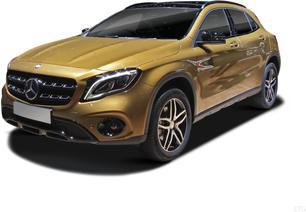
The GLA45 isn't a looker, but then, none of the GLAs are. There's a certain blobbiness to it. A bit of Teletubby mixed with...um, another Teletubby. It's not ugly, it's just not particularly attractive. The 20-inch wheels do much to lift the appearance and negate the effect of the raised ride height compared to the A45/CLA45.
The body kit stops just short of lairy, which is heartening. So if you want to stand out, venture out into the aftermarket world.
Inside was a mild surprise. The last time I drove a CLA 45 I used the word "gaudy". While the GLA isn't amazingly better, the texture of the Alcantara replacing the brushed metal-look plastic, or the carbon of the option pack, was much more pleasant. The brightwork in the cabin is still a bit odd looking, and it's still overcooked with its red detailing, but it is an otherwise beautifully built and well-detailed interior.
Sliding into the driver’s seat, the first thing I notice is how high the centre console sits. This is clearly a Polestar thing because it’s similar to the 2. This adds to the sporty feel of the cabin, but I don’t know if it needs to be that high.
It does however liberate a massive amount of storage space under the console. You could fit a handbag, shoes or other items there, and Polestar offers accessories like bicycle-esque bottle holders.
There’s more storage in the smallish central bin which also houses two USB-C ports, a half-hidden phone charging pad, and door bins that will fit a larger bottle, but only lying down.
The seats are comfortable and the cloth-like sustainable material in the Singe Motor grade looks great, but it can grip on to clothes a little. The perforated Zinc-coloured ‘animal welfare’ Nappa leather in the Dual Motor is stunning and probably what I would opt for. Which is rare given I am no leather fan. But whatever the material, there’s a decent amount of support on offer.
If you opt for the Nappa upgrade ($7000) you get Harman Kardon speakers embedded in the front headrests. It’s an interesting addition but it sounds quite cool when you realise where the sound is coming from.
Aside from the ‘play’ dial on the console, there are very few visible buttons. Meaning every function is housed in the central 15.4-inch landscape digital display.
I recently spent some time in another new Geely Group product - the Volvo EX30 - which has a similar set-up.
Thankfully, the menu is easy to navigate and the main screen is split between nav (running Google Maps of course) and up to four other functions, including apps like Spotify, a quick link to often-used controls and whatever else you want to customise.
Aside from the visually appealing graphics and colours, the display is crisp and easy to get your head around. The air con is easy to access and you use the screen to change the direction of the vents, which oscillate on the passenger side.
The ambient lighting which is solar system themed is pretty cool, too. You pick the colour by planet. And the ‘Hey Google’ command appears to work well.
However, functions like opening the glove box should still be a physical button. There is no reason it needs to be housed in the screen. Also, adjusting the exterior mirrors and steering wheel required a lesson from the Polestar team. You can do it via the screen, or by using the smart controls on the steering wheel that change depending on what function you need.
Again, this is very clever tech, but is it that necessary? Just because Tesla does something, doesn’t mean every other EV brand on the planet needs to follow suit.
Then we get to the digital interior rearview mirror. While the lack of a rear windscreen does not impact the look of the car negatively, it’s another element that feels like tech for tech’s sake. Is there really enough of a benefit to interior space to justify this radical change to the car?
The display is clear but when you look at it then the exterior mirrors, the object in the display seems closer than the mirrors. There’s also no washer for the camera, with Polestar suggesting the angle means it doesn’t need one. The question remains, what happens if it malfunctions?
I realise you can’t see out the back of plenty of vehicles, like trucks and, often, delivery vans. It’s also something you have to navigate when you pack your car full of gear for holiday and can’t see past all the luggage. And I appreciate many more people will be drawn in by the tech of it all. But for me it remains the answer to a question no one asked.
Moving to the rear, the slightly bucketed seats are plush and supportive and there is acres of legroom thanks to the Polestar 4’s 4.8-metre wheelbase. It is a spacious cabin no doubt, but the placement of the battery pack under the floor means your knees sit up higher than they would in an ICE car. It’s a similar phenomenon in Tesla models. There’s also no toe room under the front seats.
You can, however, recline the rear seats slightly, making for a more relaxed vibe back there. There are amenities like rear digital climate controls, more USB-C ports, chest and knee-level air vents, and a fold-down arm-rest with cupholders, but big bottles won’t fit in the doors.
The boot appears shallow but there is under-floor storage where you can house the charging cable as well as flatter items. All up you get up to 526 litres of cargo space (that includes 31L under-floor), increasing to 1536L with the 60/40 split rear seats folded, while a front cargo space swallows 15L.
Polestar only offers a tyre repair kit for the 4, so no temporary spare.
The front seats are utterly brilliant and feel as good as they look. On first acquaintance they may feel under-padded, but once you've adjusted them to your liking, you never want to leave. The AMG cars also feature one vast improvement over a normal GLA - the ergonomic disaster of a column-mounted shifter is removed, with a console-mounted shifter added where a small cubby once lived. It's so much better, although the Park button is oddly difficult to press.
When luxuriating in those snug front seats, you'll have access to two cupholders and door-mounted bottle holders, as well as a console bin (where the USB ports are) and a tray under the climate controls. Rear seat passengers will find legroom tight but headroom good, even with the huge sunroof.
The GLA's boot holds an entirely reasonable 421 litres, rising to 1235 when you drop both rear seats.
Polestar announced prices at the start of the year but the company lowered pricing by between $3000 and $4700 per grade ahead of the vehicle's arrival on Australian shores. That was enough of a drop to ensure it slides in under the Luxury Car Tax threshold.
Two grades are on offer initially, including the Long Range Single Motor real-wheel drive at $78,500, before on-road costs, and the Long Range Dual Motor all-wheel drive from $88,350.
Tesla’s Model Y starts at around $56,000 and tops out at about $83,000 for the Performance, so pricing for the Polestar 4 is aligned with something more premium.
Other similarly positioned EVs include the Hyundai Ioniq 5 ($69,800-$91,300), Kia EV6 ($72,590-$99,590), Skoda Enyaq ($69,990-$83,990) and the Subaru Solterra ($69,990-$76,990).
In a smart move, both grades come with an identical standard features list. The key difference is the powertrain.
The healthy standard equipment list includes the Android Automotive operating system, 'Google Built-in', wireless Apple CarPlay, eight-speaker audio, a 15.4-inch multimedia display, solar system-inspired ambient lighting, eight-way power driver’s seat and six-way powered passenger seat, 20-inch aero wheels and the camera-based interior mirror that replaces the rear windscreen - more on that later.
They also come with rain-sensing wipers, a digital key, keyless entry and drive, wireless device charging, heated front seats, digital radio and a panoramic glass roof.
There are a number of option packs available for both grades that bundle in features. The $8000 'Plus Pack' has the most features including increased AC charging from 11kW to 22kW, heated steering wheel and rear seats and a lot more.
There’s also a 'Pro Pack' ($2500), a Nappa leather upgrade ($7000) and the 'Performance Pack' ($7200) but that’s only available for the Dual Motor. There are also a number of individual options.
While the 4 comes with a decent level of kit, features like a head-up display are only available in the option packs. This and a few other items should be standard at this price.
The GLA 45 lightens your wallet by no less than $89,211 - more than double the GLA 180 front-wheel drive, and about $5000 more than the bonkers (and ancient) RS Q3.
Packed into the GLA's kit bag are 20-inch alloy wheels, a 12-speaker stereo, dual-zone climate control, comprehensive safety gear, reversing camera, keyless entry and start, front and rear parking sensors, electric and heated front seats, sat nav, auto LED headlights, auto wipers, leather trim (some real, some not), auto parking, powered and heated folding mirrors, a massive sunroof and dynamic dampers. There's no spare tyre, just a tyre-repair kit.
The multimedia system is Mercedes' COMAND unit and it is as user-unfriendly as ever. It does, however, power a very decent stereo, and also offers Apple CarPlay and Android Auto.
Thankfully our car was bereft of both the carbon-fibre package ($990) and the aerodynamics package ($1990).
The battery electric Polestar 4 comes with two powertrain options.
As its name suggests, the Long Range Single Motor has one motor driving the rear wheels only, and it pumps out 200kW of power and 343Nm of torque. That’s enough to help propel the SUV from zero to 100km/h in 7.1 seconds, on the way to a 200km/h top speed.
The Long Range Dual Motor has a second motor on the front axle for all-wheel-drive grip, and the power and torque is bumped to 400kW and 686Nm, respectively. You’ll get to 100km/h a lot quicker at 3.8 seconds, too.
AMG's fabled 2.0-litre turbo four lurks under that higher bonnet, still kicking out an improbable 280kW and 475Nm. Drive reaches the road via Merc's own seven-speed twin-clutch transmission and all four of its wheels.
All that power and grip translates to a 4.4-second dash to 100km/h for the slightly tubby (over 1600kg) GLA, but just between you and me, anything under five seconds feels scorchingly quick.
The Polestar 4 uses a 400-volt, 100kWh lithium-ion battery.
The Long Range Single Motor has a healthy EV driving range of up to 620km on the WLTP standard, and energy consumption ranges from 17.8 to 18.1 kilowatt hours per 100 kilometres.
Range in the Dual Motor drops to a still very useful 590km and efficiency sits between 18.7 and 21.7kWh/100km.
We were in and out of different grades at the launch so didn’t capture real-world efficiency but we will when we do a full review soon.
AC charging is at a rate of 11kW, but if you opt for the $8000 Plus Pack that increases to an impressive 22kW which ensures a zero to 100 per cent home charge (32-amp) in just five and a half hours.
DC charging capacity is up to 200kW and Polestar says you should be able to get from 10 to 80 per cent full in about 30 minutes.
These add up to solid figures for the price and segment.
It comes with a type 2 and CCS2 charge port and a home charging cable.
The official combined-cycle figure suggests the GLA45 will consume 7.5L/100km. Obviously that figure is largely irrelevant, and not just for the usual reasons, but because you don't buy a GLA45 to potter about in. I got, uh, 12.5L/100km, so you can imagine how much I was enjoying it.
As you might expect, you'll need to feed it 98RON.
Some EVs tend to blend into one another when it comes to the drive experience. Thankfully, that’s not the case with the Polestar 4, which is the fastest Polestar model to date.
I drove the Single Motor and Dual Motor with the Performance Pack back to back, and both hold appeal for different reasons.
The Single Motor is the everyday Polestar 4 and it is the one I would choose. There is ample power and torque on offer and that 7.1-second 0-100km/h sprint time is nothing to be sniffed at.
Riding on the standard 20-inch aero wheels with a high sidewall, the Single Motor is composed with a comfortable ride quality. The drive from Adelaide via various winding and pockmarked roads to the Barossa Valley highlighted how well the Single Motor can handle these sorts of surfaces. It’s not as comfy as a Camry, but Polestar has ironed out most of the firmness.
Steering feels light but super sharp in the Single Motor and while there is a hint of body roll, it is still exceptionally capable on the twisty stuff. It also doesn’t feel anywhere near its 2230kg kerb weight.
The Dual Motor is a different beast, especially when paired with the Performance Pack. That pack adds, among other items, Brembo brake callipers and a ‘Polestar Engineered’ chassis tune.
It is brutally quick from a standing start. Like ‘pull your face back’ quick. Zero to 100km/h in 3.8sec to be precise. It’s a hoot, but it is much more than just a straight-line speed machine.
The Dual Motor carves up corners, again with slight roll, but it has no business being this sharp given its dimensions and weight. We sprinted (safely) through bends better suited to a tiny performance hatch with ease.
You can adjust the chassis to your preference. Suspension runs from 'Standard' to 'Nimble' and 'Firm', and steering is either Standard or Firm, the latter adding quite a bit of weight to the steering. Power delivery is either 'Range' or 'Performance'. Obviously, the latter is the most fun.
Even in Standard suspension mode, the ride is much firmer than the Single Motor, which isn’t helped by the massive 22-inch wheels. It is, however, never unbearable. In fact, it’s more than fine on some of the average roads we encountered.
The Polestar 4 is well insulated, ensuring a hushed cabin.
When the 45-badged cars first launched, they were something of a revelation. BMW's turbo six-cylinder fans sniffed at the 2.0-litre's staggering outputs and all-wheel-drive chassis, but this car really captured the imagination. The GLA45 might be slightly unexpected, but it's better in almost every way as a daily driver than the A or CLA.
For a start, its higher ride height seems to translate to a much better ride quality. Anything on 20-inch wheels should have an appalling ride, but the GLA45 manages to be firm yet comfortable. Put the other two in Race mode and you'll need to up your private health insurance extras to include osteo, physio and whatever "o"-ending specialist fixes your back.
The improved ride quality meant I was far happier to chuck this car around. While it doesn't have the same ultimate overall performance of the lower cars, it's far more comfortable whether you're on it or just driving around. The front seats are supportive and comfortable, and the steering is excellent.
As for the engine...well, it still farts like toddler during a moment of silence at a funeral, but you can't deny its technical brilliance and huge power outputs. I remember the CLA45's engine as being a bit highly strung. Perhaps I couldn't separate the overall high-strung nature of the car from the engine, but I felt the same engine in this car wasn't as jumpy.
The way it propels this car into triple figures is tremendous fun. It's not as charismatic as the Audi five-cylinder, perhaps, but that doesn't matter in the end - it's properly fast, attached to a better chassis and offers a cabin with a driving position fit for humans.
The Polestar 4 is yet to be assessed by ANCAP or Euro NCAP so it’s unrated for now.
But it comes with an extensive list of standard safety gear, including the latest advanced driver assist systems. That’s one of the benefits of sitting under the Geely umbrella next to Volvo.
This includes adaptive cruise control, ‘Collision Avoidance and Mitigation’, ‘Run-off Road Mitigation’, forward collision warning, lane keeping aid, ‘Post Impact Braking’, road sign recognition and ‘Driver Alert Control’.
Other gear includes ‘Blind Spot Information System (BLIS) with steer assist’, a cross-traffic alert with brake support and a rear collision warning and mitigation.
The Polestar 4 is fitted with 11 exterior cameras, 12 ultrasonic sensors and one front radar to help keep you safe.
It also comes standard with the 'Pilot Pack' that includes lane change assist and pilot assist, which is semi autonomous driving.
The GLA comes with nine airbags (including driver's knee), blind-spot sensors, lane-departure warning, lane-keep assist, forward-collision warning and mitigation and driver-attention detection.
The GLA does not have its own ANCAP rating, but the A-Class on which it is so heavily-based scored five stars in 2013.
Covering the Polestar 4 is a five-year, unlimited kilometre new-vehicle warranty, and an eight year, or 160,000km battery warranty.
Complimentary roadside assist covers you for five years too.
The service schedule is every two years or 30,000km.
But the big news is that Polestar won’t charge you a cent for servicing for the first five years, or 100,000km of ownership, whichever comes first - it’s complementary.
This is an outstanding aftersales offer.
The Mercedes standard warranty is three years/unlimited kilometres with roadside assist to match. Service intervals are a very reasonable 12 months/20,000km.
The company also offers capped-price servicing - first service is $576 but the second and third are a whopping $1152 each. Three years will set you back $2880.