What's the difference?
Is there a class of vehicle more overlooked in Australia than the humble light van?
While the pragmatic and often hatchback-based small van is dwarfed in size and sales by the popular ute as the commercial vehicle of choice here, the case is completely reversed in Europe, where light commercial vans dominate city streets, favoured for their compact nature and relative fuel efficiency.
What is it about Australia which makes the ute more successful? Is it just our history of locally producing them? Do you really even need one, or are the Europeans on to something?
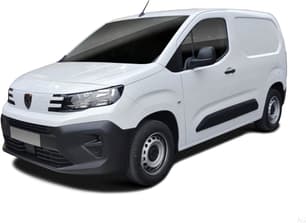
I spent a week reacquainting myself with the freshly facelifted 2025 Peugeot Partner to find out.
While the local motor industry is engaging in much hand wringing and brow furrowing over the rapid influx of new makes and models, experts are busy predicting what may happen in the longer term. What brands will still be here in 10 years? Or even ten months…
It’s a bit of a lottery, really, but in the short term, one thing is for absolute certain: Cars are getting cheaper to buy.
That’s despite a never-before-seen level of technology and sophistication, too, and we’re now seeing full electric vehicles hitting the market at $30,000 or so - a number unheard of just a year or two ago when front-loading an EV’s ownership costs was a given.
But it’s happening in the dual-cab ute world, too. Disruptors like the BYD Shark 6 and the GWM Cannon Alpha have taught us that a turbo-diesel driveline is not necessarily the way forward for all of us. And now there’s this vehicle, the JAC Hunter dual-cab which stretches the concept of fries-with-that across an even tighter budget.
The Hunter is not just an off-road capable dual-cab: It’s also a plug-in hybrid with a sophisticated driveline that offers a claimed 100km of EV-only running from a full battery. But the Hunter is not just a techno statement, it also hits the market at under $50,000.
Interested? So were we.
It might not be the most modern looking or feeling small van, but amongst its competitors, the Partner stands out for its relative value and load-lugging capabilities.
It’s somewhat fun to drive but now feels a bit plain on the inside, and could benefit from a few extra options and features to make it more comfortable and maybe even a little more customisable.
Still, I think the Peugeot Partner will fit the needs of many primarily city-based small businesses or tradies who want to work out of a compact and easy-to-drive van instead of an unwieldy and often overkill dual-cab ute.
The JAC Hunter is not yet perfected, but it’s a big step up from its diesel-powered sibling, the T9. The plug-in hybrid driveline not only has the potential to reduce running costs (provided its tech is used intelligently) but also provides an alternative to owners who are still gun-shy about the perceived problems of modern turbo-diesel engines.
The big improvements have been wrought in the chassis department, where thousands of kilometres of local testing and validation have achieved a much better car to drive than previously.
We still have our reservations about the calibration of some of the safety systems, and some of the ergonomics involved, however.
Of course, in the end, the success or otherwise of many brands like JAC and vehicles like the Hunter will come down to how the market reacts to the sudden influx of new names and badges. And in that context, purchase price will surely be a major factor. At which point the sub-$50,000 Hunter starts to shine a little brighter.