What's the difference?
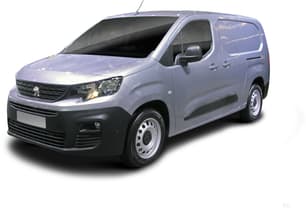
In 2023 Peugeot commands around 50 per cent of sales in Australia’s small (under 2.5-tonne GVM) commercial van segment with its Partner range, which offers a choice of wheelbase lengths and model grades.
The French marque has recently introduced its first fully electric variant to the Australian market called the e-Partner, even though this van has been on sale in Europe since 2021.
We recently put one to work for a week, which included loading it up to the max, to see how it compares to its petrol-powered sibling.
With its EV-led design, the updated flagship Hyundai Kona Electric model, the Premium Extended Range, is a small SUV that's big on space and luxury features.
Which feels increasingly necessary for EVs to compete in an ever-expanding market where change is celebrated and expectations remain high.
Competition includes the newcomer Renault Megane E-Tech, the Kia Niro EV and even the Volvo C40. I've been driving the top model for a week to see how Hyundai's cutest EV fared with my little family of three.
It’s a lot of money for a small commercial vehicle that’s well into its current model cycle in Europe, falls short on benchmark safety and requires convenient charging infrastructure to minimise inconvenience for owners. However, its emissions-free drivetrain is quiet and competent under load, with a range that should comfortably cater for the daily urban use small van operators typically require. Whether those positives outweigh the negatives, only a potential buyer can decide.
The Hyundai Kona Premium Extended Range offers a great amount of passenger comfort and space but its ongoing costs are a bit more expensive for the class and its low safety rating is surprising given its strength in that category in the past.
However, it drives well, looks good, and has great storage space so it's still in the race!
The single electric motor is positioned at the front where it drives the front wheels. The 50kWh lithium-ion battery that provides its energy is located beneath the cargo bay’s load floor to ensure that the total load volume, floor loading heights, etc, are identical to the petrol version.
The same applies to its compact 2975mm wheelbase, 4753mm length, 1921mm width and car park-friendly 1880mm height.
The e-Partner rides on MacPherson strut front suspension and coil-spring trailing-arm rear suspension, with electric power steering and four-wheel disc brakes. Its 11.4-metre turning circle is larger than we expected.
There are unpainted dark grey plastic finishes in all the places where bumps, scrapes and wear usually occur in working vans including hubcaps, bumpers, body side-mouldings, door mirrors and handles. The charging port is located above the left rear wheel.
A sealed metal bulkhead with central window separates the cabin and cargo bay, which minimises tyre noise emanating from the rear-wheel housings and doubles as a cargo barrier.
The cabin architecture, with two bucket seats and wipe-clean vinyl floor, is outwardly the same as the petrol version but the driver’s analogue instrument display has been reconfigured for the electric drivetrain.
This includes continual display of energy consumption levels, comprising 'Eco' (minimum consumption), 'Power' (maximum consumption) and 'Charge' (energy recovery from regenerative braking).
It also displays energy consumption by the cabin heating/air-conditioning and battery charge-level, while the dash’s central touchscreen includes an ‘electric menu’ that monitors live energy flows and consumption statistics plus allows scheduling of delayed charging if required.
The design for the Kona has always been a win in my books because it’s cute and functional.
Hyundai also designed the EV Kona first then based the fuel-powered versions on it. So, you get a flat floor in the back row, a cool-looking front with extended body panelling and some futuristic pleating across the panels.
The exterior LED lights are pretty cool as a lot of them resemble pixels and can be found in multiple spots at the front and rear. The long LED strip light across the front also sets it apart from it's fuel-based siblings.
The interior exudes a good sense of luxury with its light-coloured leather upholstery and trims. Coupled with the sunroof the cabin space is bright and cheery.
The 64-colour ambient lighting adds a touch of fun and the update sees some minor tweaks to accent panels where black plastic has been dropped in favour of a brushed metal look.
The dashboard has been redesigned with dual 12.3-inch technology screens (one for media, one for instruments), now standard across all variants instead of just the top model, which is great to see.
The e-Partner’s 1632kg tare weight is about a quarter of a tonne (247kg) heavier than its 1385kg petrol-engine equivalent, largely caused by the lithium-ion battery pack.
So, even though the electric model has more power (100kW vs 96kW) and torque (260Nm vs 230Nm), the battery ensures it has an inferior power-to-weight ratio, with the e-Partner carrying 16.3kg/kW compared to the petrol’s 14.4kg/kW.
The e-Partner’s 753kg payload rating is also 182kg less than its petrol sibling, so be mindful of these differences if payload is important.
The e-Partner is also rated to tow up to 750kg, but given Peugeot does not publish a GCM figure (how much it can legally carry and tow at the same time) we don’t know if it can haul its maximum payload while towing its maximum trailer weight.
The cargo bay, with 3.9 cubic metres of load volume, is a window-free zone accessed by a sliding door on each side and asymmetrical rear barn-doors that open to 180 degrees for optimum loading access.
With its 2167mm length, 1527mm width, 1243mm height and 1229mm between the rear-wheel housings, it can carry one standard Aussie pallet or two Euro pallets held in place by a choice of six load-anchorage points.
The cargo bay is lined to mid-height and there’s protective mesh over the bulkhead window. However, the bulkhead protrudes into the sliding door openings given the need to allow sufficient cabin space for the seat backrests.
There’s also no load-floor protection provided as standard, so to avoid scratches and dents we’d recommend fitting a floor-liner like the thick rubber one fitted to our test vehicle.
Cabin storage includes a full-width shelf above the windscreen and bins in the base of each door. The dash offers small bottle/cupholders on each side plus a lidded upper glove box and open storage on the passenger side.
The dash extension, where the gear-selector and electronic handbrake reside, offers more open storage as does the floor-mounted centre console.
Our criticisms include the lack of a dedicated storage place for the charging cable, which is supplied in a zip-up vinyl bag.
Although it was sitting on the passenger floor when we collected the vehicle, it was difficult to find a secure place to store it with a passenger aboard. It ended up unsecured in the cargo bay.
The rear barn-doors also do not have any stays to keep them open when positioned at 180 degrees.
As a result, the slightest breeze swings them shut.
And due to the lack of any dedicated bottle-holders in the front door bins, bottles tend to topple onto their sides and can be difficult to extract when driving.
The Kona's size has increased for its second generation, which means more occupant space and storage capacity. The front offers more space than you’d expect for a small SUV and I’d describe it as roomy, even for someone taller than my 168cm height.
The rear row also has fantastic head- and legroom for the class but it's the storage options which clinch the practicality for me.
Up front the centre console is still the hero for storage with multiple nooks and spaces for items like keys, phones and wallets. You get two retractable cupholders, a 1.5L drink bottle holder in each door and a good-sized middle console and glove box.
In the rear, you get map pockets, 0.7L drink bottle holders in each door and two cupholders in a fold-down centre armrest.
The boot sees an additional 33L, expanding the overall capacity to 407L with all seats in use. That jumps up to 1241L when the rear row is folded. Underneath the adjustable floor, you get a temporary spare wheel.
The electric front seats aren’t as comfortable as the previous generation. They’re narrower, firmer and sit a bit higher than I remember. Though I still love the added comfort functions they have, including a reclining relaxation mode.
The rear seats are better cushioned and offer longer under-thigh supports and middle seaters should be comfortable thanks to the flat floor.
The technology looks good and the 12.3-inch touchscreen multimedia system is easy to use once you spend some time with it. You get built-in satellite navigation, wireless Apple CarPlay and wired Android Auto.
The 12.3-inch digital instrument panel isn't customisable but all information is easily seen as is the colour head-up display.
Charging options are great throughout the car with each row getting two USB-C ports, the front also featuring a wireless charging pad and 12-volt outlet. The next-gen model sees the Kona get V2L (Vehicle To Load) capability, too, which is great.
Our test vehicle is available in only one specification, based on the ‘Pro Long Auto’ which means it’s the more work-focused ‘Pro’ model grade with long wheelbase and automatic, which in this application is a single-speed transmission.
With a 100kW/260Nm single electric motor and 50kWh lithium-ion battery, it has an eye-opening list price of $59,990, plus on-road costs.
That represents a substantial 56 per cent increase over its petrol-powered equivalent ($38,388) and optional metallic paint like ours adds $690.
However, the e-Partner has more power and torque with zero drivetrain emissions. It also comes standard with work-focused 16-inch steel wheels and 215/65R16 Michelin tyres with a full-size spare, a toggle-style gear selector, electric parking brake, reversing camera, two-way adjustable leather-rimmed steering wheel, 12-volt accessory socket and USB port plus a four-speaker multimedia system with 8.0-inch touchscreen, digital radio and multiple connectivity including Apple and Android devices.
There are a whopping eight variants for the Kona range and you have a choice of four powertrains – petrol, turbo-petrol, hybrid or fully electric like our flagship Premium Extended Range model.
The model on test is priced from $68,000, before on-road costs, and that positions it in the middle of its rivals.
Based on a NSW, 2000 postcode you can pick up the Kia Niro EV GT-Line for $66,590 MSRP and the Volvo C40 Plus variant for $78,990 MSRP.
The most affordable rival is the newcomer, Renault Megane E-Tech for $64,990 but it's important to note the E-Tech is only offered in a mid-spec variant for the Australian market at the moment.
Compared to it's rivals, the flagship electric Kona is well-priced but it’s a hefty $20K jump up from the equally equipped top petrol version.
Being top dog, you should expect a host of premium features like a sunroof, heated, ventilated and power-adjustable front seats, heated rear outboard seats, a heated steering wheel and eight-speaker premium Bose audio.
The front seats also feature a 'relaxation mode' where they act as a recliner, providing a comfortable option for charging sessions.
Practical features include a handsfree powered tailgate, 27L frunk storage, remote parking assist (from the key fob), over-the-air updates for the built-in satellite navigation and Hyundai connected services app.
Unusually for an EV, you also get a temporary spare wheel in this model instead of a repair kit.
Other features include some A-grade tech like dual 12.3-inch technology screens, fast USB-C ports, a wireless charging pad, and vehicle-to-load function in the form of a three-pin standard house socket so you charge larger appliances.
The single electric motor and 50kWh lithium-ion battery combination produces 100kW of power and 260Nm of instant torque.
It also offers three switchable drive modes including Eco (60kW, 190Nm) for minimal performance and energy use, Normal (80kW, 210Nm) which is a happy medium for everyday use and Power (100kW, 260Nm) for maximum performance when hauling heavy loads.
The gear-selector controls Park, Reverse, Neutral, Drive and Brake functions. There's also a button marked B which engages regenerative braking for optimum battery top-ups when driving.
The Mode 3 Type 2 wall-box/public station charging cable is supplied as standard, but buyers can also purchase a domestic wall socket cable for home-charging.
Quickest charge time from 0-80 per cent is 30 minutes using a 100kW DC charger while a 0-100 per cent charge using a single-phase wall-box (7.4kW) takes about 7.5 hours.
Home-charging from 0-100 per cent using a domestic wall socket (2.3kW) takes about 24 hours.
The Premium Extended Range model is front-wheel drive and has an electric motor with outputs of 150kW and 255Nm.
It’s not as spritely as some of its rivals but it’s able to hold its own on the open road. Just don't expect it to blow your hair back.
Peugeot claims an official WLTP driving range of 258km. The dash display was showing a projected driving range of 280km when we collected the vehicle.
A few days later when we stopped to top-up the battery at a public charging station, after 135km of unladen city and suburban driving, it was displaying average consumption of 20.4kWh/100km.
When charging was completed, the dash display was claiming 270km of driving range. This had dropped to 194km the following day when we stopped to load the vehicle for our GVM test. Average consumption had also dropped to 19.0kWh/100km.
We then drove 52km with a heavy payload in busy traffic, during which consumption dropped again to 18.8kWh/100km with regular switching between the drive modes.
After unloading and then returning the vehicle to Peugeot, there was still 96km of range remaining and energy consumption had dropped again to 18.4kWh/100km.
So, we covered a total of 271km during our test, of which about one quarter was with a heavy payload.
So, based on its lowest consumption figure, Peugeot’s claimed 258km range in real world driving conditions is pretty accurate by our measure.
The official energy consumption figure for the Premium Extended Range model is 16.7kWh/100km and a week of mostly urban road driving resulted in an average of 16.6kWh/100km.
That's very good consumption and the official driving range from the 64.8kWh lithium-ion battery is up to 444km but I’d have my eye on the range on a longer journey.
The top electric Kona has a Type 2 CCS charging port which means you can benefit from faster DC charging speeds.
But it can also accept a top speed of 10.4kW on AC power. On an 11kW AC charger, you can go from 0-100 per cent in a little over 6.5-hours.
The Premium Extended Range model can only accept up to 100kW on DC charging, which is lower than its rivals, and you can go from 10-80 per cent in just over an hour on a 50kW system and in as little as 45 minutes on an 100kW system.
Again, it's figures are a tad slower and lower than rivals but not inconvenient for everyday use.
It has a comfortable driving position thanks to a reasonably spacious cabin, two-way adjustable steering wheel, left footrest and fold-down inboard armrest.
However, the base cushion feels a tad short for proper upper-thigh support and does not have rake adjustment.
The flat top of the rectangular steering wheel provides a clear view of the instrument display while the flat bottom allows ample driver clearance.
The electric motor with its muted hum delivers a liquid-like flow of acceleration that’s different to a petrol engine.
The lack of engine noise also makes other sounds more prominent, including tyre roar on coarse bitumen surfaces and thumps from the rear suspension over larger bumps.
The extra battery weight is not a noticeable hindrance in stop-start traffic, given the instant torque of the electric motor.
Its location under the load floor also contributes to a low centre of gravity which makes the e-Partner feel well-planted on the road. Even so, it takes a leisurely 11.2 seconds to accelerate from 0-100km/h.
To test its payload rating we forklifted 650kg into the cargo bay which with driver was just under its 753kg limit. The rear suspension compressed 70mm, but there was no bottoming-out over bumps due to large rubber cones positioned inside the coil springs that assist in supporting heavy loads.
We covered more than 50km with this weight in city and suburban driving and its performance was good in all modes including the energy-saving Eco. Energy consumption did not spike as expected.
Our only gripes from a driver’s perspective are the absence of blind-spot monitoring and rear cross-traffic alert, which should be mandatory in all solid-walled vans given the huge blind-spot over the driver’s left shoulder. Relying only on the relatively small passenger door mirror is potentially hazardous.
The other is the cruise control stalk located on the steering column, which is hidden from view by the steering wheel arm. Therefore, it must be operated purely by feel, which can be fiddly and distracting when driving.
The top model's single motor delivers smooth power in most instances but you can lose traction if your accelerate too quickly from a standstill.
Mostly urban kilometres covered during this test and despite the Kona not having the punchiest motor, I’ve still had moments of it feeling zippy.
The steering feels like it’s in the middle of firm and makes for responsive manoeuvring. You get some roll when cornering and the car can feel a bit light-footed when you’re shooting across traffic but otherwise it's well-balanced.
The ride comfort is very good in terms of suspension, where it feels well-cushioned but not too floaty.
Road noise isn’t intrusive, either, but there's some wind noise, even at lower speeds.
It’s an old gripe but the speed-sign recognition tech in a lot of Hyundai and Kia models is intrusive and annoying with how often it chimes at you.
It's worth the effort to turn off the warning sounds every time you drive, particularly if you're in the city. Usually, this would be in the safety section but it affects the driving enjoyment.
When it comes to parking, the Kona's compact dimensions make it your best friend in a car park. A fabulously clear 360-degree camera system also helps.
Only four from a possible five ANCAP stars for the e-Partner (achieved 2018) and the lack of blind-spot monitoring, rear cross-traffic alert and adaptive cruise control, etc, highlight a safety menu in need of updating.
Even so, it does have front, side and curtain airbags for driver and passenger plus AEB, lane-keeping, audible low-speed pedestrian alert and tyre under-inflation warning.
The 2024 electric Kona has a long list of safety systems but surprisingly its previous-generation model’s five-star ANCAP safety score hasn’t been matched, with the new version getting four stars from testing in 2023.
Penalty points have been applied across a few items and its individual protection scores for vulnerable road users and safety assist systems are at 64 per cent and 62 per cent, respectively.
The Kona has seven airbags, including a front centre airbag and a highlight feature is the blind-spot view monitor which shows you a camera feed of your blind spot on the dashboard.
Other standard features include blind-spot monitoring, driver attention warning, safe exit warning, rear occupant alert, full LED lights, rear cross-traffic alert, lane departure alert, lane keeping aid, adaptive cruise control, a 360-degree view camera system, as well as front, rear and side parking sensors.
The Kona has AEB with forward collision warning which is operational from 5.0-85km/h for pedestrian and vulnerable road user detection and 10-180km/h for car detection.
For any families out there, the Kona has ISOFIX child seat mounts on the rear outboard seats and three top-tether anchor points but two seats will fit best.
Warranty is five years/200,000km plus eight years/160,000km for the battery. There are also three-year paintwork and 12-year corrosion warranties.
Scheduled servicing is every 12 months/25,000km, whichever occurs first.
The pre-paid service plan price of $1000 covers the first five scheduled services, or just $200 per service.
Servicing costs for the Hyundai Kona are quite expensive for the class and you can pre-purchase one, two or three services. Services cost $520 (one service), $1040 (two services), or $1560 (three services). It's typical to see EV servicing sit closer to the $250 mark.
Warranty terms are pretty typical, though, the Kona coming with a five-year/unlimited km warranty and the battery covered by an eight-year, or up to 160,000km warranty term.
Servicing intervals are every two years or 30,000km, whichever occurs first.