What's the difference?
The humble station wagon has fallen by the wayside in favour of the ever-popular SUV, however, it was once more common for a very good reason.
It offers the space many families crave without having to upsize into a vehicle that can feel big and bulky.
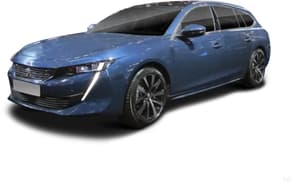
A lot of drivers enjoy the sportier on-road feel and the good-looking styling that often accompanies a wagon. Enter the Peugeot 508 Sportswagon. A model that proves wagons can be hot.
I’m family-testing the top GT plug-in hybrid model this week but there’s not a lot to compare it to because of the interesting engine specs.
So, we’re being a bit cheeky and doing an ‘apples with oranges’ comparo instead.
Being on the premium end, the 508 Sportswagon faces competition from the Audi A4 Allroad 45 TFSI, Genesis G70 Shooting Brake and Volvo V60 Cross Country Ultimate.
It certainly has the looks to turn heads but we’re sussing out whether it’s a practical alternative for families, too.
As a child, my parents - who aren't car people - would see a Jaguar and point. It didn't matter if it was an XJ, Daimler Double Six or a Mark II, there was a great deal of mystique around these bastions of Britishness. It also didn't matter that these weren't necessarily good cars. The Seventies and Eighties saw the brand slide into a funk while being passed between owners like hot potatoes.
Somehow, the brand survived its brush with Ford's useless Premier Automotive Group strategy which only came good towards the end as Jaguar's management woke up and put in place a change in direction that produced the Ian Callum-designed XF. Riding high on that design, Jaguar then promptly introduced the very pretty Jaguar XJ.
It has been on sale for ages, but with the addition of a few bits and bobs to stay competitive, it's as compelling as ever. Most importantly, the performance-focused R has kept its unique supercharged V8.
The Peugeot 508 Sportswagon GT PHEV proves wagons can be extremely stylish but looks aren’t everything and it is an expensive option compared to its luxury rivals. It earns its place with the premium interior but the safety could be improved on and the tech is more confusing than it needs to be. But this wagon offers an alternative for families who are sick of being in an SUV yet still need a little extra space.
My son didn’t go nuts over this and complained about his view.
It might be old and facing German competition bursting with advanced technology, but the XJR is still a car you can buy with heart and head. But mostly your heart. It goes like stink, has a much better interior than the Quattroporte and is more interesting than just about anything this big or this grand.
It's also a better car than the Maserati Quattroporte if you want to get on with the driving yourself and is far prettier than the Porsche Panamera. It's a wonderful thing and even more wonderful that Jaguar continues to build it. Long live that supercharged V8 and the XJ is a great home for it.
The design of this wagon is what wins it the most points. It is a damn fine specimen with the sleek lines in the body panelling and the sexy rear that looks well-proportioned for its 4790mm length.
Dark, narrow windows, 18-inch alloy wheels and a minimalist-looking nose, with fang-like daytime-running lights, all enhance its sporty look.
The rear lights have Peugeot’s signature ‘claw’ design and there’s something suggestively fun about seeing a twin-exhaust on a wagon!
On the interior, the multimedia system takes centre stage and the dashboard looks quite sleek, despite all of the deep cutaways.
The steering wheel is in the compact style that Peugeot is known for but it makes the cockpit feel driver orientated.
The quilted Nappa leather trims and shiny piano-black accents (with the piano-key controls) make for a refined cabin space.
The XJ has a marvellously exaggerated length, with a rear overhang redolent of Jag's sporting coupe and roadster pair of the time of its launch, the XK. There's nothing else in the segment like it, with the three Germans - Mercedes' S-Class, Audi's A8 and BMW's 7 Series - having gone all Hugo Boss and and in the latter two's case, almost shrinking violet. The only credible Japanese alternative, the Lexus LS, looks like a Lexused 7 Series. The XJR is a more emotional car, like Maserati's Quattroporte.
The R adds an aggro grille, 20-inch wheels with low-ish profile tyres, a bootlid spoiler, red brake calipers and vents in the bonnet. Bits and pieces get the black gloss treatment and there are V8 and R badges, as well as a rather large leaper on the bootlid. Capping it all off are four exhausts poking out from the bumper and distinctive vertical taillights.
Inside remains largely unchanged. The cabin is big and luxurious, leather-lined and very, very comfortable. The front air vents have to be modelled on the de Havilland Comet's integrated jet engine intakes and, again, the dash design stays away from the horizontal lines of its obvious competition.
There is probably a bit much chrome for my liking, particularly on the centre console and around the rotary dial shifter, which reflects sunlight into your face during the day.
The lovely 'Riva Hoop' - a band that sweeps from door to door across the top of the dash - is a great touch and remains a defining feature in the cabin. The last update brought an Audi-like digital dashboard, including maps, but it's not nearly as slick as the German. The graphics for the dials are good (and quick) but the maps are a bit so-so.
The front row gets the most space and you’ll be able to get into a comfortable position even if you’re tall.
However, it is a low car with its 142mm ground clearance and there may be a few grunts as you get in and out (or is it just me?).
My seven-year old loves how easy it is to climb in, though he didn’t have the best view out of the windows because the sills sit high.
The footwell lip also sits quite high, which isn’t an issue until you can’t open your door very wide and then it’s clumsy in a tight parking space.
The electric front seats are very comfortable and the extendable under-thigh support helps to minimise leg fatigue on a longer journey.
Surprisingly, for my 168cm (5'6") height, I have to sit much further back than I ordinarily would to get a comfy driving position.
In the back, you have plenty of headroom but behind my driving position, the legroom could be better.
An adult would still find it fairly comfortable on a longer journey so long as they aren’t behind someone tall. The seats themselves are well-cushioned and you sit in, rather than on top of them.
Individual storage options are good for this class with a dual-opening middle console, glove box and a great utility cubby next to the transmission shifter.
There is also a shelf underneath the centre console that houses the wireless charging pad and two USB-A ports but it’s a tad awkward to use and even see the ports when you're seated.
The amenities are good in the rear but for a top-spec model it’s lacking the luxury items you might expect, like heated seats and climate control but you’ll enjoy map pockets, reading lights, two USB-A ports and directional air vents.
It also has a fold-down armrest with two shallow cupholders, that in a quick turn, might spill their cups!
The boot is a great size at 530L with all seats in use and you can bump it to 1780L with the rear seats folded.
You get a level loading space and a 60/40 split with a ski-port in the back seat, which opens up your storage options.
There is a tyre repair kit rather than a physical spare but the tailgate is powered, which I always like.
The technology is a mixed bag. It looks sharp and the touchscreen multimedia system is responsive but isn’t as easy to use as others I’ve sampled.
It doesn’t have a lot of accessible information or customisations available but it is easy to connect to the wired Apple CarPlay. There is also wired Android Auto for those users and built-in satellite navigation.
The 12.3-inch digital instrument panel is the prettiest piece of tech in the car and there is more customisation available to make it feel yours.
Considering its price point and top-model status, it's more obvious that you miss out on premium items like three-zone climate control, faster USB-C connections and a head-up display.
It might be over five metres long, but the Jag's cabin isn't as gigantic as that might suggest - luckily, if you want space, the XJ L has it. The SWB version is roomy enough, though, just not palatial. You can fit five people, but the big transmission tunnel will limit the size of that fifth.
Front and rear passengers have a pair of cupholders each, with rubber bubbles to help hold smaller cups in tight. The front and rear doors have pockets but aren't really for bottles.
Boot space is a reasonable 520 litres, with a space saver spare under the floor.
Keeping things simple, there are only two variants for the 508 Sportswagon and our test vehicle is the top GT plug-in hybrid model that will cost $82,915 before on road costs.
That’s a $1000 price hike from last year and sets it well above its rivals with the Audi A4 coming closest at $78,169 (MSRP).
Given its rivals are well known for their luxury, the 508 has a fair bit to live up to but its styling and use of premium materials, like the quilted Nappa-leather trims, help it earn its position within the ranks.
The interior gets some other lovely big-ticket items with the eight-way electric front seats and a two-way memory position function on the driver’s seat.
Both front seats feature a heat function, adjustable lumbar support and a fabulous massage function. The ‘Cat Paw’ option is particularly nice!
However, the back seat misses out on these ‘top-end’ creature comforts.
There is a sunroof optioned on our test vehicle which adds $2500 to the price tag but creates an airy cabin in what would ordinarily be a bat-cave-esque space with that black headliner.
Only one colour is included in the price and our ‘Pearl White’ costs an extra $1050.
Technology has been revitalised with a new 10-inch touchscreen multimedia system and a 12.3-inch digital instrument cluster.
Dual-zone climate control, push-button start, keyless entry and a powered tailgate all add some practicality to every day life, too.
Phone mirroring tech like wired Apple CarPlay and Android Auto are easy to connect to and there are a bunch of charging options available throughout the car, including a wireless charging pad up front.
All-in-all, though, the features list isn’t as long as the price point might suggest.
As is expected at this level, Jaguar was not mucking about with price or specification - the XJR starts at a mildly terrifying $299,995, which is very close to the rather more tranquil Autobiography long-wheelbase relax-o-mobile.
Standard are 20-inch alloys, a 20-speaker stereo, power everything with three memory positions, four-zone climate control, keyless entry and start, front and rear parking sensors, heated and cooled front and rear seats, sat nav, LED headlights and DRLs, leather everywhere, auto wipers and (LED) headlights, electric boot lid, heated steering wheel and a space saver spare.
The Meridian-branded stereo is an absolute cracker, powered by the improved but still laggy 'InControl Pro' system. Oddly, it's all crammed into an 8.0-inch touchscreen when there is seemingly room for the larger (and better-performing) 10.0-inch screen. The software is far superior than the version that preceded the last update, but the screen is hard to use, as targets are placed right in the corners and are hard to hit.
Apple CarPlay and Android Auto are also absent, and the sat nav is still fairly dopey.
A long list of options are available, some of which should probably be included in the big sticker price - DAB+ ($620), premium paint is a splutter-worthy $2060 (although, to be fair, the vast majority of the 19 colours are free), adaptive cruise with queue assist ($2200), adaptive headlights a further $2620 and 'Parking Assist', which adds side sensors and a front camera, a further $2780. Reverse cross traffic alert, blind spot monitoring and forward collision warning cost yet another $1460. Ouch.
The GT plug-in hybrid model has a 1.6-litre, four-cylinder turbo-petrol engine, as well as an electric motor that sits on the front axle. It has an eight-speed automatic transmission that produces smooth gear changing driving the front wheels.
The combined outputs are 165kW and 360Nm which means you have a good amount of power for this sized car but it’s not a performance wagon as its 0-100km/h sprint time is 8.3 seconds.
The lithium-ion battery has a small 11.8kWh capacity and will get from 0-100 per cent in three and a half hours on an 11kW system. On my standard house plug, it took closer to six and a half hours.
Jaguar's lovely 5.0-litre V8 with supercharger continues under the XJ's long and shapely bonnet, delivering a walloping 404kW and a tyre-shredding 680Nm. The sprint to 100km/h for all 1875kg of XJR is completed in an impressive 4.6 seconds, which was very competitive at the car's launch in 2009.
Power reaches the rear wheels via ZF's eight-speed automatic and you can control it with the tacky plastic paddles on the steering wheel. Oh, and it has stop-start.
Peugeot says you can travel up to 55km on pure electric function, however my morning (return) school run is 38.4km and the electric range was spent by the time I parked in my garage after starting on a full charge.
Under optimal conditions, where you’re utilising both the engine and motor, the GT PHEV has an official fuel cycle consumption of 1.5L/100km.
After charging it three times, travelling 444km on a mix of open/urban roads and using 33 litres of fuel, my real-world usage came to 7.4L/100km.
You absolutely get the best economy when you regularly charge it but sometimes you just don’t get the time to!
You'll need 43 litres of premium 95 RON unleaded fuel to fill the tank which, using our real-world average consumption figure, translates to a driving range of around 580km.
The combined cycle figure for the V8 is listed at 11.1L/100km but fully expect to see the 16.1L/100km we got, especially as you try and fail to tyre of the monstrous power delivery and lovely (if muted) V8 roar.
Luckily, even if you're belting it, the 82 litre tank is a generous size and you'll cover a fair amount of ground.
The 508 Sportswagon is an odd car to drive. Around the city, the steering makes it feel like you’re in a go-kart and you may over-correct until you get used to it.
On the open-road, it feels like it gets into its groove but the power reserves feel a tad too shallow as the engine can complain with only a light load.
The suspension is well padded and you won’t notice too many bumps but you do get a fair bit of wind and road feedback at higher speeds.
Because of the narrow windows, I am surprised by how great the visibility is but you feel tiny when you sit next to a big SUV in traffic!
That said, it corners beautifully and taking this on a winding coastal road is super fun.
The brakes are very responsive, which is great in stop-start city traffic but can make it feel a little jerky while navigating a car park.
And on that note, because of the funky steering feel, it takes a moment to calibrate your senses with what the car is doing.
Once you get used to it, it’s simple to park but the quality of the 180-degree camera system is pretty rubbish for where this car sits in the market.
Indecently quick, surprisingly agile and heaps of fun. While the first descriptor applies purely because of its size, the next two shouldn't when you're in command of 5.13 metres of motor vehicle. As with the Audi and now the 7, the Jag has a lot of aluminium to help keep the kilos off and good gracious, it has worked.
The R is based around the short wheelbase version of the XJ for perhaps obvious reasons. Even so, it appears to be the shorter-again XF's because this thing turns in like a demon. No, it won't stay with the dearly-departed XF-R but it does a mighty fine impression of one, just with a better ride quality.
Rear seat passengers should be prepared to feel a lot of wheelslip, especially when in Dynamic mode, as even the fat Pirelli P-Zero's struggle for purchase when the right foot hits the carpet. The V8 rumbles rather than bellows, but the rears cheerfully spin up until the computers and active differential rein things in. Traction control off and you've got a proper tyre-smoker if you're not playing by the rules. Jag's engineers are clearly hooligans at heart.
As always, ZF's eight-speed transmission does an incredible job of marshalling the horses in a rearward direction and when you're not after a bit of sound and light, have achieved a tremendous amount with the damping. When in normal mode, the car glides along, so much so that the lady of the house wasn't so sure it was a sporting sedan.
Once she was apprised of dynamic mode (you have to cycle the button through winter mode first, for some reason), her only complaint was that it was too long and the steering wheel too big for this type of car. I was persuaded of the latter, especially after stepping out of an Audi S3 which has a tiny wheel. Long story short, the XJR is now 'her' car (to be more accurate, the XFR is, but that hasn't arrived yet, so...), as it felt smaller than it was when not parking and she's a sucker for a torquey V8.
The 508 has most but not all of the safety features you expect to see in a family car.
The active bonnet is a great feature as it lifts up in a collision to help minimise pedestrian injuries.
However, in the modern market and this being a top-spec model, I am surprised it's lacking a few safety features, namely rear cross-traffic alert.
Other standard safety equipment includes blind-spot monitoring, LED daytime running lights, forward collision warning, lane keeping aid, lane departure warning, intelligent seat belt reminders, front and rear parking sensors, a 180-degree view reversing camera, traffic sign recognition, a driver attention monitor, and adaptive cruise control with stop and go functionality.
The 508 has a maximum five-star ANCAP safety rating from testing done way back in 2018 and it only sports six airbags, which is low for a family vehicle.
The 508 has autonomous emergency braking with car, pedestrian and cyclist detection and is operational from 10.0– 80km/h (5.0 – 140km/h for car).
There are ISOFIX child seat mounts on the outboard rear seat positions and three top tethers in the second row but two child seats will fit best. Front passenger comfort may be compromised when a 0-4 rearward facing child seat is installed.
The whole XJ range has six airbags, ABS, stability and traction controls, emergency brake assist, reversing camera, three top tethers and two ISOFIX points. The XJ doesn't have an ANCAP safety rating.
On the 508 you’ll enjoy a five-year/unlimited km warranty and the battery is covered by an eight-year or up to 160,000km warranty, which is great.
You can pre-purchase either a three- or five-year servicing plan and the five-year plan costs a flat $2100 or an average of $420 per service which is very reasonable for this class.
Servicing intervals are at every 12months or 20,000km, whichever occurs first.
Jaguar offers a three year/unlimited kilometre warranty and roadside assist for the same period.
Like the F-Type, XJ owners benefit from three years/100,000km free servicing.