What's the difference?
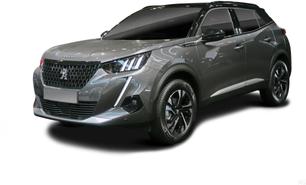
Looks are subjective but Peugeot’s updated 2008 small SUV is good looking from every angle.
The update brings a raft of design tweaks and some tech upgrades, but mechanically there isn’t anything new.
It’s not a cheap car and its diminutive size might scare off some buyers who can cross-shop cheaper and more value focused alternatives from mainstream Japanese and Korean brands.
We are driving the range-topping 2008 GT variant to find out if it’s more than just a pretty face.
The Leapmotor C10 mid-size SUV has been on sale in Australia for more than six months now, but a lot of people still give you a puzzled look when you mention the brand.
Initially offered in electric vehicle (EV) form only, the Chinese carmaker has now introduced a petrol-electric hybrid version to bring the fight to the BYD Sealion 6, Chery Tiggo 7 PHEV and Jaecoo J7 SHS, among others.
Dubbed the C10 REEV (Range Extender Electric Vehicle), it reintroduces a powertrain technology that has previously only been offered in two cars locally. These include the Holden Volt and BMW i3 REx.
With an electric motor providing all the driving power, there’s also a petrol engine that acts purely as a generator. This is claimed to allow the car to still feel like an EV, but also have the flexibility of being able to fuel up for longer distances.
Australian deliveries of the C10 REEV started a few months ago, but CarsGuide is now getting a first local drive of this car following a brief drive in Europe back in April.
How does it stack up? Read along to find out.
@carsguide.com.au Can you tell the difference between these two 2025 Leapmotor C10 models? ⚡ On the right is the new C10 REEV (Range-extender electric vehicle) which has only recently arrived in Australia. Here are some fast facts: ⏩ 158kW electric motor ⏩ 1.5L petrol engine generator ⏩ Up to 1150km total range ⏩ $43,888 before on-roads P.S. How good does Jade Green look? P.P.S. If you said the difference between the cars is also the interior colours, pat yourself on the back #leapmotor #c10 #leapmotorc10 #reev #rangeextender #EV #SUV #car #carsguide #fyp
♬ original sound - CarsGuide.com.au
The Peugeot 2008 is a handsome and accomplished little SUV that’s fun to drive and has a cabin that feels a little bit special.
In reality the 2008 is too expensive and isn’t as practical as most of the mainstream compact SUVs.
This is the car you buy with your heart, not with your head.
Plug-in hybrids are really gaining popularity in Australia and it’s great to see the reemergence of range-extender technology because it allows you to drive an EV, but not have the inherent range anxiety that comes with it.
The Leapmotor C10, as a base, is far from a perfect car, but its appealing price point and the amount of space it offers is commendable. It's not a driver's car, but rather just a means of transportation.
The C10 REEV's range-extender powertrain firms as the pick of the C10 line-up if you want the flexibility of being able to charge up the car, or just fuel it up with petrol for simplicity's sake. While it mightn’t be as efficient as rival PHEVs, it generally is quieter, safety system chimes aside.
I look forward to seeing whether Leapmotor can continue to improve the safety systems in the C10 because while the REEV on test here is better than the original EV I drove earlier this year, the way the systems operate still makes it hard to recommend.
The Peugeot 2008 is a smooth operator with head-turning French flair, but the devil is in the detail.
It’s not just the 2008’s well proportioned dimensions or the healthy dollop of exterior black highlights that catch your eye, but Peugeot has added a range of design cues to symbolise the Lion on its badge.
The tail-lights have a 3D effect that make them look like cat’s claws and the daytime running lights on the front resemble a scratch mark. These pair perfectly with the lion head crest on the grille.
Look deeper and you notice the attention to detail.
The 2008's redesigned front grille's slates are colour matched to the car's body colour.
Dual exhaust pipes are finished in chrome, giving the impression of performance even if the car doesn’t deliver on it.
The GT variant gets a two-tone paint job with a black roof contrasting with the body's colour.
Inside there are plenty of high quality finishes. The centre console is festooned in gloss black and there is a lovely carbon-effect textured insert on the dash and doors.
Some hard plastics below eye-level and on touch points such as where your knee might rub are less impressive. The rear seat loses some of the lustre of the front pew with tough plastics covering the back of the front seats and most of the doors.
If you haven’t already noticed, the Leapmotor C10’s technology seems heavily inspired by Tesla. The same can be said for its design, which is incredibly minimalist.
It’s hard to find any distinguishing features on the outside of the C10 that makes it uniquely a Leapmotor. Everything, even the car’s rounded, jelly bean-like silhouette, is generic and doesn’t stand out from the crowd.
In saying this however, the C10 REEV test car does turn heads and a few people asked what it was. This is likely because no one knows what a Leapmotor is.
It also helps the test car was finished in the delicious-looking Jade Green exterior paint. It’s definitely my pick of the available colour options.
There are the popular exterior design trends like animated lighting sequences, a rear LED light bar, connected front headlights, flush door handles, and Leapmotor script on the tailgate. Nothing revolutionary here in terms of design.
The only way to tell the C10 REEV apart from the C10 EV is its fuel filler flap on the right-hand side of the car. Everything else is identical.
Inside there are two colour choices – Black or Camel Brown. Our tester is fitted with the former, which is definitely the more conservative option.
Regardless of the colour option, the majority of the interior is finished in that colour. It’s more noticeable with the almost orange-looking brown colour option.
This makes the interior look a little bland as it lacks contrast and visual interest.
There’s no denying there are some high-end-feeling touches inside, especially for the price point. You really need to go searching for harder and scratchier plastics, but they are present lower down in the cabin.
Virtually every touch point is soft and spongey, with the entire dashboard being covered in a smooth synthetic leather. Pretty cool for $45k.
This is even before mentioning the seats. The top-spec C10 Design comes with silicone leather upholstery, which is by far one of the softest seats I’ve ever touched and sat in to date. It’ll be interesting how this finish holds up after years of use, however.
A lot of the interior design pivots around the large, 14.6-inch central touchscreen. Thankfully unlike Teslas, there’s also a 10.25-inch digital instrument cluster which also displays critical information, like your current speed.
Step inside and there is no hiding the 2008’s diminutive proportions.
It’s 4300mm long, 1815mm wide and 1550mm high, which puts it closer in size to the mini Mazda CX-3 than the larger CX-30 it is more aligned with price-wise.
This all adds up to a snug fit in whichever row you sit.
There are a couple of cupholders in the centre console - a smaller one for a standard takeaway coffee and a larger one for drink bottles.
Slight storage bins in the door can hold a regular drink bottle but there isn’t much room for much else.
The wireless device charger is hidden away behind a compartment below the central screen that opens with a push and there are two USB-C ports up front and the rear seats score a USB-C and A connection.
Rear seat passengers do without a dedicated aircon vent, unfortunately.
There is an issue with Peugeot’s i-Cockpit steering wheel and digital driver display, too.
If you like to sit low the chances are the steering wheel will cut off your view of the bottom part of the display. If you prefer to have the seat jacked up, you’ll have better vision of the readouts.
There are piano key-like physical controls for simple climate functions such as the de-mister and auto climate settings. More complex functions are done via the 10-inch central multimedia screen.
The boot is a decent size at 434L and can easily handle a weekly grocery shop or a few overnight bags.
There is only a space saver spare wheel, but this car is aimed at city driving where it is easier to source a replacement tyre.
Although the Leapmotor C10 REEV is a mid-size SUV, its interior space feels considerably larger and more spacious, especially in the second row. This is because the car is built on an EV architecture and has no driveline running down the middle, so interior space can be maximised.
Up front both seats are electrically adjustable, though neither of them offer adjustable thigh support which is a pain for people with longer legs, like myself, as it can sometimes feel like you’re slipping out of the seat. It doesn’t help that the seats are so soft and buttery.
I will say though, the heated front seats and steering wheel get warm almost instantly, which was great in the almost Arctic weather Melbourne has been experiencing recently.
While I can appreciate the minimalist design of the dashboard, from a practical standpoint it’s a huge pain. There’s virtually no physical switchgear beyond the indicator and gear selector stalks, with the majority of the controls built into the touchscreen multimedia system.
Want to adjust your side-mirror position, the air-vent direction, or drive mode? That all needs to be done via the touchscreen. Sure there are some buttons on the steering wheel which help with functions like adjusting the volume and cruise control, but it doesn’t do them all.
This is incredibly frustrating because when you do interact with the touchscreen on the move, the driver attention monitor chimes at you for not keeping your eyes on the road ahead.
Add to this, the touchscreen runs Leapmotor’s own operating system. Admittedly it does run really smoothly, but it doesn’t offer any smartphone mirroring functionality, which is a negative for some.
I imagine you would get used to using the selection of inbuilt third-party apps if you own this car, but I find the connected satellite navigation app particularly painful because it would send me on a slower route. Having Google Maps or Waze would be much more intuitive.
Up front there are two cupholders next to the wireless charging pad, a storage shelf under the centre console, a massive centre console box, a mediocre glovebox, a USB-A and USB-C port, and a 12V socket.
Moving to the second row, it’s arguably the best place to be in the C10 REEV. There’s oodles of space on offer and a completely flat floor.
At a leggy 182cm tall, I had plenty of legroom behind my driving position and also plenty to look at thanks to the huge fixed panoramic glass sunroof which, thankfully, has an electric block-out blind if the sun gets too bright.
The second-row bench feels like a big, soft couch in the best way. It’s leans backwards, allowing you to lay back and relax as a passenger.
One of the few things that detract from the space is high floor, due to the high-voltage battery pack placement. It makes you feel like your knees sit higher than normal.
Second-row amenities include centre console-mounted air vents, USB-A and USB-C ports, seat-back map pockets, door pockets, and a fold-down armrest. If you’re looking for cupholders, they’re right next to the air vents on the centre console.
Like the C10 EV, you can fold the front seats backwards to create an almost-flat space for lounging. You need to remove the front seat headrests to do this, but once you do it’s a cool novelty to show to your friends, or use while charging.
Around the back the tailgate opens quickly and quietly. Once it’s open the space on offer is decent, but not class-leading.
Leapmotor claims there’s 546 litres of boot space on offer with the rear seats upright, which is 35 litres less than the C10 EV. Folding the rear seats expands this space to 1375 litres.
Boot-related amenities include a retractable cargo cover, a light, some bag hooks, as well as two boot floor storage compartments for things like the charging cable.
Unsurprisingly, there’s no spare wheel of any kind in the C10 REEV. Instead you get a tyre repair kit under the boot floor, which is handy if you have a slow leak but not if you have a complete tyre blowout.
The 2008 range kicks off at $39,990, before on-road costs, for the base Allure grade and rises to $44,490 for the fully loaded GT variant.
That’s a lot of money for a small SUV, especially considering the Skoda Kamiq range starts at $32,990, you can get Nissan’s Qashqai from $33,890 and a Mazda CX-30 for $33,140.
There is a lot to like about the 2008’s standard equipment list, though.
Flash looking 17-inch alloy wheels are complemented by adaptive LED headlights that control individual LEDs to brighten the road without dazzling oncoming vehicles. The headlights will automatically switch on in low light situations and stay on for a short period of time after you exit the vehicle to make it easier to find your way to the door at night.
A 10-inch multimedia screen is compatible with wireless Apple CarPlay and Android Auto, and a wireless device charger completes the cord-free ecosystem.
Peugeot’s 'i-Cockpit' brings a 10-inch driver display with 3D readouts paired with a small steering wheel.
GT buyers can expect eight colour ambient lighting, a six-speaker stereo, four USB charging ports, in-built sat nav and brushed aluminium foot pedals.
Well bolstered seats are heated up front and wrapped in synthetic suede and leather upholstery with contrast green stitching. The driver’s seat is power adjustable and has a massage function but the front seat passenger will need to move the seat themselves.
There are rain-sensing wipers, roof rails, power folding and heated side mirrors and a space saver spare wheel.
It’s a solid list of equipment but is missing some features you’ll find on similarly priced rivals such as a head-up display.
Just like the EV, the Leapmotor C10 REEV is offered in two spec grades – Style and Design. Our test vehicle is the latter, which is top-spec.
Pricing for the C10 REEV starts at $43,888 before on-road costs, and extends to $47,888 before on-road costs. This is $2000 cheaper than the C10 EV.
It’s also firmly in the price bracket of plug-in hybrid rivals like the BYD Sealion 6, Chery Tiggo 7 PHEV and Jaecoo J7 SHS.
Standard equipment across the C10 REEV line-up mirrors the EV equivalents. On the base Style you get 18-inch alloy wheels, a fixed panoramic glass sunroof, automatic LED headlights, a 10.25-inch digital instrument cluster, a 14.6-inch touchscreen multimedia system, a 12-speaker sound system, synthetic leather upholstery and powered front seats.
It’s a pretty high level of equipment for a base-model vehicle, especially for the price point.
Moving up to the C10 REEV Design adds 20-inch alloy wheels, rear privacy glass, an LED rear light bar, a power tailgate, multi-colour interior ambient lighting, a heated steering wheel, silicone leather upholstery, and heated and ventilated seats.
While this does sound like a lot of standard equipment, there are some notable omissions. One of the most obvious is the lack of Apple CarPlay and Android Auto across the entire range.
Leapmotor does however include apps like Spotify, Tidal, Amazon Music, TuneIn, Deezer, Zoom, connected satellite navigation, and a browser app built into the touchscreen multimedia system as standard. TikTok was even added with a recent over-the-air software update.
Another feature omission is a regular key with buttons to unlock and lock the car. Instead you get a key card you need to tap on the driver’s side mirror to unlock and lock the vehicle, then tap on the wireless charger pad to start up the car.
You can also use your smartphone as a key, but it’s worth noting that you can only connect one smartphone key to the car at a time. This might be a pain if you share the car because one of you will need to use the key card instead of their phone.
It’s worth noting the Leapmotor smartphone app also gives you access to a range of remote functions, like battery charging, climate control, locking and unlocking, among others.
Lurking beneath the bonnet is a little three-cylinder 1.2-litre turbo-petrol engine that makes 96kW and 230Nm. That’s a decent amount of grunt from the little unit, but again you can get more oomph for less from mainstream rivals.
It is paired to an eight-speed automatic transmission that drives the front wheels.
There is no hybrid help, either.
The key difference with the Leapmotor C10 REEV compared to the C10 EV is what’s under the bonnet.
Both feature an electric motor that drives the rear wheels, however the C10 REEV’s is slightly detuned to produce 158kW, compared to 160kW in the C10 EV. Torque for both is 320Nm.
Both also have a high-voltage lithium iron phosphate (LFP) battery pack, but the C10 REEV's is smaller at 28.4kWh, compared to 69.9kWh in the C10 EV.
However, under the bonnet of the C10 REEV is a 1.5-litre four-cylinder petrol engine that acts as a generator to charge up the battery pack.
Unlike typical plug-in hybrids, the engine cannot directly power the wheels at all. It’s a similar concept to Nissan’s e-Power hybrid system, but with a considerably larger battery pack.
In addition to three driving modes, there are four ‘energy drive’ modes. EV+ doesn’t kick in the petrol engine generator until the battery charge drops below nine per cent; EV doesn’t start the battery until the battery charge drops below 25 per cent; Fuel, which can hold the battery charge or use the engine to generate charge up to 80 per cent; and Power+ which constantly has the engine charging the battery.
Leapmotor claims the C10 REEV can do the 0-100km/h sprint in 8.5 seconds, which is one second slower than the C10 EV.
It’s worth calling out the C10 REEV is around 30kg lighter than the C10 EV, but with a tare mass of almost 2000kg, it’s far from lightweight.
Stiff emissions regulations in Europe mean these little turbocharged petrol engines have a fair bit of self control on the drink.
Peugeot claims the 2008 uses 5.4L/100km on the combined cycle. We used slightly more than this but spent most of the time in the cut and thrust of city traffic where cars use more fuel.
You’ll need to budget for pricier premium unleaded petrol, too.
Leapmotor claims the C10 REEV has an electric range of up to 170km, according to NEDC testing.
All up with a single battery charge and full 50-litre fuel tank, the company claims you can travel a total of up to 1150km, also according to NEDC testing.
In EV mode, Leapmotor claims the C10 REEV has an energy consumption of 15.2kWh/100km. In practice during my testing I saw an average of around 13kWh/100km, which is fantastic and almost Tesla-like in terms of efficiency.
This theoretically means you can travel 218km on a full battery, but it's worth noting the battery pack will never fully deplete its charge.
Combined fuel consumption is claimed to be 0.9L/100km, though your fuel consumption will depend heavily on how much and how often you charge the car.
During my testing I tried out multiple different drive modes, including one section where I kept the car in a battery charge hold mode called ‘Fuel’. During this I saw an average of 6.7L/100km, which isn’t fantastic for a hybrid.
With this as-tested fuel consumption figure you can theoretically travel 820km on petrol power alone. Adding the theoretical EV range, you get a theoretical total range of 1013km.
You’re able to AC charge the C10 REEV at rates up to 6.6kW, which is notably slower than the C10 EV (11kW). The DC fast-charging rate is also notably slower at 65kW, compared to 84kW in the C10 EV.
It’s worth noting, however, Leapmotor claims you can DC charge the battery from 30 to 80 per cent in the C10 REEV in 18 minutes, whereas it takes 30 minutes in the C10 EV.
On the road the 2008 is a bit temperamental.
Most European cars are fitted with stiffer suspension than the cosseting springs found in Japanese machines.
This means you’ll feel bumps and road imperfections through your seat more than other SUVs. It has particular problems ironing out consistent smaller bumps, which can unsettle it and lead the 2008 to skip across them.
The counterbalance to that is a more dynamic drive experience, with the 2008 exerting excellent body control through the bends as it is held in line by the stiffer set-up.
Pair this with sharp, direct and well-weighted steering and it's a fun little SUV to take on a twisting country back road.
Three cylinders might not sound like a lot, but in the real world this is all the 2008 needs.
Its 96kW and 230Nm won’t set the world on fire but the torque is accessed from just 1750rpm, which endows the 2008 with some punch off the mark and it feels zippy when navigating the daily commute.
Don’t confuse that for outright speed, though, the 2008 completes the benchmark 0-100km/h dash in 9.3 seconds.
The transmission is fine when you are accelerating or cruising at motorway speeds, where it uses its many ratios to keep the engine humming along in its sweet spot. There are paddle shifters if you want more control.
In stop-start traffic it isn’t as an accomplished performer. It can struggle to find the right ratio and this leads to a jerky movement reminiscent of dual-clutch autos.
The cabin is well insulated with the outside world kept mostly at bay, but you’ll hear the three cylinder’s charming little rumble when you put your foot down.
Parking is a cinch thanks to its petite proportions and the 2008 has no issues navigating tight city streets or underground car parks.
Setting off in the Leapmotor C10 REEV, it’s surprising just how much it’s like the EV version.
The rear-mounted electric motor provides all the power, so you get a zippy feel from a standstill and at lower speeds. The acceleration is gradual and won’t snap your neck like some EVs.
This car is beautifully quiet and serene in pure EV mode. The light steering and tight turning circle also makes this an easy car to drive and park in the city.
However, the pedals feel like they’re mounted too high, which makes you awkwardly bend your ankles back to press the pedals comfortably. This can be tedious in stop-start traffic.
Add to this the disjointed interaction between the regenerative braking system and traditional friction brakes. There were many times where I’d be pressing the brake pedal and as soon as the car got below 5km/h it would stop dead. It’s not the most pleasant feeling and something I never mastered during my three-day loan.
Depending on how often you charge up the car’s battery pack, it’s possible that you might never have the 1.5-litre petrol engine kick in during your daily commute. Even if it does when the battery charge gets down low enough, you likely would not be able to tell.
The first few times it happened I genuinely had no clue the engine had started. There’s no jolt through the accelerator or dip in acceleration. The only way I found out was by going into the vehicle status menu on the touchscreen and seeing the engine temperature and revs in the top left-hand corner. It really is that quiet.
When the engine is charging up the battery at city speeds, it’ll rarely rev above 1800rpm, which at that point it’s imperceptible in the cabin. Out on the open road however it can creep up to 2500rpm, which then makes its presence known a little more. It's still nowhere as buzzy as a Mitsubishi Outlander PHEV, however.
For a brief period I tried out the Power+ mode on some country roads and I found the engine really did come alive at this point, and not in a good way. It would frequently rev above 3000rpm, and the droning engine sound would enter the cabin.
The Leapmotor C10 REEV is generally a nippy car, but when the battery charge does get down it can limit the amount of power the electric motor sends out.
Below 25 per cent a charge warning light comes up on the digital instrument cluster, and unless you’re in Power+ mode, it limits the power output to around 100kW. It’s not terribly slow, but if you’re needing to overtake, it can notably slow the process down.
In terms of dynamics, Leapmotor claims the C10’s suspension was tuned by Maserati engineers. Like the C10 EV I drove previously, however, the ride errs on the comfort side and big bumps can unsettle the car.
In the twisties the car is also far from a dynamic weapon. It tends to get the leans in the bends and can wallow around when changing directions rapidly. The steering also has no feel whatsoever, making it feel like you’re piloting a car in a video game.
For context though, none of its direct rivals are fantastic from a high-speed dynamics standpoint, so it’s almost par for the course.
The 2008 has a maximum five-star ANCAP safety rating, but that mark was given in 2020 and it might not get the same score if it was retested today.
It has six airbags, but misses out on a centre airbag that protects against head clashes in a side on collision.
It has a decent amount of safety equipment with auto emergency braking, lane keep assist, blind spot monitoring and adaptive cruise control.
Rear cross-traffic alert, which sounds an alarm if a car is approaching from the side as you reverse, is a notable absence.
Unlike the Leapmotor C10 EV, the C10 REEV hasn’t been awarded an ANCAP safety rating just yet. It also hasn’t been crash tested by Euro NCAP.
Standard safety equipment includes seven airbags, autonomous emergency braking (AEB), blind-spot monitoring, rear cross-traffic alert, driver attention monitoring, lane-keep assist, lane centring, adaptive cruise control, a surround-view camera, and rear parking sensors.
A notable absence on the safety equipment list is front parking sensors. This isn’t offered on any Leapmotor C10.
As noted above, the C10 REEV offers a range of connected services. Owners get three years of complimentary access to a range of remote functions through the Leapmotor smartphone app.
In terms of the safety system’s functionality, this C10 REEV's does feel less intrusive than the C10 EV I drove back at the vehicle’s launch in February 2025, however that was a very low bar as they were horrific.
It’s worth noting Leapmotor has made some tweaks to the safety systems with over-the-air software updates, and more are likely on the way.
There are still plenty of chimes that come from the driver attention monitor, though the intensity seems to have been dialled down. It still struggles to see my eyes, though, when I’m wearing sunglasses.
The intelligent speed limit assist chimes incessantly the moment you start travelling over what the car thinks is the sign-posted speed limit. It frequently picks up the wrong speed limit as it only uses the cameras and not sat-nav data.
Thankfully, both of these safety systems can be quickly turned off with a swipe-down control centre-style menu on the touchscreen. Annoyingly, however, they default back on every time you drive the car.
The adaptive cruise control system activates in the same way a Tesla does (with two downward pulls of the column-mounted gear selector). When active the acceleration efforts can feel jerky, and it’ll brake heavily even if a car is way off in the distance. I much prefer driving myself.
Lastly, the lane-keep assist and emergency lane-keep assist systems continue to act poorly, especially on tighter roads with poor lane markings. The moment you drift off the centre of the lane the system vibrates and kicks at the steering wheel, almost making you fight against the resistance to regain steering control.
It’s not a pleasant feeling, and the system cannot be completely turned off on the move. You need to be stopped and in park.
The AEB system engages from 5km/h, while the lane-keep system kicks in from 60km/h.
ISOFIX child-seat anchorage points are fitted to the outboard rear seats, along with three top-tether points.
Peugeot covers the 2008 with a five year/unlimited km warranty, which is the standard coverage today.
The French brand offers a range of prepaid servicing packs that’ll save you a handy amount compared to pay-as-you-go maintenance.
A five-year plan is the best value, costing $1700 for five scheduled visits every 12 months or 15,000km. That’s $638 cheaper than the pay-as-you-go servicing.
Leapmotor quietly made some changes to its ownership structure for model year 2025 (MY25) cars.
All 2025 Leapmotor C10s, including the REEV, are covered by a six-year, 150,000km warranty. It was previously seven years, 160,000km for MY24 cars.
The high-voltage battery warranty remains unchanged at eight years, 160,000km.
Some key differences, however, are eight years of roadside assistance (previously five years), as well as eight years of capped-price servicing (previously five years).
The Leapmotor C10 REEV requires logbook servicing every 12 months or 10,000km, whichever comes first, which is notably shorter than the C10 EV’s 12 month/20,000km intervals. This will likely add up if you travel long distances.
Capped-price servicing for the C10 REEV totals $4000 after eight years or 80,000km, whichever comes first. That averages out to $500 per service. Ouch…
For context, servicing the C10 EV for eight years or 160,000km, whichever comes first, costs a total of $3000. That’s $375 per service, which is still a little on the high side for an EV.