What's the difference?
Does Australia need yet another new car brand?
It’s the question I keep asking myself seemingly every other week as a new brand announces its intention to join the other 70 odd marques already competing for a slice of the Australia new-car market.
Chery made a successful re-entry into the Australian market in 2023, quickly establishing itself as a value-led brand. Earlier this year it launched Jaecoo, its more premium, adventure-focused offering and announced it would be spun-off into separate showrooms alongside the new Omoda brand.
The first Omoda-badged vehicle has now arrived, the Omoda 9 Virtue SHS (Super Hybrid System), which will join the almost-as-new Jaecoo J7 and J8 in the growing number of dealers around Australia.
So, does Australia need Omoda? Does the Omoda 9 Virtue SHS make a compelling case, in the same way the sharply-priced Chery models have?
Read on for our verdict.
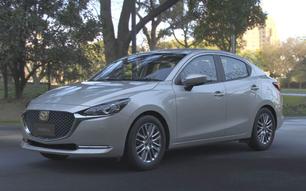
The entry-point into one of Australia's most popular brands has been around for almost 10 years in its current generation, but the Mazda2 has had a refresh.
Possibly for the last time in its current lifespan, the small hatchback gets a facelift to remain appealing, Mazda hopes, to first-car-buyers.
Mazda's up against not only direct rivals, like the Suzuki Swift and Toyota Yaris, but also the shifting market.
Mazda has sold just over 3500 Mazda2s so far this year, but almost 11,000 CX-3 small SUVs, the latter based on our friend here's platform.
It's a name with a little over two decades behind it, but can it be a first-car-favourite in an increasingly difficult small car market?
The arrival of Omoda and Jaecoo so soon after Chery’s Australian return just feels like a huge task to take on for the company. And given the amount of other new brands hitting local roads there is a real danger that customers will either feel overwhelmed or simply ignore many of these new models.
Trying to position Omoda as a genuine alternative to luxury brands, and even the likes of Mazda and Volkswagen, is a tough ask for the brand and its dealers. Certainly the price and styling will help attract potential buyers but to cement itself in the local market it will need to make sure it makes an impact early.
Judging the Omoda 9 on its merits, it’s a nice enough SUV and does many things well but doesn’t have any elements that really ensure it stands out from the numerous competitors it faces.
While Mazda's insistence that the Mazda2 is a 'first-car' could be very limited by the incomes of most teenagers or early-20s city-dwellers, the starting price being close enough to $20,000 for a dynamically enjoyable and convenient small car isn't to be scoffed at.
The new styling of the Mazda2 is well executed, and as an alternative to small SUVs (which continue to become more popular) it's a sensible option, especially considering its efficiency and ease of use.
The lower specifications in the range are probably the best in terms of value, as even the features on the higher grades aren't groundbreaking, and the Pure SP definitely exudes the most style cred.
From a design perspective, the Omoda 9 certainly stands out as different from the Chery and Jaecoo range. It has a distinctive look that speaks to its ‘premium’ and ‘technology’ aspirations, both on the exterior and interior.
However, to this reviewer’s eyes, there are also quite clearly some visual similarities to the Cadillac Lyriq, both in the overall silhouette but also the details and cabin design. This isn’t unusual in the car industry, especially from Chinese brands. Jaecoo’s designers clearly took inspiration from Range Rover, so it makes sense that the Omoda would find an equivalent luxury brand to be inspired by. Or perhaps it’s just a coincidence…
The important thing is that it’s notably different to what Chery is offering with its Tiggo models, which form the core of its Australian line-up. Omoda needs to be distinct and more upmarket if it is to justify its price premium. On that front, the wider group has done a nice job of making each brand stand out visually.
Judging the interior of the Omoda 9 on its own, it's actually a very pleasant place to be. The level of design, fit and finish also feels like a big step up on what Chery offers, even if it does feel familiar. The materials don't feel truly premium, but given the price that's understandable and acceptable.
Aside from the Pure SP, the Mazda2's styling changes are subtle. Mazda's design team aimed to move the model's looks slightly away from the previous ‘premium' chrome-adorned look to a sportier and more ‘aggressive' style.
A redesigned front bumper and mesh grille, with the rear's nip and tuck being more subtle, don't need to do much to keep the hatchback looking fresh. Despite being almost a decade old, the Mazda2 looks, to some extent, like it could be a new generation.
The Pure SP in particular is a highlight, with the blocked grille evoking some ‘electrification' vibes, while the coloured-accent treatment at the front and rear of most variants is a welcome addition for something different.
The range of differing wheels is also a plus point for the Mazda2 range, with each model having its own distinct characteristics.
Inside, the Pure SP also gets a stand-out panel across the dash in a lighter colour like mint, while others get different seat trims and colour accents in places like the vent surrounds.
New colours for the range are 'Aero Grey Metallic' and 'Air Stream Blue Metallic'.
One of the standout features of the Omoda 9 is its size, measuring 4775mm long with a 2800mm wheelbase. That makes it longer in both measures than the likes of the Toyota RAV4 and Mazda CX-5, pushing it to the upper end of the ‘medium-sized’ SUV segment.
That liberates more space inside, with good room up front and a generous back seat, at least in terms of knee and foot room. The rear seats are compromised slightly by the large sunroof and sloping roofline, with headroom tight for anyone over 180cm.
Unfortunately, the space isn’t utilised as best as it can be, thanks to the lack of seat height adjustment for the driver. It’s not unique to Omoda and is becoming a common issue among Chinese-built cars for reasons I can’t explain. What it means is I couldn’t get the seat to a point I was 100 per cent happy with, which is a problem for what should be a very comfortable vehicle.
Omoda compensates for this with some clever technology, beyond just the pair of 12.3-inch screens (housed in a single setting, which again looks very similar to the Cadillac Lyriq), and the option of wired or wireless Apple CarPlay and Android Auto.
The 14-speaker Sony sound system includes two speakers inside the driver’s headrest. This is a clever addition that allows you to take phone calls via these speakers only, so you don’t annoy the rest of the occupants in the car.
The other notable luxury element is the fragrance system, which can diffuse three different scents into the car. While the names are a bit hard to interpret (Natural, Cure and Sport), the fact you can choose from three different scents and have them gently fill the cabin is a nice luxury touch.
In terms of storage, there's plenty of small item spaces around the cabin and the boot measures a roomy 660 litres and offers a nice flat floor with a square load area. However, that comes at the expense of any sort of spare tyre, with a tyre repair kit located under the floor.
The Mazda2's interior is mostly unchanged through the facelift, with the car's overall dimensions unchanged and not affecting space for its occupants.
Up front, the two seats are comfortable for adults and arm, shoulder, and head room is ample.
Storage space for drinks, phones, or small bags and wallets is sufficient, though not quite road-trip-worthy.
In the rear seats, adults will find enough space to be comfortable for short trips but might get a little restless after a while.
Headroom when sitting upright is tight for anyone around 182cm (six-feet) tall, and a lack of armrest and little storage save for the doors means loose items will be joining occupants on the seat or sitting on the floor.
The Mazda2 has a claimed 250 litres of luggage space in the boot, which is fine for a small hatchback, but short of rivals like the Toyota Yaris' 270L.
For those who have been paying close attention the Omoda name will be familiar, as the Chery Omoda 5 was the first model the Chinese brand launched on its return to Australia. That has now evolved into the Chery C5, so the Omoda 9 becomes the first standalone model for the brand as it tries to position itself as a more premium, luxury and lifestyle brand separate from Chery.
While there are no confirmed plans for further Omoda models yet, the Omoda 9 is being positioned as the flagship of the range. It’s a medium-sized SUV but at the larger end of the segment so it will compete against the likes of the Mazda CX-60, BYD Sealion 6 and even the Mitsubishi Outlander PHEV.
In keeping with the more premium image the brand is trying to create, there will be a single, high-specification model offered, the Virtue SHS, which will be priced from $61,990 plus on-road costs.
For this price you get 20-inch alloy wheels, LED headlights and tail-lights, dual-zone climate control, a 14-speaker Sony-branded sound system, inbuilt navigation, surround view camera, automatic parking function, head-up display, wireless smartphone charger, leather seats with memory function, heated seats and steering wheel and even an in-built fragrance system.
Mazda has managed to keep pricing for its entry model relatively low for the segment. In fact, the base Pure in manual form starts from $22,410, before on-roads, and the auto is only $2000 more.
That means at a time when the Toyota Yaris is starting to look more expensive than its historic ‘cheap and cheerful' image allows, Mazda is pushing the Mazda2 to be slightly more premium while keeping its price competitive.
Standard features for the range, which start in the Pure variant, include a 7.0-inch touchscreen with Apple CarPlay and Android Auto capability, plus auto headlights and windscreen wipers.
The Pure SP, which starts at $25,210, gains a different styling kit that adds a body-coloured front panel to the grille, plus a carbon-look roof in vinyl. It also gains the ‘shark-fin' roof aerial.
The Evolve, which starts from $25,910, gains LED DRLs, with the mesh grille replacing the SP's block colour panel.
Its upholstery gets red stitching, plus it's also got a couple more tech additions with Mazda's active head-up driver display, traffic sign recognition and satellite navigation.
Finally, there's the top-spec GT, from $27,610, which gains unique aero-inspired 16-inch alloy wheels, and a set of black leather-upholstered seats with synthetic suede and red trim.
A sedan is available in Pure or GT specification at the same prices and with the same features as the hatch, though you can't get a Pure sedan in manual - that's available in the hatch only.
The Super Hybrid System may sound fancy, but it’s effectively a plug-in hybrid powertrain, which is a technology that is becoming increasingly familiar to Australian drivers as it fills the gap between internal combustion and electric vehicles.
Omoda’s SHS system combines a 1.5-litre turbocharged petrol engine with three electric motors - two at the front, integrated into the transmission package and one at the rear - to create a potent SUV. This complex system can send power to either the front wheels or all four wheels via a three-speed ‘Dedicated Hybrid Transmission’.
Omoda claims the combined output of the Super Hybrid System is 395kW, allowing this family friendly SUV to sprint from 0-100km/h in just 4.9 seconds.
It’s backed up by a 34kWh battery, which allows for meaningful electric only range too.
Mazda's ‘SkyActiv-G' 1.5 litre four-cylinder petrol engine is the unit used for six-speed manual and automatic models, but outputs vary slightly.
Manual cars produce 82kW and 144Nm, while autos deliver a slightly lower 81kW and 142Nm, both driving the front wheels only.
It's pretty much the same engine you used to find in an entry-grade MX-5, just with less power.
What gives Omoda some confidence to use the Super Hybrid System name is its claim that the battery allows the 9 to drive up to 145km (WLTP) on electric power alone, which is more than both a conventional hybrid and many existing PHEV models. For example, the Mitsubishi Outlander PHEV has an EV range of 84km and the Mazda CX-60 can make 76km.
Fuel economy is officially rated at 1.4L/100km, although that relies on using the battery to its maximum and once that is depleted, you can expect to see a much higher figure. Realistically somewhere around 5.0L/100km is what you should expect if you do mostly urban driving and anything below that is a good result.
Omoda claims that the Virtue SHS can drive up to 1100km, but that is theoretical and based on achieving both the full EV-only range and then the 1.4L/100km figure, which isn’t actually achievable in the real world.
Improved fuel efficiency and lower CO2 emissions come thanks to the automatic's slight drop in power and torque.
Mazda claims a 5.0L/100 km rating for the automatic Mazda2, which is down by 0.3L/100km over the previous version, but the manual's unchanged engine tune burns through the petrol at 5.4L/100km.
Filling the 44-litre tank with at least 91RON or even E10 is fine, and with its auto variant's efficiency rating means the Mazda2 technically has a theoretical range of 880km.
Comparatively the Mazda2 scores well here, the more expensive Toyota Yaris comes with a 4.8L/100km consumption claim with its CVT auto. A Suzuki Swift, with a smaller 1.2-litre engine, also has a 4.8L/100km rating.
While a generous level of standard equipment is one key measure of a luxury/premium vehicle, driving is another. For a vehicle to be truly premium it must have effortless performance, a comfortable yet controlled ride and confidence-inspiring handling.
This sets the bar quite high for the Omoda 9 and that makes it hard to really live up to the brand’s aspirations.
From a performance perspective the SHS powertrain does a great job. Certainly 395kW means the SUV feels quick and easy to punch into gaps or call for a burst of acceleration. But the rest of the driving experience doesn’t really live up to the premium standard buyers might expect.
The ride is too busy most of the time, never feeling settled and often fussing over the bumps in the road. It lacks the smooth, relaxed ride that premium buyers are looking for.
The same is true for the handling, with the steering too light and vague off-centre and lacking feeling when you find yourself on the open road.
The Omoda 9 is by no means a bad car to drive, but it does lack the precision and elevated comfort that genuine premium cars need to have. Perhaps with some local ride and handling optimisation it could get closer to what buyers in this part of the market expect.
Our drive loop for the Mazda2's launch included a mix of urban, highway, and rural driving, with varying road quality and conditions.
Fortunately for the little hatchback, it handled everything well or at least at a passing mark, with only a couple of small shortcomings that are common in the segment.
The Mazda2 is a joy to drive in most circumstances, with a lively but confidence-inspiring chassis and controls that give a connected feel to the road.
At low speeds, the Mazda2's relatively low power isn't noticeable, with the gearbox getting things moving at a reasonable pace and the engine is responsive enough with the traditional gearbox helping it along.
It's worth noting that for ultimate control over the drivetrain, Mazda still offers a six-speed manual transmission in the entry-grade Pure, and it's a gem.
Smooth, sporty shifts and well thought out gear ratios mean the manual is easy to handle even in traffic, and the clutch has a forgiving bite point. The 'i-Stop' stop/start system works with the three-pedal car, too, as does cruise control.
In terms of handling and comfort, the Mazda2 is a little shaken by large bumps, though some of the rough surfaces on our test loop were particularly brutal.
Similarly, when pushed hard to conquer steep hills the 1.5-litre engine becomes a little harsh.
On twisty sections the Mazda2 (especially in manual form) provides ample fun while remaining predictable in its steering and chassis feedback, rather than feeling loose.
The Omoda 9 ticks all the boxes that customers and, just-as-importantly, the safety authorities expect, like autonomous emergency braking (AEB), forward collision warning, emergency lane keeping, driver monitoring system and adaptive cruise control.
Omoda even goes a step further and offers 'Traffic Jam Assist' and 'Integrated Cruise Assist', which can centre you in the lane when cruise control is active to create a low level of autonomous functionality.
However, like so many modern cars these safety systems are not integrated smoothly into the driving experience. Instead, the Omoda likes to distract you with graphics and warnings on the dashboard and then warn you that you’re distracted. To be blunt, it’s both annoying and - ironically - very distracting.
To the credit of Omoda, as well as Chery and Jaecoo, the company has invested in a local tuning program for the active safety features and there has clearly been a dramatic improvement since the first Chery model I experienced less than 12 months ago. Hopefully with a bit more time and tuning the systems will become better integrated and the car won’t tell you you’re distracted looking at warnings.
In terms of a crash test safety rating the Omoda 9 hasn’t been tested by ANCAP yet but has five-stars from Euro NCAP so there’s little reason why it would be dramatically different if crashed locally.
The updated Mazda2 is equipped with the brand's suite of 'i-Activsense' safety tech, which includes 'Smart City Brake Support' for operating forward and reverse, blind-spot monitoring and rear cross-traffic alert.
The Evolve and GT model grades are fitted with traffic sign recognition.
The GT model grade comes fitted with front parking sensors and a set of surround-view parking cameras.
The Mazda2 also features six SRS airbags to cover the driver and front passenger, side airbags, and curtain airbags front and rear. It also has ISOFIX anchor points and top tethers for child seats in the rear.
Mazda isn't going to put the Mazda2 up for a new crash test rating by ANCAP, with the brand telling us the new safety additions bring the car's safety up to date, though its original rating from 2015 was a maximum five stars.
In a bid to give customers confidence to try a new brand Omoda is applying the Jaecoo ownership model, which means an eight-year warranty as well as eight years of capped-price servicing and roadside assistance.
Service intervals are every 15,000km or 12 months, whichever comes first and across the eight years you’ll be spending a total of $3343, which averages out to just over $418 per year.
The decision to offer such extended coverage is a commendable move from Omoda and will no doubt help its bid to convince customers to give it a chance.
Mazda offers a five-year/unlimited-kilometre warranty across the range, under which the Mazda2 will be covered. That's on par for the market, although some rivals, like the MG3, come with a seven-year term.
Scheduled servicing costs for the first seven workshop visits range from $334 to $587, and are undertaken every 12 months or 15,000km (whichever comes first).