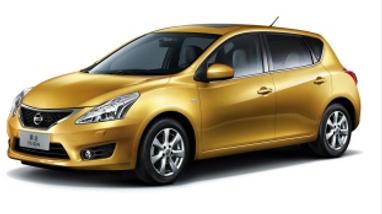
Are you having problems with your 2016 Nissan Pulsar? Let our team of motoring experts keep you up to date with all of the latest 2016 Nissan Pulsar issues & faults. We have gathered all of the most frequently asked questions and problems relating to the 2016 Nissan Pulsar in one spot to help you decide if it's a smart buy.
Show all
Unless your B17 Pulsar has the optional manual transmission fitted, then it definitely has a CVT. The reason Nissan (and many other carmakers) still use the old PRND symbols for the gearshift are because that’s what people understand, so there’s no confusion.
In any case, even though it’s a CVT and not a conventional automatic, the CVT still has a Park position, a Neutral and both a Drive and Reverse position, so the symbols are entirely consistent with that anyway.
A modern engine like the one in your Nissan uses electronics to control the ratio of fuel and air, rather than a physical choke like older engines use. However, in order to control this ratio, the modern engine relies on a range of sensors dotted around the car to tell it what’s going on. Examples include a throttle-position sensor, ambient temperature sensor, coolant temperature sensor and many more. If just one of these sensors fails or starts relaying false information, all aspects of the car’s running (including its throttle action) can be compromised.
But before you start scanning the car and spending money to fix the engine flaring during gear changes, take a hard, critical look at what you’re doing with the pedals when shifting gears. If you don’t completely release the accelerator pedal during a gear change, or get your hand-foot co-ordination wrong, the engine will naturally flare during the shift. And because modern cars have a throttle-by-wire system, there’s not the same degree of feel and feedback through the accelerator pedal as some of us are used to. It sounds a bit obvious, but checking your driving style is the first step.
We test all cars in the real world, on the toughest corners and worst surfaces we can find, and I've been doing the job for nearly 40 years. Hyundai has focussed its suspension work on European-style handling, not a cushy American-style ride, but that's no different from many other brands. For your needs I would probably have steered you to a Nissan Pulsar, but also advised not to buy anything without a proper test drive on road you know.
We haven’t had any reports of problems like you describe. If you’d care to send us more information on the problem we could perhaps find out more.
We aren't getting reports of problems with the latest model, the reports we have had relate to 2010 models or so. That said, I would be wary of buying the Cruze, the best thing about them is the cabin size. I would go for the Lancer first and Pulsar second, the Cruze a long last.
I’ll assume you’re talking about what Nissan calls the Pulsar’s `Accent Lights’ which are fundamentally LED daylight running lamps. I have heard of these failing, and the cause was a poorly soldered connection which should be pretty easy for an auto electrician to put right.
Finding the fault will involve checking for power at the lights and then working backwards to the switch to see which component is not playing. Even though they’re LEDs, trouble-shotting is no different to any other electrical component that appears to have lost power. Again, a good auto sparkie should be able to figure it out.