What's the difference?
Developing a new motor vehicle from scratch costs billions which is why manufacturers are increasingly sharing vehicle platforms and technology to spread these ever-increasing costs across two (or more) strategically aligned automotive brands.
This ‘badge engineering’ strategy is becoming popular in the light-commercial vehicle (LCV) segment as evidenced by partnerships between Ford and Volkswagen with their Ranger/Amarok and Transit Custom/Transporter pairings, Isuzu and Mazda with their D-Max/BT-50 duo and Chinese contenders MG and LDV with their U9/Terron 9 tie-up.
Mitsubishi and Nissan have recently established a similar relationship, with Mitsubishi’s Triton donating its underpinnings for the latest Nissan Navara. We recently spent a week with Nissan’s new entry-level model grade to assess its credentials from a tradie’s perspective.
Lotus - it’s one of the most iconic names in the history of automobiles and was once Great Britain’s answer to Ferrari - on the road and the Formula One circuit.
But that was a long time ago, in the 1960s and ‘70s. Since then Lotus has been on a rollercoaster ride through various owners who put in various levels of investment, resulting in various degrees of success.
But through it all, Lotus has stayed true to the ethos of company founder, Colin Chapman - ‘simplify, then add lightness.’ It’s obviously a playful saying, but it spoke to the core elements of Lotus cars, agility and driving purity.
Lotus rarely worried about big, powerful engines and instead focused on creating the best-handling cars.
That was the past, though, because Lotus Cars is now owned by Geely, the Chinese automotive giant that also counts Volvo, Polestar, Zeekr and more under its control.
Geely’s vision for Lotus is very different to what has come before, with a future focused on building electric SUVs and sedans; such as the already released Eletre and Emeya.
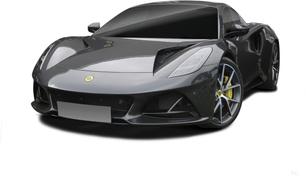
All of which is a very long way to get us to the car we’re actually testing - the MY24 Lotus Emira.
This is the last petrol-powered sports car from Lotus, and while it has been available already with a V6 engine, it has recently arrived with a Mercedes-AMG four-cylinder turbo.
Given its place in the grand scheme of things, the Emira not only needs to live up to the legacy of the iconic models that came before it, but also needs to lay the foundations for the brand’s electric future. Which is a lot of pressure for one car to carry…
The D27 Nissan Navara represents badge engineering at its best or worst, depending on your point of view regarding platform sharing. However, when assessed purely on its merits as a standalone tool of trade, the entry-level SL is a competent and economical workhorse that’s worthy of at least cross-shopping with the major players.
If this really is the final petrol-powered Lotus sports car then it’s a sad day for fans of the brand and its history. But it’s also worthy of celebration because they have made a car that is genuinely impressive.
It may not be perfect, and it will have to fight hard to lure buyers away from Porsche, BMW and co. but for anyone who enjoys a dynamic, engaging and incredibly fun sports car the Emira should be on your short-list.
Alternatively, if you’ve always dreamed of buying a traditional Lotus sports car and haven’t got around to it until now, this is your last chance so don’t wait too long.