What's the difference?
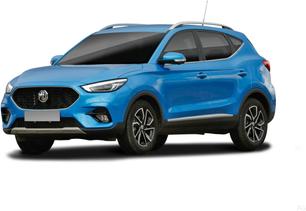
The ZST is essentially an upgraded version of MG's popular small SUV, the ZS.
The ZST sees some tweaks to the overall design and some added standard safety features. So, if you like the original, there's a good chance you'll like the ZST and I've been driving the top-grade Essence variant with my family of three.
The ZST Essence has some stiff competition from similarly specified rivals like the GWM Haval Jolion Lux and Chery Omoda 5 EX offering affordable packages and similar driving experiences. So, what makes the ZST stand out?
Deepal is a recent arrival in Australia but its parent company Changan Automotive is one of China’s largest state-owned automotive manufacturers which was established in the 1950s.
Deepal Automobile Technology (to use its full name) is one of several brands under the Changan corporate umbrella targeting different market segments across passenger and commercial vehicle lines.
Deepal’s focus is on full-electric vehicles with an expanding Australian line-up comprising a compact SUV (S05), mid-sized SUV (S07) and a groundbreaking large SUV (E07) it calls the Multitruck.
We recently spent a week in the E07 to find out if it’s not only practical for family duties but also if its unique design offers genuine workhorse ability to validate its ‘truck’ credentials.
Will the MG ZST Essence fit a small family? Absolutely, and all but the middle seat passenger will be comfortable but there are areas open for improvement. Like it's safety, laggy tech and adding a few extra items in the back seat.
Yet, it still offers a good host of features and an attractive package for a reasonable price tag. Unfortunately, my son missed having the basic amenities but did like the sun roof.
The Deepal E07 is not a truck, so tradies need not apply. However, for couples and families it's a generously equipped and luxurious EV with a unique electronic approach to a reconfigurable interior, albeit with practicality partly compromised by its fastback styling. So, only car buyers will determine if this is a short-lived automotive curiosity, or a bold new direction for SUV design.
Being the newer and shinier version of the ZS, the ZST presents as a nice little package with its full suite of LED exterior lights, shiny chrome accents and its well-shaped body.
The front is distinctively different from its design muse with a darkened grille, and redesigned fog lights that feature new air intake vents. Other highlights include the 17-inch two-tone alloy wheels with sporty red brake calipers lurking behind them.
The interior is pleasant with a massive sunroof creating a light-filled space and giving the illusion that the cabin is larger than it is.
The synthetic leather upholstery and trims seem robust and perfect for families, but also feel quite plasticky under hand. The red badge embossing on the headrests is lovely, though.
The dashboard is well-proportioned and headlined by an upgraded 10.1-inch touchscreen multimedia system and fully digital instrument cluster.
The gearshift feels a tad too skinny and tall for the general aesthetic but the circular air-vents add some cute personality.
The E07 rides on a 3120mm wheelbase with 5045mm overall length, 1996mm width and 1680mm height, so compared to the segment-leading Ford Everest it’s larger in wheelbase, length and width but not as tall. It also has active air suspension with adjustable ground clearance and ride firmness.
The exterior styling, which can best be described as a fastback SUV, disguises the electronic interior transformations that largely occur behind its privacy glass. Our example’s black paint ensures it looks smaller and less conspicuous than its generous dimensions would suggest.
Its spacious and airy interior is enhanced by the panoramic sunroof. It has a futuristic look and feel, although the optional bright orange nappa leather trim may be too garish for some. It was also showing light staining and scuffmarks, so perhaps not a practical choice for families with young kids.
Practicality is hurt by a lack of individual storage options and a back seat that has only two USB-A ports for its amenities.
The cabin space is spacious, though, and both rows have a decent amount of leg- and headroom despite the massive sunroof.
The steering wheel features height but not reach adjustment and to accommodate I have to sit much closer to the wheel than normal thanks to my poor little T-Rex arms.
Individual storage is the best up front with a small middle console and glove box, two cupholders and two drink bottle holders. The doors also feature large storage bins, which is great to keep the cockpit feeling neat.
The rear row gets two map pockets and a small storage bin in each door. There is also a (very) shallow storage nook at the back of the middle console… think a packet of gum or small wallet size.
My seven-year old isn't as comfortable in the rear because it lacks directional air vents, reading lights and a fold-down armrest. All items which will hinder an adult's comfort, too.
The boot space is a good size at 359L but you can bump it to 1187L with the rear seats folded, the backrest featuring a 60/40 split.
The height of the floor is adjustable and when set in the lowest position creates a deep well to tuck larger items, like luggage, into.
The hard cargo cover can be awkward to shift around or store but is otherwise out of the way when it counts.
Other amenities accentuate the premium-feeling the Essence is going for with the heated front seats and electric drivers seat offering well-padded comfort but on longer journeys, I miss having adjustable lumbar support.
The rear seats aren't as comfortable as the front only because the synthetic leather feels slippery, which is accentuated when you hit corners!
In terms of technology, you get two USB-A ports in each row but the front also gets a 12-volt port. You miss out on fast and wireless charging options.
The multimedia system looks great but can be sluggish to respond and the apps can be slow to load but I like the built-in satellite navigation.
The upgraded sound system has six speakers instead of four but the sound quality is a bit tinny with music and calls.
It was simple to connect to the wired Apple CarPlay. It also has Android Auto, Bluetooth connectivity and AM/FM radio.
Its 2320kg tare weight and 2930kg GVM provides 610kg of internal load capacity. That should comfortably cater for the weight of five large adults, with their belongings shared between the 131-litre front boot (aka frunk) and the rear luggage area which offers 524 litres or just over half a cubic metre of load volume with the glass dome closed and rear bulkhead upright.
This is a modest load volume compared to conventional seven-seat large SUV rivals (with their third rows folded) like the Isuzu MU-X (1119L) or Ford Everest (898L), which is largely due to the E07’s fastback design.
It’s also rated to tow up to 1500kg of braked trailer but Deepal doesn't quote a GCM rating so we don’t know how much weight it can legally carry and tow at the same time, which is a surprising omission for a vehicle claiming to be a truck.
Push a button and the rear glass dome retracts forward into the roof to expose the rear luggage area to the great outdoors (a nice space for tethered dogs to ride in). Push more buttons and the tailgate opens, the rear bulkhead window slides down and both the bulkhead and rear seat fold forward and flat to create more than 1.6 cubic metres of internal load volume, which again is modest compared to conventional large SUV rivals.
And if you’re a tradie or other service provider needing to carry bulky tools and equipment, the E07 lacks the basic requirements of a truck when the interior is in this flat-floor configuration.
For example, it can theoretically carry up to 500kg or half a tonne of cargo plus driver without exceeding its GVM limit. However, there are no load anchorage points provided on the B pillars and the strongest anchorages in the rear luggage area are only rated at 50kg each. And there’s no cargo barrier provided (or available as an accessory) behind the front seats to protect the driver and front passenger.
We also noted when using the E07 to haul gardening tools and equipment that the trailing edge of the metal roof was low enough to require deflating the tyre on our wheelbarrow to just squeeze under it (see image), so tall loads would be an issue.
And although the E07 can be driven in this fully open configuration, if the cargo is large enough to stop closure of the glass dome and you get caught in the rain, the luxurious nappa leather trim could get wet. So, we don’t expect to see one of these ‘trucks’ replacing a Ranger or HiLux for tradie duties any time soon.
Front of cabin storage includes big bins in each front door but there’s no glove box or overhead glasses holder. The two-tiered or ‘floating’ style of centre console has a large storage tray at floor height while the upper level provides two USB-C ports, wireless phone charging, a pair of cupholders and a large box with padded lids that provide comfy elbow rests.
The large rear doors open wide to access a bench seat which for a fastback body style is surprisingly accommodating, even for tall people. I’m 186cm and when seated behind the driver’s seat set in my position I have ample foot, knee and headroom.
Even those in the middle seat can ride in comfort, enhanced by a spacious flat floor with no transmission tunnel to straddle. The 60/40-split backrests can also recline but with the trade-off being less legroom given the base cushions must slide forward to achieve this.
Rear seat storage includes bins in each door, pockets on both front seat backrests and two cupholders which appear when the centre seat backrest is folded forward to serve as an armrest.
The rear of the centre console also has a USB-C port and small touchscreen that allows rear passengers to adjust various comfort settings.
The rear luggage area has numerous hooks for securing light duty straps or load nets plus a 12V accessory socket and a domestic three-pin plug outlet for the 6.6kW V2L (vehicle to load) inverter to power a variety of devices and appliances.
There are four variants for the ZST and our test vehicle is the top-spec Essence model, priced at $33,990 drive-away.
Our example's 'Pebble Black' finish is an included colour but other paintwork options can cost an extra $700.
The price point positions it right in the middle of its rivals with the Omoda 5 costing $35,990 drive-away and the Jolion sliding into the most affordable spot at $30,990 drive-away.
To highlight the value-for-money comparison, the Kia Seltos Sport+ FWD model costs $38,790 drive-away and then you start creeping up into the $40K bracket for similarly specified small SUVs.
The ZST Essence is the top-grade and it has a decent number of premium features for its price tag, like a panoramic sunroof, synthetic leather upholstery, heated front seats and an electric driver's seat, keyless entry, keyless start and a full suite of exterior LED lights.
Other standard features include wired Apple CarPlay and Android Auto, 10.1-inch touchscreen multimedia system, digital instrument cluster, one-zone air-conditioning, built-in satellite navigation, 360-degree camera system and an upgraded sound system with six speakers.
The Deepal E07 is available in a choice of drivetrain specifications comprising a single-motor RWD entry-level model with 252kW/365Nm for a list price of $64,900, plus on-road costs, or premium dual-motor AWD ‘Performance’ variant with 440kW/645Nm for $73,900.
Our test vehicle is the single-motor RWD, finished in 'Obsidian Black' which is one of three colours available including 'Hematite Grey' and 'Quartz White'. Its eye-catching orange nappa leather-appointed seat trim is an extra cost option in preference to the standard black nappa trim.
There’s currently no competitor in the ‘Large SUV Under $80K’ segment in which the E07 competes that can match its electronically reconfigurable interior, which appears to draw inspiration from the futuristic ‘Transformers’ movie franchise (see Practicality).
Our example comes standard with numerous luxury appointments including 21-inch alloy wheels with 265/45R21 tyres but no spare (repair kit only), heated door mirrors with auto-dipping and memory settings, panoramic sunroof with electronic sunshade, roof rails, rear privacy glass, active grille, LED headlights/DRLs/tail-lights and lots more.
The sumptuous interior, with smart key access and start, offers a head-up display, heated steering wheel with power adjustment/position memory, eight-way power adjustable driver and front passenger ‘zero gravity’ seats with heating/ventilation/massage/position memory/courtesy functions, power tailgate, dual-zone climate, rear seat recline/heating/ventilation/massage, wireless phone charging, integrated dashcam and a handy 6.6kW V2L (Vehicle to Load) inverter to power numerous devices and appliances.
There’s also a large 15.4-inch touchscreen which controls vehicle functions (see Driving) and the multimedia system with premium 18-speaker sound and wireless Apple and Android connectivity.
The Essence variant has a 1.3-litre, three-cylinder turbo-petrol engine with a maximum power output of 115kW and 230Nm of torque.
It's a front-wheel drive and features a six-speed auto transmission. Overall, it has enough power to keep up with traffic on the open road but you have to be firm with the accelerator to keep your speed consistent.
The official combined cycle fuel figure is 7.3L/100km and my real-world average came in at 7.7L. That is after a good mix of urban and open-road driving, so the usage is good.
Based on the combined fuel cycle and the relatively small 45L fuel tank, expect a driving range of around 616km.
It has a WLTP estimated driving range of up to 550km (510km for the dual-motor AWD) and like its sibling draws energy from a 90kWh lithium-ion propulsion battery beneath the floor.
Deepal claims a maximum AC (Type 2 plug) charge rate of 7.0kW can fill the battery from 0-100 per cent in 13 hours while DC (CCS2 plug) fast charging at the maximum 240kW can do 30-80 per cent in just 15 minutes.
When we collected the test vehicle, the touchscreen was displaying 95 per cent charge and an estimated range of 524km. We covered 219km during our usual mix of suburban, city and highway driving, with 45 per cent charge and 245km remaining.
We did an overnight charge at home using the AC Type 2 cable and after 14 hours at a glacial 1.6kW the battery charge increased from 45 to 63 per cent, adding an extra 100km of range (346km).
We added another 80km to achieve a total distance of exactly 300km, after which the touchscreen was claiming average consumption of 15kWh/100km. So, based on our real-world figure, a range of 500km or more from a single charge is credible.
The ZST Essence has an okay amount of power relative to the car's small size.
It's an adequate cruiser when I ferry just my husband and son around, but feels a full load of luggage and people.
The steering is responsive and it's an easy car to manoeuvre in tight car parks or city streets, which is great. The visibility is pretty good despite the chunkier pillars and you feel confident when checking your blind-spots.
While the suspension is fairly forgiving and ride comfort is decent, you will still notice the bumps, especially when seated in the back.
The cabin suffers from some wind and road noise and at higher speeds we had to find we raise our voices a bit to be heard. Around town, you don't notice it.
This is just a personal preference but the brake and accelerator pedals are skinnier and more centrally positioned than I prefer. You get used to it, though.
The ZST is pretty easy to park and it's great that you have a 360-degree camera system but the image quality can be grainy. You get rear parking sensors, too, but miss out on ones at the front.
The E07 offers plenty of personalisation including four drive modes, a ‘super’ power saving mode and multiple adjustments for acceleration, steering, braking, regenerative braking, suspension height and ride firmness.
It has a spacious and comfortable driving position but the view takes some getting used to given there’s no conventional instrument cluster. You rely only on the head-up display for key info like road speed, traffic sign recognition, indicator direction etc.
Steering column stalks provide some basic functions like gear selection and indicating/headlight flashing but many settings like wipers, lights, climate control, audio etc are controlled by the central touchscreen.
This can be very distracting while driving, given the need to accurately place your fingertip on a virtual button or slider each time you need to change a setting. Yes, it has ‘Hey Deepal’ voice assistance, but physical dials and buttons would be quicker and easier.
The E07 is otherwise nice to drive with its near silent powertrain and low tyre/wind noise combined with good steering feel, strong braking and sure-footed handling with an air-cushioned ride. Its electric air-con was also impressively cold when daytime temperatures reached the mid-30s.
While the single motor and RWD can’t match the performance of its dual-motor AWD sibling, our test vehicle’s smooth and spirited acceleration in the sub-7.0 second 0-100km/h zone is more than ample for family duties with the added benefit of a longer driving range.
The ZST Essence has a good suite of safety features that now come standard like rear cross-traffic alert and blind-spot monitoring.
Other standard features include tyre pressure monitoring, LED daytime running lights, forward collision warning, lane departure alert, adaptive cruise control, seatbelt reminders, a 360-degree camera system and rear parking sensors.
The ZST only features six airbags, while many of its rivals sport seven, including the newer front centre airbag. The ZST variant scored four- from a possible five-star ANCAP safety rating in 2017 testing.
It's important to note that the tested ZS model did not have AEB or lane support systems at the time of testing, these were introduced from the 2020 model year onwards and the ZST has both.
There are ISOFIX child seat mounts on the rear outboard seats and three top tether anchor points but two child seats will fit best. There is enough room for front occupants when a 0-4 rearward facing child seat is installed.
The E07 is yet to be tested by ANCAP but comes with an exhaustive menu of passive and active features including eight airbags, autonomous emergency braking (AEB) with pedestrian and cyclist alert, lane-keeping, front/rear cross-traffic alert with autonomous braking, tyre pressure monitoring, traffic sign recognition, front/rear parking sensors, 360-degree camera, adaptive cruise control, reverse tracing assistance and much more. The rear bench seat is equipped with dual ISOFIX child seat anchorages while the original two top-tethers have recently expanded to three to meet ADRs.
The ZST Essence comes with a seven-year/unlimited km warranty, which is on par with coverage offered by a growing number of its rivals.
There is a seven-year or up to 70,000km servicing program for a total cost of $2339 or an average of $334 per service, which is very competitive for the class.
Servicing intervals are at every 12 months or 10,000km, whichever occurs first, but could be annoying if you travel a lot.
The E07 RWD comes standard with a seven-year-/140,000km warranty plus a separate eight years/240,000km warranty covering the propulsion battery. There’s also 12 months of complimentary roadside assistance.
Scheduled servicing is every 12 months/20,000km whichever occurs first. Capped pricing applies to the first seven scheduled services up to seven years/140,000km totalling $2955, or an average of $422 per service.
Deepal has a small but expanding national dealership network comprising around 14 locations, with each also providing vehicle servicing.