What's the difference?
We all know by now Mercedes-Benz loves to fill a niche, and if it can't find a niche to fill, it will create one. So, please welcome its latest niche-filler, the GLB.
Despite shaping up as a mid-sizer, the GLB is a small SUV… with a twist. Whereas other small SUVs have five seats, the GLB has seven, lending itself to unrivalled practicality.
So, does the GLB operate in the 'Goldilocks Zone', or is it an answer to a question no-one asked? We put its mid-range GLB 250 variant to test to find out.
Mazda has updated one of its most popular, but rather old models.
Yes, the Mazda CX-3 is still around after more than a decade since its reveal, and it remains almost at the tippy-top of Mazda’s local sales charts.
With the brand having shifted 8221 CX-3s in the first half of 2025, it seems the light updates and modest price rise haven’t scared away any potential customers.
We’ve grabbed a CX-3 Evolve, the second-up of four available variants, to see if the popular light SUV still stacks up, or if you’re better off taking your money elsewhere.
Well, Mercedes-Benz has done it again, finding (or creating, depending on your position) a niche and filling it. But unlike some others that preceded it, this example is a good one.
Despite its safety and handling shortcomings, the GLB 250 looks the part, is undeniably practical and serves up surprising performance, which means it's a winner in our books.
‘You get what you pay for’ comes to mind with the CX-3, which is interesting given it’s neither the newest nor most feature-packed SUV in its class.
The ageing light SUV does however offer one of the best-put-together experiences in a car of this size and its engine is powerful for the class. Build quality feels well above par and there aren’t any annoying inclusions that are becoming more common in new cars.
There aren’t many downsides unless you were hoping for a big screen and the ability to play around with software functions, but at this end of the new car spectrum, a car that drives this well and remains stylish a decade on should be applauded.
Put aside its relative (but forgivable) lack of efficiency and somewhat smaller boot than rivals, and the CX-3 nails everything it needs to.
These days, so many SUVs try to toe the coupe line by incorporating a sloped-back roofline –and yes, the same is predominantly true of those that call themselves traditional wagons.
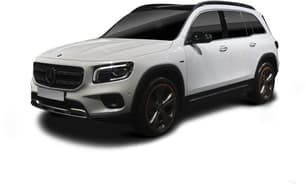
That said, prepare yourself for a bit of a throwback, because the GLB 250 is about as faithful to the classic two-box design as it gets in 2020, which we absolutely love.
Up front, it's undoubtedly a Mercedes-Benz SUV, albeit with a much squarer appearance. Simply put, the GLB 250 looks butch.
We particularly love its simple LED headlights, classic grille and strong bumper, which make it look smart but capable.
Around the side, the GLB 250 is a typical small SUV with black plastic cladding covering its wheelarch extensions and connecting skirts.
The otherwise plain design is spiced up by a sporty set of alloy wheels (our test vehicle was fitted with 18-inch items with 235/55 runflat tyres) and an unusual kink in the glasshouse, around the C-pillar.
The GLB 250 is at its best at the rear, where it exudes presence, with the tough look punctuated by the droopy LED tail-lights and a prominent bumper, which houses a diffuser element flanked by dual exhaust tailpipes.
Inside, the GLB 250 quickly reveals itself to be a technological tour de force. And yes, if its cabin looks familiar, it's because its mechanical relatives (A-Class, B-Class, CLA and GLA) more or less have the same cockpit.
As expected, a pair of 10.25-inch high-resolution displays sit side by side proudly atop the dashboard, with one the central touchscreen and the other the digital instrument cluster.
Both are items powered by Mercedes-Benz's new-generation 'MBUX' multimedia system, which is arguably the best there is today thanks its speed and breadth of functionality and input methods.
The GLB 250 is properly premium where it counts. Sure, trainspotters will notice the black 'Artico leather' upholstery covering the steering wheel, seats, armrests and door shoulders is of the artificial variety, but it's inoffensive, unlike in some of its SUV siblings.
Soft-touch materials are used for the upper dashboard, leaving hard plastics for the lower sections, which is exactly what you'd hope for at this price.
While a black headliner lends itself to a dark cabin, brighter highlights come by way of the metallic trim used throughout, notably on the steering wheel, dashboard, doors and centre console. And let's not forget the sensational ambient lighting. It's very, very cool.
And mercifully, gloss-black accents are limited to the surrounds of the steering wheel, turbine-style front air vents, dual-zone climate controls and centre console. The less scratches and fingerprints the better, we say.
For one, there’s the way it looks inside and out.
The Mazda CX-3 hasn’t remained the most popular car in its segment on price, so the fact its styling continues to age gracefully in the design-focused light SUV segment (aimed at young or first-new car buyers) must have something to do with it.
While it’s been lightly updated a couple of times since 2014, the CX-3 is still in its first generation and has stood the test of time.
Looking like a jacked-up Mazda2, the CX-3 brings some traditional aesthetic to a category peppered with more divisive and daring (but admittedly admirable) designs like the Hyundai Venue, Suzuki Ignis (RIP) or the cute but prohibitively expensive Jeep Avenger.
Some elements of the CX-3, like the chrome trim around the grille or the black plastic cladding along the bottom of the body and around the wheel arches, seemed in the past like they had the potential to age poorly, but Mazda’s design language has only slowly changed since 2015, and the CX-3 still looks at-home in the brand’s line-up.
It’s not the most adventurous - even inside its layout is quite basic - but it does give off a premium vibe and the fact it plays things a little bit safe means the CX-3’s broad appeal is undeniable.
Measuring 4638mm long (with a 2829mm wheelbase), 1834mm wide and 1659mm tall, the GLB250 is closer in size to the GLC than the GLA, making it a small SUV on paper only. And that only means good things when it comes to practicality.
For example, cargo capacity with the 50/50 split-fold third row stowed is strong, at 565L, but it can be increased to a massive 1780L with the 40/20/40 split-fold middle bench also out of action. If six or seven seats are in use, though, there's limited space to play with.
That said, the boot is still very well thought out, as evidenced by its massive aperture, lack of a load lip, and flat floor, which make loading bulkier items a lot easier. And yes, its load cover can actually be stored underfloor when not in use!
There are also four tie-down points, two bag hooks, a side storage net and a 12V power outlet to make things that little bit easier, while the rear seats can be operated from behind.
Speaking of which, let's cut straight to the point: Mercedes-Benz claims the third row can accommodate occupants that are up to 168cm tall thanks to the middle bench's ability to slide fore and aft by up to 140mm.
Therefore, my 184cm (6.0ft) frame is a little too tall, but I was still able to sit in the back, albeit not in complete comfort, with about a centimetre of legroom and negligible headroom and toe-room on offer.
The biggest challenge for any occupant is getting in and out in the first place, as the middle bench doesn't tumble forward for easy access. Needless to say, you're not going to look graceful here. Children can learn to deal with it, but adults won't be excited by the prospect.
So, the middle bench is where it's at, even when slid all the way forward. Behind my driving position, it provides about a centimetre of legroom, but this can be increased to a generous 8.0cm by sliding it all the way back.
Either way, plenty of toe-room is available alongside more than an 2.0cm of headroom – and that's with a dual-pane panoramic sunroof fitted.
The second row can accommodate three adults at a pinch, partly thanks to the short transmission tunnel that ensure there's just enough space for three pairs of fully grown feet across the two footwells. Children will be fine.
While we're on the topic, four ISOFIX and five top-tether anchorage points are on hand for fitting up to four child seats across the second and third rows, making the GLB250 a genuine option for families.
In-cabin storage options are numerous, with the central storage bin on the larger side despite housing a pair of USB-C ports, and the glove box is also pretty handy, even if it does have an odd shape. There's also a sunglasses holder in front of the rearview mirror.
The centre console's cubby doesn't lend itself to storage, though, as it's more or less taken up by two cupholders, another USB-C port and a wireless smartphone charger.
The front door bins can take one small and two regular bottles each, while their rear counterparts can carry one small and one regular apiece.
Second-row occupants are further treated to a fold-down armrest with another pair of cupholders, although they're of the retractable (flimsy) variety.
These passengers also have access to two USB-C ports, which fold out below a small cubby and a pair of air vents, which are located at the rear of the front centre console. There are also storage nets on the front seat backrests.
And don't make the mistake of thinking the third row misses out on the action, as two cupholders (one regular, the other small) divide the seats, which have their own USB-C ports and device straps to the sides.
The Mazda CX-3 isn’t the most spacious light SUV on the inside, but from either of the front seats it’s clear a lot of thought has gone into the best way to make the cabin work.
For example, precious space hasn’t been wasted by two dedicated cupholders, instead there’s a cupholder in the central storage compartment that’s relatively easy to reach into.
Like its design and some of its features, the CX-3’s layout can’t hide its age - there are still big physical controls for the climate settings, the speedometer is a physical dial and the gear selector is a very traditional style.
Mazda’s soon-to-be-gone media control wheel persists in the CX-3, which is by no means a bad thing. It falls nicely to hand, as with many of the controls in the CX-3. Its seating position isn’t too high and the positions you’re able to get the seat and steering wheel into should accommodate most humans.
Behind the front seats it’s a little more spartan. Space is at a premium, with my 178cm frame fitting in the back seat just enough that I had a fair bit of headroom, but my knees were able to brush the seat in front, set to my own driving position.
There are no ports for charging or vents in the second row, but the fold-down armrest has a clever fold-away cupholder. The window shoulder is a little high for young kids to properly see out, but there’s enough light that it doesn’t feel cramped.
The boot is similarly diminutive, a 264-litre space becoming 1174L with the second row folded down. Compare it with the Hyundai Venue and its 355-litre boot, or the Toyota Yaris Cross and its 390 litres, and the CX-3’s simple, well-constructed interior starts to lose points.
Priced from $73,900 plus on-road costs, the GLB 250 sits in the middle of the GLB range, above the $59,900 GLB 200 and below the $88,900 AMG GLB 35.
Standard equipment not already mentioned in the GLB 250 includes dusk-sensing lights, rain-sensing wipers, power-folding side mirrors, aluminium roof rails and a power-operated tailgate.
Inside, satellite navigation with live traffic, Apple CarPlay and Android Auto support, digital radio, a 225W sound system with nine speakers, keyless entry and start, power-adjustable comfort seats with heating and memory functionality, auto-dimming mirrors and illuminated scuff plates feature.
As with most Mercedes-Benz models, the GLB 250 has a long and expensive options list, so the purchase price can blow out quickly if you're a little too keen.
That said, aside from some safety equipment we'll cover momentarily, there's really not that much missing to begin with, making the GLB 250 the sweet spot in the GLB range.
Either way, our tested vehicle was finished in $1490 'Mountain Grey' metallic paintwork, which is one of six extra-cost exterior colour options.
As mentioned, the GLB 250 is a unique proposition, so it's only comparable rival, the $67,852 Land Rover Discovery Sport P250 SE, is from the segment above, despite its similar size.
Upon updating the Mazda CX-3, the Evolve variant is now a $32,100 ask before on-road costs, which is $900 more than before. It’s a little step up from the $30,370 entry price of the Pure, but falls well short of the top-spec Akari’s $38,890 sticker price.
The CX-3 range now comes with updated autonomous emergency braking and adaptive cruise control, with the Evolve specifically scoring new fog lights and keyless entry.
The Evolve also comes with black machined 18-inch alloy wheels, synthetic leather interior trim and front parking sensors.
This is all on top of the CX-3’s standard kit which includes a leather-wrapped gear shift knob, handbrake handle and steering wheel, keyless start, an 8.0-inch multimedia display, wireless Apple CarPlay and wired Android Auto plus LED headlights, daytime running lights and tail-lights.
For its segment, the CX-3 isn’t cheap. The Evolve grade is more expensive than pretty much the entire line-ups of rivals like the Kia Stonic or Hyundai Venue, and its price somewhat lines up with the newer, hybrid-powered Toyota Yaris Cross.
But there’s more to the CX-3 than just a list of features.
The GLB 250 is motivated by a peppy 2.0-litre turbo-petrol four-cylinder engine that produces 165kW of power from 5500-6100rpm and 350Nm of torque from 1800-4000rpm.
This unit is mated to an eight-speed dual-clutch automatic transmission that's solid on debut, while Mercedes-Benz's 4Matic all-wheel-drive system is also in tow.
Thanks to this combination, the GLB250 can sprint from a standstill to 100km/h in a brisk 6.9 seconds while on the way to its top speed of 236km/h. It also enables a maximum braked towing capacity of 2000kg.
The Mazda CX-3 is still powered by a 2.0-litre, naturally aspirated, four-cylinder petrol engine, as has been the case for years. Its outputs remain at 110kW/195Nm.
It drives the front wheels only, via a six-speed automatic transmission.
The GLB250's fuel consumption on the combined-cycle test (ADR 81/02) is 7.7 litres per 100 kilometres, while its carbon dioxide emissions are 173 grams per kilometre. Both claims are pretty solid.
In our real-world testing, though, we averaged 8.9L/100km over 180km of driving skewed towards country roads over highways. As such, it's a strong result, especially when you consider my lead foot.
For reference, the GLB 250's 60L fuel tank takes 95RON petrol at minimum.
Mazda claims the CX-3 sips 6.3 litres of fuel per 100km, minimum 91 RON petrol, though on test the small SUV returned an 8.1L/100km figure under a mix of urban, highway and some dynamic driving.
With its 48-litre fuel tank, that means you’re realistically likely to get about 550km to a tank, though theoretically given Mazda’s efficiency claim a 760km trip on a single tank would be possible - if you could recreate the test lab conditions.
Families are sure to be pleased by the way the GLB 250 drives, because it can be summed up in one word - comfortable.
A lot of the credit has to go to the GLB 250's independent suspension set-up, which consists of MacPherson-strut front and trailing-link rear axles with adaptive dampers.
The ride is sensational, with the GLB just wafting along on the highway. Take it onto a coarse-chip road and this quality does suffer, but not much. That said, road noise does become more of a factor on lower-quality tarmac.
It's worth reiterating that our test vehicle was fitted with 18-inch alloy wheels, which are an inch smaller than the GLB 250's standard set that come with lower-profile tyres (235/50), so the chances are our glowing review doesn't apply across the board.
There were also some noticeable underbody creaks when navigating speed bumps and the like, but hopefully they're just specific to our test vehicle.
What will be more consistent, though, is the wind noise generated by the side mirrors at highway speeds. It penetrates the cabin and disturbs its serenity more than any underbody creak ever could, so turn up the sound system.
Handling-wise, the GLB 250 performs just as well as any other non-performance SUV with seven seats and a high centre of gravity, with body roll prominent when cornering with intent.
Put the aforementioned adaptive dampers into their sportiest setting and body control improves somewhat, but you'll still be conscious of the GLB 250's 1721kg kerb weight.
Either way, grip is quite good due to the all-wheel drive system, which works hard to keep things on track. Its front bias is apparent, though, with the GLB 250 running wide of its line at times.
While it's not the sharpest handler, the GLB 250 is far from awful, partly thanks to the electric power steering's variable ratio set-up.
This system goes from lock-to-lock with ease at low speed, making parking manoeuvres much easier to perform, while it's far more stable at high speed.
However, it's not the first word in feel despite being well-weighted… until you make the mistake of engaging the GLB 250's Sport drive mode, which adds too much artificial weight.
Speaking of sporty, the GLB 250 is surprisingly fun in a straight line thanks to its strong engine and transmission combination.
I particularly enjoyed the 2.0-litre turbo-petrol four-cylinder engine's mid-range, headlined by a useful 350Nm of max torque from 1800-4000rpm.
Once it comes and goes, though, it's a 'long' wait until 165kW of peak power kicks in from 5500-6100rpm, so best to up-shift early.
Doing so is very easy due to the new eight-speed dual-clutch automatic transmission, which serves up gear changes that are only smooth, but quick.
Engage Sport drive mode and the engine and transmission become that little bit sharper, with the former's throttle response improved, while the latter adopts more aggressive shift patterns.
That said, it's best to resist that temptation, as the GLB 250 is at its best when driven calmly, while it exudes family-friendly comfort.
The light SUV category is an interesting one, as it feels somewhat like a gateway to bigger SUVs for those who get a taste of the higher seating position. But in city and urban areas, a light SUV should be as much car as someone needs - unless they have two kids or a bunch of equipment to get around with.
This comes down to the fact cars like the CX-3 are more efficient and easier to manoeuvre than their larger counterparts. And as light SUVs go, the CX-3 feels solid, confidence inspiring and more capable when outside its inner-city comfort zone.
Its naturally aspirated engine is big for the class. Even if it doesn’t feel the punchiest off the line it offers plenty of flexibility at higher speeds and makes overtaking on the highway feel less daunting than it would otherwise be in a car this small.
Its steering is light, which is an advantage in everyday driving, but has enough feedback that more dynamic driving is still engaging. It’s not sportscar-sharp, but you wouldn’t want it to be.
While its age would suggest the CX-3 should feel unrefined compared to newer small cars and light SUVs because of what lies underneath, Mazda’s work on the little SUV over the years has resulted in a car that feels mature and capable.
The suspension isn’t perfect, but it manages low-to medium speeds elegantly and does a decent job of maintaining stability at high speeds. It feels better than you’d expect from a car this size on the highway.
The 1294kg kerb weight and small-enough 18-inch wheels mean there’s not too much weight to manage, and there’s enough cushion in the tyres that harsh bumps don’t come crashing into the cabin.
While the CX-3 feels refined for its class, don’t expect a dead-quiet ride, as some road and wind noise make their way in above 80km/h. Then there’s the fact its engine and transmission will sometimes need to get a bit raucous when accelerating quickly. Aside from this, the CX-3 around town and in suburban areas feels nice and calm.
ANCAP awarded the GLB range its maximum five-star safety rating in 2019.
Advanced driver-assist systems extend to autonomous emergency braking with pedestrian and cyclist detection, lane-keep assist, blind-spot monitoring, rear cross-traffic alert, traffic sign recognition, driver attention alert, tyre pressure monitoring, hill-descent control, hill-start assist, high-beam assist, park assist, a reversing camera and front and rear parking sensors.
What's missing? Front cross-traffic alert, steering assist and adaptive cruise control all form part of the $1990 'Driving Assistance Package', which was fitted to our test vehicle but should be standard for the money.
Other standard safety equipment includes nine airbags (dual front, front-side, curtain and rear-side plus driver's knee), anti-skid brakes (ABS), electronic brake-force distribution (EBD) and the usual electronic stability and traction control systems.
The Mazda CX-3 is technically unrated by ANCAP, though only because its original maximum five-star rating expired after seven years. While this means it easily passes many of ANCAP’s main criteria for safety (and strict Australian Design Rules - ADRs - to be able to be sold here), the CX-3 is missing some recent, more complex safety features.
Not everything is standard across the line-up, either. The Evolve misses out on adaptive headlights, a surround-view parking camera and traffic sign recognition. The base Pure variant also misses out on a front parking sensor.
Fortunately, there are plenty of other key features like seven airbags, dual-front and front-side plus curtain airbags spanning the sides. The CX-3 also has ABS and emergency braking with forward pedestrian detection and rear cross-traffic alert.
There’s lane departure warning, forward obstruction warning, blind-spot monitoring and a driver attention alert for those times you might miss something or - hopefully not often - are distracted.
All these systems are programmed well to minimise interference while driving, making the CX-3 refreshingly trusting of the driver to actually do the job of driving.
As with all Mercedes-Benz models, the GLB 250 comes with a five-year/unlimited-kilometre warranty, which is the gold standard for the premium market. It also comes with five years of roadside assistance.
The GLB 250's service intervals are every 12 months or 25,000km, whichever comes first. It is available with a three-year capped-price servicing plan for $2650, but its pricing can be reduced by $500 if paid upfront alongside the vehicle.
Mazda offers a five-year, unlimited kilometre warranty, which is behind the curve for a mainstream brand these days. Rival brands like Kia and Hyundai offer seven years, for example, with some offering up to 10.
Servicing is undertaken every 12 months or 15,000km, whichever comes first, with servicing costing between $353 and $633 per visit. Total cost over the first seven years currently sits at $3233, averaging $462 a service, which is pricey considering the relatively simple mechanicals under the CX-3.
Mazda says there are more than 150 certified service dealerships across the country, with a tool to find the most convenient one for you. Given the CX-3’s advanced age, chances are there won’t be too many mechanical issues that haven’t been worked out in the last decade.