What's the difference?
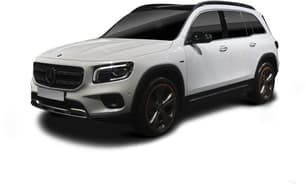
We all know by now Mercedes-Benz loves to fill a niche, and if it can't find a niche to fill, it will create one. So, please welcome its latest niche-filler, the GLB.
Despite shaping up as a mid-sizer, the GLB is a small SUV… with a twist. Whereas other small SUVs have five seats, the GLB has seven, lending itself to unrivalled practicality.
So, does the GLB operate in the 'Goldilocks Zone', or is it an answer to a question no-one asked? We put its mid-range GLB 250 variant to test to find out.
This feels wrong to say this, but it’s so refreshing not to be driving an electric vehicle. There I said it.
After testing so many EVs lately reviewing a car that has an actual engine is a nice change. And this car definitely has an internal combustion engine - it's the Land Rover Defender Octa Black with a twin-turbo petrol V8.
The Defender Octa is the ultimate form of the 110 Defender. It’s wilder looking, more powerful and more capable, while the Black edition adds darkened elements inside and out for even more visual appeal.
While the Defender Octa Black is special, it’s not alone in a world of high-performance luxury SUVs and its head-to-head rival would be Mercedes-AMG’s G63.
I had the Defender Octa Black for a week and while I didn’t take this beast off-road where it is superbly capable, I put it to the test on some challenging tarmac as well as some challenging real-world family duties.
Well, Mercedes-Benz has done it again, finding (or creating, depending on your position) a niche and filling it. But unlike some others that preceded it, this example is a good one.
Despite its safety and handling shortcomings, the GLB 250 looks the part, is undeniably practical and serves up surprising performance, which means it's a winner in our books.
The Land Rover Defender Octa Black could well be the ultimate form of the Defender. There's also the combination of Land Rover style and utility, but with one of the best V8 powerplants gifted to it from BMW. The Black edition adds extra appeal and highlights how stealthily something this good can fly under the radar against rivals like the Mercedes-AMG G63.
These days, so many SUVs try to toe the coupe line by incorporating a sloped-back roofline –and yes, the same is predominantly true of those that call themselves traditional wagons.
That said, prepare yourself for a bit of a throwback, because the GLB 250 is about as faithful to the classic two-box design as it gets in 2020, which we absolutely love.
Up front, it's undoubtedly a Mercedes-Benz SUV, albeit with a much squarer appearance. Simply put, the GLB 250 looks butch.
We particularly love its simple LED headlights, classic grille and strong bumper, which make it look smart but capable.
Around the side, the GLB 250 is a typical small SUV with black plastic cladding covering its wheelarch extensions and connecting skirts.
The otherwise plain design is spiced up by a sporty set of alloy wheels (our test vehicle was fitted with 18-inch items with 235/55 runflat tyres) and an unusual kink in the glasshouse, around the C-pillar.
The GLB 250 is at its best at the rear, where it exudes presence, with the tough look punctuated by the droopy LED tail-lights and a prominent bumper, which houses a diffuser element flanked by dual exhaust tailpipes.
Inside, the GLB 250 quickly reveals itself to be a technological tour de force. And yes, if its cabin looks familiar, it's because its mechanical relatives (A-Class, B-Class, CLA and GLA) more or less have the same cockpit.
As expected, a pair of 10.25-inch high-resolution displays sit side by side proudly atop the dashboard, with one the central touchscreen and the other the digital instrument cluster.
Both are items powered by Mercedes-Benz's new-generation 'MBUX' multimedia system, which is arguably the best there is today thanks its speed and breadth of functionality and input methods.
The GLB 250 is properly premium where it counts. Sure, trainspotters will notice the black 'Artico leather' upholstery covering the steering wheel, seats, armrests and door shoulders is of the artificial variety, but it's inoffensive, unlike in some of its SUV siblings.
Soft-touch materials are used for the upper dashboard, leaving hard plastics for the lower sections, which is exactly what you'd hope for at this price.
While a black headliner lends itself to a dark cabin, brighter highlights come by way of the metallic trim used throughout, notably on the steering wheel, dashboard, doors and centre console. And let's not forget the sensational ambient lighting. It's very, very cool.
And mercifully, gloss-black accents are limited to the surrounds of the steering wheel, turbine-style front air vents, dual-zone climate controls and centre console. The less scratches and fingerprints the better, we say.
Oh gosh yes, there’s a lot that’s interesting about the design of the Defender Octa Black.
Land Rover absolutely nailed the look of the new Defender when it launched in 2020 and it's barely aged in the years since.
I love its modern take on the original Defender design with its boxy styling that looks both prestigious enough to be waiting in the driveway of a castle, but also purposeful and practical enough to be sitting in a paddock on a farm.
The Octa is based on the 110 Defender four-door body style with five seats, but its muscular enhancements make it longer, wider and taller than a regular 110 Defender.
The Octa Black has exactly the same dimensions as the Octa at 5003mm long including the tailgate-mounted spare wheel, 2105mm wide with the mirrors out, and 1995mm tall on the low suspension setting (air suspension can raise the vehicle much higher).
The Octa Black adds about 30 gloss black or satin black elements to the Octa and I’ve listed many of them in the features section above.
For me the highlights of the Black include the 20-inch forged wheels which look stylish and army tough, there’s also the black coating on the quad exhaust tips, while the blacked-out badging and lettering also gives this variant a carefully modified, stealthy look.
Inside I love the exposed screws in the door trim, and black dashboard hand rail. When the vehicle is switched off all of the black buttons lose their glowing icons, turning the cabin into an inky, luxurious, minimalist space.
I could go on about the safari windows overhead in the boot area, the thick carpet, and how the optional chopped carbon fibre looks like solid marble, but we need to move on.
Measuring 4638mm long (with a 2829mm wheelbase), 1834mm wide and 1659mm tall, the GLB250 is closer in size to the GLC than the GLA, making it a small SUV on paper only. And that only means good things when it comes to practicality.
For example, cargo capacity with the 50/50 split-fold third row stowed is strong, at 565L, but it can be increased to a massive 1780L with the 40/20/40 split-fold middle bench also out of action. If six or seven seats are in use, though, there's limited space to play with.
That said, the boot is still very well thought out, as evidenced by its massive aperture, lack of a load lip, and flat floor, which make loading bulkier items a lot easier. And yes, its load cover can actually be stored underfloor when not in use!
There are also four tie-down points, two bag hooks, a side storage net and a 12V power outlet to make things that little bit easier, while the rear seats can be operated from behind.
Speaking of which, let's cut straight to the point: Mercedes-Benz claims the third row can accommodate occupants that are up to 168cm tall thanks to the middle bench's ability to slide fore and aft by up to 140mm.
Therefore, my 184cm (6.0ft) frame is a little too tall, but I was still able to sit in the back, albeit not in complete comfort, with about a centimetre of legroom and negligible headroom and toe-room on offer.
The biggest challenge for any occupant is getting in and out in the first place, as the middle bench doesn't tumble forward for easy access. Needless to say, you're not going to look graceful here. Children can learn to deal with it, but adults won't be excited by the prospect.
So, the middle bench is where it's at, even when slid all the way forward. Behind my driving position, it provides about a centimetre of legroom, but this can be increased to a generous 8.0cm by sliding it all the way back.
Either way, plenty of toe-room is available alongside more than an 2.0cm of headroom – and that's with a dual-pane panoramic sunroof fitted.
The second row can accommodate three adults at a pinch, partly thanks to the short transmission tunnel that ensure there's just enough space for three pairs of fully grown feet across the two footwells. Children will be fine.
While we're on the topic, four ISOFIX and five top-tether anchorage points are on hand for fitting up to four child seats across the second and third rows, making the GLB250 a genuine option for families.
In-cabin storage options are numerous, with the central storage bin on the larger side despite housing a pair of USB-C ports, and the glove box is also pretty handy, even if it does have an odd shape. There's also a sunglasses holder in front of the rearview mirror.
The centre console's cubby doesn't lend itself to storage, though, as it's more or less taken up by two cupholders, another USB-C port and a wireless smartphone charger.
The front door bins can take one small and two regular bottles each, while their rear counterparts can carry one small and one regular apiece.
Second-row occupants are further treated to a fold-down armrest with another pair of cupholders, although they're of the retractable (flimsy) variety.
These passengers also have access to two USB-C ports, which fold out below a small cubby and a pair of air vents, which are located at the rear of the front centre console. There are also storage nets on the front seat backrests.
And don't make the mistake of thinking the third row misses out on the action, as two cupholders (one regular, the other small) divide the seats, which have their own USB-C ports and device straps to the sides.
The Defender Octa Black is practical by its design and intention. This is a large off-road SUV with boxy proportions and utility is as much a priority as luxury.
A five seater with no third row, the Defender Octa Black has an enormous boot at 972 litres and outstanding cabin storage throughout from large door pockets to stowaway areas, trays and hidey holes. There’s also a small fridge under the centre armrest between the front seats.
Space for passengers is excellent with ample headroom and rear legroom. I’m tall at 188cm and can easily sit behind my driving position. Upfront and sitting in the driver’s seat I have acres of room in the footwell, plenty of space for my legs to clear the steering wheel and lots of elbow room.
There are power outlets throughout including a 230V powerpoint in the boot, USB-C ports in the second and front rows, plus wireless phone charging up front.
How great it is to see big chunky physical dials for climate control and volume as opposed to just a media screen, which is the case with so many new vehicles.
Possibly the only impracticality of the Defender Octa Black is the drop down out of the cabin. Even on the lowest air suspension setting the step up and out of the cabin will be too big for some older people and younger children.
Priced from $73,900 plus on-road costs, the GLB 250 sits in the middle of the GLB range, above the $59,900 GLB 200 and below the $88,900 AMG GLB 35.
Standard equipment not already mentioned in the GLB 250 includes dusk-sensing lights, rain-sensing wipers, power-folding side mirrors, aluminium roof rails and a power-operated tailgate.
Inside, satellite navigation with live traffic, Apple CarPlay and Android Auto support, digital radio, a 225W sound system with nine speakers, keyless entry and start, power-adjustable comfort seats with heating and memory functionality, auto-dimming mirrors and illuminated scuff plates feature.
As with most Mercedes-Benz models, the GLB 250 has a long and expensive options list, so the purchase price can blow out quickly if you're a little too keen.
That said, aside from some safety equipment we'll cover momentarily, there's really not that much missing to begin with, making the GLB 250 the sweet spot in the GLB range.
Either way, our tested vehicle was finished in $1490 'Mountain Grey' metallic paintwork, which is one of six extra-cost exterior colour options.
As mentioned, the GLB 250 is a unique proposition, so it's only comparable rival, the $67,852 Land Rover Discovery Sport P250 SE, is from the segment above, despite its similar size.
The Defender Octa Black lists for $313,800 which is about $10,000 more than a standard Octa. The difference between them is purely cosmetic but the black elements add such a visual impact that $10K seems worth it for the unique customised look that distinguishes it from ‘ordinary’ Defender Octas.
The Black edition adds about 30 elements with either a gloss black or satin black finish. These include the Narvik Black paint, gloss black exhaust tips, 20-inch forged black wheels with gloss black calipers, there’s black badging and lettering, too.
Inside there’s ebony semi-aniline leather upholstery, plus black hand holds and dashboard crossbeam.
Then there’s all the standard equipment you’ll find on a regular Defender Octa.
There's three-zone climate control, a Meridian sound system, Android Auto and Apple CarPlay, 11.4-inch touchscreen with sat nav, wireless phone charging and head-up display.
The front seats are heated and cooled, while the second-row outboard rear seats are heated. There’s privacy glass in the rear windows, a panoramic glass roof, LED headlights and tail-lights and a proximity key.
Our car had several options fitted including the chopped carbon-fibre finisher which you can see on the front seat-backs and centre console, dual snorkels, tow-hitch receiver, mud flaps and black roof rails.
Is the value good? Yes' it's very expensive at more than $300k, but the price is quite a bit lower than the Mercedes-AMG G63 ($368,400) and the Porsche Cayenne Turbo GT ($376,200).
The GLB 250 is motivated by a peppy 2.0-litre turbo-petrol four-cylinder engine that produces 165kW of power from 5500-6100rpm and 350Nm of torque from 1800-4000rpm.
This unit is mated to an eight-speed dual-clutch automatic transmission that's solid on debut, while Mercedes-Benz's 4Matic all-wheel-drive system is also in tow.
Thanks to this combination, the GLB250 can sprint from a standstill to 100km/h in a brisk 6.9 seconds while on the way to its top speed of 236km/h. It also enables a maximum braked towing capacity of 2000kg.
One of the Defender Octa’s biggest drawcards is its engine, a 4.4-litre twin-turbo V8 courtesy of BMW.
Yes this is a BMW-sourced V8 making 467kW and 750Nm. The same engine is found in BMW’s M5 super saloon and X5 M and it suits the Defender Octa Black so well you’d swear it was purpose built for the big SUV.
You might not know that there is also a mild hybrid system on board too, but it doesn’t drive the wheels and isn't really there to save fuel. Its function is to add even more grunt to the engine.
Unlike Mercedes-AMG's G63’s V8, the Defender Octa’s V8 won’t traumatise the neighbourhood on start up or idle or even just cruising along. But push it hard and it changes its attitude from a powerful limousine growl to a wild NASCAR roar.
There are drive modes including a dynamic setting but it’s ‘Octa’ mode that makes the car special. It's is a high-performance off-road setting that does exactly what you’d think.
Of course the Defender is one capable off-road vehicle with low- and high-range four-wheel drive.
An eight-speed automatic transmission sends the drive to all four wheels smoothly and the paddle shifters allow quick changes up and down.
The GLB250's fuel consumption on the combined-cycle test (ADR 81/02) is 7.7 litres per 100 kilometres, while its carbon dioxide emissions are 173 grams per kilometre. Both claims are pretty solid.
In our real-world testing, though, we averaged 8.9L/100km over 180km of driving skewed towards country roads over highways. As such, it's a strong result, especially when you consider my lead foot.
For reference, the GLB 250's 60L fuel tank takes 95RON petrol at minimum.
Nobody buys a large off-road SUV powered by a petrol V8 thinking it’s going to be super fuel efficient, right? Just checking, because the 4.4-litre petrol V8 in the Defender Octa Black needs feeding constantly, like some kind of huge, hungry animal.
My average fuel economy of 18.5L/100km (according to the trip computer) over nearly 500km of driving actually wasn't as high as I expected considering all the countryside I ran through combined with the urban warfare of heavy traffic. Still that’s much higher than the 13.1L/100km Land Rover says the Octa should do in combined driving conditions.
Fortunately the Octa has a 90L fuel tank so you won’t have to fill up at every petrol station you see.
Families are sure to be pleased by the way the GLB 250 drives, because it can be summed up in one word - comfortable.
A lot of the credit has to go to the GLB 250's independent suspension set-up, which consists of MacPherson-strut front and trailing-link rear axles with adaptive dampers.
The ride is sensational, with the GLB just wafting along on the highway. Take it onto a coarse-chip road and this quality does suffer, but not much. That said, road noise does become more of a factor on lower-quality tarmac.
It's worth reiterating that our test vehicle was fitted with 18-inch alloy wheels, which are an inch smaller than the GLB 250's standard set that come with lower-profile tyres (235/50), so the chances are our glowing review doesn't apply across the board.
There were also some noticeable underbody creaks when navigating speed bumps and the like, but hopefully they're just specific to our test vehicle.
What will be more consistent, though, is the wind noise generated by the side mirrors at highway speeds. It penetrates the cabin and disturbs its serenity more than any underbody creak ever could, so turn up the sound system.
Handling-wise, the GLB 250 performs just as well as any other non-performance SUV with seven seats and a high centre of gravity, with body roll prominent when cornering with intent.
Put the aforementioned adaptive dampers into their sportiest setting and body control improves somewhat, but you'll still be conscious of the GLB 250's 1721kg kerb weight.
Either way, grip is quite good due to the all-wheel drive system, which works hard to keep things on track. Its front bias is apparent, though, with the GLB 250 running wide of its line at times.
While it's not the sharpest handler, the GLB 250 is far from awful, partly thanks to the electric power steering's variable ratio set-up.
This system goes from lock-to-lock with ease at low speed, making parking manoeuvres much easier to perform, while it's far more stable at high speed.
However, it's not the first word in feel despite being well-weighted… until you make the mistake of engaging the GLB 250's Sport drive mode, which adds too much artificial weight.
Speaking of sporty, the GLB 250 is surprisingly fun in a straight line thanks to its strong engine and transmission combination.
I particularly enjoyed the 2.0-litre turbo-petrol four-cylinder engine's mid-range, headlined by a useful 350Nm of max torque from 1800-4000rpm.
Once it comes and goes, though, it's a 'long' wait until 165kW of peak power kicks in from 5500-6100rpm, so best to up-shift early.
Doing so is very easy due to the new eight-speed dual-clutch automatic transmission, which serves up gear changes that are only smooth, but quick.
Engage Sport drive mode and the engine and transmission become that little bit sharper, with the former's throttle response improved, while the latter adopts more aggressive shift patterns.
That said, it's best to resist that temptation, as the GLB 250 is at its best when driven calmly, while it exudes family-friendly comfort.
The Defender Octa Black is big but it only takes a week of driving before it feels like an extension of your body and becomes an easy and obedient thing to pilot.
The acceleration is strong with 0-100km/h coming in four seconds but it's how it handles that's really impressive.
Smart so-called '6D suspension' uses adaptive tech to keep the vehicle level, damping its desire to pitch forward under braking and preventing body roll in the corners. I tested this on my remote winding, bumpy test road and was amazed by this big monster’s ability to keep itself composed and flat despite the sudden changes in direction.
There was no off-road test for the Octa Black this time but we've been impressed with the capability of Defenders in our tough terrain tests in the past. The Octa Black’s air suspension can rise high enough to offer a maximum 323mm of ground clearance. Angle of approach is 40.2 degrees and departure is 42.8 degrees, while the ramp over angle is 29 degrees. Wading depth is 1000mm.
And if you’re towing, braked towing capacity is 3500kg.
We tested the Octa Black for its handling of both engaging roads but also its handling of suburban duties where it proved easy to pilot, towering over the traffic but still able to slip up tight streets and in and out of car parks (check the maximum headroom and keep the suspension low), along with the school run each day.
Built for off roading means visibility is excellent, from being able to see clearly where the vehicle begins and ends to the huge windows that means there’s hardly a blind spot.
That made parking easy as long as there’s a space large enough and trust me, even if you take your time to park, nobody will honk at you in this military-grade looking rig.
All the while the air suspension kept the ride comfortable and serene.
ANCAP awarded the GLB range its maximum five-star safety rating in 2019.
Advanced driver-assist systems extend to autonomous emergency braking with pedestrian and cyclist detection, lane-keep assist, blind-spot monitoring, rear cross-traffic alert, traffic sign recognition, driver attention alert, tyre pressure monitoring, hill-descent control, hill-start assist, high-beam assist, park assist, a reversing camera and front and rear parking sensors.
What's missing? Front cross-traffic alert, steering assist and adaptive cruise control all form part of the $1990 'Driving Assistance Package', which was fitted to our test vehicle but should be standard for the money.
Other standard safety equipment includes nine airbags (dual front, front-side, curtain and rear-side plus driver's knee), anti-skid brakes (ABS), electronic brake-force distribution (EBD) and the usual electronic stability and traction control systems.
The Land Rover Defender scored the maximum five-star ANCAP rating when it was tested in 2020 and that applies to the Octa Black, too. The only catch is that ANCAP rating will expire at the end of 2026. The criteria is now much stricter to get five stars.
That said, of course the Defender is safe, just as cars given a five star rating this year won’t automatically be unsafe in six or seven years, but there will be newer and better safety tech.
Still the Defender has auto emergency braking (AEB), lane-keeping assistance, blind-spot warning and rear cross-traffic alert.
Occupant safety in crash tests also scored high, according to ANCAP.
For child seats you’ll find two ISOFIX points and three top tether anchors across the second row.
As with all Mercedes-Benz models, the GLB 250 comes with a five-year/unlimited-kilometre warranty, which is the gold standard for the premium market. It also comes with five years of roadside assistance.
The GLB 250's service intervals are every 12 months or 25,000km, whichever comes first. It is available with a three-year capped-price servicing plan for $2650, but its pricing can be reduced by $500 if paid upfront alongside the vehicle.
Land Rover covers the Octa Black with a five-year, unlimited-kilometre warranty which is short compared to most mainstream brands but fairly common among the high-end makes.
Roadside assistance is included for five years, too.
A service plan is available with five years costing $4800. Again, quite common for prestige brands but expensive compared to the more mainstream makers.