What's the difference?
They're doing it again! Actually they've been doing it again for a bit now. It’s Mercedes-Benz Australia and plug-in hybrid tech.
The Ross and Rachel, or Jim and Pam of the premium automotive world.
It's been a will they, won't they for a while, and in the past Mercedes has dipped its proverbial plug into the electrons a few times and gotten cold feet.
But now it says it’s all in. There are others, the GLA and GLC SUVs, plus there’s the new C63 performance car, but this one feels like a bit of an arrival.
Yeah, the C-Class is no longer the Mercedes-Benz in terms of sales, but it might be the best way to make the most of a bit of battery power.
BMW has been incredibly smart with its electric vehicle (EV) offerings in Australia to date.
Ever since the Fringe Benefits Tax (FBT) exemption was introduced for novated lease buyers of EVs under the Luxury Car Tax (LCT) threshold, the German brand strategically introduced versions of its EVs that qualify.
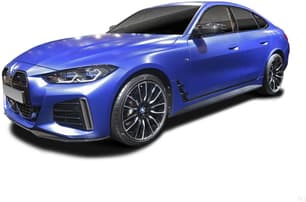
The BMW i4 eDrive35 electric liftback, which is based on the locally defunct 4 Series Gran Coupe, is one of these cars.
It recently received a mid-life update that brought more range and features, while remaining under the LCT threshold for fuel-efficient vehicles.
However, the plot thickens. BMW is soon set to launch its new i3 electric sedan which is based on the company’s Neue Klasse dedicated electric architecture.
BMW hasn’t given the i4 an official production end date, however overseas reports indicate it’ll end as soon as next year to make way for the new i3.
Should you hold out for this new-generation car, or does the i4 still hold up? Read on to find out.
Plug-in hybrids will probably not appeal to all buyers, but in the premium space they make sense.
Smooth electric driving paired with the potential for weekend trips outside the 100km-or-so range make the C350e a decent thing, let alone its price parity with the C300.
It still doesn’t top the charts for value or practicality, but even aside from the PHEV tech, the C350e remains a fun-to-drive sedan that holds its own in the executive space.
Note: CarsGuide attended this event as a guest of the manufacturer, with meals provided.
The BMW i4 balances a solid, old-school feel with the beauty and stunning looks of high-end technology. It feels like the end of an era for the German brand before it leaps into the screen-heavy age of software-defined vehicles.
While BMW hasn’t publicly announced an end-date for i4 production just yet, the new i3 is bound to overshadow it once it arrives. It offers more than double the claimed range and will likely address a number of this car’s flaws.
In the meantime however, the i4 is definitely worth considering if you value driving dynamics and a quality feel in a car that you can drive daily.
The C350e doesn’t depart massively from the familiar visual formula that is the current ‘206’ generation C-Class and that’s no bad thing.
Call it conservative if you like, but having seen what’s possible when Mercedes takes risks (hello EQ models), the traditional Mercedes design language is put into healthy perspective.
Handsome proportions and lines without any fuss - there are no unnecessary creases or panels or materials.
The plug-in C350e comes, as mentioned, with the AMG Line pack, adding 18-inch five-spoke AMG wheels, an AMG front apron, grille insert, and of course EQ Hybrid badging.
The pack also includes AMG Line styling inside, where you’d have to be a Mercedes regular to spot the specifics. The AMG-style steering wheel and seats are the biggest giveaways.
The BMW i4 is firmly at the end of its lifecycle, however its exterior design is ageing like fine wine. This is apt given our tester was finished in delicious-looking 'Fire Red' metallic paint.
The overall proportions of this car are gorgeous, especially towards the rear where the roofline is drawn out, accentuating the liftback look.
This latest update only brought minor tweaks to the design, including refreshed headlight and tail-light signatures. As mentioned above, the M Sport package is now also standard which does give this car a subtly sporty look.
Inside the design marries together the best of the old and new worlds. A major highlight is the curved display housing not only the 12.3-inch digital instrument cluster, but also a 14.9-inch touchscreen multimedia display. It’s a stunning setup that looks ultra modern.
On the flipside however, there is still a lot of physical switchgear on the centre console, including a rotary iDrive controller that allows you to control the content on the screen. It’s a great setup if you like to avoid getting fingerprints on the touchscreen.
While there are a few applications of glossy piano black around the cabin, it’s balanced nicely with other metallic and matt finishes. You’re able to choose from a few different trim inlays, including aluminium and open-pore wood, for no extra cost.
Lastly, the new M Sport steering wheel looks great in this car and adds a lovely sporty touch to the interior.
The space inside the C-Class remains straight-forward as ever. The layout and features don’t stray from convention, meaning there’s a sizable central screen, digital driver display, central cupholders, and places to put things like a phone, with wireless charging included.
The electrically adjustable seat and steering column make getting into a comfortable position easy, and the memory settings keep it that way.
While physical buttons are scarce, the key controls are easy to access via the central multimedia touchscreen and there’s a lack of complicated sub-menus. It's a refreshingly straightforward system compared to some from rivals, especially that of former category benchmark BMW.
There are fewer than a dozen main tile buttons on the menu, and they’re clear and easy to work out. The main screen also defaults to the navigation, and the climate controls are always visible on the touchscreen.
The central storage area is laid out so a phone sitting in the charging pad is slightly hidden, meaning it’s not a distraction, plus the cover means the cupholders and storage can be hidden away. Tidy!
The AMG-style steering wheel’s haptic controls can be used as regular buttons, but more than once on the test drive I nudged the volume and turned my music back on, just a minor annoyance.
In the second row, there’s generous space for a mid-size sedan, and the seats are comfortable for an adult to ride along for a lengthy trip.
There’s a centre armrest, hidden cupholders, and a generally light and open feeling thanks to the panoramic sunroof.
The battery for the hybrid system sits under the second row seats, which means there’s no uneven flooring in the 315L boot.
Hopping into the i4, it’s clear you’re getting into a low-slung vehicle. If you’ve got poor mobility, it may be worth looking elsewhere.
Once you’re in though, the cockpit is a lovely space to spend time. The driver’s seat is beautifully comfortable and offers plenty of adjustment, including extendable thigh support.
Ahead of the driver the steering wheel is rather thick in classic BMW fashion. I appreciate the physical buttons and scroll wheels as they’re easy to understand and use on the fly.
The curved display not only looks stunning, but is functional and easy to use. The digital instrument cluster has a number of layouts you can choose from and it can be paired with the head-up display, which is great to refer to at a glance.
Moving across, there is a lot going on with the central multimedia system. It can feel overwhelming with the amount of content and information to begin with, but once you start poking around, things are logically sorted.
Thankfully there are also a series of shortcut buttons always at the bottom of the screen to take you to key menus.
Adding to this, there is the flexibility of having the iDrive controller. Reaching the far side of the screen from the driver’s seat can be a bit of a stretch and being able to use the rotary dial on the move is much easier.
There is wireless Apple CarPlay and Android Auto as standard. It takes up the full touchscreen display, which looks great.
Looking around the cabin, storage space is fine but not amazing. There are two cupholders plus a wireless charger tucked behind them on the centre console, plus a shallow centre storage area under the central armrest.
Hopping into the second row, it’s clear the focus for this car is on the occupants up front. The door aperture is rather narrow, making it tricky to get in and out gracefully.
In the second row space is nothing more than adequate. At a leggy 182cm tall, my legs almost touch the seat in front when it’s set to my driving position and my head almost brushes the roofliner. I’d struggle to spend a lot of time back here.
This is compounded by the massive hump in the centre that’s a carryover from the combustion platform this car is based on.
Second-row amenities include climate control with air vents mounted on the back of the centre console, two USB-C ports, as well as a fold-down armrest with cupholders.
At the back there is a large liftback that opens and closes electronically. With the rear seats upright there is 470L of boot space, which expands to 1290L when folded.
While this is not massive in terms of outright capacity over a similarly sized sedan, the envelope is much more open and usable.
There’s also a section under the boot floor that’s generously sized for power cables, among other odds and ends.
The Mercedes-Benz C350e kicks off from $98,200, that’s before options and on-road costs.
And there are some key options, the main one being the ability to DC fast-charge which costs $1500 and brings the total to $99,700.
Pricing sits par with the C300 non-PHEV because of its similar specification, and Mercedes Australia said it wanted to give buyers the choice of internal combustion engine (ICE) or PHEV without having to consider the costs.
There’s a decent stack of standard kit in the C350e, including power adjustable heated leather seats, a 12.3-inch multimedia touchscreen and same-size digital driver display, head-up display, and wireless Android Auto and Apple CarPlay.
The C350e also scores some more fun stuff as standard, including a Burmester surround sound system, panoramic sunroof, the Driving Assist Plus pack, augmented reality MBUX, and the AMG Line pack which adds some sportier-looking design features.
It also comes with Mercedes’ Comfort Suspension which includes self-levelling suspension, and Digital Lights with adaptive high beam.
BMW now only offers one version of the i4 in Australia, the eDrive35. It dropped the M Performance grade when the facelift was introduced last year.
The 2026 BMW i4 eDrive35 is priced from $88,900 before on-road costs, which is $1100 more than it was in pre-update guise.
It’s worth noting that it now picks up the M Sport package as standard which gains sporty exterior and interior highlights. This was previously offered on defunct eDrive40 trim.
Critically the i4 remains under the LCT threshold which means that if you put it on a novated lease it’s exempt from Fringe Benefits Tax.
Standard features include 18-inch alloy wheels, LED headlights, power tailgate, 12.3-inch digital instrument cluster, 14.9-inch touchscreen multimedia system, wireless Apple CarPlay and Android Auto, synthetic leather upholstery and heated front seats.
It’s fairly standard on this front, though a heated steering wheel and ventilated front seats would make for a nice touch. However, this would likely tip it over the LCT threshold.
The C350e’s plug-in hybrid drivetrain consists of a 2.0-litre turbo-petrol four-cylinder engine and an electric motor that drives the rear wheels via a nine-speed automatic transmission.
The combustion engine’s peak outputs are 150kW and 320Nm, while the 95kW/440Nm electric motor works with it to land on a total system output of 230kW and 550Nm.
While it’s not lightning quick, the C350e has a decent claimed 0-100km/h sprint of 6.1 seconds, and from the driver’s seat it certainly feels brisk enough to get out of its own way.
The i4 eDrive35 continues to be powered by a single, rear-mounted electric motor that produces an unchanged 210kW and 400Nm.
This is nothing revolutionary in terms of the powertrain, though it’s nice it retains a rear-wheel drive-layout like the discontinued 4 Series Gran Coupe this car is based on.
BMW claims the i4 eDrive35 can do the 0-100km/h sprint in 6.0 seconds and the top speed is 190km/h.
Mercedes officially claims the C350e has a driving range of 104km under NEDC testing, with a 25.4kWh battery supplying the juice.
Official fuel use is just 1.5L/100km, but Mercedes says that becomes 7.6L without any battery charge to help it out.
Under standard 11kW AC charging, it’s about two hours from flat to full, but with the optional 55kW DC fast-charging, it takes about 20 minutes from flat to 80 per cent.
The electric motor is fed by a 70kWh lithium-ion battery pack that allows for up to 448km of claimed range, according to ADR 81/02 testing.
This is 18km more than the pre-update car thanks to silicon carbide semiconductor components which are claimed to reduce energy consumption and increase range.
However, the Tesla Model 3 and Polestar 2 both still offer more range for less money.
BMW claims the i4 eDrive35 consumes an average of 16.3kWh/100km, according to ADR 81/02 testing. Over my 200km of urban testing I saw an average of 17.5kWh/100km, which isn’t fantastic as EVs are predominantly more efficient in the city.
Using my as-tested consumption, this means you have a theoretical range of 379km. That’s not great, though this range issue will be addressed with the forthcoming i3 electric sedan.
AC charging is available at rates up to 11kW, whereas DC fast-charging is offered at rates up to 180kW, allowing for a 10 to 80 per cent charge in 32 minutes.
The C350e has a few drive modes that are mostly self-explanatory, those being Battery Hold, Electric, Hybrid, Sport and Individual.
You’ll likely find yourself using Electric and Hybrid most of the time, so we’ll focus on those. Sport is fine but somewhat defeats the purpose of the plug-in system for day-to-day driving.
In electric mode, the C350e doesn’t feel like it’s lacking any power without the engine helping it along. Acceleration is smooth, brisk enough, and a 130km/h top speed means you won’t need the engine on your commute.
Realistically, its 104km range is probably somewhere closer to 80km, but covers you for a decent daily distance.
Let the car use the engine to help out via Hybrid mode and, if you’ve got music playing, you might not notice the engine starting and cutting. The system is smooth and it means a much longer life out of the battery before needing to charge. That, and there’s the benefit of more brisk acceleration thanks to the hefty 230kW/550Nm total outputs.
Everything else about the C350e is classic C-Class - the ride is controlled and the suspension does a decent job of soaking up bumps and rough roads, the comfort and self-levelling suspension makes cornering smooth and inspires confidence.
The most noticeable shortcoming for the car is its transmission hesitation if you put your foot down quickly, though the ability to use the paddles to choose your own gears in Sport mode avoids this.
In Electric or Hybrid, the paddles decide how much braking regen to apply, a useful feature that lets you recuperate some power for the battery if your drive includes a lot of downhill slopes or if you’re avoiding relying on the brake pedal.
The C530e’s extra weight doesn’t dull its driving characteristics as you might expect from a car laden with PHEV tech, so it’s a welcome surprise that you could pick up a plush plug-in for the same price as a combustion C300.
BMW has positioned itself as creating vehicles that are the ‘ultimate driving machine’ for decades now and this i4 is no exception.
While it’s not an outright performance powerhouse, it doesn’t need to be in order to feel engaging to drive.
The rear-mounted electric motor produces a decent 210kW/400Nm and it’s enough to get moving in frenetic urban traffic with ease. You’ll rarely want any more out on the open road either as rolling acceleration is decent.
The regenerative braking system in this car feels natural and transitions to the friction brakes with no awkward lurching or inconsistencies.
I like how you can drive this car like a regular combustion car using both the accelerator and brake pedals, or with an extra flick of the gear selector you can activate one-pedal driving. During my loan I played around with both and didn’t have a favourite as both feel well tuned and easy to adapt to.
The steering is direct and on the lighter side, making the car feel agile and nimble on the move. However, in low-speed situations you realise the turning circle isn’t fantastic…
I appreciate that BMW opted for standard 18-inch alloy wheels that are paired with tyres that have chubby sidewalls as this keeps the ride from being harsh and jittery, especially over firmer bumps.
Don’t worry if 18 inches aren’t enough though, BMW offers alloy wheel options that go all the way up to 22 inches.
This is the type of car that suits a long-distance road trip as it’s such an easy and fun car to cruise around in. That's why it’s so unfortunate that the range limits how you can travel before recharges.
In terms of noise, vibration and harshness (NVH) in the cabin, the i4 is naturally quiet given it’s an EV. However, it feels like there’s extra insulation because even at high speeds tyre and wind noise are virtually nonexistent, creating a hushed and tranquil interior ambience.
The C-Class has a five-star ANCAP rating, but it was tested in 2022 before the plug-in variant arrived.
Still, 10 airbags and an advanced list of safety features provides peace of mind.
The C-Class benefits from the brand’s Pre-Safe collision protection system to minimise occupant injuries from an impact, even to your hearing.
It also has emergency collision avoidance via steering input, driver monitoring, speed limit assist with adaptive cruise control, and parking sensors with surround-view cameras.
The BMW i4 received a four-star ANCAP safety rating based on testing conducted by Euro NCAP in 2022.
It was held back from receiving a five-star rating due to its ‘Safety Assist’ score of 62 per cent. A car needed to receive a minimum of 70 per cent back in 2022 to achieve five stars.
It’s also worth noting that the Australian-specification BMW i4’s autonomous emergency braking (AEB) and lane support systems are claimed to be of a “higher standard” than the European-specification car tested by Euro NCAP. However, BMW never provided ANCAP with an Australian-spec i4 for verification testing.
Standard safety highlights include AEB, blind-spot monitoring, rear cross-traffic alert, lane departure warning, adaptive cruise control, front and rear parking sensors, plus a surround-view camera.
One of the few safety features that is missing is an active lane-keep assist or lane-centring function. When you drift near a marked line the steering wheel only vibrates to notify you and doesn’t physically move you back into the lane.
Mercedes has a five-year, unlimited kilometre warranty which is decent for a premium brand.
Servicing is pricey, though.
A three-year pack covering a service every 12 months (or 25,000km, whichever comes first) costs $3355, that being just three services.
Four years costs $4630, or five includes a more expensive service and brings the total to $6890. That’s an average of $1378 per service.
Finding somewhere to spend that money shouldn’t be hard as there are 100 dealers listed in Australia.
Like all electric BMWs, the i4 is covered by a five-year, unlimited-kilometre warranty, whereas the high-voltage battery is covered for eight years or 160,000km.
A five-year warranty has been commonplace within the premium space for a few years now, whereas many mainstream brands have since moved up to seven years of coverage, or longer in some cases. It’s far from competitive.
Owners also receive three years of complimentary roadside assistance.
BMW offers a six-year pre-paid service package priced at $2420, which averages out to just over $400 per year.