What's the difference?
Believe it or not, the McLaren 540C is an entry-level model. But you won't find anything remotely resembling rubber floor mats, steel wheels, or cloth seats here. This is a 'base' car like few others.
Revealed in 2015, it's actually the cornerstone of McLaren's three-tier supercar pyramid, being the most affordable member of the Sport Series, with the properly exotic Super Series (650S, 675LT and now 720S), and pretty much insane Ultimate Series (where the P1 hypercar briefly lived) rising above it.
So, how has this British upstart managed to build a world-beating supercar brand so quickly?
Only a few years ago, McLaren meant nothing to anyone outside the octane-infused world of motorsport. But in 2017, it's right up there with aspirational sports car big guns like Ferrari and Porsche, both of which have been producing road cars for close to 70 years.
So, how has this British upstart managed to build a world-beating supercar brand so quickly?
Everything you need to know to answer that question resides inside the stunning McLaren 540C.
I think auto journalists are supposed to see vehicles a bit like parents see their children. You know, view them all as equals. No favourites. That kind of thing.
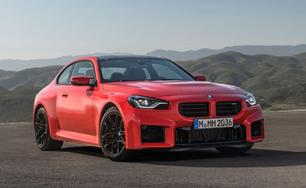
But I'm going to let you in on a tiny little secret, just between us. I liked this potent M2 before I even sat in it. And I like it just a little bit more than I love other bite-sized performance cars.
In fact, I like it more than I like bigger, more powerful, and more expensive models in the BMW M family.
The 540C is desirable on so many levels. Its dynamic ability, blistering performance, and stunning design make the cost of entry a value-for-money ticket. And the refreshing thing is, choosing a McLaren, with its focus on function and pure engineering, sidesteps the wankery that so often goes with ownership of an 'established' exotic brand. We absolutely love it.
Proving good things still come in small packages, the pint-sized M2 remains my pick of the BMW M range. It's not the perfect daily drive, but I reckon the fun outweighs the foibles.
In 2010 the recent rise (and rise) of McLaren Automotive really began, when its design director, the hugely respected Frank Stephenson, started to send things in a compelling direction.
He says McLarens are 'designed by air' and that intricately sculpted, wind-tunnel-driven approach to supercar beauty is clear in the 540C's shape.
It's aimed at so-called everyday supercars like the Audi R8, and Porsche 911 Turbo, yet it incorporates all the subtle aero tricks that define the brand's dynamic personality.
A serious front spoiler and a mix of large intakes low in the nose create a delicate balance between downforce and corridors for cooling air.
The dihedral design doors swinging up to their fully open position is a camera phone attracting, jaw dropping, traffic-stopper.
Broad strakes down the side, standing proud of the main bodywork, are reminiscent of a formula one car's turbulence reducing barge boards, and giant intake ducts channel air through to the radiators in the cleanest, most efficient way possible.
And the look is suitably spectacular. You could hang the dramatically carved doors in a contemporary art museum.
Barely noticeable flying buttresses extending from the rear of the main roofline make a big contribution to downforce, cooling and stability with a minimal drag penalty.
There's a delicate lip spoiler on the trailing edge of the main deck, and a giant multi-channel diffuser proves air flow under the car is just as carefully managed as that going over it.
But the 540C doesn't lack traditional supercar drama. The dihedral design doors swinging up to their fully open position is a camera phone attracting, jaw dropping, traffic-stopper.
The interior is simple, striking and single-mindedly driver-focused. The chunky wheel is completely unadorned, the digital instruments are crystal clear, and the seats are the perfect combination of support and comfort.
The vertical 7.0-inch 'IRIS' touchscreen is cool to the point of minimalism, managing everything from audio and nav, to media streaming and air-con, with low-key efficiency.
There have been mixed reviews of the design of the BMW M range, but I reckon this one looks pretty damn good. In fact, I've always thought this kind of hyper-aggressive styling looks better on smaller cars than it does on big ones.
And it certainly is aggressive, right? From the huge bonnet bulges to the meshed out grille and angry rear diffuser, to the staggered alloys and flared wheel arches, to the blocky rear end with its four massive exhaust exits.
But my favourite exterior item has to be the blacked-out carbon roof, which helps shrink the M2 visually, and makes the whole car look more potent.
Inside, it's plenty sporty feeling, with hard-backed sports seats, lashings of carbon-fibre-look trimmings and the bright red M buttons on the steering wheel.
It's nice, but some of the touch points – like the hard plastics on top of the doors, where, if you're like me, you rest your elbow when driving – feel less than premium.
Still, all the tech is present and accounted for, with its digital dash and huge centre screen, and there's no shortage of spaces to connect or charge your phone.
There are some cursory concessions to practicality… like a glovebox, a single cupholder under the dash at the leading edge of the centre console, a small bin between the seats, housing multiple USB outlets, and other storage options here and there.
The latter includes a shelf at the top of the bulkhead behind the seats, marked with a specific label saying (words to the effect of) 'don't put stuff here', but that's more about objects flying forward in a high-G deceleration, which in this car is more likely to be the result of hitting the brakes, rather than a crash.
But the 'big' surprise is the 144-litre boot in the nose, complete with light and 12 volt power outlet. It easily swallowed the CarsGuide medium sized, 68-litre hard shell suitcase.
In terms of getting in and out, make sure you've done you warm-ups because frankly it's an athletic challenge to maintain composure and get the job done either way. Despite best efforts, I hit my head a couple of times, and aside from the pain it's worth pointing out that being a follicularly-challenged person I'm forced to display abrasions in full public view.
The M2 pocket rocket measures just over 4.5m in length, just under 1.9m in width, and just over 1.4m in height, and it rides on a 2747mm wheelbase. That makes it longer, wider and lower than the model it replaces.
Remember that 'lower' bit, as it will come up again in a moment.
Up front, you don't feel cramped, and there's the requisite cupholders, door pockets and hiding holes, as well as wireless device charging and USB connections.
But remember, this is a two-door, four-seat affair, which cuts into the practicality a little, or a lot.
Swing open the wide front doors, and push the front seat-back forwards, and the entire chair will slide forward automatically.
It does help create more room to climb into the back, but it's still a slightly embarrassing challenge to make getting back there look anything like graceful.
Once there, it's tight. I'm 175cm and my head was firmly pressed into the roof.
You do get your own vents and temp controls, but that's about it. Even the pull-down divider only gives you access to the 390-litre boot, rather than extra cupholders.
You do get two sets of ISOFIX attachment points, though, and let's be honest – if you're buying this to make Bunnings runs, you've probably got it wrong.
At $331,500, we reckon the McLaren 540C is a supercar bargain. For just on $140k less than a Ferrari 488 GTB it delivers equivalent visual drama, and isn't far behind on speed and dynamic ability.
Standard kit runs to climate control air con, an alarm system, cruise control, remote central locking, LED headlights, tail-lights and DRLs, keyless entry and drive, a limited-slip differential, leather steering wheel, power folding mirrors, four-speaker audio, and a multi-function trip computer.
'Our' car featured close to $30,000 worth of options; headline items being the 'Elite - McLaren Orange' paint finish ($3620), a 'Sport Exhaust' system ($8500), and the 'Security Pack' ($10,520) which includes front and rear parking sensors, a reversing camera, alarm upgrade and a vehicle lifter that raises the front of the car an extra 40mm at the push of a column stalk. Very handy.
And the signature orange shade follows through with orange brake calipers peeking out through the standard 'Club Cast' alloy rims, and similarly coloured seatbelts inside.
First, the bad news. The M2 has only been getting more and more expensive over the years, and this new-generation model continues that charge.
Fun fact: When we first tested this model way back in 2016, you could get the Pure grade for less than $90K with a manual transmission.
Or you could spend just under $100K for the full-fruit version. This one, though, lists at $121,700, before on-road costs.
So, a little less bang for buck, but there's still a whole lot of bang on offer here.
You'll find staggered 19- and 20-inch lightweight alloys, while standard performance kit includes an 'Active M Differential', 'Adaptive M Suspension', 'M Compound Brakes' (with blue calipers), 'M Sport Seats' up front and, for the first time, a lightweight 'M Carbon' roof.
Elsewhere, there's adaptive LED headlights, a 12.3-inch instrument display and a 14.9-inch multimedia screen, a head-up display, a Harman Kardon 'Surround Sound' audio system and Android Auto and Apple CarPlay connectivity.
You'll sit on leather seats that adjust electrically and are heated up front. There's three-zone climate control, along with a heated steering wheel, wireless device charging and ambient interior lighting.
Aside from you and a passenger, the most important thing sitting between the 540C's axles is the 3.8-litre (M838TE) twin-turbo V8.
Developed in collaboration with British high-tech engineering specialist, Ricardo, McLaren's used it in various states of tune across different models, including the P1, and even in this 'entry-level' spec it produces enough power to light up a small town.
In 540C trim, the all-alloy unit delivers 397kW (540 metric horsepower, hence the model designation) at 7500rpm, and 540Nm from 3500-6500rpm. It uses race-derived dry sump lubrication, and a compact flat plane crank design, favoured by Ferrari and others in high-performance engines.
While vibration damping can be an issue with this configuration, it allows a much higher rev ceiling relative to the more common cross plane arrangement, and this engine screams up to 8500rpm, a stratospheric number for a road-going turbo.
The seven-speed 'Seamless-Shift' dual-clutch transmission sends drive exclusively to the rear wheels and comes from Italian gearbox gurus Oerlikon Graziano. It's been progressively refined and upgraded since its first appearance in the MP4-12C in 2011.
Besides, this is what we're really here for, isn't it? The M2 gets the 'M TwinPower' 3.0-litre twin-turbo inline-six engine, producing a sizeable 338kW and 550Nm, sending that power to the rear wheels via an eight-speed auto or six-speed manual.
BMW says this engine is very, very close to the engine that powers the M3 and M4, and says it will rocket the M2 from 0-100km/h in 4.1 seconds, and to 200km/h in either 13.5 seconds in the automatic, or 14.3 seconds in the manual.
McLaren claims 10.7L/100km for the combined (urban/extra urban) fuel economy cycle, emitting 249g/km of CO2 at the same time.
For the record, that's six per cent better than the Ferrari 488 GTB (11.4L/100km – 260g/km), and if you take it easy on a constant freeway cruise, you can lower it even further.
But most of the time, we, ahem, didn't do better than that, averaging 14.5L/100km via the trip computer in just over 300km of city, suburban and freeway running.
A small fly in the ointment is fuel use, with the M2 said to use 9.7L/100km on the combined cycle. It also drinks 98 RON premium, and is home to a 52-litre fuel tank. Your theoretical driving range is around 540km.
Now, be warned, you'll be bored stiff if you drive it in the way that's required to get it that low. When we were being gentle, we were somewhere between 10.5 and 11.5 litres per hundred kilometres.
Emissions are pegged a 220g/km of C02.
The best word to describe driving this McLaren is orchestration. The 540C's dynamic elements flow seamlessly together to transform its operator into a conductor guiding a well-honed mechanical orchestra through an energetic concerto.
And slipping (carefully) over the carpeted bulkhead into the driver's seat is like dropping into an ergonomic masterclass. It feels like you're putting the car on, rather than getting into it.
Like all other current McLarens, the 540C is constructed around a one-piece, carbon-fibre tub, which it calls MonoCell II. It's super stiff, and just as importantly, light.
McLaren quotes a dry weight (no fuel, lubricants, or coolant) for the 540C of 1311kg, with the kerb weight a stated 1525kg (including a 75kg passenger). Not featherweight, but with this kind of power sitting a few centimetres behind your head, it's not a lot.
The engine sounds brilliantly guttural, with lots of exhaust roar managing to find a way past the turbos.
A sophisticated launch control system means zero to licence loss is achieved in a flash (0-100km/h – 3.5sec), with jail time lurking if you ever decide to explore the 540C's 320km/h maximum velocity. And in case you're wondering, it'll blast from 0-200km/h, in just 10.5sec.
The engine sounds brilliantly guttural, with lots of exhaust roar managing to find a way past the turbos. Maximum torque is available across a flat plateau from 3500-6500rpm, and mid-range punch is strong. However, the 540C is anything but a one-trick pony, or is that 540 ponies?
The double wishbone suspension, complete with the adaptive 'Active Dynamics Control' system lets you channel all that forward thrust into huge cornering speed.
The switch from Normal, through Sport to Track progressively buttons everything down harder, and an ideal weight distribution (42f/58r) delivers fantastic agility.
Feel from the electro-hydraulic steering is amazing, the fat Pirelli P Zero rubber (225/35 x 19 front / 285/35 x 20 rear), developed specifically for this car, grips like a Mr T handshake, and the standard 'Brake Steer' torque vectoring system, which applies braking force to optimise drive and minimise understeer, is undetectable in the best possible way.
A console switchable 'Powertrain Control System' also offers three settings, and in the upper modes, shifts from the seven speed dual clutch 'box are eye-blink rapid.
The steering wheel paddles come in the form of a genuine rocker, so you're able to change up and down ratios on either side of the wheel, or one-handed.
You'll love catching a glimpse of the heat haze shimmering up off the engine in the rear-view mirror at the lights.
Hammer towards a quick corner and the reassuringly progressive steel rotor brakes bleed off speed with complete authority. Flick down a couple of gears, then turn in and the front end sweeps towards the apex without a hint of drama. Squeeze in the power and the fat rear rubber keeps the car planted, and perfectly neutral mid-corner. Then pin the throttle and the 540C rockets towards the next bend… which can't come quickly enough. Repeat, and enjoy.
But slotting everything into 'Normal' mode transforms this dramatic wedge into a compliant daily driver. Smooth throttle response, surprisingly good vision and excellent ride comfort make the McLaren a pleasure to steer around town.
You'll love catching a glimpse of the heat haze shimmering up off the engine in the rear-view mirror at the lights, and the (optional) nose-lift system makes traversing awkward driveways and speed bumps manageable.
Let's be totally up front here: the BMW M2 isn't the most comfortable vehicle to live with. In fact, I recently climbed out of the M3 Touring, and found that to be more comfortable on broken city streets.
The M2 is fitted with adaptive suspension, but even in its most comfortable settings it can feel rough, bumpy and jarring on bad roads (of which Australia has lots), and unless you're gentle with the accelerator, it can feel a little jumpy when first taking off – a by-product of its prodigious power.
Now, let's be totally up front again: I don't care. The M2 is fun, plain and simple, and for mine, the above is a fair price to pay for something that brings so much joy.
The steering is lovely, the power immediate and the soundtrack intoxicating, and it's the kind of car that's fun no matter where, how far or how fast you drive it.
In fact, fun seems to be the very centre of the M2 proposition, which definitely doesn't take itself too seriously.
For evidence, look no further than the 'M Drift Analyser', buried in a hopelessly busy multimedia system that will have you praising the CarPlay and Android Auto gods.
It will rate your best drift out of four stars, measure it for distance, and basically give you a pat on the back for doing your best hooligan impression (not on a public road, of course).
Fun, then, is the order of the day here. And I bloody love it.
In terms of active safety, the car's dynamic ability is one giant safeguard against a collision, and that's backed up by tech features including ABS and brake assist (no AEB, though), as well as stability and traction controls.
But if a crunching-type incident is unavoidable, the carbon-composite chassis offers exceptional crash protection with dual front airbags in support (no side or curtain airbags).
Not a huge surprise that ANCAP (or Euro NCAP, for that matter) hasn't assessed this particular vehicle.
The BMW M2 hasn't been assessed by ANCAP, but it arrives with six airbags, as well as all your usual traction and braking aids.
Elsewhere, you'll find lane change and lane departure warning, active cruise control, front and rear parking sensors, tyre pressure monitoring, and AEB with pedestrian detection.
There's also blind-spot monitoring, rear cross-traffic alert and lane centring assist, as well as a tyre-pressure monitoring system.
McLaren offers a three year/unlimited km warranty on the 540C, and servicing is recommended every 15,000 km or two years, whichever comes first. No capped price servicing program is offered.
That's a lot of kays for a premium exotic like this, and some may not see 15,000km on the odometer… ever.
The BMW M2 is covered by a five-year, unlimited kilometre warranty, and servicing is 'condition based', in that the vehicle will tell you what maintenance is required, and when.
You can prepay your service costs at the time of purchase for all BMW vehicles, covering the first five years of ownership, for $3480 (which means $695 per service).