What's the difference?
Lotus - it’s one of the most iconic names in the history of automobiles and was once Great Britain’s answer to Ferrari - on the road and the Formula One circuit.
But that was a long time ago, in the 1960s and ‘70s. Since then Lotus has been on a rollercoaster ride through various owners who put in various levels of investment, resulting in various degrees of success.
But through it all, Lotus has stayed true to the ethos of company founder, Colin Chapman - ‘simplify, then add lightness.’ It’s obviously a playful saying, but it spoke to the core elements of Lotus cars, agility and driving purity.
Lotus rarely worried about big, powerful engines and instead focused on creating the best-handling cars.
That was the past, though, because Lotus Cars is now owned by Geely, the Chinese automotive giant that also counts Volvo, Polestar, Zeekr and more under its control.
Geely’s vision for Lotus is very different to what has come before, with a future focused on building electric SUVs and sedans; such as the already released Eletre and Emeya.
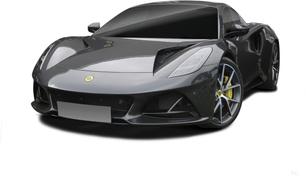
All of which is a very long way to get us to the car we’re actually testing - the MY24 Lotus Emira.
This is the last petrol-powered sports car from Lotus, and while it has been available already with a V6 engine, it has recently arrived with a Mercedes-AMG four-cylinder turbo.
Given its place in the grand scheme of things, the Emira not only needs to live up to the legacy of the iconic models that came before it, but also needs to lay the foundations for the brand’s electric future. Which is a lot of pressure for one car to carry…
One question frequently discussed in the skunkworks of the CarsGuide office is: What exactly does Lexus stand for?
When the brand debuted its original export-market IS sedan in 1999 the messaging was more or less clear: Toyota’s premium sub-brand was here to be a Japanese BMW.
The brand even employed Nobuaki Katayama – chief engineer on the iconic Corolla AE86 program – to again take the reins of its small rear-wheel drive sedan program.
As the years went on though, Lexus changed. Fundamentally geared toward the US market, the second-generation (wild IS F aside) became a bit more sedate and softer around the edges, while the third generation strayed even further from the sedan’s performance-inspired roots, leaning into a plush interior, hybrid drive, and even CVT transmissions.
This brings us to today’s Lexus IS. Essentially a heavy facelift of the third generation (which arrived back in 2013), the brand has “reimagined” its core sedan with a tweaked design and updated technology for 2021.
Is it enough to keep it relevant against its ever-present European rivals and the newly arrived threat from Hyundai’s Genesis G70? I took a signature IS300h hybrid for a week to find out.
If this really is the final petrol-powered Lotus sports car then it’s a sad day for fans of the brand and its history. But it’s also worthy of celebration because they have made a car that is genuinely impressive.
It may not be perfect, and it will have to fight hard to lure buyers away from Porsche, BMW and co. but for anyone who enjoys a dynamic, engaging and incredibly fun sports car the Emira should be on your short-list.
Alternatively, if you’ve always dreamed of buying a traditional Lotus sports car and haven’t got around to it until now, this is your last chance so don’t wait too long.
Smooth, cosy, quiet, the IS looks and feels better than ever, but without a doubt this hybrid version is a car best suited to cruising the dense metropolis of Chiba at midnight more than it is carving up a bunch of S-bends in the Australian countryside on the weekend.
While that might still limit its appeal for fans of German sports luxury sedans and place it further from the original IS’s ambitions, it does offer an intriguing efficiency and luxury focused alternative, without the compromises brought by rivals with more sporting intent. In a way then, the IS 300h perhaps inadvertently best embodies what Lexus is as a brand.