What's the difference?
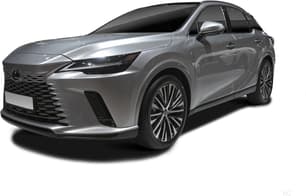
The Lexus RX500h F Sport Performance is the flagship model for the RX line-up.
It’s a deceptively large SUV and it has some serious heavy-hitting luxury rivals; like the BMW X5 xDrive45e and the Mercedes-Benz GLE450. The new RX has been revamped, restyled and retooled, so how does it compete?
Read on to see what’s new and what my little family of three thought of it!
Years ago, McLaren wasn't really making McLarens. The ill-fated SLR was still in production, but was an oddity that made little sense - it was a highly specialised Mercedes and built to sell for crazy money to mega-rich F1 fans. Production was down to a trickle,and the iconic and legendary F1 had completed its run a decade earlier.
The "new" McLaren Automotive had a shaky start in 2011 with the unloved MP4-12C, which became the 12C and then morphed into the 650S, getting better with each reinvention.
The P1 was the car that really grabbed the world's attention and was then-new designer Rob Melville's first project for the British sports car maker.
Last year, McLaren sold its 10,000th car and production numbers are closing in on Lamborghini's. Sales have almost doubled in Australia and Rob Melville is still there, and is now the Design Director. The company, clearly, has done very, very well.
Now it's come time for McLaren's second generation, starting with the 720S. Replacing the 650S, it's the new Super Series McLaren (fitting in above the Sport Series 540 and 570S and below the Ultimate P1 and still-mysterious BP23), and is a car McLaren claims has no direct competitors from its rivals at Ferrari or Lamborghini.
It has a twin-turbo V8, a carbon fibre tub, rear-wheel drive and bristles with cleverness.
The Lexus RX500h F Sport Performance certainly gave a solid driving performance this week. I was comfortable behind the wheel and enjoyed the luxe features up front. I feel that it's missing some luxe items in the back seat and some of the family storage options that other large SUVs can have but otherwise, it suited my family’s needs. The fuel efficiency was quite surprising for a hybrid, so this gets a 7.0/10 from me.
My son really liked the panoramic roof and his high seating position. So, he gives this an 8.0/10.
Past McLarens have been accused of being a bit soulless, but this one is alive. The last time I felt like this in a car was a Ferrari F12, one of the scariest but most brilliant cars I've ever driven. Except the 720S isn't scary on the road, just sheer genius.
The 720S doesn't necessarily beat the competition but it opens up new ways of doing supercar things. It's a car that looks amazing, is more than fit for purpose but has a wider range of talents than the others.
That makes it ever more compelling, both as a piece of automotive brilliance to admire, andl as something to consider when you've got half a Sydney apartment to spend on a car.
Australian roads await, but the drive through rural English country roads and villages was a great preview. All I can say is: gimme one.
The RX is a deceptively large SUV, at first glance the sporty tailoring might make you think it’s the smaller NX sibling but park it and you’ll see how it fills up a space!
It’s 4890mm long and 1920mm wide but the compact 1695mm height is what causes the misdirection.
Let’s get straight into some of the obvious design changes. The iconic ‘spindle’ grille design has been flattened at the top with a new body panel. It’s a design choice that makes the bonnet look more bulbous than sporty but that’s pretty much all I don’t like.
It was a great choice to lift and level out the sloping of the bonnet because it looks a lot more purposeful now. There’s lots of sporty elements too with the black 21-inch alloy wheels and faux-mesh intake vents at the front and rear. Plus, I’ve always been a fan of the floating roof effect that’s created by the black panelling that shoots from the C-pillar to the rear.
It’s not just the exterior that’s been revamped. The interior now boasts a massive 14-inch touchscreen multimedia system, up from the 12.3-inch screen from the previous generation. The gear shifter is now an e-shifter and the dashboard has been ‘stepped’ to make it feel like you’re being tucked into the cockpit. There’s new ambient lighting inside too, designed to make the interior feel like a luxury lounge.
All round, they’ve nailed the ‘luxury’ aspect.
The 720S has received mixed reviews but nobody will say it isn't striking. I love it - every designer says their influence is a Lockheed SR-71 Blackbird (designer Melville even jokes about it), but you really can see it in the 720S, especially in the cockpit design, which looks like a glass canopy from that surveillance jet.
McLaren's signature dihedral doors, which go all the way back to the 1994 McLaren F1, are substantial, with a double skin to act as a serious piece of aero kit.
Melville told me in January that he thinks the cars look shaped by nature, using the example of a stone left in a stream to erode. The 720S is full of details evoking that image, with a clean, taut surface. Where everyone complained that the 12C was "designed in a wind tunnel", the 720S looks designed by the wind. In the carbon and aluminium, it looks extraordinary.
One of the most talked about features are those headlights - almost always finished in black, they're known as "the socket". When you get close you see slim LED DRLs, small but powerful headlights, and you then discover two radiators behind them. Follow it through and the air exits through the bumper, around the wheels and then through the door. It's quite something.
Inside is the McLaren we've come to know and love, but with a clever kicker. The dash panel looks lifted from a race car - but with far nicer graphics. Switch to "active" mode, turn everything up to Track and the panel swings down and presents you with a minimised set of instruments to reduce distraction and make up for a lack of head-up display - just speed, get and, revs.
Sometimes you can forget how many luxury items this car has because they've been sprinkled around too sparsely.
For example, front passengers definitely enjoy the most this car has to offer. The legroom and headroom are both great, while the luxe factors feature heavily with the heated and ventilated seats and heated steering wheel. It’s great that there is dual-climate control up front and ample individual storage on offer.
The driver has a lot of technology within easy reach – the 14-inch touchscreen multimedia system is simple to use and has built-in satellite navigation. You can pull the directions into the head-up display and there’s still a healthy mix of physical dials on display. The wireless Apple CarPlay was easy to connect to and there’s also wired Android Auto, Bluetooth connectivity and digital radio (which was good in the city, terrible in regional areas).
Front passengers are absolutely spoiled when it comes to charging options, too. You can choose between an USB-A port, three USB-C ports, 12-volt port and a wireless charging pad!
When I reviewed the smaller NX sibling, I struggled with the e-latch door handles but finally got used to them on this model (I even like them!). My six-year-old found them to be frustrating at times and if the groans from my family members are to be believed, they weren’t impressed either but I do think it came down to it being a ‘user’ issue!
The backseat is comfortable and perfect for my 168cm height but taller passengers may feel a little cosier. The seats are set in a stadium setting, which does make you feel like you’re teetering in corners but my son loved the high position.
You can comfortably fit a couple of child seats back there but it might be a squeeze for three. The wide door apertures do make it easy to fit a child seat and to bend down to buckle them in.
Individual storage is limited to just map pockets, two cupholders and skinny drink bottle holders in the doors. The amenities never quite make it to luxurious either but I did like seeing two USB-C ports and retractable sun blinds.
The boot space is decently sized at 612L but the aperture is sloped, which means you might struggle to fit some bulky items. It has a level load space and it’s easy to access the temporary spare tyre. The powered tailgate with kick-function is super quick and handy too.
For a supercar, there is a surprising amount of space in the cabin. You can strap 220 litres of (hopefully) soft stuff on the rear shelf behind the seats and there's a 150-litre boot under the nose. You can store your track gear under there, including helmet, or even cram in a few soft bags for a weekend away.
Again, unusually a for a supercar, you're also treated to a couple of storage cubbies in the centre console.
There's plenty of room in cabin for two bodies and the driver's seat offers lots of adjustment. Despite being so close to the front wheels, your feet have space even for my ridiculous duck feet to fit easily. There's even enough headroom for those over six feet, although the glass portholes in the top of dihedral doors might not be so welcome in an Australian summer.
There are six models for the RX and the 500h Sport Performance completely replaces the previous 450h model as ‘top dog’.
As with most things, the purchase price has shifted upwards with a hearty $126,000 tag (before on-road costs). However, it’s still almost $10K more affordable than its nearest rival, with the X5 at $139,900 and the GLE at $135,200 (all before on-road costs).
Being a top model means you enjoy the perks of many features coming as standard, like electric front seats with lumbar support, heated and ventilated front seats, heated steering wheel, panoramic sunroof and leather accented seats and trim.
It even has real aluminium inserts for the accents and a new for 2023 digital rear-view mirror.
The only luxe factor that it doesn’t have, but should for a flagship model, are heated and ventilated outboard seats in the back row.
Other features include some decent tech, like wireless Apple CarPlay and wired Android Auto, three-zone climate control and a premium Mark Levinson sound system but more on that below.
Kicking off at $489,900 plus on roads, it's fairly clear that the car the local operation has in its sights is the Ferrari 488 GTB, which sells for around $20,000 less but rarely arrives with less than $40,000 in options on board. Two further versions of the 720S are available from $515,080, the Luxury and Performance spec levels, both largely cosmetic.
The 720S ships with 19-inch front wheels and 20-inch rears wrapped in Pirelli P-Zeros. The exterior is finished in "dark palladium" trim and the cabin is lined with Alcantara and Nappa leather. Also onboard is a four-speaker stereo, digital dash, dual-zone climate control, sat nav, active LED headlights, power windows, sports fronts seats and not much else.
A predictably lengthy options list includes paint from $0 to $20,700 (McLaren Special Operations, or MSO, will cheerfully find ways to charge you more for that extra special paint job), but most of the list is carbon fibre bits, reversing camera ($2670!), a $9440 Bowers and Wilkins stereo... you get the picture. The sky, or your credit card, is the limit.
The front lift kit is $5540 and totally worth it to protect the underbelly from driveways. Unlike a couple of Italian rivals, it's not mandatory for all speed-bump ascents.
As we discover every time we look at a car like this, the spec seems slim but none of its competitors have much in them, so it's line-ball.
There is only one engine for the top model and that’s a 2.4-litre, four-cylinder turbo-petrol hybrid offering. It has a combined max power output of 273kW.
This replaces the old V6 hybrid engine from previous models but I found it to still be punchy. In fact, it’s claimed that you can do 0-100km/h in as little as 6.2 seconds.
It’s an all-wheel-drive and features a cool – eAxle … meaning the car is a bit clever with its power distribution using the electric motor to power the rear axle and the petrol engine to power the front. You can notice the gear changes with the six-speed auto transmission but overall, this combination delivers a solid performance.
The 720S runs a 4.0-litre version of McLaren's familiar flat-plane crank twin-turbo V8. Power is up to 537kW (or 720PS, hence the name) and torque up almost 100Nm to 770Nm, from 678. McLaren says 41 percent of the components are new.
A seven-speed twin clutch sends power to the rear wheels and the 1283kg dry (down 106kg from the 650S) monster hits 100km/h in 2.9 seconds, surely a cautious claim. The more alarming 0-200km/h clam is a terrifying 7.8 seconds, half a second quicker than its closest rival, the 488 GTB. That is seriously, insanely quick, while top speed is equally bonkers at 341km/h.
Instead of a complicated and heavy active differential, the 720S uses the rear brakes and various other methods to get the same effect. It's one of several ideas pinched from F1, some of them now banned.
The official combined fuel figure is 6.5L/100km and that’s up by half a litre on the previous model. Real-world testing saw my figure at 8.3L, and I was disappointed with the efficiency. There are more efficient options out there that I would consider if the ‘hybrid’ part of the model’s name was what interested you.
With the 65L fuel tank and based off the official combined figure, you should be able to get a 1000km driving range … but based off my experience, I would expect a little less than that.
McLaren claims the European combined cycle could return 10.7L/100km, but we have no way of knowing if that is accurate because we weren't mucking about on the day we had the car.
My first thought when I drove this was that it doesn’t drive like a big car. It has nice sporty handling – it feels firmly positioned on the road and the steering is responsive.
There’s a definite sense of power but it’s lazy. You have to get firm with the accelerator but it performs well when you push it.
There’s an interesting duality at play here because, despite this, it’s not sluggish - I’m just as confident on the open-road as I am zipping across traffic in this.
The suspension is adaptive and feels springy. It handles cornering quite well but I’m not as firmly seated as I would like. My husband said the same from the passenger side.
The cabin is extremely quiet and peaceful until my kid gets into the car. Then it’s 20-questions in 20-seconds. But otherwise, the new active noise cancelling this model has, works.
I really love the 11m turning circle – parking this in a rat-warren car park was simple. The 360-degree view camera is easily in my top three for camera tech that I’ve used and I like how the car ‘disappears’ when you’re manoeuvring. It makes it easier to navigate a tight spot and not get distracted. Large SUVs can sometimes feel daunting to park but not this one.
One of the biggest changes from 650 to 720 is the new Monocage II carbon fibre tub. The drop in overall weight is partly because the cage now includes the windscreen hoop, which previously was metal. Kerb weight with all fluids and a 90 percent full fuel tank (don't ask why 90 percent, I don't know either) it weighs 1419kg, giving it the same power-to-weight ratio as a Bugatti Veyron. Yikes.
The 720S is an astonishing car. We always say you can pootle in a modern supercar, but the 720S is so user-friendly, maneouvreable and so easy to see out of - there are no significant blind spots with an almost entirely glass roof - you can tackle city and country in comfort mode and actually be comfortable. Comparatively, a Huracan goes all blergh in Strada mode and the 488 GTB never stops begging you to kick it in the guts. The McLaren is easy, liveable and smooth.
I was driving a left-hand drive car in the UK, which should have been a complete nightmare, but it was fine - the vision is excellent, particularly over the shoulder.
But when you do decide to kick the 720S into action, it's wild. The acceleration is brutal, the handling impeccable and the ride, oh, the ride. No supercar can handle bumps, irregularities and flat out poor surfaces like the McLaren. The 540C's ride is incredible as it is, but the 720 is just wow.
Because it's quite light, the nose goes where you point it, the huge brakes have less to stop, the towering power less to push. The steering in the 720S is well-weighted but has tons of feel - you know what's going on underneath the double-wishbone sprung front wheels and you can adjust what you're up to accordingly. The stability system is excellent, too. Never overbearing or abrupt, where talent ends and the help begins is delightfully blurry.
The new engine is a bit more tuneful than past McLarens - there's even a loud-start party trick - but it's not loud and overbearing. You'll hear turbos whisting, sighing and pshawing, a deep bassy exhaust note and some awesome intake roar. But there's not much off-throttle character. It does at least do away with the histrionics of the Italians.
The only serious drama is the amount of noise bouncing around the cabin over about 100km/h. There's a lot more glass than sound-soaking Alcantara, which explains some of the extra tyre racket over a 650S. You can't have everything, I guess.
The RX has a full suite of safety features that are always great to see on a large SUV, like: LED daytime running lights, lane keeping aid, lane departure alert, blind spot monitoring, rear cross-traffic alert, 360-degree view camera, front and rear parking sensors and dynamic parking guidance.
A cool highlight is the 'Safe Exit Assist' which will alert you via the dash if the car has sensed an oncoming obstacle when you go to exit the car. However, Lexus goes further and if the obstacle is still present and you try to open the door, the car will LOCK your door and stop you from exiting. Pretty neat!
The autonomous emergency braking with forward collision warning has car, pedestrian and cyclist detection (operational from 5.0 – 80km/h and up to 180km/h for car detection).
It achieved a maximum five-star ANCAP safety rating from testing done in 2022. However, this model used to have 10 airbags but now only has eight. I do like that it now has the front centre airbag.
There are ISOFIX child seat mounts on the outboard seats and three top-tether anchor points. You may get lucky with three skinny child seats but two will fit best. A 0-4 rearward facing child seat can be installed but will encroach on front passenger comfort, especially if they’re tall.
Along with a super-strong carbon tub, to which is fitted aluminium crash structures front and rear, the 720S comes fitted with six airbags, stability and traction controls and carbon ceramic brakes with ABS (100-0 happens in fewer than 30 metres).
The ownership terms have been improved too with the RX now coming with a five-year/unlimited km warranty term, which is more in line with the market standard.
It has a five-year/75,000km capped-price servicing plan and services cost $695, which is $100 more than the previous model. Even with the price hike, the servicing costs aren’t as expensive as others in the class.
Servicing intervals are reasonable at every 12 months or 15,000km – whichever occurs first, which is good.
Lexus recommends a minimum of 95 RON petrol for this model.
The 720S comes with McLaren's three-year/unlimited kilometre warranty with roadside assist. McLaren will want to see you every 12 months or 20,000km, which is quite unusual at this level.