What's the difference?
Land Rover has launched a 35th Anniversary Edition of the Discovery, a seven-seat model that’s been a familiar sight on Australian roads for decades. Sitting in the large SUV category, it’s up against a fiercely contested field where the Lexus GX and Toyota LandCruiser Prado are household favourites.
The special edition lands squarely in the middle of that pack, a space that demands serious capability and comfort while still delivering a sense of occasion.
So the question is, does it manage to do all three?
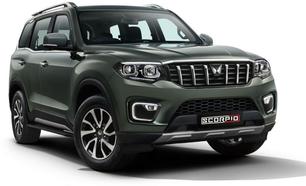
The Mahindra Scorpio is back – but now it has upgraded safety tech (including AEB) and it’s only available in one variant: the Z8L+.
This is a 4WD wagon with a fair bit of appeal: seven seats, a stack of standard features, a low-range transfer case, an automatic rear diff lock and its price-tag – at just under $50 grand – won’t kick you in the space near the pocket where you keep your wallet.
It hasn’t undergone any mechanical changes so is the Scorpio any good off-road?
Read on.
The Land Rover Discovery 35th Anniversary Edition drives beautifully, with effortless power and a composed, comfortable ride. It’s elegant and well-equipped for its price, though the technology often frustrates, and it’s not as spacious as some seven-seater rivals. Small quirks in everyday use prevent it from fully standing out in a competitive segment but it does enough to be considered.
It may seem like I've been harsh on this Mahindra but I reckon the Scorpio Z8L+ is a positive product for the company.
It’s nice enough to drive on-road – reasonably refined and comfortable – and it’s also a capable 4WD, with some trade-offs.
But this seven-seat wagon remains a good value-for-money prospect with the addition of more driver-assist tech onboard boosting its safety and adding to its overall appeal.
The Discovery remains a handsome SUV. It isn’t as boxy or rugged-looking as some of its rivals, but it still carries a quiet confidence and a hint of adventure in its stance. The 35th Anniversary Edition gets a few subtle touches to help it stand out, including 21-inch black alloy wheels, roman-numeral anniversary badging and slim LED lighting signatures that give it a clean, sophisticated look.
Inside, everything feels solid and thoughtfully put together, with soft-touch materials in all the right places. Some of the trim finishes lean a little synthetic, but the leather upholstery is beautifully done and the dual sunroofs bring in plenty of natural light, which helps elevate the cabin ambience.
The 11.4-inch media display takes pride of place on the dash and looks premium, and there are enough physical buttons and dials to satisfy those who like some tactile-functionality. That said, the cabin doesn’t quite deliver that sense of occasion you might expect at this price. It’s nice, it’s just not especially distinctive.
Nothing has changed on the Scorpio’s exterior. It still reminds me of the early-generation Hyundai Terracan – long bonnet, generic cabin (i.e. inoffensive, soft lines, nothing to set it apart from most other mid-sized SUVs) and, though its off-road angles check out (more about those later) it looks quite low to the ground.
So it’s all standard for a 4WD wagon.
The Scorpio also has 18-inch alloy wheels, side steps, roof rails and a sunroof.
Potential main rival GWM Tank 300 holds sway in the looks department.
The Discovery’s cabin is an interesting mix - at first glance it seems to offer the right balance of space and features, but once you settle in, a few small disconnects between technology and layout become apparent.
Up front is where you want to spend most of your time. The powered seats are well-padded with long bases and excellent lumbar support. There’s plenty of room for tall drivers and passengers and elbow space is generous. The only annoyance is the heated seat function, which is buried behind the menu system and the fiddly climate dials.
The middle row highlights the Discovery’s tall-but-narrow proportions. Adult passengers can feel a little cramped side-to-side, though the flat floor gives decent leg and foot room. The third-row surprises with wider seats and deeper footwells than expected, so knees aren’t pressed against chests. Access, however, is more suited to children than adults.
Storage is abundant and thoughtfully positioned. Up front, there are dual glove boxes (one lockable), a hidden cubby behind the climate panel and underneath the sliding cupholders, a tray housing the wireless charging pad (which, in our test car, didn’t work), and the middle console fridge which is a handy touch for keeping snacks or drinks cool on long trips. The middle row gets map pockets, cupholders and bottle storage, while the third-row benefits from hinged cubbies on each wheel arch.
The boot is the standout, offering a massive 1137L when the third row is folded. Its tall and deep shape makes it practical and features like the powered tailgate, adjustable boot-lip height via air suspension, a full-size spare and a 12 volt socket round out its friendly usability.
Access is a simple step-in and step-out scenario thanks to the Discovery’s 'Auto Comfort Access' mode which, when activated, lowers the vehicle when parked. That said, the doors are heavy and need a firm push to latch properly.
Technology is a bit of a mixed bag. The media system is somewhat intuitive once you spend time with it, but newcomers may find the layout confusing. It includes sat nav, wireless Apple CarPlay, and Android Auto, though in our test car, CarPlay occasionally showed music playing without sound but re-pairing my iPhone 15 Pro Max fixed the issue. The dual-use climate dials, which control temperature, fan speed and seat heating, can feel finicky, and one rear door locked itself for four days despite troubleshooting. The rear seat fold controls also worked inconsistently.
On the plus side, amenities like four-zone climate control, multiple air vents per row, and seven USB ports scattered throughout the cabin are thoughtful touches.
Nothing much has changed inside the Scorpio, either, except for the addition of an electronic park brake.
The cabin has a neat layout with a 8.0-inch touchscreen multimedia system that is easy to operate but it needs to be bigger.
The synthetic leather trim looks and feels only adequately premium and if you more closely scrutinise the Scorpio’s interior it lacks the build quality, storage spaces and USB charge points of rival wagons.
Driver and front passenger get adequate room, while the second row is actually satisfactorily spacious without being capacious; behind my driving position I had more than enough leg, head and shoulder room – but, take note, I'm the size of a garden gnome. The third row is the stuff of nightmares – only joking, but it should quite rightly be limited to use by small children or your mate the jockey.
There’s one cupholder (between the driver and front passenger), door pockets are narrow and there are few other storage spaces. In this respect, the Scorpio cabin lacks general functionality.
The Scorpio also cops a mark down because of its third row. With the third-row seats in use, there’s a small rear cargo area, and those seats don’t fold flat so when they’re not in use they occupy a lot of what could be useable storage space.
As a result, the Scorpio is one of the few modern 4WDs I’d consider removing the third row every time long-distance loaded-up travel was on the cards – just so it’s a more practical touring vehicle.
Some features, such as the directional air vents, feel flimsy. Otherwise, the Scorpio’s cabin is adequately practical, rather than overly impressive.
Suffice to say, in terms of practicality, the Scorpio’s rivals have it beaten.
Since the launch of the 35th Anniversary Edition, the Discovery line-up has shifted, now trimmed to five diesel-powered grades. Originally based on the Dynamic SE, this special edition is based on the Gemini variant which is second from the top of the range.
Pricing starts from $132,090 MSRP, placing it above key rivals like the Lexus GX 550 Luxury ($112,607) and Toyota LandCruiser Prado VX ($87,400). In other words, it’s priced right in the middle of the family-luxury SUV battlefield.
Inside, you get heated and powered chairs up front with four-way lumbar, plus heated outboard second-row seats. There’s no heated steering wheel or front seat ventilation, which feels like a miss at this price point, but the equipment list remains generous. Standard highlights include an 11.4-inch media screen, satellite navigation, dual sunroofs (one fixed), wireless Apple CarPlay and Android Auto and a premium Meridian sound system.
Family practicality is well-covered with a hands-free powered tailgate, adjustable load height, full-size spare wheel, 360-degree camera system, five USB-C ports, two USB-A ports, two 12-volt sockets and directional vents in every row. You also get seating flexibility and family-friendly safety points: four ISOFIX mounts and five top-tether anchors across the back rows.
The Anniversary Edition builds further with rear privacy glass, a Wi-Fi-enabled media system (with data plan), colour head-up display, power-tilt/fold second-row seating, tow pack (including hitch receiver and tow assist), anniversary badging, black roof rails, centre console 'fridge' and four-zone climate control.
Our test vehicle also features the 'Capability Plus Pack' ($4910), which adds meaningful off-road hardware like a rear differential lock, twin-speed transfer case (high/low range), multi-terrain modes (including 'Grass', 'Gravel', 'Snow', 'Mud-ruts' and 'Rock Crawl') and a wading sensor. Land Rover’s 'All-Terrain Progress Control' (essentially a low-speed, off-road cruise control) is also included.
It offers a well-rounded feature set that keeps it competitive, though a handful of additional premium touches would elevate it to a more commanding position in the segment.
As mentioned, there is only one Mahindra Scorpio now available, the Z8L+. And its price-tag is listed as from $48,990, drive-away. That’s $2000 more than its previous incarnation, the Z8L.
Standard features in the Z8L+ include a 8.0-inch touchscreen multimedia system (with wired Apple CarPlay and Android Auto), a 12-speaker Sony stereo, dual-zone climate control, front and rear parking sensors and a six-way power-adjustable driver’s seat.
New features include ventilated front seats, an electronic park brake, an auto-dimming rear view mirror and, more importantly, the Scorpio now has Level 2 Advanced Driver Assistance Systems (ADAS) detailed in the Safety section.
It also has 18-inch alloys, a full-sized steel spare, power sunroof and synthetic leather trim.
Exterior paint choices include 'Deep Forest', 'Everest White', and 'Stealth Black'. Metallic paint costs $495 and floor mats cost $125. Price as tested for this vehicle is $49,610.
Rivals such as the GWM Tank 300 and KGM Rexton offer more in this category.
The 35th Anniversary Edition runs a hefty 3.0-litre, six-cylinder, twin-turbo diesel paired with a 48V mild-hybrid system. Together, they produce 257kW and 700Nm. It’s brisk, too, with a 0-100km/h sprint time of 6.3-seconds, which is impressive for such a large 4WD.
Towing is rated at 3.5 tonnes and wading depth sits at 900mm, reinforcing its credentials as a proper adventure vehicle. Our test vehicle also features the 'Capability Plus Pack', which brings low-range gearing, rear differential lock and multiple terrain modes.
Not too bad for something that looks more like a school-run luxury SUV than some of its rivals.
The Mahindra Scorpio Z8L+ has a 2.2-litre four-cylinder turbo-diesel engine, producing 129kW and 400Nm and it’s matched to a six-speed automatic transmission.
This engine-and-auto combination is sluggish at times but it’s generally okay.
The Scorpio has a part-time 4WD system (with high- and low-range) and an automatic rear diff lock.
Worth noting the Scorpio must be in neutral and stationary for the driver to shift into '4WD low-range', but the driver is able to shift between '2WD' and '4WD High' on the move, up to 80km/h.
This 4WD wagon’s '4Explor' system’s drive modes include 'Normal' (2WD for sealed surfaces), 'Grass/Snow' (4WD), 'Mud & Ruts' (4WD) and 'Sand' (4WD).
The Scorpio lags behind its rivals here.
The 35th Anniversary Edition has a claimed combined fuel figure of 7.8L/100km, and with its 89-litre tank you’re looking at a theoretical driving range of around 1141km. In the real world, I saw 9.0L/100km - that’s with one longer highway run mixed into a week of school runs and suburban errands.
It’s a touch thirstier than I’d hoped given I wasn’t towing or carrying heavy gear, but it still sits comfortably within expectations for this segment and size of vehicle.
Official fuel consumption is 7.2L/100km on a combined (urban/extra-urban) cycle on regular unleaded fuel.
Actual fuel consumption on this test was 9.0L/100km, which is better than the 9.6L/100km I recorded on my last Scorpio review a couple of years ago.
The Mahindra Scorpio Z8L+ has a 57-litre fuel tank so, going by those fuel figures, you could reasonably expect a driving range of about 633km from a full tank. It also has a 16-litre Adblue tank, so keep that mind.
Remember, that 633km is a best-case scenario figure and has not had a 30-50km safe-distance buffer subtracted from it. And it doesn't take into account the fact that, when being used for touring, the Scorpio may be loaded with people, pets, camping gear and more.
Rivals such as the GWM Tank 300 easily outclass the Scorpio when it comes to off-roading and all-round touring suitability.
Power delivery in the Discovery feels effortless, with none of the laggy, heavy character you can get from some big diesels. It responds quickly when you need it to, whether you're merging into traffic or overtaking and always feels like it has plenty left in reserve.
Ride comfort is excellent. The adaptive suspension absorbs bumps and settles the body confidently through corners without feeling floaty or wallowy. Steering has a reassuring weight to it - not too light, not too heavy - which helps the Discovery feel sure-footed and composed on the road.
The cabin is impressively quiet, making it easy to chat with passengers across all three rows and reducing fatigue on longer drives. Visibility is generally strong and the high seating position gives a good command of the road. The only drawback is the middle-row headrest, which blocks the rear view. A digital rear-view mirror would be a helpful addition, especially when the car’s full.
Despite its size, the Discovery is surprisingly easy to manoeuvre, with a fairly forgiving 12.7-metre turning circle. Parking is straightforward thanks to a clear 360-degree camera system, although the display itself could be larger. Even in tight shopping centre car parks it never feels unwieldy.
On road the Scorpio is reasonable. It’s comfortable and refined but can be a bit firm on the suspension it has – double wishbone and coil springs at the front, live axle with multi links, Watts link and coil springs at the rear. But for a four-wheel drive wagon it's quite nice on sealed surfaces.
The powertrain is generally a reasonable set-up, although there is lag between foot-down and acceleration and it holds onto gears for too long before upshifting.
There have been no mechanical changes to this Scorpio over the previous generation and that's fine because this Mahindra’s tractable engine offers reasonable power and torque across enough of a rev range to make it an effective 4WD.
The Scorpio feels comfortable and reasonable off road. And when it’s time to tackle ‘4WD-only’ territory, it is generally capable. High- and low-range gearing is decent, and as mentioned earlier, its off-road drive modes adjust traction control, among other aspects, to best suit the terrain you’re tackling.
Its no rock-crawling beast but as a result of these mechanical and technical elements this 4WD wagon is able to drive the kind of terrain you’d reasonably expect to be able to cover in a standard off-roader that's been engineered for 4WDing across light to moderately difficult terrain.
The Scorpio’s off-road angles and ground clearance are on par with mid-size SUV rivals. Ground clearance is a listed 227mm. It feels quite low, but if you drive it with care and consideration, you should be fine.
The rear diff lock doesn't feel as clunky in its application as it has in the past. Maybe I'm more forgiving in my old age because, as I mentioned earlier, there haven't been any upgrades mechanically or in terms of off-road-specific driver-assist tech or in diff lock operation.
Hill descent control works reasonably well, although it's not the greatest, allowing for some free-wheeling before it bites.
The Scorpio’s road-oriented Bridgestone Ecopia (255/60 R18) tyres are fine on formed dirt tracks but are found wanting on anything rougher than that.
In terms of towing capacity, the Scorpio is able to tow 750kg unbraked and 2500kg braked. So if you're looking to haul anything larger than a small box trailer, camper trailer or tinny, you'll have to look elsewhere.
GVM and GCM are 2610kg and 5155kg, respectively.
Main potential rival GWM Tank 300 has it over the Scorpio in terms of off-roading prowess and, even though it’s not a towing beast, the GWM wagon is better suited to life as a touring platform than the Mahindra.
The new Discovery hasn’t been tested by ANCAP yet and is unrated but it does come with a large suite of safety features and eight airbags which is good to see on a large 4WD.
Standard equipment includes autonomous emergency braking, blind-spot monitor, driver attention monitor, lane keeping aid, rear collision alert, rear cross-traffic alert, traffic sign recognition, speed limit warning, intelligent seatbelt warning, powered child locks, front/rear parking sensors and a 360-degree view camera system.
The adaptive cruise control is well-calibrated as it slows smoothly behind traffic and confidently builds speed again once the lane clears, without the hesitation some systems have. The only safety feature which is intrusive is the speed limit warning and unfortunately you have to slough though some menus to mute it.
There are four ISOFIX and five top-tether anchor points spread across the rear rows, which should delight families.
The Mahindra Scorpio Z8L+ hasn't been tested by ANCAP, but as standard it has six airbags (front, side and curtain) and a 'Level 2 Advanced Driver Assistance System' which includes AEB, 'Forward Collision Warning', 'Front Vehicle Start Alert', adaptive cruise control, high-beam assist, lane departure warning, 'Smart Pilot Assist', 'Speed Limit Assist', lane keep assist and more.
It also has electronic stability control, front and rear parking sensors and a tyre pressure monitoring system.
Rivals such as the GWM Tank 300, with a full suite of driver-driver-assist tech and the maximum five-star ANCAP safety rating, have it all over this Mahindra in this category.
The Discovery 35th Anniversary Edition is covered by a five-year/unlimited-kilometre warranty, which is fairly standard for vehicles in the luxury SUV segment. However, it's worth noting the Nissan Patrol is offered with a 10-year (conditional) warranty.
Land Rover offers a pre-paid, five-year service plan for around $3500, which is cheaper than paying for each service individually. Service intervals are well spaced at every 12 months or 20,400 km, whichever comes first. There are approximately 71 authorised Land Rover centres across Australia, so even if you live regionally, you should be able to service your Discovery fairly easily.
The Mahindra Scorpio Z8L+ has a seven-year/150,000km warranty and comes with seven years' of roadside assistance if your Scorpio is serviced by Mahindra.
The first service is scheduled at the 1500km mark, then every 12 months or 10,000km. Pricing details were not available at the time of writing.
Five years of capped price servicing is available at an average cost per visit of $471.
For reference, the GWM Tank 300 offers a seven year/unlimited km warranty, five years' of roadside assistance, and five years of capped price servicing (starting at $360 for the first service and topping out at $1035 for the sixth). Service intervals are scheduled for every 12 months or 15,000km.
At time of writing there were reportedly about 80 Mahindra dealerships spread across Australia. According to the company, "the dealer network spans all states and territories, including locations in major cities like Melbourne, Brisbane, Adelaide, and Perth". Your Scorpio can be serviced at any authorised Mahindra dealership.