What's the difference?
Make no mistake, you are looking at the biggest challenge the all-conquering Tesla Model Y has ever faced in Australia.
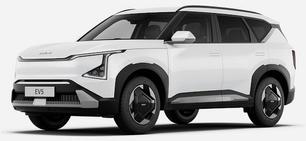
It’s the Kia EV5, a mid-size, all-electric SUV the Korean brand thinks will be its best-selling EV by some margin.
Oh, and it’s cheaper than the Tesla, by more than a little bit.
So, is this the electric SUV that might finally put an end to Tesla’s winning run in Australia?
Most people that are wealthy enough to be ferried around in a car or limo choose a long luxurious sedan like a Mercedes-Benz S-Class, BMW 7 Series or a Lexus LS. Of course, there are now also SUVs that are used for the same purpose.
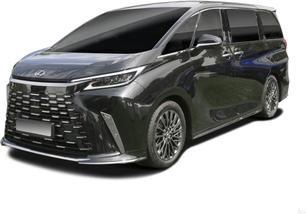
But what about a plush people mover? There are very few of these available in Australia and they don’t sell in huge numbers. But Lexus believes there is a market for such a model and it has just launched the big and bold LM. The hybrid-only range is a unique proposition and the LM should hold appeal for limo and tourism operators, and larger cashed-up families.
This initial launch drive was a slightly different format to usual. Given the intended use of the lounge-like model, Lexus arranged for us to be collected in the LM by a chauffeur and ferried from Melbourne to the Mornington Peninsula. From there we got behind the wheel for a brief drive, but many of my impressions will focus on the passenger cabin experience.
Note too that the LM500h does not land until early 2024, so we only sampled the LM350h AWD.
So jump aboard and let’s see if this Lexus can do everything the LS can do - and maybe even a little bit more.
The size is right, the price is right and the drive is right – three things that make the Kia EV5 a pretty formidable foe, and the kind of vehicle that might finally be able to break through the wall of the temple of Tesla in Australia.
Note: CarsGuide attended this event as a guest of the manufacturer, with accommodation and meals provided.
The Lexus LM is going to be a niche model. This was not designed to appeal to people that may have bought a Toyota Tarago back in the day, or even a Kia Carnival now.
It has a specific purpose for ferrying people around in absolute comfort and at that, it succeeds in a big way.
It’s just a bonus that it’s great to drive.
Welcome to the automotive equivalent of a business class airline suite.
Note: CarsGuide attended this event as a guest of the manufacturer, with accommodation and meals provided.
If you’re familiar with any of Kia’s EV designs, and specifically the EV9, you’ll already know the Kia EV5, which looks a lot like a shrunken version of the company’s biggest electric 4WD.
But this one looks a bit smaller, a bit more familiar looking, and maybe a bit more accessible than the hyper-modern EV9.
Honestly, it looks like a contemporary, mid-size SUV that could be powered by anything.
There are a couple of EV5 design elements I really like. The first is the combination of hard edges and subtle curves, which combine really well. I also love the lighting treatment up front, which gives the EV5 a bold and unique light signature, especially at night.
Inside, it’s another story of familiarity, with a clean, high-tech cabin and Kia’s common twin-screen set-up. Actually, it’s more a triple screen, with two 12.3-inch screens, and a 5.0-inch climate monitor between them.
The materials are all nice, and they look great, but they don’t exactly melt under the touch, and that gives the EV5’s cabin a hard edge I don’t love.
I do, however, love the inclusion of some physical buttons, so you’re not pawing through the screen to access every in-car function.
And one final design quirk. I know it looks like it has an old-school bench front seat, but you can’t use it as a third seat in front. Kia says it’s just a design flourish. But it is also somewhere safe to pop your phone or other small valuables to stop them sliding about when you're on the road.
Look, people movers are not considered the sexiest of automotive body styles, but that’s changing.
The Kia Carnival and Hyundai Staria are examples of good MPV design.
And the Lexus LM steps it up again.
It is based on Toyota’s TNGA-K architecture that underpins a bunch of Toyota and Lexus models, including the Lexus RX, and it measures a whopping 5.1 metres long and has a three-metre wheelbase.
It shares its underpinnings with the latest generation Japanese-market Toyota Alphard, which is a cult hit in Australia among the grey import set.
The front-end design is bold, with the latest take on Lexus’ big ‘spindle grille’, pinched slimline headlights and a stubby nose.
I am a big fan of this design. It is far more than a box on wheels and it has quite a bit of presence.
The interior design up front is modern Lexus, with a few familiar Toyota touches, and while it’s not exactly minimal, it’s still visually appealing.
At 4615mm in length, 1875mm in width, 1715mm in height, and with a wheelbase of 2750mm, the Kia EV5 is roughly the same size as a Tesla Model Y, so if you’re ever sat in the back of the Tesla, you’ll have a fair idea of what to expect here.
Sitting behind my own 175cm driving position, I found I had a heap of knee room, more than enough headroom, and I reckon you could fit three adults across the back seat pretty easily, too.
There are a couple of design flourishes I really like, too. The pull-down divider that separates the backseat is home to two cupholders, which isn’t unusual, but what is new to me is the unique positioning of the USB charge ports, which are in the middle-back of the front seats, right above the storage pocket, so you have somewhere to pop your phone and cable when you're charging.
There is also a deep storage draw between the two front seats. It’s just for extra storage in the Air and Earth, but in the GT-Line it’s heated and cooled, which means hot pies or cold drinks when you’re on the move.
The EV5 might be an all-electric vehicle, but it’s still a mid-size SUV, which means there are certain standards it has to hit to be taken seriously, and one of those is boot space.
Up front there’s 67 litres of space in the fruit, or frunk, while the boot holds 513L with the rear seats in place – that number obviously growing as you begin folding them flat.
It is also a hugely customisable space. There’s heaps of under-floor storage below the removable panels. There’s also vehicle-to-load capability, which takes the form of a standard power point in the boot that can use the vehicle’s battery to power pretty much whatever you want.
Finally, there are adjustable luggage hooks, so you can carry bigger or smaller bags as you wish.
While most of the fun happens in the second row of the Lexus LM, there is a lot to like in the front compartment.
The dash is dominated by a large touchscreen that houses Lexus’ latest multimedia setup. The logical menu and uncomplicated sub-menus ensure this is an easy system to navigate. Speaking of, the in-built sat-nav is one of the better systems I have experienced.
Comfort isn’t just the domain of the second row - the driver’s seat is very supportive and comfortable, with power adjustment.
There’s plenty of glass including a smaller front quarter window that helps eliminate front blind spots, so forward visibility is exceptional. Rearward visibility is aided by the digital rear-view mirror that is designed to ensure privacy for second and third-row occupants. You don’t want the chauffeur spying on you while you’re sleeping, do you?
The other big tick for me is the driving position. Other people movers, namely the Hyundai Staria and Mercedes-Benz EQV, have very low window lines and it leaves you with a feeling of sitting on the car, rather than in it. I am sure it helps with extra light and it probably makes it easier for kids to see out of, but from a driving perspective, I find it a little disconcerting.
But the LM has flipped that. The front compartment is designed in such a way that it feels like a cockpit that you’re ensconced in. This helps the driver feel more connected with the car, and in the LM it feels like you’re sitting in the driver’s seat of a sporty sedan, not a five-metre bus. Very well done, Lexus.
And now to the main event - the second row.
Where to begin. Let’s start with space. Because there is so much of it. Unsurprisingly given the seating layout, there is an unending amount of head, leg, knee, bum, shoulder and whatever-else room. I can’t imagine anyone complaining about space back there.
Also, getting in and out is a breeze thanks to the sliding power doors on both sides. These can be opened from the front seat, and via several buttons in the rear.
Those captain’s seats are plush. Not quite Benz S-Class plush, but still.
They are adjustable six ways - power adjustable, of course - and they’re heated and ventilated. They recline almost flat, too, if you need a nap on the way to the country estate. And while you do that you can look up through the split sunroof, or close the shade a number of ways.
Is there a massage function? Of course there is a massage function. And it’s not bad. You can choose two settings - weak and firm.
Adding to the feeling of a business class airline seat, there is a fold-out table in the armrest, although it’s a smallish one. And there is dual-zone climate control in the rear.
There is a roof-mounted control panel for things like climate, sunshades and sunroof blinds, but much of this can also be controlled by the Apple iPhone-like devices clipped into both rear seats. These are closer to the seats, so it is easier to access than the roof.
Another function in the device is the Climate Concierge that features different modes - Dream, Relax, Focus, Energise. Depending on which one you choose, it alters the seat settings, massage, climate and lights to suit.
I love the massively wide side windows that are tinted (or privacy glass), too.
Other amenities include map pockets, knee and roof-mounted air vents and a 14.0-inch display screen that retracts from the roof and connects to an HDMI cable, allowing you to watch whatever you want.
The third row is not as appealing as the second. It is technically a three-person row, but the width and the fact that it has a sizeable gap in the centre suggests that this is best thought of as a six-seater van.
The seats are not as plush of course, so you might not want to spend too much time in that row unless you are a small child. But you do get USB-C ports, cupholders, air vents, lights, sunglasses holder, power side shades and grab handles.
Getting in and out of the third row can take a while. It’s all power adjustable, so you don’t have to lift anything heavy - but it takes a while for the second row seats to move forward and up.
With all seats in place the cargo space is limited. In fact, it’s just 110 litres.
That’s similar to what you get in a seven-seat SUV. But it did fit all our overnight luggage easily.
Drop the rear row and that expands to a maximum of 1191 litres in the 350h or 752 litres in the 500h.
All grades have a space-saver spare wheel.
The cheapest EV5, the Air, arrives in two guises, Standard Range or Long Range, and the former is something of a bargain.
It’s the only EV5 to get included on-road costs, and Kia is asking $56,770, on the road. That puts it well below the Tesla Model Y. As of right now, the single-motor Tesla is $60,868, on the road, in NSW.
Next is the Air Long Range, which lists at $61,170, before on-road costs. The EV5 Earth occupies the middle rung, at $64,770, before on-roads, while the yet-to-arrive flagship, the GT-Line, is a considerable $71,770, before on-road costs.
Air models get 18-inch alloys, LED lighting all around, roof racks and power mirrors, while inside there are cloth and synthetic leather seats, with a massage function for the driver, along with a synthetic leather steering wheel and LED interior lighting.
Tech is covered by twin 12.3-inch screens, with a smaller 5.0-inch climate screen sandwiched between them, and there’s in-built nav, a six-speaker stereo and Apple CarPlay and Android Auto.
The Earth then adds 19-inch alloys, gloss black exterior design flourishes and privacy glass, while inside, the seats are now entirely synthetic leather. You also get a second V2L connection, as well as a powered tailgate.
Finally, the GT-Line gets pretty much everything Kia could throw at it, including 20-inch alloys, auto-flush door handles, a panoramic sunroof, two-tone seats which are now billed as offering "premium relaxation", wireless phone charging, fingerprint recognition, a heated steering wheel and an augmented-reality head-up display.
From launch there will be two versions of the LM350h Sports Luxury on offer - front-wheel drive and all-wheel drive, priced from $160,888 and $165,888 before on-road costs respectively.
They both have seven seats across three rows and share the same four-cylinder hybrid powertrain, but an even more high-end version is on the horizon.
The LM500h will land in January 2024, priced from $220,888, and it adopts a newer more powerful hybrid powertrain. Something else that sets the LM500h apart is the seating layout - it is a four-seater. Behind the driver and front passenger compartment are two big captain’s chairs that recline flat if required. Decadent luxury. Or so the pictures suggest. We will have to wait until the New Year to sink into the sumptuous seats.
Given the positioning and interior layout, the LM will probably not appeal to people looking at a Kia Carnival, or who would have opted for the departed Toyota Tarago. It will, however, appeal to large families that aren’t short of a dollar, airport limo operators, and even as tourist transport.
Thankfully, there’s a substantial amount of standard gear fitted as standard in the LM.
The only difference in spec between the two 350h grades is the addition of all-wheel drive. Otherwise you’ll find keyless entry and start, front heated seats, automatic retractable side steps, power opening side doors, rear privacy glass, a pair of sunroofs, and semi-aniline or L-aniline upholstery.
Tech-wise, there is a digital rearview mirror, and a 14.0-inch touchscreen, a 12.3-inch digital instrument cluster, a head-up display, seven USB ports, a smartphone charger and a rear 14.0-inch multimedia display.
The 500h adds niceties like a separation partition with elevating and dimmable glass, that doubles as a 48.0-inch widescreen display to watch films and TV, or take conference calls with. It also gets two partition glove boxes, a pair of umbrella holders, two second-row phone chargers, a 23-speaker Mark Levinson 3D audio system and more.
In terms of rivals, there really aren’t many other luxury people movers on the market. Aside from the Mercedes-Benz V-Class and all-electric EQV, there are higher-grade versions of the Volkswagen Multivan, and the LDV Mifa 9 EV.
The entry-level EV5 Air is available in Standard Range or Long Range guises, both powered by a single front-mounted electric motor, producing 160kW and 310Nm.
The Standard Range will clip 0-100km/h in 8.5 seconds, while the extra weight of the bigger battery slows down the sprint in the Long Range, taking around 8.9 seconds.
The Earth is a twin-motor AWD offering, with a motor at each axle, lifting outputs to 230kW and 480Nm, dropping the sprint to a brisk-feeling 6.1 seconds. The incoming GT-Line gets the same powertrain.
There are two hybrid powertrains available. Coming next year, the LM500h combines a 2.4-litre turbocharged petrol engine and a hybrid setup, making for power and torque of 202kW and 460Nm respectively. It is all-wheel drive and is paired with a six-speed automatic transmission.
The LM350h comes with a 2.5-litre naturally aspirated petrol engine and a parallel hybrid system, offering up a total system output of 140kW and 239Nm. The 350h comes in front or all-wheel-drive guise and uses a continuously variable transmission (CVT).
The Air Standard Range gets a 64.2 kWh lithium iron phosphate battery, weighing in at a hefty 428kg, which delivers a claimed driving range of 400km. The Air Long Range, the Earth and the incoming GT-Line all share the same 88.1kWh battery, upping the range to 555km, 500km and 470km, respectively.
So, if driving range is at the very top of your must-have list, the Air Long Range is the car for you.
All cars can take 7.0kW home AC charging, while the dual-motor versions are set up for 11kW AC charging. Fast charging. When it comes to fast charging, all models can plug into a 350kW charger, taking them from 10 percent to 80 per cent in less than 40minutes.
As you’d hope with an all-hybrid line-up, the LM excels when it comes to combined cycle fuel efficiency. The 350h FWD sips just 5.5 litres per 100 kilometres, while the AWD version is 5.6L/100km. The 500h is a little thirstier at 6.6L.
Our drive was so brief we did not get to record an on-test fuel figure.
The theoretical range of the LM, considering the 60-litre fuel tank and 5.5L/100km (350h) and 6.6L/100km (500h) fuel consumption figures is about 1000km.
First things first – I spend most of my time behind the wheel of the EV5 Earth, which though it shares its dual-motor powertrain with the GT-Line, is actually the fastest of the lot owing to the extra weight of Kia's flagship.
That means zero to 100km/h in just over six seconds, and trust me when I say this, that is more than fast enough. I know you read about EVs knocking off the sprint to 100km/h in supercar-besting times, but you don't need that sort of crazy acceleration in a family-focused mid-size SUV.
Actually, forget needing, you don't want it. The EV5 feels more than punchy enough, without shaving years off your life every time you plant your foot.
Fit for purpose, then, which is exactly how I'd describe the rest of the EV5's very good drive experience. Kia's Australian ride and handling wizards have once again had their way with the EV5, and the result is an EV that handles most everything Australian road surfaces can throw it at it with ease.
Surprisingly, it's maybe not quite as dynamically sharp as the bigger EV9, but it's always comfortable, without feeling floaty or disconnected, and it will happily grip its way around tighter corners without tipping from side to side, either.
There are a couple of small quirks, though. The first is the steering, which is definitely responsive and confidence inspiring, but it also has a kind of artificial weight or heaviness at times that feels a bit disconnected from what's happening beneath the tyres. And the cabin can be a little noisy through wind, too.
But these are small beans, really. The EV5 is comfortable and capable, and without the harsh ride or too-sharp steering that can be found in some of its rivals.
We drove it for hours across all sorts of road surfaces, and in all sorts of conditions, and found very, very little to complain about.
As mentioned earlier, I spent much more time in the second row as a passenger than I did behind the wheel of the LM350h. But it was enough time to capture some initial high-level drive impressions.
But let’s start in the rear. The ride in the second row is comfortable - as you’d hope. Our trek from Melbourne’s inner north down to the Mornington Peninsula included a lot of freeway, which was smooth. The only thing that disturbed the peace was a chunky bridge join that caused a bit of a thump. But we were hardly disturbed.
Back in the driver’s seat, there’s a lot to like about how the LM350h drives. First of all, it feels smaller on the road than its ample dimensions would otherwise suggest. It even feels relatively light on the road.
After the LM, I drove a Mercedes-Benz EQE SUV that has a similar kerb weight (the Lexus is about 2.4 tonnes), and the LM felt lighter.
The hybrid powertrain is responsive enough, offering decent acceleration from a standing start. The more potent 500h will of course be quicker.
The transition from electric to petrol propulsion is pretty smooth in Lexus (and Toyota) models these days, and the additional noise-deadening materials in the LM ensure it’s subtle.
The 2.5-litre petrol engine is really only noticeable when accelerating hard, and the CVT a slight drone, but it’s in no way unpleasant.
Otherwise it’s a superbly refined and quiet cabin on all but the absolute worst road surfaces. Whisper quiet power windows adds to that feeling of luxurious refinement.
Given the brief time behind the wheel, we didn’t get to test the handling capability of the LM, so that might have to wait for a review in the New Year.
The steering is heavily weighted and doesn’t feel overly responsive, but it’s perfectly suited to this sort of vehicle.
That supple ride we experienced in the rear was also evident behind the wheel.
This was especially impressive on a couple of pock-marked peninsular back roads. The ride is also much more compliant than the Mercedes-Benz EQV I tested early in 2023.
Every EV5 gets a comprehensive safety offering, including 'Advanced AEB' that includes junction crossing, lane oncoming and lane changing alerts. There’s rear-cross-traffic alert, semi-autonomous highway cruising and a whole heap more.
If you want a blind-spot view monitor, surround-view monitor or remote park assist, you’ll need to spring for the GT-Line.
The EV5 hasn’t been crash-tested yet, but Kia will be shooting for the maximum five-star ANCAP rating.
The LM is yet to be crash tested by ANCAP, and it is unclear if it will be given the fact that it’s a niche model. However, as with other current Lexus models, it has a long list of standard safety gear.
The safety suite, including intersection assist, and a pre-collision system with vehicle, pedestrian, bicyclist and daytime motorcyclist detection.
It also comes with emergency steering assist, full-speed radar cruise control, ‘Curve Speed Reduction’, ‘Lane Trace Assist’ with lane-departure alert, automatic high beam, ‘Road-Sign Assist’ (speed signs only), ‘Emergency Driver Stop System’, a blind-spot monitor and rear cross-traffic alert.
The EV5 is covered by Kia’s seven-year, unlimited-kilometre warranty, and you can prepay your servicing costs, too.
Three years will set you back $980, five years is $1535 and the full seven years will set you back $2431 ($347 per workshop visit), which is category competitive.
When you buy a Lexus, you get a bit more than a car. The brand has a customer loyalty program - Lexus Encore - and depending on what model you buy, you are eligible for some pretty cool discounts, bonuses and experiences.
There are three tiers, depending on your model. UX, NX, RX and ES fall under regular Encore, and electric models the RZ and UX300e sit beneath Electrified Benefits. But the LM, as well as the LS, LC and LX are under Encore Platinum - the top tier.
That means access to the ‘On Demand’ program that allows access to another Lexus model for a few days or longer. So if you own an LC Convertible but need an RX for a few days to ferry people around, that’s all free. There’s valet parking service loans and more.
It also includes upgrades at Lexus partners. Our launch took us to Jackalope Hotel on the Mornington Peninsula, which is a Lexus partner, and you can get a bunch of extras here as a Lexus owner that other guests won’t get.
In terms of other ownership details, the LM is covered by a five-year, unlimited-kilometre warranty, and the servicing schedule is every 12 months or 15,000km.
Lexus is yet to announce the capped-price servicing details for LM, but it is expected to cover five years, and should be in the vicinity of approximately $700 per service.