What's the difference?
Three years after the fourth-generation Cerato small car rolled into Australian dealerships, Kia launched a mid-life facelift for the sedan and hatch range in mid-2021.
It ushered in styling tweaks including new headlights and Kia’s new logo, as well as more safety tech and a multimedia upgrade.
At the top of the range sits the warmed-up Cerato GT. It’s not quite Hyundai i30 N-level performance, more i30 N-Line. In other words, more than enough performance to keep most people satisfied and enough poke to get away quickly at the lights.
But is the updated version of Kia’s Cerato trying to be something it’s not, or is it a performance bargain?
Read on to find out.
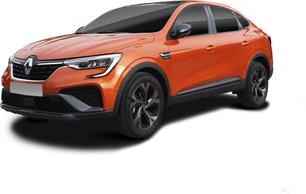
Renault’s Arkana coupe-style compact SUV has been hit with its first makeover, which ushers in a range of styling changes, increased equipment and new model grade names.
There are few cars like it in the compact SUV segment, where vehicles usually favour the boxier, traditional SUV wagon shape over the stylish but often internal space compromised coupe SUVs.
Renault Australia is only expecting about one per cent share of the segment or around 1500 sales a year.
But if you want to stand out from the crowd of Mazda CX-30, Mitsubishi ASX and Toyota Corolla Cross small SUVs then the Arkana might be for you.
Kia has value and packaging on its side with the sleek and spunky Cerato GT sedan. There’s no shortage of standard gear, it comes with the latest multimedia and safety gear and the cabin and cargo area are spacious and practical.
The powertrain is a winner too. Which is why it’s such a shame that it’s let down so badly by the ride quality.
If you’re going to be driving on various road surfaces, or regularly driving long distance, check out the far more compliant Hyundai i30 N-Line instead.
But if you’ll only ever drive in urban areas – or enjoy the occasional back-road blast – and you can handle the firm ride, there’s still plenty to like about the Cerato GT.
The Arkana is a stylish alternative in a sea of same-same compact SUVs. It's relatively well equipped and has some hidden gems in its ownership and running costs that elevate it above some of the competition.
It’s not a bad thing to steer, either, but the lurchy dual-clutch could be a deal breaker for some.
The sweet spot is the Techno, which misses out on the Esprit Alpine’s special touches but represents the most bang for your buck.
Note: CarsGuide attended this event as a guest of the manufacturer, with meals provided.
When the fourth-gen Cerato sedan was revealed in US-market Kia Forte guise at the 2018 Detroit motor show, the design was praised for taking inspiration from the sleek Stinger performance sedan.
The facelift has arrived at just the right time to keep the Cerato fresh against the dominant Toyota Corolla, Mazda3 and new Volkswagen Golf.
The sharpened front-end styling features an eye-catching daytime running light signature and the headlights now connect with the redesigned, slimline Kia ‘tiger-nose’ grille in gloss black.
It’s a subtle, yet successful design refresh.
Inside, the Cerato is starting to look its age against rivals like the Golf and Mazda3. Those GT themed additions definitely lift the ambience of the cabin, but the dash layout feels a bit generic and the overall interior design is nothing flash. Especially when you consider the interior of some of Kia’s latest models, like the impressive Sportage medium SUV.
This update isn’t a massive overhaul of the Arkana, rather its “refreshing and enhancing” what was already there according to Renault Australia.
And this remains true with the car’s styling. Not much has changed on the outside except for a few minor garnishes and flourishes, especially on the Esprit Alpine variant.
The coupe styling isn’t for everyone. It’s more popular in Europe than Australia but if you want to stand out from the crowd it’s a good place to start.
The Arkana has curves in all the right places and its little grille made up of little Renault badge diamonds is a welcome addition in a world of wide mouth front ends. The C-shaped LED headlights and a large Renault badge add a bit of pop to its look.
The pinched rear end has LED lighting that runs from the tail-lights to the centre badge and Arkana is spelled out in big, bold letters.
The Esprit Alpine stands out with gunmetal highlights on the front bumper and the front and rear skid plates in the same colour. It also adds a Esprit Alpine badge below the side mirror and front door sill plates.
The Esprit Alpine has 'Tricolour' stitching in red, white and blue on the door trim and steering wheel, which is complemented by blue contrast stitching on the gear shifter, seats and centre console.
Cabin quality is variable. There are some nice feeling materials used on the dash and on the door trims but below eye level there are lots of hard wearing plastics. A big slab of faux wood running along the dashboard doesn’t feel as high-quality as you would like. The quality drops a bit in the back row, which is where carmakers often try to cut costs.
Solid white is the only no cost paint colour, but it is not available on the Esprit Alpine. Metallic white, blue, black, grey and red cost $750.
Buyers can also option a black roof for a two-tone look for $600.
As mentioned, the red stitching throughout, chunky steering wheel and sports seats are welcome additions to the GT cabin.
There are soft-touch materials on the top of the dash but hard plastics on the dash fascia.
There’s no fully digital instrument cluster, but it has a 4.2-inch LCD display in the cluster showing fuel economy and the like. No complaints with the analogue dials and there’s a digital speedo if required.
The update ushered in Kia’s latest multimedia system to the Cerato and it’s a winner thanks to cool graphics, logical menus and its ease of use.
There’s quite a sizable central storage bin and glovebox, while the console houses a key slot, two sizeable cupholders and a second spot for devices adjacent to the charging pad.
The front sports seats look sexy, have excellent side and body bolstering and they’re firm, but comfortable.
A 600mL bottle will just fit into the doors, bit it’s tight.
Sitting behind my six-foot (182cm) frame in the rear, legroom is adequate but toe room is tight. My head was about an inch away from the headliner due to the sloping roofline. The rear seats are also firm.
The Cerato has lower rear air vents, one USB-C port, a map pocket on the passenger side, a central rear armrest with two cupholders, and bottles slot into the doors easier than they do up front.
Kia offers a temporary spare wheel housed under the boot floor. The boot is long, offering an impressive 502 litres (VDA) of cargo space, which is more than other small sedans like the Subaru Impreza (460L VDA) and the Hyundai i30 (474L VDA).
Lower the rear 60/40 seats via the levers in the boot and that space increases further, but they don’t fold completely flat.
The Arkana isn’t a family SUV, but rather is pitched at younger couples and empty nesters.
Up front there is great forward vision with a higher seating position than hatchbacks and sedans. Electronically adjustable seats and a manually moveable steering wheel means there’s a good seating position for pretty much everyone.
The seats are comfy and the multimedia screen and climate controls are easy to reach. The centre console has a wireless device charger, two USB-A charging ports and a 12-volt socket to keep various devices juiced up.
Two cupholders take up most of the space with minimal storage space leftover. There are decent sized storage bins in the doors and a little net in the passenger seats footwell to stop small items rolling around.
Back seat passengers have their own air con vents and USB charging ports, which is a welcome addition.
In the rear pew is where the Arkana’s stylish coupe-like design dents its practicality. The sloping roof shrinks the windows and reduces headroom, which makes it feel a bit gloomy compared to more boxy-shaped SUVs that makes it no-no for smaller kids.
The boot is a decent size, but it’s longer and lower than other SUVs, which is the price you pay for looking good.
The GT is priced at $35,290 before on-road costs regardless of whether you opt for the four-door sedan (as tested here) or the five-door hatchback, though be aware that Kia Australia regularly runs drive-away pricing campaigns.
There’s not a lot of competition in the warmed-up small car market these days. A number of carmakers have slimmed down their small-car line-ups in the face of falling sales.
Kia’s closest rival is also its mechanical sibling, the Hyundai i30 N-Line sedan and hatch. The Hyundai is cheaper by more than $2500, but the more generously equipped i30 N-Line Premium sedan is a little over $2000 more expensive than the Cerato GT.
The Mazda3 GT sedan and hatch could also be considered a rival and pricing is about on par with the Kia.
Other lower grades in the Cerato range run from $25,490 to $30,640 (MSRP).
The GT benefits from the more premium powertrain offering in the Cerato line-up – the 1.6-litre turbocharged four-cylinder engine shared with the i30 N-Line and the recently discontinued Veloster Turbo.
The GT bodykit adds sporty styling flourishes like a black front and rear diffuser, boot spoiler, dual exhaust, black external mirror caps, red highlights and 18-inch GT alloy wheels.
This theme carries through to the cabin too with features like alloy sports pedals, flat-bottom perforated leather sports steering wheel and leather-appointed seats with red stitching and embossed GT logo.
As the range flagship, the GT also has the most standard equipment. It comes with a sunroof, eight-way power driver’s seat, wireless device charging, an eight-speaker JBL premium sound system, heated and ventilated front seats and dual-zone climate control air conditioning.
The only option fitted to the test car was Snow White Pearl premium paint for $520.
Initially Renault is launching with just two variants, the mid-tier Techno and top-spec Esprit Alpine, which replace the formerly named Intens and R.S. Line variants.
Despite the update, prices remain the same with the Techno starting at $41,000, before on-road costs, and the Esprit Alpine from $45,000.
An entry-level Evolution grade will arrive later to take the place of the old Zen variant. Expect it to be priced from $37,500.
The Arkana isn’t the cheapest compact SUV on sale with lower starting points for the Hyundai Kona, Kia Seltos and Mazda CX-30 ranges. It is cheaper than the hybrid-only Toyota C-HR and its French rival, the Peugeot 2008.
The two model grades are fairly well stacked with gear to justify the price, though.
Techno shoppers can expect 18-inch alloy wheels, which swell to 19-inche on the Esprit Alpine and all variants have LED head and tail-lights.
Step inside and the Techno grade has black leather and synthetic suede accented seats, which upgrade to more premium synthetic leather and suede upholstery with contrast blue stitching and Alpine badging in the top-spec grade.
The front seats are heated in both grades and the Esprit Alpine has a heated steering wheel, too.
On the tech front both variants have a 9.3-inch portrait-shaped multimedia display paired with a 10.25-inch digital driver display.
Apple CarPlay and Android Auto wireless smartphone mirroring is standard.
The Esprit Alpine version ditches the six-speaker stereo in the Techno for a booming eight-speaker Bose system and it adds a sunroof.
While all other Cerato grades use a 112kW/192Nm 2.0-litre naturally aspirated petrol engine, the GT benefits from a spicier powertrain.
Under the bonnet is the Hyundai Group 1.6-litre T-GDI four-cylinder turbocharged petrol engine delivering 150kW of power at 6000rpm and 265Nm of torque at 1500-4500rpm. This is the same tune as the Hyundai i30 N-Line.
This is paired with a seven-speed dual-clutch automatic transmission that drives the front wheels. Lower grades use a six-speed torque converter auto. Kia dropped the manual from the S and Sport grades as part of the update.
The GT differs from the rest of the Cerato range as it has multi-link rear suspension, instead of a torsion beam setup. Both the suspension and steering have been tuned for dynamic driving. More on that later.
The Arkana keeps the 1.3-litre four-cylinder turbocharged petrol engine from before. It makes 115kW and 262Nm and is paired with a seven-speed dual-clutch auto that drives the front wheels.
That’s plenty of grunt for a car this size, but it’s let down by a glitchy transmission that hesitates a lot at lower speeds and doesn’t do its best work when asked to hustle, either.
According to Kia, the Cerato GT sedan uses 6.9 litres of fuel per 100km on the combined cycle. The GT hatch uses 0.1L less.
After a week of mixed driving in the Cerato GT, we recorded a combined fuel consumption figure of 9.0L/100km – a fair bit more than Kia’s claim.
The GT emits 157g/km of CO2 (official combined).
Efficiency is the name of the game with the Arkana’s little turbo engine. The French brand claims it drinks 5.9L/100km on the combined (urban/extra-urban) cycle but we averaged 7.5L/100km on our circa two-hour country road drive according to the trip computer.
The higher speed twisting and turning country roads we drove on aren’t conducive to low fuel use, though.
It has a 50-litre fuel tank and only requires cheaper 91 RON petrol, which is rare for little turbo engines that usually have premium tastes.
The 1.6-litre turbo engine is a ripper and it’s been put to good use in Hyundai’s i30 N-Line and Veloster Turbo.
It’s just as willing and responsive under the bonnet of the Cerato GT, but they each perform quite differently.
Accelerating from a standing start, there’s mild turbo lag in the Cerato, and some torque steer when accelerating hard.
Once up and running it’s quick, and the seven-speed dual clutch snaps through the gears smoothly while still allowing it to rev freely.
It’s the type of powertrain that is utterly unbothered by things like steep ascents. The Cerato GT just keeps pushing on, without losing momentum.
The downside of that is that the engine is super noisy when pushed and the Kia just doesn’t have sufficient noise suppression materials to counter that. Because of this, it lacks the refinement of its i30 N-Line cousin and the Mazda3.
Steering is weighted on the heavier side but it’s direct and the car goes where you point it.
Like many Kia models, the Cerato GT benefits from an Australian-specific steering and suspension tune. Kia doesn’t have a full performance hot hatch to line up with the i30 N, but the engineers seem to have tuned the suspension to be just as capable as the full-fat i30 N.
That certainly aids dynamic driving in the Cerato GT. It hugs corners and grips the road, avoiding any skipping and with only a hint of body roll.
However, we think Kia’s engineers have made the damper settings too firm, because the Cerato GT’s ride is harsh in virtually all driving environments.
A new, freshly laid road surface in an urban area without any speed bumps was the only time the ride was comfortable during our week with the car.
It crashes over potholes and it’s loud and jarring when you unexpectedly encounter a sharp rut. There’s a bit of vibration through the steering wheel too.
This is disappointing, especially when you consider that the i30 N-Line has a much more supple ride and is the sort of warmed-up hatch or sedan you could easily live with day to day.
We briefly drove the i30 N hot hatch just before we got into the Cerato GT and even that has a more tolerable ride quality than the Kia.
The Arkana is a bit of a mixed bag on the road. Its engine is a nice little unit but the dual-clutch auto deflates the drive experience.
At lower speeds it hesitates and then gives too much oomph all at once, which can result in some wheel spin. It means you need to be mindful at T-intersections and when turning across traffic and feather the pedals.
This is a symptom of most dual-clutch autos but the Arkana’s is less sophisticated than say ones fitted to Volkswagens, and the Arkana doesn’t have the meaty power and torque bands of performance cars. A conventional torque converter auto would suit it better.
The Arkana does some of its best work at higher speeds, where the dual-clutch is more decisive and it's an admirable highway cruiser.
It isn’t a bad operator through the bends where it exerts excellent body control to minimise rolling. This is complemented by nice steering that is well weighted and accurate. Pedal feel is excellent with no woody or doughy feel to them.
The suspension is on the firmer side and you’ll feel some harsh bumps, especially over consistent smaller ones that it will crash over.
Its rear torsion beam suspension set-up is less sophisticated than the multilink arrangements found in an increasing number of competitors in the segment.
Road noise is noticeable at higher speeds. There's a fair bit of wind noise, too, but it was an especially windy day on our test drive.
The Arkana isn’t a sports car but is a stylish SUV for punting around town and facilitating weekend getaways, but there are other compact players that answer this brief better.
The Cerato GT achieved a five-star ANCAP crash safety rating in 2019 and it applies to all Cerato variants built after June 2021, except the S and Sport which have four stars because the autonomous emergency braking system offered as standard in those grades can’t detect vulnerable road users like pedestrians and cyclists.
Standard safety for the GT includes auto emergency braking (AEB) with pedestrian and cyclist detection, forward collision warning, rear occupant alert, driver attention assist, rear cross-traffic alert with collision avoidance, blind spot detection and collision avoidance assist, adaptive cruise control, lane keep assist with lane follow assist steering, safe exit warning, front and rear parking sensors and a reversing camera.
At one point, the AEB kicked in pulling out of a parallel street parking spot because it detected a vehicle that had already driven past the car and was several metres ahead.
Kia’s lane keep assist system is generally impressive and functions without issue, but it pulls on the wheel a little. It’s not jolty like systems offered by some other brands.
When lane keep and follow assist are active, it can be fiddly to switch them both off. If you hold the steering wheel-mounted button down, the follow assist stays on but the lane keeping deactivates, so you just have to keep holding the button down until the lane and steering wheel icons in the digital display eventually disappear.
The Arkana holds a maximum five-star ANCAP rating, but it is based on the 2019 crash test of the Renault Captur, with which it shares much of its underpinnings. This rating is due to expire in late 2025.
There are six airbags and a range of active driver aids included as standard and the update adds a 360-degree camera view to all grades.
This joins auto emergency braking with pedestrian and cyclist detection, lane keep assist, blind-spot monitoring, rear cross-traffic alert, radar cruise control and speed sign recognition.
A lot of carmakers just tick the box for active driver aids but don’t think of the calibration. Not Renault. The driver aids barely interjected during the launch drive and only chirped up when needed, which is a welcome reprieve from the overly touchy and nannying sensors found in other cars.
The Cerato, like all Kia models, is offered with a seven-year/unlimited kilometre warranty, and one-year free roadside assist which extends year by year if you service with Kia (up to eight years).
It also comes with a seven-year capped-price servicing plan that costs approximately $3234 over the seven-year period.
Servicing intervals for the Cerato GT are every year or 10,000km, whichever comes first.
There is one part of Renault’s ownership credentials that others can’t match.
Its service intervals are every 12 months and a whopping 30,000km, which is double the industry norm of 15,000km.
If you need to do big kays such as a sales rep or rideshare driver might this will be extremely important.
Five years or 150,000km of capped price servicing visits costs $2385, which is one the expensive side compared to Honda, Hyundai and Toyota but is in the ballpark of similar-sized Kias and Volkswagens.
Renault covers the Arkana with a five year/unlimited km warranty - par for the course in the mainstream market - and five years of roadside assistance.