What's the difference?
Electrified utes are growing in popularity in Australia and carmakers have been paying attention.
While the BYD Shark 6 plug-in hybrid (PHEV) ute is by far the best-selling as it stands, there hasn’t really been any electric ute to go up against the poorly received LDV eT60, until now.
South Korea’s KGM (formerly known as SsangYong) has just launched the Musso EV, which is a purely electric dual-cab ute. It’s unrelated to the existing, turbo-diesel Musso and is more closely related to the current car-based Actyon and Torres SUVs.
Read along to see how this ute stacks up against its growing set of competitors.
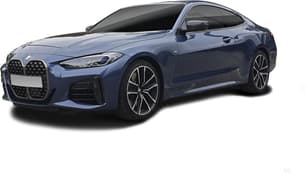
BMW's new 4 Series blasted onto the world stage with a chonky schnozz on it that only a mother could love. If BMW didn't want anyone to look at the rest of the car, it did a cracking job of it, because everyone had something to say about the big gnashers now grafted to the 4's front end.
I was nervous about it, too, because the 4 Series has always been so elegant and the current 3 Series - on which it is based - is quite nice to look at. It also threatened to overshadow just how good a car the BMW 4 should be, based as it is on the excellent 3 Series.
And, of course, one also had to wonder if a sports coupe like this would be any good around town. Limited vision? Hard to get in and out of? A true four-seater, or just a squishy 2+2? So many questions.
Despite having the Musso name, this electric ute is a completely different beast which is much more lifestyle-oriented than the older and unrelated turbo-diesel Musso workhorse.
There really isn’t much competition out there right now in the electric ute space but this makes a compelling case, especially for those looking in the fleet space. It has an appealing price, adequate range, SUV-like comfort and decent payload capacity.
The BMW 420i is a terrific car if you're after a bit of style and sophistication. Not everyone will warm to your car's nose, but if you get it de-chromed, like this white one, it really does look pretty good. It's a car that uses very little fuel, moves along smartly and is brimming with a decent amount of tech, even if it could do with a bit more safety gear at this price.
I reckon this car is settling well into the automotive landscape and ignoring it because of a few loudmouths think the grille is too big would be a terrible waste.
You’ll either love or hate the exterior design of this ute. I’m not the biggest fan as the front is busy and likely won’t age well.
Regardless, you can’t deny that it stands out, especially with the yellow paint of our test car.
It’s hard to call this ute a Musso as it’s very clearly an Actyon or Torres from the B-pillar forwards. It’s like a Frankenstein as the rear tub section doesn’t look like it fits the aesthetic of this car.
Between the cabin and the tub area is a large slab of body colour with a rhino emblem, which looks tacky, plus there is an oversized grab handle section which serves no purpose.
At the back I like how ‘KGM’ is prominently embossed into the tailgate as no one will know what this vehicle is, at least for now.
However, I’m not convinced by the ‘X’ motif in the rear tail-lights. Like the split front LED headlight set-up with the full-width light bar, it looks too over-the-top for this kind of vehicle.
Inside, it's virtually identical to the Actyon and Torres.
While I like the look of the hexagonal steering wheel and the wraparound screen set-up combining the digital instrument cluster and touchscreen multimedia system, the copper dashboard trim looks out of place in a work-oriented type of vehicle. Good thing this is more of a lifestyle ute than something like a HiLux.
Pair this with the large amounts of glossy piano black around the gear selector and the window switches on the door cards, it’s a recipe for fingerprints, smudges and scratches.
The internet exploded when it became clear the big kidney grille was for real. To be fair, BMW did itself absolutely no favours by ensuring the photos of the 4 Series made the twin grille look Easter Island statue sized.
And it persisted in doing them naked, without number plates to break up the look. In the flesh, it all works, the nose is striking but not completely overblown.
BMW coupe elegance reigns supreme in profile, however, with excellent proportions, and even in base form the wheels are the right size. The slim tail-lights and sculpted tail complete the look. It's a car I think most people love looking at. Hardly anyone mentioned the grille.
The cabin is excellent, as are all of the newer BMW interiors. It's not really a base model, given the price, but the mix of Alcantara and synthetic leather is very pleasing.
The big screens for the media and instruments headline the cabin with high-tech style and while it's not avant-garde, it's sharp and feels premium, which is just as well.
You sit up high in the Musso EV’s driver’s seat, allowing for a clear and commanding view of the road ahead. This is something that buyers of these kinds of vehicles seek as it provides more confidence behind the wheel.
While the hexagonal steering wheel looks cool, it can take a while to get your head around it, especially when turning quickly. Thankfully there are plenty of physical buttons on the wheel for key functions, so it doesn’t entirely reinvent the wheel (pardon the pun…)
Ahead of the driver is a 12.3-inch digital instrument cluster which looks clear and bright. You can cycle through a range of informative pages and while this is good, I’d love to see more customisation and configurability.
The same can be said for the central touchscreen multimedia system. It’s a rather basic system, but that’s not a bad thing because it also means that it’s easy to use. Frustratingly however, the screen takes a while to boot up when you start the ute.
Even though the touchscreen is basic, the majority of owners will likely be using smartphone mirroring for the majority of their time behind the wheel. It’s for this reason that it’s disappointing there’s only the wired form of Apple CarPlay and Android Auto available.
On the flip side though, the wired connection is flawless and it actually charges your phone rather than overheating it like some wireless chargers do.
I’d love to see some more physical switchgear and buttons around the screen because you’re forced to use it for a number of key functions, like the climate control and volume.
Up front the Musso EV is fairly practical. There are two cupholders, plenty of phone slots, a large open section under the centre console, as well as dual bottle holders in the doors.
Moving to the second row you can tell this is a ute that’s based on an SUV. There’s much more space and thought put into the second-row comfort.
At a leggy 182cm I have plenty of room behind my own driving position. In the default position it’s a comfortable spot to be, however you can recline the backrest even further, although you sacrifice legroom as a result. You don’t get features like this in every ute.
In terms of second-row amenities there are two USB-C ports and air vents on the back of the centre console, a fold-down armrest with cupholders, as well as lots of seat-back pockets and bottle holders in the doors.
The tub of the Musso EV is where things get interesting. There’s a damped tailgate with two gas struts that allows for effortless opening and closing.
Once the tailgate is open, the space is decent but not standout for a dual-cab ute. The tub area measures in at 1345mm long, 1515mm wide (1100mm between the arches) and 510mmmm tall. This notably means a standard Australia pallet is a bit too wide for the tub.
Payload in the 2WD is up to 905kg which isn’t too bad for a dual-cab ute, however it drops to 805kg in the AWD.
Towing capacity is where this electric ute suffers the most. It has a braked towing capacity of only 1800kg, which is down considerably over the benchmark 3500kg many of its top-selling rivals can do. There’s also only a maximum towball down load of 180kg, which is limiting.
While this isn’t great, electric utes typically aren’t the most efficient for towing rigs. As a result this limits the Musso EV to more light-duty and lifestyle applications.
Disappointingly there’s no spare wheel at all in this ute. Instead you have to rely on a tyre repair kit which isn’t helpful if you have a proper puncture and not a slow leak.
As a sports coupe, it's hardly a practical all-rounder but it's not a squishy 2+2 either. The rear seats are sculpted for maximum headroom and have the added bonus of holding onto rear passengers.
Six footers won't be super-comfortable but it's bearable for short trips. There are two ISOFIX points back there, too.
The front seats electrically fold out of the way for ingress and egress, but it's not an elegant process.
Front-seat passengers score two cupholders and bottle holders in the doors and a black hole for your phone and its wireless charging pad.
The boot takes an impressive 440 litres and the rear seats split and fold like good little soldiers.
There are three trim levels in the local KGM Musso EV line-up.
Pricing starts at $60,000 drive-away for the 2WD trim, which is what we have here. While this is around $7000 more than the top-spec diesel-powered Musso, it’s around the same price as the popular BYD Shark 6 PHEV ute.
Electric dual-cab utes are thin on the ground right now, with the only notable rival being the lacklustre LDV eT60 which is priced at a hefty $92,990 before on-roads.
However, electric versions of the Toyota HiLux and Isuzu D-Max are due to launch over the next few years in Australia and will likely be priced similarly. In this respect, it makes the Musso EV seem like a bargain.
Do note however that this is based on car-like monocoque platform rather than more rugged ladder frame of many utes. While these models are not sold here in Australia (yet), the US-market, SUV-based Ford Maverick and Hyundai Santa Cruz are more logical competitors for this ute.
Standard kit includes 17-inch alloy wheels, LED headlights, dual 12.3-inch screens, wired Apple CarPlay and Android Auto and interior ambient lighting.
There are even niceties like eight-way power-adjustable front seats with heating and ventilation, plus heated outboard rear seats on all models which isn’t common in the ute space.
It’s disappointing there’s no wireless smartphone mirroring available across the line-up, especially in a brand-new car that was only revealed earlier this year.
A 2WD Black Edge trim is available that, as the name suggests, brings a range of blacked-out finishes. It’s priced from $62,000 drive-away.
At the top of the line-up is the AWD, which is priced from $64,000 drive-away. It’s configured identically to the base grade but gains an extra electric motor for more power and torque.
The 420i starts at $71,900. That's a fair bit of money, I think you'll agree.
You get 19-inch wheels, a 10-speaker stereo, LED headlights with auto high beam, head-up display, power front seats, lighting package, auto-parking with reverse assistant, synthetic leather and Alcantara interior, 'Live Cockpit Professional' (fully digital dash), wireless phone charging and digital radio.
The massive 10.25-inch touchscreen may be smaller than the 12.3-inch digital dashboard, but it still looks huge. BMW's Operating System 7.0. is a cracking set-up, and you can control it via either touch or the 'iDrive' rotary dial on the console. It also has Apple CarPlay and Android Auto. Both of them, wireless. You don't read that every day.
You also get 'BMW ConnectedDrive', with some remote services that last for three years. The subscription includes things like the endearingly weird 'Caring Car' and the far less weird real-time traffic information.
The 4 Series is available in eight colours. 'Alpine White' is the only freebie while 'Black Sapphire', 'Arctic Race Blue', 'Portimao Blue', 'San Remo Green' and 'Mineral White' are $1538 each (or part of the 'Visibility Package'). 'Tanzanite Blue' and 'Dravit Grey' are a hefty $2962.
My car for the week had the $6300 Visibility Package (metallic paintwork, sunroof, BMW Laserlight, Ambient Light, which is worth it for the amazing Laserlights alone), the $2860 'Comfort Package' (lumbar support, electric boot, heated front seats, 'Comfort Access' with 'BMW Digital Key') and an $800 black pack. All this took the price to $81,860.
Two-wheel-drive versions of the Musso EV are powered by a single, front-mounted electric motor producing 152kW and 339Nm. Yes, that makes this ute front-wheel drive.
It’s worth noting this is the exact same set-up as the KGM Torres EVX which has also just launched in Australia.
The all-wheel-drive version adds a second electric motor to the rear axle, bumping up total system outputs to 266kW and 630Nm.
The 420i’s 2.0-litre turbocharged four-cylinder, codenamed B48, spins up 135kW/300Nm. Driving the rear wheels through an eight-speed ZF automatic transmission, you'll go from zip to the 100km/h mark in 7.5 seconds, which is brisk, if not staggering.
All KGM Musso EVs have a BYD-sourced 80.6kWh lithium-iron phosphate (LFP) battery.
It allows for up to 420km of claimed range in the 2WD and up to 380km of claimed range in the AWD, both according to WLTP testing.
The official energy consumption is 23kWh/100m in the 2WD and 26kWh/100km in the AWD. However, in our largely unladen urban testing of the 2WD we saw an average of 20kWh/100km, which is fairly decent for a larger EV, but not outstanding.
Using this, the Musso EV 2WD has a theoretical range of 403km.
The Type 2 CCS combination charge port is on the passenger-side front wheel arch, which is great because it’s kerbside.
Maximum DC charging is 120kW, allowing for a quick charge from 10 to 80 per cent in 36 minutes, whereas maximum AC charging is 10.5kW, allowing for a 0-100 per cent charge in 10.5 hours.
Vehicle-to-load (V2L) is available through the use of an accessory which plugs into the charge port. This allows you to use the ute’s battery to power household appliances, among other things.
BMW's official combined-cycle figures seem to be slowly moving towards reality. The 420i's sticker figure of 6.4L/100km was met with an indicated 6.8L/100km, which was excellent going for almost exclusively suburban and urban running.
It's a solid result, but being a BMW, it's premium unleaded only for its 59-litre tank.
With my generally unsympathetic (but not psychopathic) right foot, that means a real-world range of over 800km between fills.
As previously mentioned, the Musso EV we tested is a front-wheel drive. Its electric motor doesn’t have the highest outputs, although like all electric motors, peak torque comes on tap from a standstill.
In everyday traffic the acceleration is decent, yet does not stand out when unladen. Load the ute up with stuff in the tub or hook a trailer on the back and it might struggle. Thankfully if you’re after more oomph there’s the all-wheel drive.
There are two drive modes available – Eco and Sport. The former dramatically nerfs initial acceleration to make progression feel naturally tapered and to ensure there’s no front-wheel slip, but as a result it can feel a little sluggish. The latter however gives you everything and can create some light front-tyre spin if you’re too eager with the throttle.
You’re able to select from a number of different regenerative braking modes which feeds kinetic energy back into the battery pack. None of them offer a one-pedal driving mode, meaning you’ll still need to use the brake pedal to come to a complete stop.
This mimics the braking experience of a hybrid vehicle, which likely feels more comfortable and natural for drivers of internal combustion engine (ICE) vehicles.
Once you get your head around the hexagonal steering wheel, the steering feel itself is on the lighter side, but it still feels direct. As a result, it’s fun to chuck this ute around.
However, you can’t escape just how big this ute is, especially when parking and doing three-point turns. It measures almost 5.2m long, which is slightly shorter than a Ranger but still not compact.
Unlike many traditional dual-cab utes, this electric ute is based on a monocoque chassis, rather than a body-on-frame chassis. Additionally, the rear suspension is a multi-link set-up rather than a leaf spring set-up.
As a result, this makes the driving experience more like an SUV that prioritises passenger comfort than a ute that prioritises outright payload and towing capacity.
Around town the ride is supple but still has a firm edge, especially over the rear, even when unladen.
Smaller-than-average 17-inch alloy wheels wrapped in chunky tyres with thick sidewalls smooth out some bigger bumps.
A nifty feature this ute has is self-leveling rear shock absorbers. It’s able to pump up the rear end when you’ve got a heavy load in the tub, or if you're towing a trailer, in order to create a flat ride height. This is great as you won’t be dazzling oncoming cars with your headlights.
From a noise, vibration and harshness (NVH) standpoint, this ute is largely quiet around town. Despite this, there’s an annoying pedestrian warning sound that plays under 33km/h and can intrude into the cabin.
At higher speeds there is a fair bit of road noise which is amplified by the lack of ambient engine noise. There can also be occasional wind noise buffeting from the bonnet flourishes.
One of the main things that sets a BMW sedan or sedan-based coupe apart is that they're good everywhere, except perhaps in quicksand.
As the platform has matured and BMW's persistence with run-flat tyres has yielded improvements in tyre construction, the 3/4 Series platform (and many others - the internal name for the platform is CLAR) has once again become the benchmark for ride and handling.
For some people reading this, that's a lot of blah blah blah but the main point is, it's a terrific thing to drive whether you're dawdling along in traffic, dealing with traffic calming or bombing down your favourite deserted road.
The Bridgestone tyres on the 420i aren't as ultimately grippy and sticky as the alternative rubber on the 430i but they work well in town and are quiet on the 80km/h roads so prevalent in Sydney.
The steering is absolutely lovely, providing just the right weight at any given speed and throwing in the road feel to inspire confidence.
Ride around town is compliant but with the whiff of fun if you decide to push things outside of the city.
Its capabilities are still more than worthwhile day-to-day, however, because the way it handles the need to duck in and out of spaces in traffic is extremely handy.
The 2.0-litre four-cylinder is as smooth as rival Audi's. It doesn't sound like much (with a few vestigial pops in Sport mode) but it's certainly got the power to get you out of sticky situations and a transmission that's willing to play ball, whether in Sport or Normal.
Without the adaptive suspension of its 430i and M 440i brethren, this is a very smooth, easygoing sports coupe, with just enough sportiness to keep you interested, if you're that way inclined.
The KGM Musso EV hasn’t been crash-tested by ANCAP or Euro NCAP.
As standard it receives eight airbags, autonomous emergency braking (AEB), blind-spot monitoring, front and rear cross-traffic alert, lane-keep assist, lane centring, adaptive cruise control, front and rear parking sensors, as well as a surround-view camera.
The safety systems all do a good job of staying out of the way when you’re driving, though the lane-keep assist can be a little too hands-on at points if the lane is narrow.
The 4 Series comes with six airbags, ABS, stability and traction controls, forward AEB, forward collision warning, lane-departure warning, reverse cross-traffic alert and reversing camera.
The 4 Series hasn't been tested by ANCAP or Euro NCAP and the 3's five-star rating can only be a guide because of the very different structure of the 4.
Sports cars rarely fare well in the sometimes complex rules so carmakers tend to keep them away from the clutches of crash testers.
The Musso EV is covered by a seven-year, unlimited-kilometre warranty as standard, whereas the high-voltage battery is covered by a 10-year, unlimited-kilometre warranty.
KGM is yet to confirm servicing intervals or pricing.
There are 66 KGM dealers and service centres around Australia. The majority are spread over the eastern seaboard, however, there is generous coverage in many regional areas.
BMW offers a ho-hum length of three years and 100,000km of warranty coverage. Mercedes has gone to five years so one wonders why BMW (and Audi) hasn't joined its German rival.
Servicing is entirely reasonable at $1650 for a five-year/80,000km package that covers the 12 month/16,000km servicing regime.
At $330 per service, it includes things many carmakers don't, such as brake fluid and spark plugs.
You can go full noise with the 'Plus Package', which costs $4500 and chucks in brake pads, rotors and even windscreen-wiper replacement. That doesn't seem like terribly good value to me unless you drive like a lunatic.