What's the difference?
Jeep's Renegade might be late to the mini-SUV party but it comes with a pretty impressive back catalogue to suggest that this is a SUV that can cash the cheques its name can write.
The top of the range Trailhawk can write even bigger cheques than the lower models, bringing with it a range of off-road tech toys to let you really get down and dirty.
Can it be possible that, between 1959 and 2023, there have only been four distinct generations of Mini?
Besides the 1959 British Motor Corporation (BMC) original, it’s just been a trio of hatchback versions under BMW stewardship – the R50 of 2001, 2006’s R56 and the 2014 F56.
Now, in 2024, that number has suddenly jumped to six.
The F56 has morphed into the lightly restyled and solely petrol-powered F66 Cooper range in F66 three-door (3DR) and coming F65 five-door (5DR) hatchback guises like before.
Meanwhile, the completely new and electric-only J01 Cooper 3DR joins the fold, along with its J05 Aceman 5DR crossover spin-off.
Despite their shared name and similar styling inside and out, the British-built Cooper and electric Cooper from China are two different cars. You can read all about the latter in another review, as this is about the petrol-powered Cooper range.
More of a thorough makeover and less of a total redesign, has it changed enough? Let’s find out.
Rugged, dependable and good off-road are the most obvious qualities of the Trailhawk. It stands out from the rest of the mini-SUVs by being able to do the S and the U with plenty of vigour.
It's just a shame that its on-road manners can't match that of its big brother, the Cherokee. Unless you're planning on proper off-roading, the Trailhawk might not be quite what you're looking for.
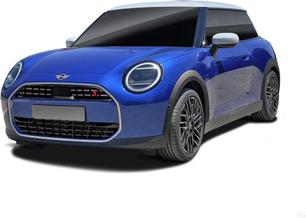
The new petrol Cooper range very gently evolves the upmarket Cool Britannia cliché BMW invented with the R50 back in 2001 and fostered with every iteration since.
More of the same, only slightly updated and just improved enough to justify trading the old one in. If this appeals to you, then go for it. This is the best petrol version yet. Probably.
But the Cooper’s real spark literally and metaphorically lies within the EV version.
Two very different Minis indeed.
Note: CarsGuide attended this event as a guest of the manufacturer, with meals provided.
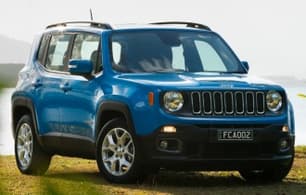
In what is absolutely not a coincidence, the Renegade immediately conjures up the Wrangler. Upright grille from the Willys Jeep (references abound here), round headlights, squared off wheel arches to mimic the Wrangler's guards, short overhangs and big rear view mirrors.
The 17-inch wheels look completely lost in the wheelarches which are even more cavernous owing to the Trailhawk's 50mm of extra ride height. The wheels are also a bit cheap looking but will probably survive the belting the car is intended to take.
Less rugged is the interior, despite a fairly self-conscious effort to make it look and feel chunky. The front seats are flat and unsupportive with the rears just as lacklustre making sure everyone is sliding around together. Luckily, front passengers get a dash-mounted grab handle.
It seems quite well put together, however, but with carpets and easily-marked plastics, you'll hope your passengers don't bring the mud in with them too often. And the "Since 1941" stamped into the steering wheel can go.
The dashboard is reasonably clear and has plenty of information to share via the screen between the dials but whoever thought marking the redline with a water splash graphic in bright orange should probably rethink their design decisions.
Storage is limited to two cupholders up front, door pockets in each door and nets on the front seat backs.
You’ve got to hand it to BMW.
The new nose and triangular tail-light treatment on the 2013-vintage midsection look as if they were designed to all go together back in the day.
You could even mistake it for the previous Cooper EV, though side-by-side that’s less likely, since the latter ditches the upright windscreen for a more raked item, clamshell bonnet opening, horizontal bumper shutlines for shorter and more-angled ones, plastic wheel arch surrounds and pull-out door handles for flush units.
The wheels are further apart, the overhangs shorter and the lower-side surfacing broken up by an artful sheetmetal crease.
The overall length at 3876mm, width at 1744mm and height at 1432mm have increased by 55mm, 17mm and 18mm respectively over the old model, but the 2495mm wheelbase stays the same.
And that’s not all.
The Renegade range starts at $28,000 for the 1.6-litre Renegade Sport manual front-wheel drive, climbing between $2000 and $3000 through the Sport Auto, Longitude Auto, Limited Auto with a final jump of $4000 to the 2.4-litre auto-only Trailhawk.
Standard is a nine-speaker stereo with Bluetooth and USB, 17-inch alloys, dual-zone climate control, reversing camera, rear parking sensors, keyless entry and start, cruise control, electric front seats with heating, satellite navigation, automatic bi-xenon headlights, auto wipers, leather trim, roof rails, front and middle bash plates, full size spare, heated leather steering wheel, privacy glass, trailer sway control and tyre pressure monitoring.
The lairy Omaha orange is $500, part of an eleven colour palette with only two no-cost paint options (black and white).
You can add lane departure warning, auto-parking and a black painted roof for $500 each, a removable and retractable roof called My Sky Roof for $2200 or a more conventional electric sunroof for $1900.
The Beats-branded nine-speaker stereo is run via Fiat-Chryser's UConnect system, accessible through the 6.5-inch touchscreen. While it improves with every attempt, it's still quite clunky and when the sat-nav is added, becomes a bit of a mess.
Thankfully, not every function has been crammed into the touchscreen interface, so you'll spend more time with your hands on the wheel rather than working out which bit of the screen has the climate control.
For the duration of the original BMC/BLMC/Leyland/Austin/Rover era, the Mini was often the cheapest new car around. We’re talking bare bones motoring here, for the people.
Obviously, BMW bothers with no such democratic notion today.
The new Cooper comes in two models differentiated by engine size – the C with a 115kW 1.5-litre three-cylinder turbo and S with a 150kW 2.0-litre four-cylinder turbo. Both are carryover units, and automatic only, sadly.
Which helps explain why the base C Core starts from a steep $41,990 (all prices are before on-road costs). Much the same car cost $10K less just five years ago.
The Core includes climate control air-conditioning, an OLED circular touchscreen, a head-up display, a reverse camera, parking sensors, wireless Apple CarPlay/Android Auto, DAB+ digital radio, a smartphone charger, ambient lighting, a heated steering wheel, 17-inch alloy wheels and a basic cruise control set-up.
You’ll need to step up to the $44,990 Cooper C Classic for adaptive cruise control, a surround-view monitor, interior camera, 'augmented reality' satellite navigation, front seat warmers, seven rather than four colour choices, 18-inch alloys, a glass roof and more.
'Sun Protection Glazing' for the latter, along with a Harmon/Kardon premium audio system, John Cooper Works (JCW) sports seats with electric adjustment and memory, fancier interior materials and a broader palette of options are part of the Cooper C Flavoured package from $47,990.
Meanwhile, the more-powerful Cooper S auto bypasses Core and kicks off with the Classic from $49,990, Favoured from $52,990 and the JCW Sport from $54,990.
The latter includes a JCW body/interior styling, steering wheel and stripes, along with adaptive suspension, paddle shifters and uprated brakes.
Going for the 5DR Cooper equivalents adds $2000 to the price.
All up, then, with drive-away pricing, the Cooper before options is priced between $47,000 and $63,000.
Obvious rivals are the Audi A1, Fiat/Abarth 500, Citroen C3 and even Suzuki Swift Sport, though alternatives with a retro bent and driver focus might also be in BMW’s crosshairs, including the Toyota GR86, Subaru BRZ, Mazda MX-5, Ford Mustang and Nissan Z.
The Trailhawk is powered by Fiat's 2.4-litre four naturally-aspirated four-cylinder producing 129 kW and 230 Nm. Jeep reckons you'll get 7.5L/100km on the combined cycle. Our mostly city driving with a longish motorway run produced an 11.0L/100km average over a week.
The transmission is a nine-speed ZF automatic driving all four wheels.
The Trailhawk also has Jeep's five mode Selec-Terrain system which should cover pretty much every eventuality – Auto, Sport, Mud, Sand and, just for the Trailhawk, Rock. The Trailhawk is rated to tow 400kg unbraked and 907kg braked.
Compared to the previous model, the new one brings more performance to the table.
The Cooper C uses BMW’s 1.5-litre three-cylinder turbo petrol engine, and pumps out 115kW of power at 6500rpm and 230Nm of torque from 1500rpm to 4600rpm. Previously it was 100kW and 220kW.
With a power-to-weight ratio of 91.3kW per tonne, it’s enough for a zero to 100km/h time of 7.7 seconds (previously 8.1s), on the way to a 225km/h top speed.
Mounted transversely, it drives the front wheels via a seven-speed dual-clutch transmission (DCT).
It’s still difficult to imagine Mini buyers not outraged by the manual’s disappearance. But don’t worry. There’s always the Suzuki Swift.
Stepping up to the Cooper S, you’ll find a 2.0-litre four-cylinder turbo-petrol unit delivering a useful 150kW at 6500rpm and 300Nm between 1450rpm and 4500rpm. It was 141kW/280Nm in the old version.
Boasting 117kW/tonne, this one needs just 6.6s to 100km/h and can achieve a 242km/h V-max.
Now known as the FAAR platform, it is an evolution of BMW’s UKL (Untere Klasse, German for ‘lower class’) modular architecture that debuted in the previous model.
Suspension is via MacPherson-style struts up front and a multi-link independent rear end.
The Trailhawk name suggest that things are going to get muddy – compared to the rest of the range, the range-topper rides 50mm higher and has exposed, easy-to-reach tow hooks in the fairly unlikely event you get stuck. It also has a 20:1 low-range crawl ratio and Active Drive 4x4 which means it can switch between front and all-wheel drive. It'll also wade through almost half a metre of water. It's a genuine mud-plugging proposition and will take on some much bigger machinery out in the bush.
On the road, where we spent all our time in the Renegade, it's not what you'd call particularly inspiring. There's a number of sources of noise that contribute to a less than quiet cabin and having to constantly correct your course at freeway speeds adds to the tiring nature of the Renegade.
It's much better at lower speeds, pottering around but then again, its nine-speed transmission needs a lot more work on the shift mapping because it seems to forget which gear it needs to be in when you sink the right foot. If you don't need the Trailhawk's extra off-road goodies, consider the 1.4 litre Limited or Longitude.
So far, similarities in design, packaging, dashboard presentation and suspension layout suggest that the electric Cooper and petrol Cooper would be like fraternal twins from behind the wheel.
But in reality, the petrol-powered Mini feels much the same as the previous model, whilst the EV is more akin to what we secretly wish the fantasy Tesla Model 1 would be like. From the future.
Now, we never had a chance to drive the Cooper C, but the closely-related (though larger and heavier) Countryman C sibling – complete with the same powertrain – proved to be a willing and feisty performer once on the go, after what seemed like protracted turbo and DCT lag.
Why the hell can’t Mini just offer manuals again?
The Cooper S, meanwhile, completely lived up to brand expectations, with the familiar, revvy snarl of BMW’s sophisticated 2.0-litre four-pot turbo providing punchy of throttle response and effortless cruising capability, though there’s still some initial acceleration hesitation.
Thankfully, the Mini’s steering is always alert, offering precision and agility by the bucketful, backed up a chassis that seems permanently glued to the road – even in the wet and wintry conditions we had to endure.
Yet, other than a ride quality that seemed better than any previous-gen Mini we’ve ever encountered and so genuinely surprised us, the Cooper S seemed a little… stale compared to the glorious SE EV we had just (reluctantly) surrendered.
A bit like having a favourite dish as leftovers for two nights in a row, it felt a bit passé in 2024, even when surrounded by that dazzling OLED dash and glitzy ambient lighting.
In every important metric – performance, handling, roadholding, ride quality, packaging and (particularly) refinement – the battery-powered Cooper is the more vibrant and alive option. And truer to the vision of the original’s creator, Alec Issigonis, as a result.
Seven airbags (including driver's knee bag), traction and stability controls, roll mitigation, blind spot monitoring, ABS and brake assist.
The Renegade does not yet have an ANCAP star rating although it scored five EuroNCAP stars in 2014.
There are no crash-test ratings for the 2024 Cooper at the time of publishing.
The previous F56 managed four out of five stars with ANCAP.
On the driver-assist tech front are AEB, lane departure warning, lane keep assist, blind-spot monitoring, rear cross-traffic alert with braking, rear-collision prevention, driver-attention monitor, tyre-pressure monitor, auto high beams and an exit warning.
However, at the time of publishing, no AEB operating parameter data was available.
Other safety features include adaptive cruise control with automatic speed-limit assistance from Classic-grade and up, anti-lock brakes, electronic stability and traction controls and nine airbags (front/side/head and interaction centre-front airbags).
A pair of child seat tether latches and twin ISOFIX latches are fitted within the rear seats.