What's the difference?
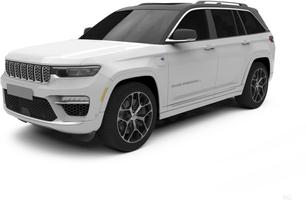
Jeep Australia's first plug-in hybrid, the Grand Cherokee 4xe, has arrived at a time when the company’s sales figures need a decent shot in the arm.
Though it’s seemingly spearheading a large and extra-large SUV hybrid push into the Aussie market, with the likes of a Toyota LandCruiser 300 Series hybrid on its way, the marque’s debut PHEV is only available here in the range-topping Summit Reserve spec, and only as a five-seater.
So, does the 4xe have enough of a jump on any large SUV hybrid rivals – including a rumoured but postponed Ford Everest hybrid – and is it enough to give the brand a much-needed boost?
Read on.
It’s finally happened: Rolls-Royce has become so divorced from the everyday world of common folk that it's no longer even sharing the previously agreed meanings of words. Rolls has its own meanings, possibly its own language, which must be spoken with a plum on the tongue.
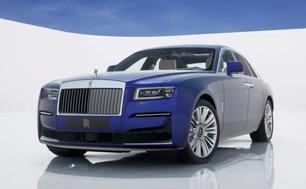
They’ve been heading here for a while. For example, at Rolls, “affordable” means the car we're driving today, the Rolls-Royce Ghost Series II, which is yours for just $680,000 (an indicative price, bumping to $800K for the Black Badge). And “iconic British marque” means, obviously, “BMW bought us in 2003, so there might be some German bits”.
It turns out that “driver-focused” means something different at Rolls-Royce, too. Thanks to a smattering of chassis innovations, Rolls says this updated 2025 Ghost is “the most driver-focused V12 Rolls-Royce ever”. Which is “a side of Ghost’s character that our clients increasingly and enthusiastically embrace”.
Don’t fall for it. The Ghost’s extra focus is not actually very focusy, and its additional dynamism is really only more dynamic in the way that a bed that could corner at all would be more dynamic than a normal bed. None of that matters.
The reason it doesn’t matter is because the Ghost Series II is wonderful. Indeed, it is very nearly perfect. Which is a word that even Rolls won’t quibble over.
A wise man* once said "Being first can sometimes feel like being wrong" and perhaps that's how it is with the 4xe, but at least Jeep Australia is giving the large SUV hybrid realm a good ol' try.
* Former CarsGuide Big Kohuna, Glen Knowles.
The company's first plug-in hybrid, the Grand Cherokee 4xe, is not perfect by anyone's standards, however, it is a definite move in the right direction.
It's a quiet and refined drive, it retains the brand's renowned 4WD capability, and even its hefty price-tag likely won't dissuade Jeep loyalists from giving it a go.
In a disruptive era when the coachbuilder has pivoted to SUVs like the Cullinan, a sort of London black cab that’s been dipped in opulence, and succeeds despite itself, and the brand’s grand, million-dollar EV, the Spectre, the Ghost is a safe and familiar space.
A beautiful, long, broad, immaculate land boat. It’s a space Rolls inhabits with relish.
The Ghost Series II feels nothing like a track-day option when you’re behind the wheel. But it might do if you were stepping out of a Phantom. Or a Cullinan. Or a Wraith. Especially if you’re stepping out of the back doors.
It’s the perfect driver’s car. As long as all your other cars are also Rolls-Royces.
Yes, its exterior is more monolithic than before. The previous iteration was hardly fiddly, but the (apparently client driven) evolution here edges ever so gracefully towards what Rolls-Royce might secretly think of as brutalism.
The Ghost Series II’s generous 2148mm width is further emphasised up front, stretched across its upright prow, with slimline headlights adding definition and — surprisingly — a touch of villainy.
New, Spectre-inspired tail lamps and a discreetly inscribed double ‘R’ monogram add a reserved flourish from behind, and buyers can choose from two new 22-inch, nine-spoke wheel designs.
It’s subtle, no doubt. But it’s also impeccable.
The Jeep Grand Cherokee Summit Reserve 4xe PHEV retains the regular model’s level of functionality but adds a reasonably classy touch to everything.
All seats offer adequate comfort, support and room.
There are plenty of storage spaces, cupholders etc, and charging points - two USB-A and two USB-C plus a 12V socket in the front and two USB-A and two USB-C plus a 230V point in the back.
Controls are generally easy enough to locate and operate although some buttons are positioned in awkward places – including drive-mode buttons under the steering wheel – and it sometimes takes a few finger-stabs at the multimedia touchscreen to get to where you want to go in the operating system.
In terms of packability, the rear cargo area has a listed 1067 litres of space, and, with the second row folded and out of the way, that space opens up to 2004 litres.
Inside, yes, there are bonkers touches in this most refined of automotive spaces, such as upholstery pinpricked by 107,000 'Placed Perforations' of 1.2mm in diameter, each individually examined, that replicate the shape of some clouds spotted over Rolls-Royce's Goodwood HQ.
Beside those flourishes of lunatic opulence, the more practical features feel pedestrian, but they’re comprehensive. The wireless Apple CarPlay and Android Auto, the seamless 'Central Information Display' and the 18-speaker 1400-watt audio, the upgraded Wi-Fi hotspot and the unobtrusive USB-C ports. The rear-seats flush with giant, streaming-optimised screens and heated and ventilated massaging seats.
Rolls acknowledges the generational movement of its clientele from back seat to front, with over 90 per cent of buyers now opting to — gasp! — steer themselves in a Ghost. But with back-seat savoir faire in its DNA, Rolls simply extends its hospitality to every seat.
The five-seat Jeep Grand Cherokee Summit Reserve 4xe PHEV has a MSRP of $129,950 (excluding on-road costs).
Standard features include a 10.1-inch multimedia system (with Apple CarPlay and Android Auto), a 10.25-inch digital instrument cluster, 19-speaker audio system, quilted Palermo leather-trimmed seats, air suspension and 21-inch alloy wheels.
It also has a heated steering wheel, 12-way power-adjustable seats and four-way power lumbar adjustment with memory for driver and front passenger, driver and front passenger seat massage function and heated and ventilated seats (driver, front passenger and rear outboard passengers).
A Mode 2 charging cable is also included.
An 'Advanced Technology Group' pack is available as a $5500 option and that includes a head-up display, a 10.25-inch screen for the front passenger, wireless phone charger, and night vision camera.
Exterior paint options include 'Bright White', 'Diamond Black', 'Silver Zynith', 'Velvet Red', 'Baltic Grey', 'Rocky Mountain', 'Midnight Sky' and 'Hydro Blue'.
The Ghost Series II is yours for an indicative price of just $680,000 (or $800K for the Black Badge) plus substantial on-road costs. The Ghost Series II extended (which we didn’t drive at the international launch in Provence) will slip in at around $20K less than the Black Badge before additional charges.
If they seem like big numbers, you’re probably the sort of person who looks at price tags, or who shops in shops that put price tags on things. These are not common traits of Rolls-Royce buyers, who may only be vaguely aware of the actual price of their vehicle, and whose historical impression of guillotines is generally unfavourable.
So, high six-hundreds is table stakes.
But you might also think the ‘standard’ Ghost, like all Rolls-Royces, is considered by most buyers to be a mere starting point, from which they’ll typically up-spec their ride from a sumptuous and expensive options list.
Spending another 10 percent of the purchase price on customisation is a bare-bones outlay for most owners, but even so, the evolved Ghost’s out-of-the-box features are so comprehensive as to be almost overwhelming.
First, because the Ghost has been Rolls-Royce’s driver’s car since the first (modern) generation arrived in 2010, specifically to cater to a weird (for Rolls clientele) new generation of buyers who wanted to drive their Rolls themselves.
So that price gets you, above all, that proven but superb 6.75-litre twin-turbo V12 engine, massaged via an eight-speed transmission and an AWD system that’s as rich and viscous as Crassus’s last libation.
There’s its subtly tinkered 'flight on land' 'Planar Suspension System' (note the unspoken dissonance between the terms ‘flight on land’ and ‘driver-focused'), with an ingenious 'Satellite Aided Transmission' system that uses GPS to pick the ideal gear with which to launch out of turns.
It works hand-in-velvet-glove with Goodwood's 'Flagbearer' camera system, which tracks the road ahead to chide potholes into submission in advance.
Because it’s a Rolls, though, that’s barely even the start of the story.
The coachwork is extraordinary, with new trim options including natural open-pore 'Grey Stained Ash' design elements, a sumptuous new bamboo rayon textile called 'Duality Twill'.
There a night-sky inspired illuminated fascia that apes elements of time-lapse celestial photography, part of the central glass panel that stretches the length of the dash.
Sure, you might expect that level of detail for the outlay. But for the outlay it’s far from missing anything you’d expect.
The Jeep Grand Cherokee Summit Reserve 4xe PHEV has a 2.0-litre four-cylinder turbo-charged petrol engine, two electric motors (one on each axle) and a 17.3kWh battery.
Combined engine and electric outputs for power and torque are 280kW and 637Nm, respectively. The 4xe has it over any of its stablemates equipped with the 3.6-litre Pentastar V6 petrol engine because that yields 210kW and 344Nm.
The 4xe has an eight-speed automatic torque-converter transmission and regenerative braking.
Drive modes include 'Hybrid' (with combined engine and electric motor providing “maximum instant torque and impressive acceleration”, according to Jeep), 'Electric' (“zero emissions”) and 'eSave' (aims to save battery power).
There are a few options available when it comes time to charge the 4xe.
The 4xe vehicle has a Mode 2 charging cable so you can charge it at home in less than 10 hours, according to Jeep.
With a full charge, the 4xe has a claimed driving range, on electric charge alone, of 52km.
Jeep reckons a Mode 3 (wall box) single-phase electric vehicle charger will fully charge the 4xe in less than three hours.
If out and about and looking for a charge, a 4xe driver can use the onboard 'UConnect' system to locate an appropriate public charging station.
Rolls doesn’t like acceleration figures — too gauche, darling — but armed with that proven 420kW and 850Nm V12, the Ghost Series II has serious heft. Delivering max torque from 1600rpm — just 600rpm above idle — the effect is genuinely of one endless surge, a wafting cloud of momentum that subtly slips between gears as it exudes itself across the countryside.
The Black Badge edition, like all of its, er, ‘disruptive’ ilk offers a ‘Low’ button (‘Low’ means ‘Sport’ in Rollspeak), which bumps gearshift speeds by 50 percent when you plant your foot, and delivers a distinctly non-Rolls-like pop and burble on overrun. It also provides an extra 21kW and 50Nm, because Black Badge is mean and tough.
As mentioned, the 4xe has a listed electric-only driving range of 52km.
On our official test day, we drove just under 50km on a full electric charge and then the rest of the trip was courtesy of the good ol’ petrol engine.
Jeep's official figure for the combined cycle is just 3.2L/100km, but that's predicated on keeping the hybrid battery charged at all times. On fuel-only we recorded 11.6L/100km.
The 4xe has a 72-litre fuel tank (you need 95RON premium to fill it), so going by that on-test fuel-consumption figure, you could reasonably expect to get a driving range of about 620km out of a full tank.
Add an approximate electric range of about 50km on a full charge to that figure and you have a total estimated driving range of 670km.
Provence is not entirely a driver’s paradise, with every stretch of slightly twisty tarmac only a counterpoint to a motorway lined with Marseille lorries, Depardieu-esque men in tractors who refuse to move to the verge, and small villages where each kerbside corners sit millimetres from the foot of an adjacent boulangerie.
Which is to say it’s neither a place for economy runs, nor a location at which to run up the consumption numbers with a madcap series of impromptu hill climbs.
Our Ghost II drive returned around 16L/100km, which feels about right with that gorilla-in-a-tuxedo 6.75L V12, and is only slightly above the official figures of 15.8L/100km. Not great, could be worse.
We’re all time-poor, right? So, why should I take up your time and rattle on about the 4xe for a thousand words when I can get the essence of it across to you, the reader, in a few sentences? Call me, Mr Thoughtful.
This is generally a big, quiet and refined, easy-steering large SUV, but it feels bulky at times and tends to be quite fussy on irregular surfaces, exhibiting a jittery ride on even brief sections of light corrugations on dirt tracks.
The 4xe’s PHEV set-up is smooth and highly responsive on-road and you can switch between the aforementioned drive modes to suit the circumstance.
Driving range on electric only is listed as 52km. I only recorded a total distance of just under 50km, and it’s a very quiet and smooth drive while relying on electric power.
It regenerates power rather quickly down big hills and via braking, but we’d exhausted all electric charge by the time we’d reached our 4WD test track.
As expected, this Grand Cherokee tackled every off-road challenge without any strife.
The air suspension, set to full off-road height, is a bonus.
Our 4WD test track consists of difficult set-pieces, including one small steep rocky hill that I’ve seen heavily modified vehicles struggle to conquer and, to the Jeep’s credit, it climbed the incline, no sweat.
The 4xe’s efforts were only ever hampered by its 'all-season' Continental CrossContact tyres (275/45R21) which are much better suited to blacktop driving and the fact the 4xe costs upwards of $129,950 and I didn’t want to risk any damage to it.
The 4xe has a listed wading depth of 610mm but our test track was dry so I never had the chance to do any water crossings.
The Grand Cherokee has a solid enough rep as a towing vehicle but, take note, the 4xe is rated to tow 2722kg.
The Ghost Series II drives like a magic carpet, serene and untroubled; in almost any stable other than that of Rolls, calling it a ‘driver’s car’ would have you throttled by their skunkworks. Everything is relative.
Still, it hides its considerable dimensions well. There’s never any doubt that you’re in a large saloon, as you white-knuckle the Ghost’s impeccably appointed steering wheel, but there’s always enough power to deliver creamily instant throttle response, even in the case of initially misjudged cambers.
Nor can the Black Badge hide the shimmy of that characteristic ‘flight on land’ body drift. The upside is that its manners are impeccable, even through the worst possible pieces of corrugation Provence can deliver.
If anything, the Ghost Series II’s big-hearted bulk adds to the fun factor, especially in some of Rolls-Royce’s more garish colour options, when gasping South of France MAMILs stare in amazement as a bright yellow, five-and-a-half metre Rolls passes them on the outside, scattering their various baguettes and garlands of onions.
The Jeep Grand Cherokee Summit Reserve 4xe PHEV has the maximum five-star ANCAP safety rating from assessment this year.
Safety gear includes AEB with pedestrian detection, blind-spot monitoring with rear cross-traffic alert, adaptive cruise control, lane-keep assist, driver monitoring, traffic sign recognition, intersection collision assist, and a surround-view parking camera.
The Summit Reserve spec brings with it 'ParkSense' parallel and perpendicular park assist and (low-level autonomous) 'Active Driving Assist'.
It has eight airbags including front, side, and knee (for driver and front passenger), sides (for second-row passengers) and full curtain airbags.
You get airbags, ESC, adaptive cruise, parking sensors and auto parking, and a rear camera. But don’t expect Rolls-Royce to allow the blighters at ANCAP to wreck one.
The Jeep Grand Cherokee Summit Reserve 4xe PHEV has a five-year/100,000km warranty and a lifetime roadside assist service.
Servicing is set at 12-month/12,000km intervals and capped price servicing keeps what you pay for each appointment at $399 for the first five.