What's the difference?
After a long gestation period where a variety of Jaguar corporate overlords toyed with the idea of a successor to the all-time iconic E-Type, the F-Type finally emerged in late 2013 to a global intake of breath.
It managed to capture just the right amount of Jag heritage, folded into a high-tech package, with a simple choice of supercharged V6 and V8 engines, housed in a supremely sleek convertible body.
Over time the formula has become more complex, with the arrival of a coupe version, powerhouse R and full-fat SVR variants, special editions including the exotic Project 7, and more recently, 2.0-litre, turbo four-cylinder models to make this stunning two-seater more accessible.
A late 2019 update added some extra catnip, including a redesigned nose and this is the flagship F-Type R, complete with supercharged V8 power and performance-focused underpinnings. Time to dive into this latest chapter of the Jaguar F-Type story.
Close your eyes for me and try to picture a two-door vehicle with a thumping V8 engine, 575kW and a whopping 1000Nm on tap, a 0-100km/h burst of 3.2 seconds and a top speed of 335km/h. Does it look like a Ferrari in your head? Something else Italian, or German perhaps?
Well, what if I tell you it also weighs 2.5 tonnes. Are you imagining a luxe SUV with the rear doors removed, perhaps? Think again, because what we’re discussing here is arguably the very best of Britain (albeit German-owned), the all new and highly impressive Bentley Continental GT Speed.
Gone is the famous and fabulous W12 engine, never to return (Bentley was long the world’s biggest maker of 12-cylinder engines, henceforth it will make exactly none), to be replaced by the one and only power plant the company will now offer, in various tunes, in all of its ICE cars (yes, a Bentley EV is coming, of course).
All that torque isn’t just from the big 4.0-litre V8, it’s also an 'Ultra Performance Hybrid', which will allow you to drive up to 81km in fully silent electric mode, should you be so boring.
We flew to a posh and very private members-only race track in Japan to find it out if this really is, as Bentley suggests, the everyday supercar.
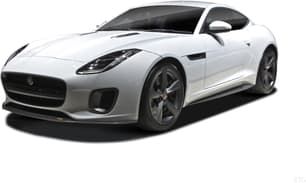
The Jaguar F-Type R is as fast and capable as it is beautiful. Although it's a little thirsty and comes up short on active safety, it's technically outstanding, delivering a stunning mix of performance, dynamics, and comfort.
Any fears Bentley was heading in the wrong direction by abandoning 12 cylinders for hybridisation (not that it had a lot of choice) should be totally salved by the Continental GT Speed. It is a hugely capable, fabulously luxurious and beautiful to behold grand tourer that deserves extra points for not being an SUV. It might just be the supercar you could drive every day, with no complaints.
Note: CarsGuide attended this event as a guest of the manufacturer, with travel, accommodation and meals provided.
Although it kicked off as a roadster, a coupe version of the F-Type was always part of the plan. In fact, Jaguar's C-X16 concept, that in 2011 previewed the eventual production car, was a hardtop.
Following the Coupe's public reveal at the 2013 Los Angeles motor show, I asked Jaguar's then head of design, Ian Callum, if the bean counters had vetoed the concept's ultra-cool side-opening hatch door; one of many styling hat tips to the E-Type. His response was a wry smile and slow nod of the head.
It's a shame that door didn't make it to the showroom floor, but the E-Type is still a strong design influence on its successor.
At close to 4.5m long, around 1.9m wide, and a fraction over 1.3m tall, the F-Type R looks more compact in the metal than it does in photographs, arguably the hallmark of a successful sports car design.
A long, flowing (front-hinged) bonnet (Jaguar calls its shape 'liquid metal' sculpture) projects forward from a rear-set cabin, with broad but tightly wrapped haunches behind it. The 20-inch, 10-spoke rims (in 'Gloss Black' with diamond-turned finish) fill the wheel arches perfectly.
I'm a huge fan of the tail-light cluster design, subtly reprofiled in the late 2019 update, which echoes the shape of the Series 1 E-Type and other classic Jags, but found it harder to warm to the outgoing F-Type's squarish headlight treatment.
Always a subjective call, but to my eyes this car's slimmer, more feline (LED) eyes and ever-so-slightly larger grille deliver a better front to rear balance. And slender, flush-fitting pop-out exterior door handles remain sub-zero cool.
Our 'Santorini Black' test car had been optioned with the 'Exterior Black Design Pack' ($1820) for an extra hint of menace. It applies body-colour to the front splitter, side sills, and rear diffuser, at the same time blacking out the grille surround, side vents, side window surrounds, rear valance, Jaguar script, F-Type badge and 'Leaper' emblem.
Jaguar describes this two-seater as a '1+1', confirming the F-Type's focus on the driver, and our test car's tan leather interior emphasises the fact.
Tan dash on the passenger side, complete with flying buttress-style grab handle for extra support when g-force starts to build. Contrasted by all black and all business on the driver's side.
A broad centre stack houses the 10-inch multimedia touchscreen, with easy-to-use dials for the climate control system below. And the 12.3-inch reconfigurable hi-def instrument cluster (with graphics unique to the F-type) is a model of clarity and simplicity.
The latter offers a choice of display themes, including full nav map, but the default mode highlights a large central tachometer. Nice.
An impressive design feature carried over from the previous model is deployable front air vents. The dashtop remains flat until a given climate control temperature setting causes an upper section, housing a pair of adjustable vents, to gently rise. Very cool (no pun intended).
I don’t think I’ve ever heard so much interesting waffle about the design of any car, ever, but before we get to the wild, and wildlife, justifications for how it looks, just feast your eyes on it.
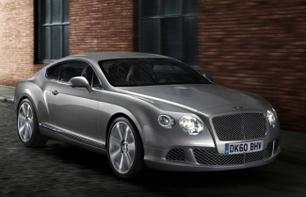
Now, not everyone might love it, but it’s hard to imagine a huge, super coupe looking any better than this thing does. It’s no Ferrari, sure, but realistically it doesn’t have to compete with that, because it’s a cruiser as well as a bruiser, a supercar you can be quiet and comfortable in. A Rolls-Royce with rocket engines, even.
The most obvious change, of course, is that Bentleys have had four headlights, or four eyes if you like, for so long that seeing this new one with two is a major shock, a big shift, but somehow it works.
The proportions, the elegance, the bold 'be big and bold and give no damns what anyone thinks', it’s just impressive, and the interior reflects that same, luxury ethos.
Apparently the new-look Continental is built on three design principles, the first of which is, amusingly, 'Resting Beast'. This is supposed to reflect how the Bentley looks from side on; like a tiger, stalking its prey, or perhaps resting and thinking about its prey. It’s all muscles and strength and power, but also elegance. And who doesn’t imagine tigers walking red carpets in ball gowns?
Principle two is 'Upright Elegance', and here you’re supposed to see, in the car, the strong vertical line one finds in the chest of a thoroughbred horse when it’s standing in particularly powerful way. Great. Love it.
And finally, there is the 'Endless Bonnet', which is a horizontal line that goes from the front of the car - via the bonnet obviously - and all the way to there rear, via cat-like haunches, providing an impression of “speed, even when standing still”.
Those are the bold strokes, but it’s all the little details that make it sing, like the beautiful jewellery-like look of the headlights, which are meant to resemble a tiger’s eyes. So many cats, is it any wonder I started thinking of the Bentley as a very, very flashy Jaguar?
It’s important to note that while it looks very new - and 68 per cent of the Continental’s parts are new - the body panels are carried over, while the front and rear are all new. This is one very effective mid-life facelift, with a heart transplant, then.
If you're intending to daily drive your F-Type R, make sure your yoga fees are up to date, because entry and egress are for the fleet of foot and flexible of limb.
Once inside, though, within the bounds of its two-door coupe format, the F-Type offers an array of storage options, including a decent glove box, centre storage box/armrest, small door bins, a netted pocket on the top of the bulkhead between the seats, and a pair of console cupholders.
Power and connectivity runs to a 12V socket in the dash, with another in the central storage bin, alongside two USB-A ports, and a micro SIM slot.
Notwithstanding the (alloy) space saver plonked on the boot floor, the F-Type Coupe delivers worthwhile cargo space, with 310 litres on offer, rising to 408 with the load cover removed.
That's enough to swallow small (36-litre) and large (95-litre) suitcases together, and there are two (nicely chromed) tie-down anchor, as well as elasticised retaining straps at either end of a small ledge on the bulkhead.
So a two-door, '2+2' grand tourer isn’t entirely built with the term 'practicality' in mind and it could be argued the existence of this Bentley Continental, the fourth generation, is something of a surprise, when you consider most people just buy SUVs and Bentley has done quite well with its Bentayga (which will, in future, share the same engine used here).
But for what it is, a two-seat car with occasional seating in the rear for emergencies, or very small children, it feels entirely fit for purpose.
An actual human can sit in the back, but it does feel a bit claustrophobic, and you’d be so jealous of how comfortable the people are in the front.
The 20-way adjustable front pews feel like grand armchairs for grand touring, fabulously comfortable - although you can slide across them a bit when driving on a race track, not a common problem - and plush to the touch.
They now come with a 'Wellness Facility' that brings postural, massage and climate functions to help with fatigue on long journeys - and epic blasts across multiple European countries is clearly what this thing is designed for.
In general, the cabin is just lovely, Bentley claims it does the best car interiors in the world and while Rolls might argue, it’s a pretty fair statement.
The spinning central 12.3-inch display remains the highlight, offering you a modern touchscreen, which can disappear to reveal either three classic analogue dials or a plain piece of dashboard, if you prefer a 'digital detox'.
It's hard to pin down direct competitors for the $262,936 F-Type R, except one; Porsche's 911 Carrera S, a clear price and performance rival at $274,000.
With a 3.0-litre, twin-turbo 'flat' six producing 331kW/530Nm the 911 is capable of accelerating from 0-100km/h in just 3.7sec, which (surprise, surprise) exactly matches the Jag's claimed performance number.
Cast the net a little wider and you'll snag the likes of Nissan's GT-R Track Edition on the low side ($235,000), and the Mercedes-Benz S 560 Coupe ($326,635) for around $50K above the F-Type's asking price. So, the standard features list needs to be impressive, and long story short, it is.
Drilling down to the depths of detail on this car's equipment spec would need a review of its own, so here's the highlights package.
The 10-inch 'Touch Pro' multimedia screen manages a 380-watt Meridian audio system featuring 10 speakers (including subwoofer), digital radio, dynamic volume control and a 10-channel amp, as well as Apple CarPlay, Android Auto, and Bluetooth connectivity.
It's also the gateway to the car's configurable dynamic set-up, 'Navigation Pro', phone connection, ambient lighting, reversing camera, and a lot more.
Full-grain 'Windsor' leather is applied to the 12-way, electrically-adjustable (plus memory) performance seats. There's also a 12.3-inch customisable digital instrument cluster, cruise control (and speed limiter), keyless entry and start, auto rain-sensing wipers, auto-dimming and power folding heated door mirrors (with memory), a switchable active exhaust, LED headlights, DRLs and tail-lights, as well as an electrically adjustable steering column (with memory), climate control, powered boot lid, 20-inch alloy wheels, racy red brake calipers, and specific 'R' branding on the leather-trimmed sports steering wheel, door tread plates, and centre console.
As always, value becomes a nebulous term once the price of a car surges into the multiple hundreds of thousands. The Bentley Continental GT Speed will set Australian buyers back a whopping $581,900, before on-road costs.
Yes, you really can buy Ferraris and Lamborghinis for that kind of money, but Bentley assures us its buyers have already owned such fearsome machines, grown tired of their compromises and want something that’s just as fast, but 1000 times more comfortable, and easier to drive every day, and everywhere.
So that’s where the value proposition sits, basically. You’re buying a supercar that’s also a kind of Rolls-Royce adjacent luxury cruiser. Two cars for one price. Bargain. Kind of. It also weight 2.5 tonnes, if you’d like to think of it in dollars per kilogram.
Oh, and it’s hand made, too, and genuinely feels like it.
For that money you get an incredibly posh and plush cabin, excellent seats, and everything you touch, and smell, seems expensive and refined.
The newly facelifted, and butt-lifted, Continental also looks simply stunning, from every angle, outside. Particularly in its new 'Tourmaline Green' paint (there are 18 standard colours to choose from, or you can have bespoke paint made for you on request). And 15 standard leather hide colours as well.
It comes with all the apps and connectivity you could wish for, including a Bentley App Studio.
The F-Type R is powered by Jaguar's all-alloy (AJ133) 5.0-litre supercharged V8 engine, featuring direct-injection, variable (intake) cam timing, and an Eaton (Roots-type) blower to produce 423kW (567hp) at 6500rpm, and 700Nm from 3500-5000rpm.
Drive goes to all four wheels via an eight-speed 'Quickshift' automatic transmission and Jaguar's own adaptive AWD system with 'Intelligent Driveline Dynamics' (IDD).
The AWD system is based on an electro-hydraulic multi-plate (wet) clutch, controlled by a centrifugal electro-hydraulic actuator. Default front/rear drive balance is 10/90, although Jaguar claims even a full shift of power from 100 per cent rear to 100 per cent front takes just 165 milliseconds.
The IDD system continuously monitors each wheel's speed and traction, suspension compression, steering angle and braking force, as well as the car's rotational state.
It then uses an algorithm to determine which wheel(s) are likely to lose traction, and before grip is lost, transfer drive to the wheels that can make best use of it.
There is some sadness that the world’s biggest producer and promoter of 12-cylinder engines has cut production of them altogether - the epic W12 is no more - and this does feel, on a smaller scale, like Porsche ditching flat-six engines forever.
Previous hybrid efforts from Bentley, including a V6-based one that the company now admits was a bit limp wristed, might cause some concern when you hear that Bentley will, henceforth, make just one engine for all its cars, and that it is a hybrid, albeit one attached to a 4.0-litre twin-turbo V8.
But then they point out the version in this Continental GT Speed’s is “the most powerful Bentley engine ever” and that sounds pretty good.
The engine alone makes 441kW and 800Nm, which almost sounds ample, but the addition of the electric E-motor is good for another 140kW and 450Nm, with the aid of a 29.5kWh battery, which somehow adds up to a combined output of 575kW and a nice, round, and impressive 1000Nm of torque.
All that power does have to move 2.5 tonnes of precious metal, which sounds like an ask, but is effortless in practice - hurling the Speed to 100km/h in a properly supercar-like 3.2 seconds on its way to a top speed of 335km/h.
Yes, vitally, it sounds pretty damn impressive when all the power sources are going at once, it even barks and pops on the overrun, a bit like the Porsche Panamera with which it shares the hybrid set-up, only a bit bossier, and perhaps classier.
The point of the hybrid feels like it’s mostly about performance and excitement, but it has a practical side, too, because in EV-only mode this giant Bentley can drive for up to 81km in pure, and slightly inappropriate-feeling, silence (at speeds of up to 140km/h).
Handy if you live in global cities with zero-emission zones, or if you want your neighbours to think you care about the climate.
One brilliant thing about this plug-in hybrid is it’s set up to use the engine to regen the battery, hard, in 'Sport' mode, so the more fun you have, the quicker the battery charges. So much so that, realistically, you might never need to plug it in at all (Bentley recently ran the car at a race track for two weeks and never needed to top it up via cable once).
It is an impressive, sonorous and enjoyable power plant, and you’d expect nothing less from Porsche, although Bentley says it’s done lots of work on the donor engine to make it uniquely more wonderful.
Claimed fuel economy for the combined (ADR 81/02 - urban, extra-urban) cycle is 11.3L/100km, the F-Type R emitting 269g/km of CO2 in the process.
Despite the standard auto stop/start function, over close to 350km of city, suburban, and freeway running we recorded a (dash-indicated) average of 16.1L/100km.
That's a solid drinking habit, but it kind of goes with this performance territory, and we did lean into the throttle on a regular basis.
Recommended fuel is 95 RON premium unleaded, and you'll need 70 litres of it to fill the tank. That equates to a range of 619km in line with the factory claim, and 434km using our real-world number as a guide.
While the top-line figures for performance hybrids like this always sound impressive, it’s hard to believe anyone will ever get near them in the real world, because the temptation to drive a car like this hard and fast, as its makers clearly intended, will mean chewing fuel in a very non-efficient way indeed.
On paper, though, where it matters in terms of being allowed to sell your giant luxury grand tourer in Europe, the Bentley Continental GT Speed produces just 29 grams of CO2 per kilometre.
Fuel economy is a claimed 10.3 litres per 100km, which is optimistic, but still a lot lower than the equally unlikely 14L/100km figure for the old (12-cylinders and no hybrid) car. As in, neither car would ever achieve the theoretical figure, but at least the new one is clearly a lot better.
Yep, no surprise, the 2021 Jaguar F-Type R is a proper, rip-snorting, beast of a machine. Weighing in at just over 1.7 tonnes, with 423kW/700Nm to propel it forward, in terms of straight line acceleration, it's every bit the scalded cat.
Bury the right foot and it will storm from 0-100km/h in just 3.7 seconds, with furious aural accompaniment courtesy of the 4.0-litre supercharged V8 and sports exhaust system. Electrically-actuated bypass valves in the latter's rear silencer remain closed until they automatically open under load, and boy, do they open up.
Prospective F-Type R owners wishing to remain on good terms with their neighbours will be pleased to know there's a 'Quiet Start function', but once you're a few blocks clear the engine is capable of alerting the entire suburb to you presence, complete with raucous crackles and pops on the overrun.
All 700Nm of maximum torque is available from 3500rpm through to 5000rpm, and mid-range thrust is ferocious. If you have access to a long enough private road Jaguar claims this car will storm on to a (electronically-limited!) maximum velocity of 300km/h.
The eight-speed auto transmission has picked up several tweaks courtesy of the XE-based SV Project 8, and it's brilliant. A conventional torque-converter based unit, rather than a dual-clutch, it's dubbed 'Quickshift', and that it does. Manual flicks between ratios, using the wheel-mounted paddles, are rapid and positive.
Head for your favourite B-road, and it's the F-Type R's ability to put every bit of its power down, without fuss, that impresses next. Push into a series of tight corners and the car grips, settles, and simply surges from one bend to the next, the tricky AWD system seamlessly shuffling torque between the axles and individual wheels.
The standard electronic active diff, and torque vectoring (by braking) also help keep everything under control, turning backroad tryhards into apex hunting virtuosos.
Suspension is by (aluminium) double wishbones front and rear, with revised springs and anti-roll bars added in the 2019 upgrade. Continuously-variable dampers underpin the 'Adaptive Dynamics' system, learning your style and adjusting accordingly.
The electrically-assisted power steering combines great road feel with satisfying accuracy, and the car feels balanced yet agile and responsive in enthusiastic driving.
In a more relaxed mode the adaptive set-up detects rough road conditions and adjusts the suspension settings for greater ride comfort. According to Jaguar, the damper valves and control algorithms have been recalibrated to improve low-speed comfort and high-speed control, and I can vouch for their effectiveness.
Not long after steering this F-Type R I spent some time in the supercharged V6 F-Type P380 R-Dynamic, and this R is far more compliant.
Rubber is a specially-developed Pirelli P Zero (265/35 fr - 305/30 rr), and the supremely efficient brakes are ventilated 380mm at the front, and 376mm rear.
In an ideal world, one would take the Bentley Continental GT Speed for an appropriate drive from the top of Germany to the bottom of Italy or France, but instead we were asked to drive the big beast around a tight and slightly terrifying private members race track outside Tokyo called the Magarigawa Club.
Members here pay US$1 million a year for access to this circuit, carved out of several mountain tops, which features two long and fun straights attached to what feels like a hill climb circuit with a bit of Laguna Seca’s Corkscrew and a touch of Mt Panorama’s undulations.
This track, with its daunting lack of run-off, should have been an intimidating and possibly inappropriate place to try the Continental GT Speed, but it is a credit to the car’s “everyday supercar” personality that it soaked up the pressure, and pace with ease.
On our first lap we were encouraged to drive in EV mode, which was predictably a bit dull, quiet and not-quite boring, because if you went past 75 per cent of throttle, or 140km/h, the engine would kick in and things would instantly get interesting.
It was a good chance to note just how lushly comfortable the cabin and seats are, however, and just how supple the suspension can be.
The Bentley’s “secret weapon”, according to its engineers, is a new twin-valve damper the allows the chassis to behave like a sports car when you want it to - probably about 3.0 per cent of the time for actual owners - and an absolute luxury pleasure palace for cruising around the rest of the time.
The split personality thing really is on offer with this car, as we found out once we engaged the Sport setting.
The Speed’s all-wheel drive, all-wheel steering, torque vectoring and electronic LSD were all on display over the later laps, in which we were allowed to blast past 200km/h and find out just how good the brakes are at pulling up 2.5 tonnes of high-speed luxo-barge.
You do your steering via a lovely wheel with a leather front and Alcantara wheel, and it feels effortless, even in full track attack mode. A bit more feedback might be nice, but I guess Bentley owners have other cars for that kind of thing.
Aside from the rushing, roaring speed, what is most impressive is how little body roll there is from the Continental. It feels planted, poised, happy to change direction and is rarely upset or flustered, despite some squeals of complaints from the tyres.
Getting too wide on to the ripple strips caused a shudder and a skip sideways now and then, but perhaps I shouldn’t have been so far off the racing line.
Overall, the Continental GT delivers on its name, with Speed, and lots of it, all delivered in a properly swanky environment.
The F-Type hasn't been assessed by ANCAP, but as well as the usual active safety suspects like ABS, EBD, traction and dynamic stability controls, the R features an AEB system operating at speeds above five km/h, Vehicle detection is in place at speeds of up to 80km/h, and pedestrian detection up to 60km/h.
The AWD system facilitates specific 'Rain', 'Ice', and 'Snow' modes, plus there's active high-beam, lane keep assist, a reversing camera, as well as front and rear parking sensors, and a 'Driver Condition Monitor.'
But cross-traffic alert (front or rear) is missing-in-action, blind spot assist is an option ($900), as is park assist ($700), and tyre pressure monitoring ($700). Any car that's crested the $250K barrier should have all of these as standard.
If an impact's unavoidable there are six airbags (front, side, and curtain). But remember, the front passenger seat is a no-go zone for a rear-facing child restraint. And Jaguar says, "A child should only travel in the front passenger seat if it is essential and national or state legislation permits it."
All the money and you only get four airbags; front and side for driver and passenger. And none in the back, so don't sit there. Bentley also has its own 'Safeguard' suite of technologies including 'Advanced Emergency Braking', 'Swerve Assist' and 'Turn Assist'.
Other tech includes 'Predictive Adaptive Cruise Assist with Lane Guidance', 'Lane Departure Warning', 'Emergency Assist', 'Remote Park Assist' and '3D Surround View'.
Jaguar covers its Australian new car range with a three-year/100,000km warranty, which looks particularly stingy next to the mainstream market norm of five years/unlimited km, and lags other premium players like Mercedes-Benz and Genesis, both sitting at five years/unlimited km.
On the plus side, paint and corrosion (perforation) are warranted for three years, and roadside assistance is complimentary for 12 months.
And on the big plus side, scheduled servicing for the F-Type (determined by an on-board service interval indicator) is free-of-charge for five years/130,000km.
The Bentley Continental GT Speed comes with a five-year, all-inclusive servicing plan as standard.
That sounds good, but stunningly, Bentley still only offers a three-year manufacturer warranty, albeit one with no mileage limitations. That's way below industry standard these days.
The battery that forms part of the hybrid system is, however, warrantied for eight years, or 160,000km.